By Editorial Staff
Updated: September 30, 2026
In the landscape of contemporary German theater, few names command as much reverence as Lina Beckmann. A powerhouse of the Hamburg Schauspielhaus ensemble, Beckmann has spent two decades redefining the boundaries of stage performance. While a national audience recognizes her face from the popular Rostock Polizeiruf 110 crime series, her true mastery remains anchored in the ephemeral, visceral space of the theater. To watch Beckmann on stage is to witness a performer who does not merely interpret a character but embodies a primal, often uncomfortable, human truth.
The Anatomy of a Performance: The "Medea" Effect
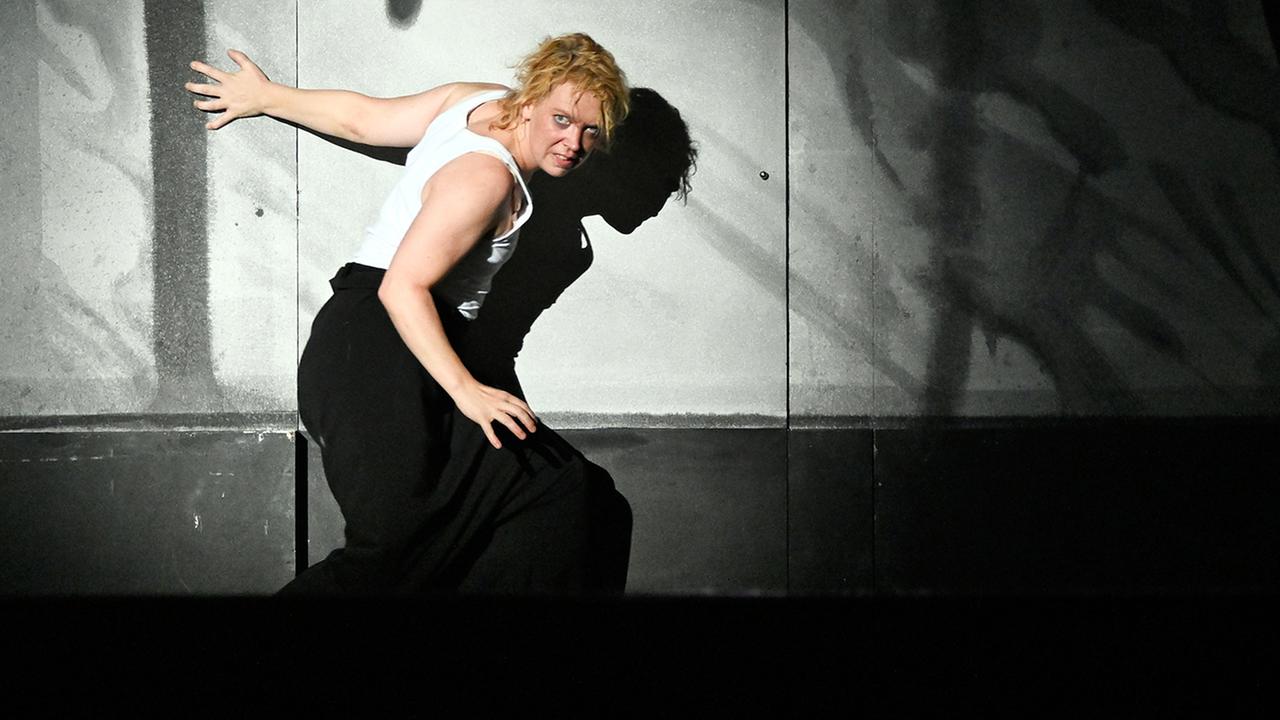
The experience of seeing Lina Beckmann in a leading role is often described by critics as a physical event. When she steps onto the stage as Medea, the air in the Hamburg Schauspielhaus seems to thin. Her screams are not the polished, rhythmic cries of traditional acting; they are ragged, guttural, and deeply unsettling. They pierce the audience, leaving spectators feeling uncomfortably complicit in the tragedy unfolding before them.
Beckmann’s ability to articulate the "unsayable" stems from a rare fearlessness. She approaches the most daunting emotional voids—such as the moment Medea chooses to commit the ultimate atrocity—with a "blank" canvas. She admits that the process of preparing for such a role is not about technical rehearsal, but about a terrifying accumulation of emotional pressure. Guided by her long-term collaborator, director Karin Beier, Beckmann pushes herself to a point where the performance becomes an organic release rather than a rehearsed sequence.
Chronology: A Career Forged in Collaboration
Lina Beckmann’s trajectory is inextricably linked to the vision of Karin Beier, one of Germany’s most influential theater directors. Their professional synergy began nearly twenty years ago at the Cologne Schauspielhaus. It was during these formative years in Cologne that Beckmann met her future husband, the acclaimed actor Charly Hübner.
- 2000s (Early Years): Beckmann honed her craft in ensemble work, developing a reputation for raw, intuitive performances that challenged traditional stage hierarchies.
- 2011: A milestone year, where she was honored with the Alfred-Kerr-Darstellerpreis at the Berlin Theatertreffen. During the ceremony, actress Eva Mattes provided a description that has defined Beckmann’s public image ever since: she noted that Beckmann speaks to an audience not as an elevated artist, but with the relatable, grounded authenticity of "the cashier at the local corner shop."
- 2013: Beckmann and Hübner transitioned to the Hamburg Schauspielhaus, following Beier’s appointment as artistic director. This move cemented the trio as the heartbeat of modern German theater.
- 2022: A new chapter began as she joined the cast of the Rostock Polizeiruf 110 as Kommissarin Melly Böwe, succeeding her husband, Charly Hübner, in the series.
- 2025–2026: The success of the "Anthropolis" project—a marathon of Greek classics—saw Beckmann take center stage in the solo piece Laios, further establishing her as a pillar of classical reinterpretation.
Supporting Data: The Dual Life of Screen and Stage
While the stage remains her primary domain, the transition to television and film has showcased Beckmann’s versatility. The challenge of moving between these two worlds is significant. As she notes, acting for the camera requires a microscopic awareness of one’s own body—the precise flick of an eye or the subtle tilt of a head.
In the 2026 film Spaziergang nach Syrakus (directed by Lars Jessen), Beckmann starred alongside Hübner in a poignant narrative about an East German citizen fleeing via sailboat to escape political confinement. Unlike the theater, where a performance is a living, breathing creature that changes with every audience interaction, film offers a "closed" performance—a moment captured and frozen in time.
Beckmann’s ability to move between the sprawling, unbridled energy of a theatrical Greek marathon and the intimate, restrained demands of a cinematic drama is what places her in the top echelon of German performers. Her "Spielkinder" theater ensemble, founded in 2009 with her siblings, further highlights her commitment to the craft, proving that her artistic life is not merely a job, but a foundational aspect of her identity.
Official Perspectives and Artistic Philosophy
Beckmann’s colleagues often speak of her "Urkraft"—a primal power—that she brings to the stage. Karin Beier, who has directed her for two decades, notes that Beckmann possesses an uncanny ability to translate the internal, abstract pain of a character into clear, visible physical expressions. This is not about vanity or technique; it is about the honesty of the human condition.
"I throw myself into it entirely," Beckmann says of her process. This "all-in" approach is what draws audiences in. In her performances, there is no fourth wall in the traditional sense; there is only a conversation. Whether she is playing a tragic queen of antiquity or a weary detective, the audience feels the presence of a real person navigating a real crisis.
Implications: The Evolution of the "Actor-Audience" Relationship
The impact of Beckmann’s work goes beyond individual performances; it marks a shift in how audiences expect to consume theater. In an era dominated by digital entertainment, Beckmann’s insistence on the "live" moment—where she might break the tension by chiding the audience during an intermission or demanding they be quiet—creates a shared reality.
Her performances in the "Anthropolis" series serve as a case study for modern theater: by stripping away the mythic ornamentation of ancient Greek drama, she renders the narratives of Laios and Medea immediate and relevant. She proves that the classical canon is not a dusty artifact but a mirror for contemporary society.
The Future of the "Beckmann-Hübner" Dynamic
The creative partnership between Beckmann and Charly Hübner continues to evolve. By sharing the screen and the stage, they have become a recognizable brand of high-quality, authentic storytelling. However, Beckmann remains fiercely individual. While their careers overlap, her reputation is built on her own terms—as a woman who can move from the profound tragedy of Medea to the comedic, irreverent interactions of a stage performer with ease.
Conclusion
Lina Beckmann remains a rare phenomenon. She is a performer who resists being categorized. She is neither just a theater star nor a television detective; she is a conduit for the human experience. Whether she is commanding a stage of thousands or staring into the lens of a camera, she retains that essential quality noted by Eva Mattes: a complete lack of pretension.
As she continues her work at the Hamburg Schauspielhaus and explores new cinematic territories, Beckmann serves as a reminder that the power of acting lies in the truth—the raw, sometimes ugly, and always electrifying truth of what it means to be alive. She does not just perform roles; she inhabits the space between the notes, bringing the "unsayable" into the light, one performance at a time.