


Berlin/Ann Arbor, Michigan – Irene Butter, a remarkable Holocaust survivor, esteemed economist, and unwavering advocate for peace and human understanding, has passed away at the age of 95 in the United States. The native Berliner dedicated decades of her life to sharing her harrowing experiences under Nazi persecution, transforming her personal trauma into a powerful message against hatred and for the promotion of love and reconciliation. Her passing marks the loss of a pivotal voice in Holocaust remembrance, whose legacy will continue to resonate globally.
A Life Dedicated to Bearing Witness and Fostering Peace
Irene Butter died peacefully on Friday, October 3rd, 2026, surrounded by her family and friends in the United States. Her agent, Mary Bisbee-Beek, confirmed the news to German broadcaster NDR, bringing to light the end of an era for many who knew her or were touched by her profound story.
Born Irene Hasenberg in Berlin in 1930, Butter’s life trajectory was brutally altered by the rise of Nazism. Her early years were marked by a forced exodus from her homeland, a desperate search for safety, and unimaginable suffering in concentration camps. Yet, from the depths of this despair, she emerged as an indefatigable champion for human rights and an eloquent voice against antisemitism and all forms of prejudice.
Just two years prior to her passing, in 2024, Irene Butter was awarded the Bundesverdienstkreuz (Federal Cross of Merit), Germany’s highest civilian honor. This prestigious award recognized her tireless and invaluable educational work as a Zeitzeugin (contemporary witness), particularly her commitment to enlightening younger generations in both Germany and the United States about the atrocities of the Holocaust. The award underscored Germany’s deep respect and gratitude for her contributions to reconciliation and the fight against forgetting.
Her life’s mission, articulated through countless speeches, interviews, and her powerful memoir, "Shores Beyond Shores: From Holocaust to a Life of Love," was to ensure that the lessons of the past are never forgotten. She believed passionately that remembering the Holocaust was not merely an act of historical preservation, but a vital tool for fostering a more compassionate and just future.
A Journey Through Darkness and Towards Light: Irene Butter’s Chronology
Irene Butter’s life story is a testament to human resilience, marked by unimaginable loss and an extraordinary will to live and forgive. Her journey from a child in Nazi-era Berlin to an internationally recognized peace activist is a compelling narrative of survival and purpose.
Early Life in Berlin and the Seeds of Persecution
Born into a loving Jewish family in Berlin in 1930, Irene’s early childhood was idyllic until the insidious rise of Nazism began to cast a long shadow over Germany. As Hitler consolidated power, the daily lives of Jewish citizens became increasingly precarious. Laws were enacted that stripped Jews of their rights, their property, and eventually their humanity. Irene, even as a young child, began to sense the growing hostility and fear. The family, like many others, realized they could no longer remain safely in their homeland.
Escape to Amsterdam and a Shared Fate with Anne Frank
In 1937, Irene’s family made the difficult decision to flee Germany, seeking refuge in the Netherlands. They settled in Amsterdam, in the very same neighborhood where Anne Frank and her family also resided. Though separated by a few years in age, Irene and Anne shared the same streets, parks, and the increasingly tense atmosphere as the war clouds gathered over Europe. This period of relative calm was tragically short-lived. In May 1940, Germany invaded the Netherlands, bringing with it the full force of Nazi occupation and the systematic persecution that the Hasenberg family had desperately tried to escape. Life under occupation meant curfews, yellow stars, and the constant fear of deportation.
Westerbork and the Illusion of Hope
The inevitable came in 1943 when the Hasenberg family was rounded up and deported to Westerbork, a transit camp in the northeastern Netherlands. Westerbork was not an extermination camp but served as a crucial assembly point for Jews awaiting transport to concentration and extermination camps further east. Conditions were harsh, but a glimmer of hope appeared for the Hasenberg family. Irene vividly recalled a package arriving one day, containing precious documents: Ecuadorian passports. Her father, with remarkable foresight and desperate hope, had arranged for these passports, believing they might offer a chance for his family to be exchanged as "foreign Jews" for German citizens held abroad. This faint hope, while ultimately a cruel illusion for many, offered a temporary reprieve from immediate extermination.
Bergen-Belsen: A Glimpse of Anne Frank and Unspeakable Loss
From Westerbork, the family was transported to Bergen-Belsen concentration camp. This was a place of unimaginable suffering, starvation, disease, and brutality. Here, Irene Butter would have a haunting encounter with Anne Frank. Through a barbed-wire fence, separating the "exchange Jews" section from other prisoners, Irene saw Anne Frank one last time. It was a brief, poignant moment, a silent acknowledgment of their shared plight. Anne Frank would tragically perish in Bergen-Belsen, succumbing to typhus and starvation, just weeks before the camp’s liberation.
The promise of an "exchange" for the Hasenberg family remained a fragile thread. After nearly a year in Bergen-Belsen, the exchange finally materialized. However, it came at a devastating cost. Irene’s father, severely weakened by forced labor, starvation, and the inhumane conditions of the camp, died just days before their planned departure. Her mother and brother were critically ill and had to be hospitalized. Thus, a young Irene, alone and grief-stricken, had to embark on the journey of liberation by herself. Her odyssey took her first to Algeria, a waypoint for refugees, before she finally reached the shores of the United States.
A New Beginning in America and an Illustrious Academic Career
Arriving in the United States as a lone, traumatized survivor, Irene Butter faced the daunting task of rebuilding her life. Despite the immense emotional scars, she possessed an indomitable spirit and an intellectual drive. She pursued higher education, studying economics, a field in which she would excel. Her dedication led her to become a respected professor at the University of Michigan, where she taught and conducted research for many years. Her academic career was a testament to her intelligence and resilience, a stark contrast to the dehumanization she had endured. She built a new life, a new family, and a new identity, but the past, though unspoken for decades, was never truly absent.
The Enduring Power of Testimony and a Responsibility Embraced
For decades, Irene Butter maintained a profound silence about her experiences during the Holocaust. Like many survivors, the trauma was too immense, the memories too painful, and perhaps the world too unwilling to listen. This silence, however, was broken by a pivotal moment that transformed her into the powerful public speaker she became.
Breaking the Silence: The Anne Frank Discussion
The turning point came during a discussion about Anne Frank. While the exact details of the discussion are not provided, it was likely an event that compelled her to confront her past directly. In her own words, she "recognized her responsibility and began to speak." This realization was a profound shift, moving her from personal remembrance to public advocacy. She understood that as one of the last living witnesses, her voice was not just her own; it was a conduit for the millions who had been silenced forever.
A Message for Future Generations: "Never Again"
From that moment on, Irene Butter dedicated herself to sharing her story, primarily with students in both the United States and Germany. Her approach was not one of bitterness or revenge, but of education, empathy, and the urgent need to learn from history. She emphasized the importance of confronting prejudice, recognizing the early signs of hatred, and standing up against injustice. Her message of "Never Again" was delivered with a compelling blend of personal narrative, academic insight, and heartfelt conviction. She spoke not just of the horrors she witnessed, but of the love, compassion, and courage that can emerge even in the darkest times. She often recounted the simple acts of kindness she received, underscoring the power of human connection against overwhelming evil.
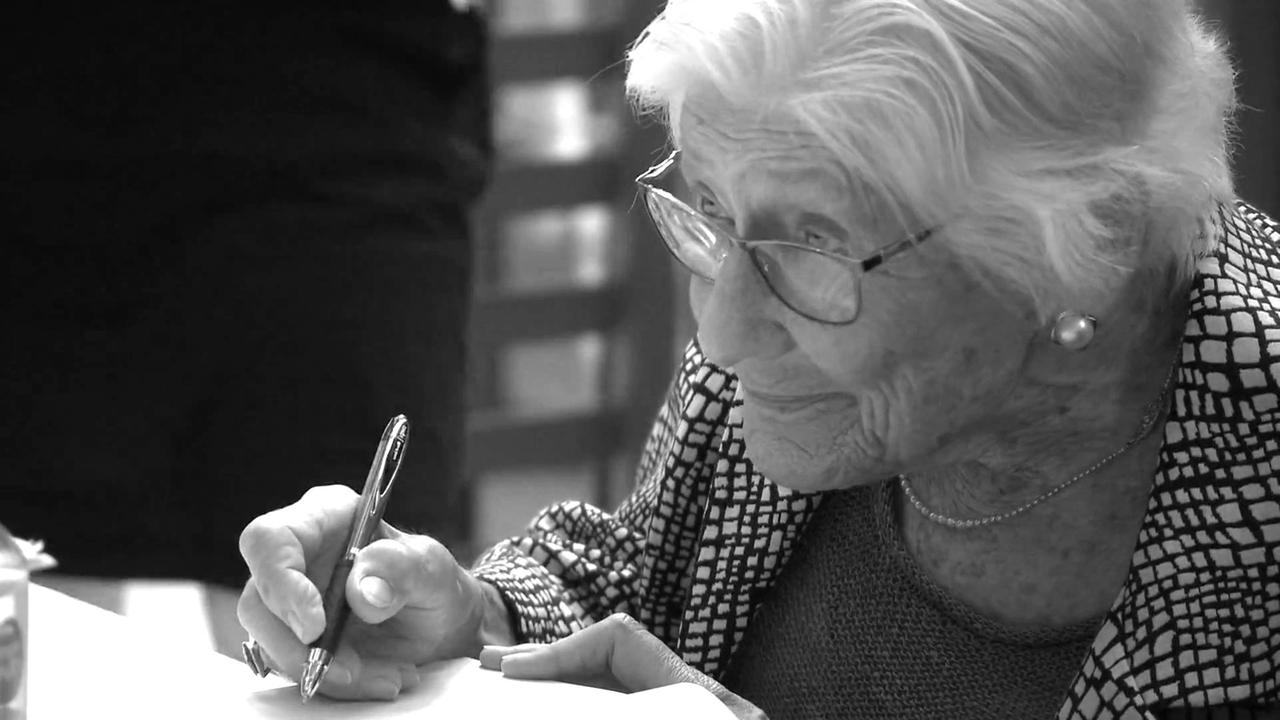
Her engagement extended beyond classrooms. She became a sought-after speaker at universities, conferences, and remembrance events, captivating audiences with her calm demeanor and the powerful clarity of her recollections. Her memoir, "Shores Beyond Shores," co-authored with John D. Bidwell and Kris Holloway, further amplified her voice, allowing her story to reach an even wider audience and ensuring its permanence.
Tributes to a Tireless Advocate
The news of Irene Butter’s passing evoked a wave of tributes from across the globe, acknowledging her profound impact on Holocaust remembrance and peace education.
Wolfram Weimer, Germany’s State Minister for Culture, issued a heartfelt statement mourning her loss. "With Irene Butter, we lose an impressive voice of remembrance and a tireless fighter for peace," Weimer declared. He further emphasized her decades-long commitment to "enlightenment, peace, and understanding." Weimer lauded her "courage to raise her voice and tell her personal story as a Jew," calling it "of inestimable value." This official recognition from the German government highlights the deep gratitude for her efforts in reconciliation and ensuring that the atrocities of the past serve as a perpetual warning.
Her colleagues and former students at the University of Michigan also expressed their sorrow and respect. Many remembered her not only as a brilliant economist but as an inspiring mentor whose personal story added immense depth and urgency to her teachings. Holocaust remembrance organizations, both in Germany and the U.S., underscored the critical role she played in their missions. They noted that her personal testimony provided an irreplaceable connection to the past, making history tangible and immediate for new generations.
These tributes collectively paint a picture of a woman whose life was not merely defined by the suffering she endured, but by the extraordinary purpose she forged from it. Her voice, once silenced by trauma, became a beacon of hope and a powerful call to action for a better world.
Supporting Data and the Urgency of Remembrance
Irene Butter’s work is situated within the broader context of the critical importance of Holocaust survivor testimonies. As the generation of survivors dwindles, their firsthand accounts become increasingly precious and vital.
The Role of Survivor Testimonies
Survivor testimonies serve multiple indispensable functions:
- Humanizing History: They transform abstract historical facts and statistics into deeply personal, relatable narratives, making the enormity of the Holocaust comprehensible on an individual level. Irene’s story of seeing Anne Frank, the struggle for Ecuadorian passports, and her father’s tragic death, grounds the historical events in human experience.
- Combating Denial and Distortion: Eyewitness accounts are the most powerful antidote to Holocaust denial and revisionism. They offer irrefutable proof of the atrocities committed.
- Moral Education: Survivors often impart lessons on tolerance, resilience, empathy, and the dangers of indifference, encouraging critical thinking and moral courage in the face of injustice. Irene’s consistent message of love over hate exemplifies this.
- Preserving Memory: As living witnesses pass, their recorded testimonies, memoirs like "Shores Beyond Shores," and the institutions dedicated to their stories become the primary means of keeping their voices alive for future generations.
The Context of "Exchange Jews"
Irene Butter’s experience as an "exchange Jew" highlights a lesser-known, yet equally cruel, aspect of Nazi policy. The Nazis sometimes held certain groups of Jews, particularly those with foreign passports or specific professional skills, in separate sections of camps like Bergen-Belsen, with the intention of exchanging them for German prisoners of war or valuable foreign currency. This policy, while offering a false hope of survival, was still rooted in the same dehumanizing ideology. These individuals endured the same brutal conditions as other prisoners, often dying before any exchange could occur, as was the case with Irene’s father. Her testimony sheds light on the cynical and manipulative nature of the Nazi regime, even in its "exceptions."
Rising Antisemitism and the Enduring Relevance
In an era witnessing a global resurgence of antisemitism, hate speech, and divisive ideologies, Irene Butter’s message holds profound contemporary relevance. Her warnings against the normalization of hatred, the dangers of silence, and the imperative to defend democratic values resonate with renewed urgency. Her life’s work serves as a stark reminder that vigilance against prejudice is a perpetual duty, not merely a historical footnote.
A Legacy of Love, Remembrance, and Peace
Irene Butter leaves behind an indelible legacy that extends far beyond her personal story of survival. Her life, marked by unimaginable hardship, ultimately blossomed into a powerful testament to the human spirit’s capacity for love, forgiveness, and advocacy.
The Enduring Impact of Her Work
Her memoir, "Shores Beyond Shores: From Holocaust to a Life of Love," will continue to be a vital resource for understanding the Holocaust from a deeply personal perspective and for drawing universal lessons about resilience and compassion. Her countless speeches and interactions, particularly with young people, instilled in them a sense of responsibility to remember and to act. She didn’t just tell her story; she inspired others to find their own voices against injustice.
Her legacy will also be felt in the ongoing work of Holocaust education centers, museums, and remembrance initiatives worldwide. These institutions will continue to share her testimony, ensuring that her voice, and the voices of all who perished, are heard for generations to come. She understood that while survivors pass, the stories must endure through meticulous documentation, digital archives, and dedicated educators.
The Future of Holocaust Education
As the number of living Holocaust survivors continues to decline, the challenge of preserving and transmitting their stories becomes even more critical. Irene Butter’s life provides a blueprint for how this can be achieved: through personal narratives, educational outreach, and the relentless pursuit of peace and understanding. Her passing underscores the urgency for new generations of educators and activists to pick up the mantle of remembrance. This involves leveraging technology, developing innovative pedagogical approaches, and fostering cross-cultural dialogue to ensure that "Never Again" remains a guiding principle for humanity.
A Call to Action for a More Compassionate World
Ultimately, Irene Butter’s life was a powerful call to action. She urged everyone to become "upstanders," not bystanders, in the face of injustice. Her message was simple yet profound: choose love over hate, empathy over indifference, and peace over conflict. She believed deeply in the power of individual actions to shape a more humane world. Her passing is a moment of profound sadness, but it is also a moment to reflect on her extraordinary life and to recommit to the values she championed. Irene Butter may no longer be with us, but her spirit, her message, and her unwavering commitment to a world free from hatred will continue to inspire and guide us toward a future built on understanding and peace.


















