

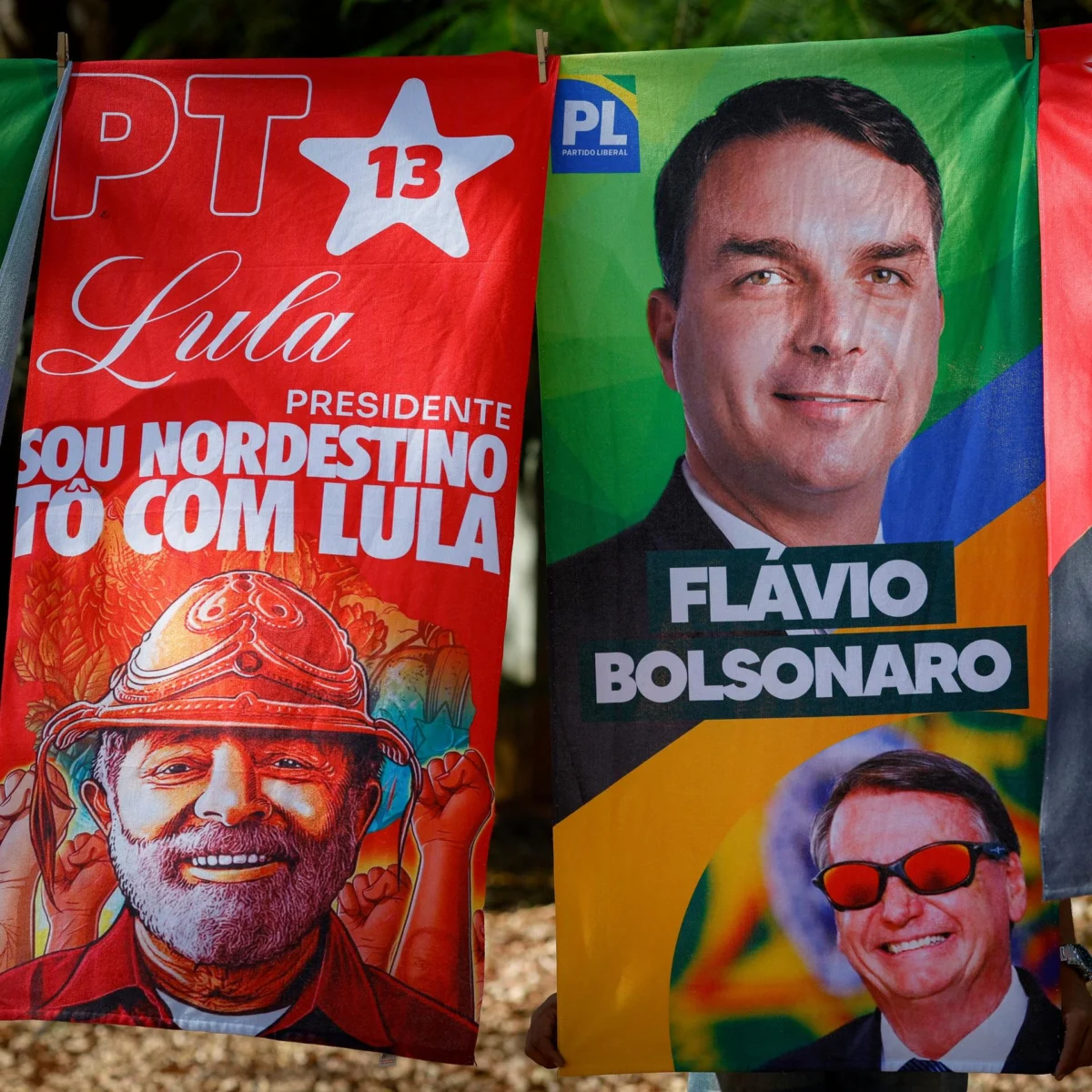
Brasília, Brazil – October 5, 2026 – Brazil stands at a critical juncture, as the nation prepares for a highly anticipated presidential runoff election on October 25. Voters will once again cast their ballots to choose between the incumbent leftist leader, Luiz Inácio Lula da Silva, and the right-wing challenger, Flávio Bolsonaro, in a contest that promises to redefine the country’s political, economic, and social trajectory. The outcome of the first round has sent ripples of surprise across the political landscape, setting the stage for an intense three-week campaign.
Main Facts: A Nation Divided Heads to the Polls
The first round of Brazil’s presidential election, held yesterday, concluded without a decisive winner, forcing the two leading candidates into a runoff. According to official figures based on the near-complete count of votes, Flávio Bolsonaro, representing the Liberal Party (PL), secured approximately 47% of the vote. Close behind was the veteran politician and current president, Luiz Inácio Lula da Silva of the Workers’ Party (PT), who garnered around 45% of the ballots. Both candidates fell short of the absolute majority required for an outright victory in the first round, a scenario that, while anticipated by some, unfolded with an unexpected twist in the vote distribution.
The results notably defied pre-election polls, which had consistently placed President Lula da Silva ahead of his rival, often by a significant margin. This discrepancy has become a central talking point, underscoring the volatility and unpredictability of Brazilian electoral politics. The upcoming runoff on October 25 will now determine who will lead Latin America’s largest nation for the next four years, guiding it through complex challenges ranging from economic stability to environmental preservation and social equity.
This election is widely regarded as a "directional election," presenting Brazilian voters with a stark choice between two fundamentally different visions for the country. Lula da Silva, a figure synonymous with social welfare programs and state-led development, seeks to extend his legacy into a fourth term. Flávio Bolsonaro, on the other hand, advocates for a smaller state, fiscal conservatism, and a tough-on-crime approach, positioning himself as a champion of change and a direct ideological counterpoint to the incumbent. The stakes could not be higher for a nation grappling with persistent socio-economic disparities and political polarization.
Chronology: A Path to the Runoff
The journey to this runoff election has been marked by a complex interplay of political legacies, shifting public sentiments, and a highly charged campaign environment.
The Road to October 2026:
The current election cycle began with a crowded field of 13 hopefuls vying for Brazil’s highest office. However, from the outset, the contest was largely framed as a battle between the established political titan, Lula da Silva, and the ascendant force of the Bolsonaro family.
Lula’s Resurgence and Third Term (2023-2026):
Luiz Inácio Lula da Silva, now 80 years old, made a remarkable political comeback to secure his third non-consecutive term in 2023. His previous presidencies (2003-2010) were characterized by robust social programs that lifted millions out of poverty, economic growth fueled by commodity booms, and an assertive foreign policy that sought to elevate Brazil’s standing on the global stage. His return to power in 2023 was met with both fervent support and strong opposition, reflecting deep societal divisions.
During his current term, Lula’s administration has focused on reversing policies enacted by his predecessor, particularly in environmental protection and social welfare. Key achievements highlighted by his supporters include a notable reduction in unemployment rates and a significant curbing of deforestation in the Amazon rainforest, a critical global concern. However, his government has also contended with considerable economic headwinds, including rising living costs, substantial state spending, and an escalating national debt, which have fueled criticism from the opposition and segments of the electorate.
The Bolsonaro Legacy and Rise of Flávio:
The challenger, Flávio Bolsonaro, is the eldest son of former President Jair Bolsonaro. His candidacy carries the weight and political capital of his family’s populist movement, which surged to power in 2018. The original article states that Jair Bolsonaro was "convicted of a coup attempt," a detail that significantly shapes the political landscape in this fictional 2026 scenario. This conviction, if it refers to events like the January 8, 2023 attacks on government buildings in Brasília, would have profoundly altered the political standing of the former president and potentially galvanized his base around his son. Flávio Bolsonaro, a senator, has positioned himself as the inheritor of his father’s conservative and nationalist agenda, appealing to voters who desire a departure from what they perceive as Lula’s statist policies. His campaign has echoed themes of individual liberty, fiscal responsibility, and a strong stance against crime, often leveraging the anti-establishment sentiment that propelled his father to power.
Election Day and Vote Count:
The first round of voting on October 4, 2026, saw millions of Brazilians head to the polls. The process was largely orderly, but the subsequent vote count proved to be a nail-biter. Initial projections and exit polls, influenced by earlier surveys, had suggested a more comfortable lead for Lula. However, as the votes were tabulated, particularly from regions historically more aligned with conservative ideologies, Flávio Bolsonaro’s numbers steadily climbed, narrowing the gap and eventually surpassing Lula in the preliminary count. The final figures, with nearly all votes counted, presented the unexpected outcome: a narrow but clear lead for Bolsonaro, pushing the election into the runoff phase. This dramatic shift from polling expectations has fueled intense speculation about voter behavior and the accuracy of pre-election surveys.
Supporting Data: Unpacking the Numbers and the Polling Anomaly
The official vote count, showing Flávio Bolsonaro with approximately 47% and Lula da Silva with about 45%, reveals a nation deeply polarized and an electorate that seemingly defied conventional wisdom.
The Polling Discrepancy:
Perhaps the most striking aspect of the first-round results is the significant divergence from pre-election polling data. Leading pollsters had consistently shown Lula holding a lead of anywhere from 5 to 10 percentage points over Bolsonaro. This unexpected outcome has prompted widespread discussion and introspection within Brazil’s political analysis circles. Several factors could contribute to this discrepancy:
- "Shy Voter" Phenomenon: It is plausible that a segment of Bolsonaro’s supporters, often characterized by a more conservative and sometimes anti-establishment stance, might have been reluctant to openly express their voting intentions to pollsters. This "shy voter" effect has been observed in other elections globally.
- Methodology and Sampling Errors: Polling methodologies, particularly in a vast and diverse country like Brazil, can struggle to accurately capture the nuances of public opinion. Sampling biases, difficulties in reaching certain demographics, or underrepresentation of specific regions could all contribute to inaccuracies.
- Late Campaign Swings: The final days of the campaign can often see significant shifts in voter sentiment. Intense media coverage, viral social media content, or last-minute debates could have swayed undecided voters towards Bolsonaro.
- Underestimation of Anti-Incumbent Sentiment: Despite Lula’s achievements, the economic challenges of rising living costs and national debt might have fostered a stronger anti-incumbent sentiment than polls captured, benefiting the challenger.
Geographic and Demographic Insights (Inferred):
While specific breakdowns are not provided in the original text, typical Brazilian election patterns suggest certain trends. Lula da Silva traditionally enjoys strong support in the poorer regions of the Northeast and among lower-income urban populations, who benefit directly from social welfare programs. His support base often includes union members, intellectuals, and those who advocate for greater state intervention in the economy.
Flávio Bolsonaro, conversely, likely drew significant support from the wealthier South and Southeast regions, particularly among agricultural businesses, evangelical Christians, and those who prioritize law and order and a smaller government. The emphasis on his father’s legacy and a tough stance on crime would resonate strongly with this demographic. The narrow margin suggests that both candidates managed to mobilize their core constituencies effectively, and the runoff will hinge on their ability to attract the votes of those who supported the other 11 candidates in the first round, as well as the undecided.
The "Other" Candidates:
With 13 candidates initially in the race, the approximately 8% of votes cast for candidates other than Lula and Bolsonaro will be crucial in the runoff. These voters represent a diverse spectrum of ideologies, from centrist to more radical left or right-wing positions. Their allegiance in the second round will be heavily courted by both campaigns, potentially determining the final outcome. The ability of Lula and Bolsonaro to forge alliances or appeal to the priorities of these "swing voters" will be a key determinant of victory.
Official Responses: Confidence and Determination
Following the surprising first-round results, both candidates swiftly addressed their supporters and the nation, projecting confidence and outlining their strategies for the upcoming runoff.
Lula da Silva’s "Extra Time" Mentality:
President Lula da Silva, speaking to enthusiastic crowds in São Paulo, acknowledged the unexpected nature of the first-round outcome but quickly pivoted to a message of resilience and optimism. "The result was unexpected," he stated, referring to Bolsonaro’s lead despite the polls. However, he quickly added, "The game goes into extra time, and in extra time, we will win over the Brazilian people." His metaphor, drawn from Brazil’s beloved football culture, resonated with his base, signaling that the fight was far from over. Lula emphasized his long history of overcoming adversity and expressed unwavering belief in his ability to mobilize support for the second round. He framed the runoff as an opportunity to further articulate his vision for a more inclusive and equitable Brazil, focusing on the continuation and expansion of social programs that have been the bedrock of his political career. His team will undoubtedly focus on reminding voters of his track record in reducing poverty and improving living standards during his previous terms.
Flávio Bolsonaro’s Call for "Change":
Flávio Bolsonaro, equally confident, presented his first-round lead as a clear mandate for change. He declared that "Brazil wants change," positioning himself as the embodiment of a new direction for the country. His address likely emphasized themes of economic liberalism, a reduction in state bureaucracy, and a stronger stance against crime – policies that resonate with his conservative base. Bolsonaro’s team will capitalize on the momentum gained from exceeding polling expectations, arguing that his performance indicates a deeper, perhaps unexpressed, desire among Brazilians for a different kind of leadership. His campaign is expected to intensify its critique of Lula’s economic policies and perceived governmental overreach, aiming to consolidate the anti-PT vote and attract centrist disillusioned with the current administration.
The immediate responses from both camps set a combative tone for the runoff period. Both leaders are now poised to intensify their campaigns, leveraging their respective strengths and aiming to persuade the significant portion of the electorate that either abstained or voted for other candidates in the first round.
Implications: A Pivotal Choice for Brazil’s Future
The runoff election between Lula da Silva and Flávio Bolsonaro presents Brazil with a fundamental choice that will shape its domestic policies, economic direction, social fabric, and international standing for years to come. This is truly a "directional election," as the candidates offer starkly contrasting philosophies of governance.
1. Economic Philosophy and Fiscal Policy:
- Lula da Silva (PT): Lula’s platform champions a stronger role for the state in economic development. This includes continued public investments in infrastructure and key industries, robust social programs aimed at wealth redistribution and poverty reduction, and potentially a more protectionist trade stance to foster domestic industries. His supporters argue this approach ensures inclusive growth and protects vulnerable populations. However, critics point to the associated risks of increased state spending, potential inflation, and a growing national debt, issues that have already challenged his current administration.
- Flávio Bolsonaro (PL): Bolsonaro advocates for a leaner state, characterized by significant spending cuts, deregulation, and reduced taxes to stimulate private sector growth. His promise of fiscal conservatism and a focus on market-oriented policies aims to attract foreign investment and boost economic efficiency. A central tenet of his platform is to roll back what he perceives as excessive government intervention. While this could appeal to business interests and those concerned about public debt, critics worry about the potential impact on social safety nets and public services, particularly for Brazil’s most vulnerable citizens.
2. Social Programs and Inequality:
- Lula da Silva: A cornerstone of Lula’s political identity is his commitment to social programs, such as Bolsa Família (cash transfer program) and investments in education and healthcare. His policy aims to continue and expand these initiatives, addressing Brazil’s deep-seated inequality and providing a safety net for millions. The reduction in unemployment during his current term is presented as evidence of the success of his people-centric policies.
- Flávio Bolsonaro: While not explicitly against all social welfare, Bolsonaro’s focus on a smaller state implies a potential re-evaluation or scaling back of some existing programs. His emphasis on individual responsibility and market solutions suggests a different approach to poverty alleviation, possibly through job creation in a deregulated economy rather than direct state transfers. His supporters believe this fosters self-reliance and reduces dependency on government.
3. Environmental Policy and the Amazon:
- Lula da Silva: Lula’s administration has made reversing Amazon deforestation a priority, and the article highlights a decrease in deforestation during his current term. He champions international cooperation on climate change and sustainable development, positioning Brazil as a responsible global environmental actor. His government is likely to continue strengthening environmental enforcement agencies and promoting sustainable practices.
- Flávio Bolsonaro: The Bolsonaro family’s past rhetoric and policies have often been criticized by environmentalists for prioritizing agricultural and mining interests over conservation. While Flávio Bolsonaro may present a more nuanced stance than his father, his platform is expected to favor economic development in the Amazon region, potentially through less restrictive environmental regulations. This could have significant implications for biodiversity, indigenous communities, and global climate efforts.
4. Law, Order, and Democratic Institutions:
- Lula da Silva: Lula’s approach to crime often involves addressing its root causes through social programs and economic opportunity, alongside traditional law enforcement. His administration would likely focus on strengthening state institutions and promoting democratic norms.
- Flávio Bolsonaro: A central promise of Flávio Bolsonaro is a "tougher line against criminality." This aligns with his family’s emphasis on law and order, potentially including stricter policing, harsher penalties, and a focus on public safety. Crucially, his campaign includes a promise of "amnesty for his father," Jair Bolsonaro, following the latter’s conviction for a coup attempt. This particular promise raises profound questions about the rule of law, the independence of the judiciary, and the stability of Brazil’s democratic institutions. Should Flávio Bolsonaro win and attempt to grant such an amnesty, it would undoubtedly trigger a constitutional crisis and potentially deepen the country’s political polarization, with far-reaching implications for democratic governance.
5. International Relations:
- Lula da Silva: Lula’s foreign policy tends towards multilateralism, fostering alliances with developing nations, and playing an active role in international forums like BRICS. He advocates for a more balanced global order and often takes an independent stance on geopolitical issues.
- Flávio Bolsonaro: A Bolsonaro presidency might lean towards closer ties with specific conservative governments globally and could potentially adopt a more nationalist, Brazil-first approach to foreign policy, possibly echoing the more skeptical stance towards international institutions seen during his father’s tenure.
6. The Future of Brazilian Democracy:
The election is taking place in a context where Brazil’s democratic institutions have faced considerable strain, particularly with the mention of Jair Bolsonaro’s conviction for a coup attempt. The outcome of this runoff will be a critical test for the resilience of these institutions. Lula’s victory would likely signal a reinforcement of traditional democratic norms and a return to a more predictable political environment. A Bolsonaro victory, with his promise of amnesty for his father, could usher in a period of heightened constitutional tension and further scrutinize the checks and balances within the Brazilian system. The election is not just about policy; it’s about the very nature of governance and the future health of Brazilian democracy.
In conclusion, the runoff election on October 25 is more than just a contest between two individuals; it is a battle of ideologies and a referendum on Brazil’s future direction. The surprising first-round results underscore the profound divisions within the electorate and the high stakes involved. As the campaigns intensify, the focus will be on mobilizing core supporters, swaying undecided voters, and addressing the critical issues that resonate most deeply with the Brazilian people. The world watches closely as Brazil prepares to make its pivotal choice.















