

MEKELLE, ETHIOPIA – October 5, 2026 – Ethiopian government forces have reportedly secured full control over Mekelle, the capital city of the northern Tigray region, marking a significant and potentially volatile turn in the country’s ongoing internal conflict. Eyewitnesses in the city on Monday reported seeing army soldiers actively patrolling the streets and occupying key administrative buildings, just one day after federal troops entered Mekelle without encountering resistance. The development follows the strategic withdrawal of fighters from the Tigray People’s Liberation Front (TPLF), who had previously held the city.
This latest military maneuver comes roughly two weeks after a fragile peace, established after a devastating two-year conflict, shattered, plunging the region back into active hostilities. The TPLF initiated a series of offensives into the neighboring Amhara and Afar regions but has reportedly been repelled and pushed back in recent days, culminating in their retreat from Mekelle. The humanitarian implications of this renewed conflict are severe, with a previous iteration of the war between 2020 and 2022 claiming hundreds of thousands of lives and displacing millions. The international community watches with growing apprehension as the Horn of Africa teeters on the brink of further destabilization.
Main Facts
Government Forces Claim Full Control of Mekelle
On the morning of October 5, 2026, reports from Mekelle, the administrative and economic heart of Ethiopia’s Tigray region, confirmed that federal government troops had established complete operational control over the city. This assertion of authority by the Ethiopian National Defense Force (ENDF) follows a swift military advance that saw government soldiers enter Mekelle virtually unopposed on Sunday. Eyewitnesses, whose identities are being withheld for their safety, described a visible and assertive military presence throughout the city. Soldiers were observed conducting patrols across major thoroughfares, securing critical infrastructure, and occupying prominent public institutions, including government offices and communication centers. The move signifies a major tactical victory for Addis Ababa and underscores the federal government’s renewed commitment to asserting its sovereignty over the rebellious region.
The capture of Mekelle carries immense symbolic and strategic weight. As the capital of Tigray, it serves not only as the political and administrative center but also as a vital hub for commerce, education, and culture in the region. Its control has historically been a key objective for all parties vying for influence in Tigray. The current takeover, therefore, represents a significant blow to the TPLF’s operational capabilities and its narrative of regional autonomy. The lack of direct engagement upon entry suggests a deliberate tactical decision by the TPLF to withdraw its forces, possibly to regroup, avoid urban warfare that could endanger civilians, or preserve its fighting capacity for a prolonged insurgency. This withdrawal, however, also raises questions about the TPLF’s immediate strength and its long-term strategy following this setback.
Latest Development in Renewed Conflict
The re-entry of federal forces into Mekelle is the culmination of a rapid escalation of hostilities that reignited approximately two weeks prior. This resurgence of fighting effectively nullified a fragile ceasefire and a peace agreement that had offered a glimmer of hope for the war-torn region. The latest round of conflict began with the TPLF launching offensive operations into the adjacent Amhara and Afar regional states. These moves were widely interpreted as an attempt by the TPLF to relieve pressure on Tigray, potentially secure strategic territories, or even push for a stronger negotiating position.
However, these initial TPLF advances appear to have been met with a robust counter-offensive by federal forces and their allies. Reports from the frontlines over the past few days indicated that government troops had successfully pushed back the TPLF fighters from the contested areas in Amhara and Afar. This counter-offensive evidently gained momentum, leading to a direct advance towards Mekelle itself. The swiftness of the federal push and the subsequent TPLF retreat from the regional capital suggest either a significant shift in military balance, superior tactical execution by the ENDF, or a calculated strategic decision by the TPLF to avoid a direct confrontation within Mekelle, which could have resulted in catastrophic civilian casualties and extensive damage to the city. The renewed conflict has once again plunged millions of Ethiopians into uncertainty, raising urgent calls from international bodies for de-escalation and the protection of civilians.
Chronology of the Tigray Conflict
Roots of the Crisis: Pre-2020 Tensions
The conflict in Tigray is deeply rooted in Ethiopia’s complex political history, particularly the federal structure established after the fall of the Derg regime in 1991. For nearly three decades, the TPLF, a liberation front that spearheaded the coalition that overthrew the Marxist military junta, held a dominant position within the ruling Ethiopian People’s Revolutionary Democratic Front (EPRDF) coalition. This period saw significant economic growth but also accusations of authoritarianism and ethnic favoritism, particularly towards Tigrayans, who constitute about 6% of the country’s population.
The political landscape shifted dramatically with the rise of Abiy Ahmed to Prime Minister in 2018. Abiy, an Oromo, initiated sweeping political and economic reforms, promising to unite a fractured nation. His efforts included sidelining the TPLF from its influential position within the federal government and dissolving the EPRDF to form a new, more centralized Prosperity Party, which the TPLF refused to join. Tensions escalated sharply in 2020 when Abiy’s government postponed national elections due to the COVID-19 pandemic. Defying federal orders, Tigray proceeded with its own regional elections in September 2020, which Addis Ababa deemed illegal. This act was a direct challenge to federal authority, setting the stage for the catastrophic war that erupted months later. Both sides accused the other of seeking to undermine the constitutional order, creating an intractable political standoff.
The 2020-2022 War: A Devastating Period
The first full-scale conflict officially began on November 4, 2020, when Prime Minister Abiy Ahmed ordered a military offensive in Tigray, citing attacks by TPLF forces on federal military bases in the region. What was initially framed as a "law enforcement operation" quickly spiraled into a full-blown war. Federal forces, reportedly aided by Eritrean troops and Amhara regional militias, rapidly advanced, capturing Mekelle within weeks. The TPLF leadership retreated to rural areas, vowing to continue fighting.
Despite initial federal claims of victory, the TPLF mounted a remarkable resurgence. By June 2021, Tigrayan forces had not only pushed back federal and allied troops but also recaptured Mekelle, forcing the ENDF into a humiliating withdrawal. This period saw the conflict expand beyond Tigray’s borders, with TPLF forces making advances into Amhara and Afar regions, threatening the capital Addis Ababa at one point. The war was characterized by brutal fighting, widespread human rights abuses, and a severe humanitarian crisis. After nearly two years of protracted conflict and numerous failed peace initiatives, a landmark peace agreement was signed in Pretoria, South Africa, in November 2022, under the auspices of the African Union. The agreement called for a permanent cessation of hostilities, disarmament of TPLF fighters, restoration of federal authority in Tigray, and unhindered humanitarian access. For nearly two years, this agreement, though imperfect and often strained, largely held, allowing for some aid delivery and a degree of stability, albeit fragile.
The Recent Resurgence of Hostilities
The fragile peace established by the Pretoria Agreement began to unravel in late September 2026. While the exact trigger remains disputed, both sides have accused the other of violating the terms of the ceasefire. Reports indicate a buildup of forces on both sides of the contested borders, particularly around areas claimed by both Tigray and Amhara. The TPLF leadership cited a lack of progress in implementing key aspects of the peace deal, including the full withdrawal of Eritrean forces, the lifting of blockades, and the transfer of disputed territories, as reasons for their renewed military actions. The federal government, conversely, accused the TPLF of failing to fully disarm and of launching unprovoked attacks.
The new round of fighting commenced with TPLF incursions into parts of the Amhara and Afar regions. These operations targeted strategic towns and supply routes, signaling a clear intent to disrupt federal control and potentially gain leverage. However, the federal government, possibly better prepared or reinforced than in previous encounters, mounted a swift and effective counter-offensive. Leveraging air power and coordinated ground operations, the ENDF, reportedly again with the support of allied regional forces, successfully pushed back the TPLF from its gains in Amhara and Afar. This decisive counter-attack paved the way for the advance on Mekelle. The strategic objectives for both sides in this renewed conflict appear to be similar to the previous war: for the federal government, to assert national sovereignty and dismantle the TPLF’s military capacity; for the TPLF, to protect Tigray’s autonomy and secure its political future. The collapse of the peace agreement and the renewed fighting underscore the deep-seated mistrust and unresolved issues that continue to plague Ethiopia.
Supporting Data and Context
The Humanitarian Catastrophe
The human cost of the Tigray conflict has been staggering, earning it the grim distinction of being one of the world’s deadliest conflicts in recent memory. The previous war between 2020 and 2022 resulted in an estimated death toll ranging from 300,000 to 600,000 people, a figure that includes both combatants and civilians, many of whom succumbed to famine and lack of medical care. Millions more were forcibly displaced from their homes, becoming internally displaced persons (IDPs) within Ethiopia or refugees in neighboring Sudan. The United Nations and various international aid organizations have consistently highlighted the dire humanitarian situation, reporting widespread food insecurity, with parts of Tigray facing famine-like conditions due to blockades and disruptions to agricultural production.
Access to aid has been a persistent challenge, with both sides accused of impeding humanitarian efforts. Essential services, including healthcare, electricity, and telecommunications, were severely disrupted or completely collapsed in many areas, particularly in Tigray. Hospitals were looted or destroyed, and medical supplies became critically scarce, leading to preventable deaths, especially among children and vulnerable populations. The renewed fighting threatens to exacerbate this already catastrophic situation, potentially reversing any gains made in humanitarian access and basic service provision since the 2022 peace agreement. Aid agencies are now bracing for a fresh wave of displacement and an urgent increase in humanitarian needs, with fears that the conflict zones will once again become inaccessible.
Strategic Importance of Tigray and Mekelle
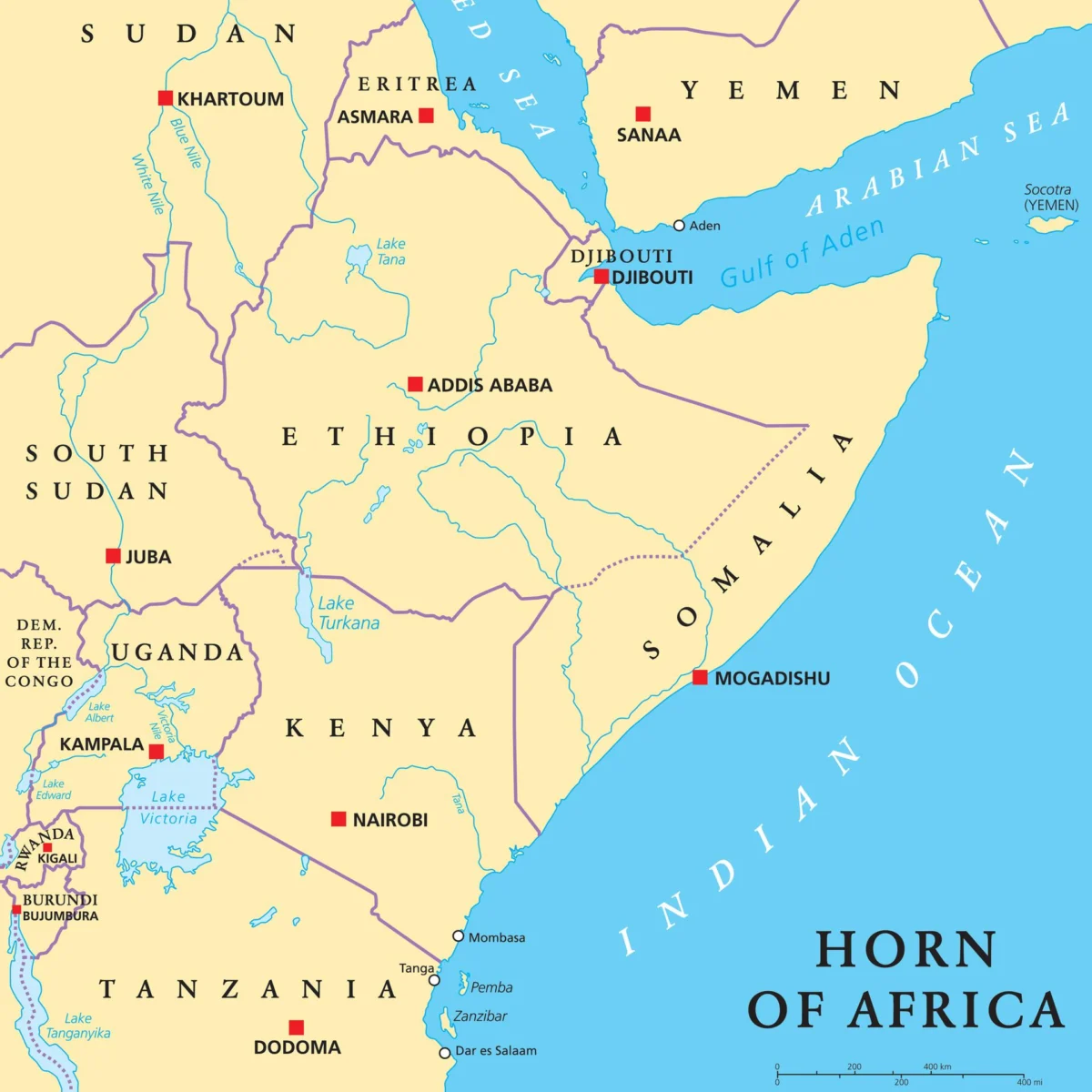
Tigray’s geographical and political position makes it strategically vital within Ethiopia and the broader Horn of Africa. The region borders Eritrea to the north and Sudan to the west, giving it significant geopolitical relevance. Control over Tigray impacts regional trade routes, cross-border stability, and influence in an already volatile part of the world. Mekelle, as the regional capital, acts as the nerve center for Tigray. Its strategic value lies not only in its political symbolism but also in its infrastructure. It hosts a major university, significant commercial activities, and serves as a logistical hub for the region. Control of Mekelle allows the occupying force to exert administrative authority, manage resource distribution, and project power across Tigray.
Historically, the TPLF’s deep roots and extensive support network within Tigray have made it a formidable opponent. The region’s mountainous terrain also presents significant challenges for conventional military operations, favoring guerrilla tactics. The repeated capture and recapture of Mekelle by both federal forces and the TPLF underscore its pivotal role in the conflict. For the federal government, controlling Mekelle is crucial for asserting its sovereignty and demonstrating its capacity to enforce national law. For the TPLF, holding Mekelle is essential for its legitimacy and operational coordination. The current federal takeover, therefore, represents a major strategic gain for Addis Ababa, allowing it to potentially consolidate control over key urban centers and arteries within Tigray, though the challenges of securing the broader rural areas remain significant.
Regional Dynamics and External Actors
The conflict in Tigray is not confined to Ethiopia’s borders but has profound regional implications, drawing in or affecting several neighboring states. Eritrea’s alleged involvement in the 2020-2022 war, assisting Ethiopian federal forces against the TPLF (a long-time adversary of Asmara), was a critical and controversial aspect of the conflict. The image caption referencing "Ethiopia and Eritrea conflict again" hints at this continued dynamic, suggesting that Eritrean forces might again be playing a role in supporting the ENDF, or that the conflict itself might be spilling over. Such involvement complicates any peace efforts and broadens the scope of the war.
Beyond Eritrea, the conflict impacts Sudan, which has grappled with an influx of Ethiopian refugees and its own internal instability. The border region between Sudan and Ethiopia has also seen its share of tensions, exacerbated by the Tigray conflict. Somalia, already fragile, could also feel ripple effects, particularly if the Ethiopian government, a key contributor to the African Union peacekeeping mission in Somalia (ATMIS), needs to divert resources internally. The destabilization of Ethiopia, a country of over 120 million people and a regional anchor, poses a significant threat to the wider Horn of Africa, potentially fueling refugee crises, cross-border illicit activities, and extremist movements. The international community’s muted or fragmented response to the previous conflict allowed it to fester, and there are concerns that a similar lack of decisive, unified action could further embolden external actors and prolong the suffering.
Official Responses and International Reaction
Addis Ababa’s Stance
The Ethiopian federal government, led by Prime Minister Abiy Ahmed, has consistently framed its military operations in Tigray as efforts to restore constitutional order, uphold national sovereignty, and combat what it terms a "terrorist" organization, referring to the TPLF. Following the reported capture of Mekelle, official statements from Addis Ababa are expected to emphasize the success of their "law enforcement operation" and the restoration of peace and stability to the regional capital. The government’s narrative will likely focus on its commitment to protecting civilians, ensuring the delivery of humanitarian aid, and beginning the process of reconstruction and reconciliation under federal authority.
However, despite these claims of restoring order, the government’s actions have often been criticized for their heavy-handedness and the severe humanitarian consequences. While Addis Ababa has signed the Pretoria Peace Agreement, its renewed military offensive against the TPLF suggests a shift in strategy towards a more decisive military victory rather than a negotiated political settlement, at least in the short term. The government is likely to reiterate its position that the TPLF violated the peace agreement first and that the current military action is a necessary response to secure the nation’s integrity. They will also likely appeal to the international community for understanding and support in their efforts to stabilize the region and deliver aid, while simultaneously pushing back against any perceived interference in Ethiopia’s internal affairs.
TPLF’s Position
The TPLF, on the other hand, is expected to present its retreat from Mekelle as a strategic withdrawal, aimed at minimizing civilian casualties and avoiding urban warfare. Historically, the TPLF has shown a capacity to regroup and launch insurgent operations from rural strongholds, and their current move might be indicative of such a strategy. Their official statements are likely to condemn the federal government’s renewed offensive, accusing Addis Ababa of violating the Pretoria Peace Agreement and of seeking to impose a military solution rather than a political one. They will likely highlight the continued presence of Eritrean forces (if confirmed) as a breach of the peace deal and a violation of Ethiopia’s sovereignty.
The TPLF’s communication will likely focus on the plight of the Tigrayan people, emphasizing the humanitarian crisis, the ongoing blockades, and the need for international intervention to protect civilians and ensure unfettered aid access. They are likely to call for the full implementation of the Pretoria Agreement, including the withdrawal of all non-federal forces from Tigray and the establishment of an inclusive transitional administration. The TPLF will seek to rally international support by portraying themselves as defenders of regional autonomy and the rights of the Tigrayan people against what they describe as federal aggression and ethnic targeting. Their strategy will be to maintain international pressure on Addis Ababa and keep the conflict on the global agenda.
International Community’s Appeals
The international community, including the United Nations, the African Union (AU), the European Union (EU), and the United States, has largely reacted to the renewed hostilities with grave concern. Statements from these bodies have consistently called for an immediate de-escalation of violence, the protection of civilians, and unhindered humanitarian access to all affected areas. There is widespread dismay over the collapse of the 2022 Pretoria Peace Agreement, which was hailed as a significant step towards resolving the conflict.
The African Union, as the primary mediator of the original peace deal, is particularly invested in restoring peace. Its envoys and commission chairperson are likely to issue strong appeals for the parties to return to the negotiating table and recommit to the terms of the peace agreement. However, the AU’s capacity to enforce such agreements or significantly influence the warring parties has often been challenged. Western nations, including the US and EU members, have expressed deep concern over the humanitarian implications and the potential for wider regional destabilization. They are likely to call for accountability for human rights abuses and for diplomatic solutions, potentially threatening sanctions against individuals or entities found to be obstructing peace efforts or committing atrocities. However, a unified and robust international response has often been lacking, contributing to the protracted nature of the conflict. The challenge remains to translate these appeals into effective pressure that can bring both sides back to a genuine and lasting peace process.
Implications and Future Outlook
For Tigray: A Precarious Future
The re-capture of Mekelle by federal forces casts a long shadow over the future of Tigray. The immediate implications are primarily humanitarian, with renewed fears of aid blockades, increased displacement, and a worsening food crisis. The civilian population, already traumatized by years of conflict, faces an uncertain future under federal military control. Politically, the question of governance in Tigray will be paramount. Will the federal government install an interim administration, and how will it be received by a populace that largely identifies with the TPLF? The potential for continued insurgency remains high. Even if the TPLF has retreated from Mekelle, its capacity for guerrilla warfare from rural strongholds has been proven in the past. This could lead to a prolonged period of instability, characterized by low-intensity conflict, further hindering reconstruction and reconciliation efforts. The prospects for a genuine political settlement that addresses the root causes of Tigrayan grievances appear increasingly distant, threatening to perpetuate a cycle of violence and suffering.
For Ethiopia: Unity Under Strain
For Ethiopia as a whole, the renewed conflict in Tigray places immense strain on national unity and stability. Prime Minister Abiy Ahmed’s vision of a unified, prosperous Ethiopia under a strong federal government is severely challenged by the persistent rebellion in Tigray. The economic cost of prolonged conflict is immense, diverting resources from development, deterring foreign investment, and exacerbating inflation. The conflict also risks re-igniting ethnic tensions across the country, potentially fueling other regional grievances and separatist movements. The federal government’s reliance on military solutions rather than inclusive political dialogue could erode trust in national institutions and undermine the fragile democratic transition that Abiy initially championed. Ethiopia, a diverse nation, needs genuine reconciliation and a political framework that respects regional autonomy while upholding national unity. Without these, the specter of further fragmentation and instability looms large, threatening the very fabric of the state.
Regional Stability in the Horn of Africa
The Tigray conflict’s ramifications extend far beyond Ethiopia’s borders, posing a significant threat to the already volatile Horn of Africa. Renewed fighting could trigger new waves of refugees into neighboring countries like Sudan, which is already struggling with its own internal crises. The potential involvement of Eritrea, whether overt or covert, complicates regional dynamics further, potentially drawing other actors into the fray. The conflict could also distract Ethiopia from its commitments to regional security initiatives, such as its contributions to peacekeeping missions in Somalia, creating security vacuums that extremist groups could exploit. The prolonged instability in Ethiopia, a key regional player, could undermine broader efforts towards peace and development across the Horn, impacting trade, migration patterns, and the fight against terrorism.
Pathways to Lasting Peace
Achieving lasting peace in Tigray and Ethiopia requires a fundamental shift from military confrontation to genuine political dialogue and negotiation. The current military victory by federal forces, while significant, is unlikely to be a definitive end to the conflict without addressing the underlying political grievances and mistrust. A sustainable solution necessitates a comprehensive peace process that includes:
- Recommitment to the Pretoria Agreement: Both parties must return to the terms of the 2022 agreement, including a verifiable ceasefire, disarmament, and humanitarian access.
- Inclusive Dialogue: A broader national dialogue that involves not only the federal government and TPLF but also other regional and ethnic groups, to address the structural issues of federalism, power-sharing, and resource allocation.
- Accountability and Justice: Mechanisms for investigating and prosecuting human rights abuses committed by all sides during the conflict, as a prerequisite for reconciliation.
- Reconstruction and Rehabilitation: Massive international support will be required for the reconstruction of Tigray and the rehabilitation of its displaced population.
- International Mediation: Continued and more robust engagement from the African Union, supported by the United Nations and other international partners, will be crucial to facilitate negotiations and monitor compliance.
Without a concerted effort to pursue these pathways, the capture of Mekelle, while a military achievement, may prove to be merely another chapter in a tragic cycle of violence, leaving the people of Tigray and Ethiopia vulnerable to an uncertain and perilous future.

















