

Main Facts
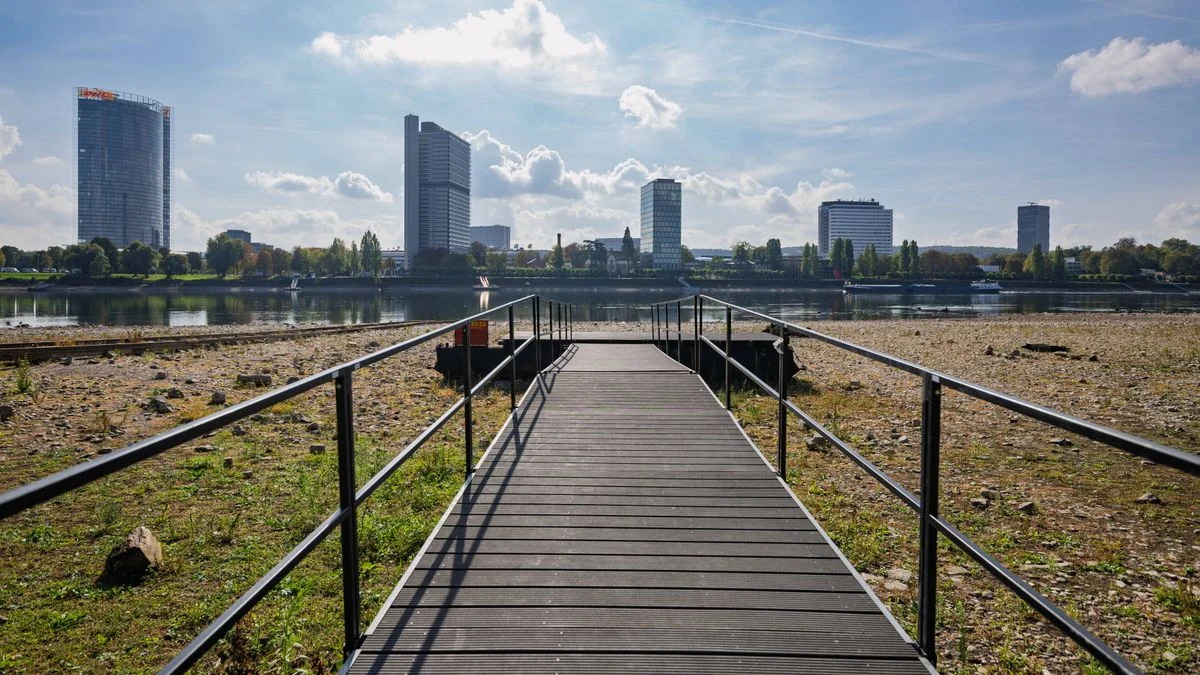
Germany is grappling with the profound implications of critically low water levels in its vital waterways, a crisis that has profoundly disrupted inland navigation and sent ripples through the national economy and delicate ecosystems. Rivers like the Rhine, often described as the backbone of European logistics, and major lakes such as Lake Constance, have seen their depths diminish to alarming rates this summer. This environmental stressor is far more than a seasonal inconvenience; it is, according to Federal Environment Minister Steffi Lemke, a stark indicator of a broader, more menacing trend demanding a radical re-evaluation of the nation’s relationship with water.
"The situation on the Rhine and Lake Constance represents a dramatic burden, not only for nature but also for the economy," Minister Lemke stated in an interview with the Kölner Stadt-Anzeiger. She underscored that these visibly stressed water bodies are merely symptoms of a larger, evolving environmental reality – climate change and its escalating impact on Germany’s water resources. The minister stressed the urgent need for Germany to adopt a fundamentally different approach to water management, moving away from historical practices that prioritized rapid drainage towards a paradigm of retention and ecological restoration.
The economic ramifications of the low water levels are immediate and severe. Inland shipping, a crucial component of Germany’s industrial supply chain, has been forced to operate with significantly reduced cargo capacities. This impacts the transport of essential goods, from raw materials like coal and chemicals to finished products, leading to delays, increased costs, and potential bottlenecks. Beyond the economic sphere, the ecological toll is equally concerning, threatening biodiversity, altering habitats, and exacerbating the effects of drought on forests and agricultural lands.
In response to this escalating crisis, Minister Lemke has issued a pointed call to action for Germany’s federal states. She urged them to channel substantial portions of the "Sondervermögen" – a special federal fund – into modernizing and fortifying water infrastructure. Her message was unequivocal: "The availability of water is a central factor for security and economy," highlighting the strategic importance of robust water management for national resilience. This sentiment underscores a growing recognition within the government that water security is not just an environmental issue but a fundamental pillar of national stability and prosperity. The urgency of this call is further amplified by warnings from the Federal Network Agency, which has cautioned that sustained low water levels could eventually impact the country’s energy supply, particularly the delivery of coal to power plants.
Chronology
The current water crisis, while acutely felt this summer, is the culmination of decades of environmental transformation and a series of increasingly severe drought years. Historically, Germany’s water policy, like that of many industrialized nations, was largely dictated by a pragmatic need to control nature for human benefit. For centuries, the prevailing philosophy revolved around efficiently draining water from landscapes, channeling rivers, and reclaiming wetlands. This approach, often celebrated as progress, aimed to facilitate agriculture, urban development, and industrial expansion. Rivers were straightened, wetlands were dried out for cultivation or construction, and water was quickly diverted to prevent flooding, effectively optimizing land use at the expense of natural water retention capacities.
The Rhine, in particular, stands as a testament to this historical approach. Major engineering projects in the 19th and 20th centuries, such as the "Rhine straightening" initiatives led by engineers like Johann Gottfried Tulla, transformed the river from a meandering, braided waterway into a highly regulated channel. While these interventions improved navigability and reduced flood risks for nearby settlements, they also disconnected the river from its natural floodplains, accelerating water flow and reducing its ability to naturally store water.
The first significant alarm bells regarding changing water patterns began to ring more insistently in the early 21st century, particularly with notable dry periods in 2003. However, the years 2018, 2019, and 2022 marked a turning point, ushering in a series of "drought summers" of unprecedented intensity and duration. The summer of 2018, for instance, saw the Rhine drop to historic lows, causing widespread disruption to shipping and prompting emergency measures. These events were no longer isolated anomalies but began to reveal a clear pattern of increasing aridity and altered precipitation regimes, consistent with climate change projections for Central Europe.
This summer’s crisis followed a winter and spring characterized by lower-than-average snowfall in the Alps and reduced rainfall across much of Germany. The melting glaciers in the Alpine regions, historically crucial suppliers of meltwater to rivers like the Rhine during drier months, are rapidly receding, diminishing this natural buffer. As the summer progressed, persistent high temperatures and minimal rainfall exacerbated the situation, pushing river levels to critical thresholds. Barges on the Rhine were forced to reduce their loads by as much as 50-70% to navigate the shallower channels, leading to significant delays and cost increases. The escalating frequency and severity of these events have shifted the public and political discourse from managing individual drought incidents to recognizing a systemic, long-term challenge that demands a fundamental paradigm shift in water management strategies.
Supporting Data
The economic and ecological repercussions of Germany’s water crisis are substantial and multifaceted, providing compelling evidence for the urgent need for a new water strategy.
Economic Impact:
The Rhine is a critical artery for European trade, connecting the industrial heartlands of Germany, Switzerland, France, and the Netherlands to the North Sea ports. Annually, over 300 million tons of goods are transported on German waterways, with the Rhine accounting for a significant portion. During periods of low water, the economic consequences are severe:
- Shipping Surcharges: Shipping companies levy "low water surcharges" to compensate for reduced cargo capacity, higher fuel consumption per ton, and the need for more vessels. These surcharges can add significantly to logistics costs, sometimes increasing them by hundreds of percent for certain routes.
- Supply Chain Disruptions: Industries heavily reliant on inland shipping, such as the chemical, steel, automotive, and energy sectors, face bottlenecks. Companies like BASF, ThyssenKrupp, and various power utilities have reported operational challenges due to difficulties in receiving raw materials or dispatching finished products. Some have resorted to more expensive and less efficient alternatives like rail or road transport, which themselves face capacity constraints.
- Agricultural Losses: Drought conditions directly impact agriculture, leading to reduced crop yields, increased irrigation costs (where possible), and financial losses for farmers. The German Farmers’ Association has repeatedly warned of substantial damages, sometimes running into billions of euros in severe drought years.
- Tourism and Recreation: Low water levels can also affect tourism, particularly river cruises and water sports, leading to cancellations and economic losses for affected regions.
Ecological Impact:
The ecological toll of diminished water levels extends across various ecosystems:
- Aquatic Life: Fish populations suffer from reduced habitat, higher water temperatures (which decrease oxygen levels), and increased concentration of pollutants. Species adapted to cooler, oxygen-rich waters are particularly vulnerable.
- Wetlands and Floodplains: These vital ecosystems, critical for biodiversity and natural water purification, dry out, losing their unique flora and fauna. The absence of regular inundation prevents natural regeneration and impacts groundwater recharge.
- Forest Health: Forests, especially those in traditionally moister areas or along riverbanks, experience severe stress. Trees weaken, making them more susceptible to pests and diseases. The widespread tree mortality observed in German forests in recent years is partly attributable to prolonged drought.
- Groundwater Depletion: Low river levels often correlate with declining groundwater tables, which are crucial for drinking water supply, agriculture, and maintaining base flow in smaller streams.
Climate Science Context:
The increasing frequency and intensity of droughts are directly linked to climate change.
- Altered Precipitation Patterns: Climate models project a shift in precipitation patterns for Central Europe, with more intense rainfall events in winter and spring, followed by prolonged dry spells in summer. This leads to rapid runoff rather than gradual absorption and replenishment.
- Reduced Snowmelt: The Alps, traditionally a "water tower" for many European rivers, are experiencing rapid glacier retreat and reduced snowpack. This significantly diminishes the meltwater contribution to rivers during critical summer months, exacerbating low flow conditions.
- Increased Evaporation: Higher average temperatures lead to increased evaporation from soil, water bodies, and plants, further reducing available water.
- Data Trends: Studies by the German Federal Institute of Hydrology (BfG) and other research institutions show a clear trend of decreasing average water levels in major rivers over the past decades, particularly during summer. For instance, the Rhine’s average low-water mark has progressively declined, and the duration of low-water periods has extended.
Energy Sector Specifics:
The Federal Network Agency’s warning highlights a critical intersection of water scarcity and energy security. Many coal-fired power plants, particularly in southern Germany, rely on barges for the delivery of coal. When river levels are too low, these barges cannot carry their full capacity, or in extreme cases, cannot navigate at all.
- Reduced Deliveries: This forces power plant operators to either draw on existing coal stockpiles (which are finite) or seek alternative, often more expensive and logistically challenging, transport methods like rail. Rail capacity, however, is limited and prioritizing coal transport can displace other goods.
- Cooling Water Issues: Beyond fuel transport, power plants also require significant amounts of water for cooling. Low river levels mean warmer river water, which reduces the efficiency of cooling systems and can lead to operational restrictions or even temporary shutdowns if environmental discharge limits for heated water are exceeded. While the Agency has noted no immediate impact on power plant availability, a prolonged crisis could strain the grid, especially in conjunction with the ongoing energy transition away from fossil fuels.
Official Responses
The gravity of the water crisis has prompted a robust response from the German government, spearheaded by Federal Environment Minister Steffi Lemke, who is advocating for a transformative shift in national water policy.
Minister Lemke’s Vision: A Paradigm Shift
Minister Lemke’s core message is that Germany must abandon its historical approach of rapid water drainage and embrace a new strategy focused on "retaining water in the landscape." This represents a profound philosophical shift from controlling water to working with natural systems.
-
"Retain Water in the Landscape": This overarching principle is the cornerstone of the proposed new water management strategy. It acknowledges that the traditional engineering solutions designed to quickly channel water away are no longer suitable in an era of climate change, where water scarcity is a growing threat. Instead, the focus is on enhancing natural water storage capacities within the landscape itself.
-
Rewetting Moors (Moorvernässung): This is a critical component of the strategy. Moors (or peatlands) are natural sponges that can store vast amounts of water. Historically, many moors in Germany were drained for agriculture, forestry, or peat extraction, releasing significant amounts of stored carbon dioxide and destroying unique habitats. Rewetting these dry moors involves restoring their natural hydrological conditions. This not only increases water retention in the landscape, providing a buffer against droughts, but also reactivates their function as powerful carbon sinks, crucial for climate mitigation, and restores vital biodiversity.
-
Giving Rivers More Space (Flüssen mehr Raum geben / Auenrenaturierung): This refers to the restoration and creation of natural floodplains (Auen). By removing artificial embankments and allowing rivers to meander and seasonally flood adjacent areas, several benefits are achieved. Floodplains act as natural reservoirs, absorbing excess water during heavy rainfall events and slowly releasing it during dry periods, thus moderating both floods and droughts. They also recharge groundwater, improve water quality through natural filtration, and create diverse habitats for flora and fauna, enhancing ecological resilience.
-
Converting Forests to Stable Mixed Forests (Wälder zu stabilen Mischwäldern umbauen): Monoculture forests, particularly those dominated by non-native conifers, are often less resilient to drought and pest infestations. Minister Lemke’s plan advocates for transforming these into diverse, stable mixed forests composed of native tree species that are better adapted to local climatic conditions. Mixed forests generally have deeper root systems, better soil health, and higher water retention capacities, making them more effective at storing water and more resilient to climate impacts. They also contribute to greater biodiversity.
-
-
Modernizing Technical Water Infrastructure: While emphasizing nature-based solutions, Minister Lemke also acknowledged the necessity of upgrading existing technical infrastructure. This includes:
- Smart Water Grids: Implementing advanced technologies for more efficient water distribution, leakage detection, and demand management.
- Improved Reservoirs and Storage Facilities: Optimizing existing storage capacities and potentially developing new, strategically located reservoirs, while carefully considering their environmental impact.
- Wastewater Recycling and Reuse: Investing in advanced treatment technologies to enable the safe recycling of wastewater for agricultural, industrial, or even potable uses, reducing reliance on freshwater sources.
- Rainwater Harvesting: Promoting systems for collecting and utilizing rainwater, especially in urban areas, to reduce the strain on municipal water supplies.
-
Investment Call to States: The minister’s call for federal states to invest parts of the "Sondervermögen" (special federal fund) into water infrastructure highlights the need for substantial financial commitment. This fund, initially established for other purposes, is now being considered a vital resource for addressing the climate crisis, with water management emerging as a key area of focus. Lemke’s emphasis on water availability as a "central factor for security and economy" positions water infrastructure as a strategic national asset, deserving of significant investment.
Federal Network Agency’s Monitoring and Warnings:
The Bundesnetzagentur (Federal Network Agency) plays a crucial role in monitoring potential impacts on critical infrastructure. Their warning regarding the coal supply to power plants underscores the interconnectedness of water levels, logistics, and energy security. The agency’s continuous monitoring helps anticipate and mitigate potential disruptions, providing essential data for policymakers.
Upcoming Conference and EU Involvement:
A significant step in addressing the crisis is the upcoming special conference in Berlin. Minister Lemke is scheduled to meet with EU Environment Commissioner Jessika Roswall to discuss strategies for a new approach to water management. This highlights the cross-border nature of water issues, particularly for international rivers like the Rhine, and the need for coordinated European solutions. The participation of representatives from federal states, businesses, and associations signals a multi-stakeholder approach, recognizing that effective solutions require collaboration across all sectors. Discussions will likely revolve around:
- EU-level Funding and Policy Frameworks: Exploring how EU funds and policies can support national water resilience efforts.
- Cross-border River Basin Management: Enhancing cooperation among riparian states for integrated management of shared river systems.
- Sharing Best Practices: Learning from successful water management strategies implemented in other EU member states.
Implications
The current water crisis and the government’s response signal a fundamental shift in Germany’s environmental policy, carrying profound implications for its economy, society, and long-term sustainability.
Long-Term Vision: From Control to Adaptation:
The proposed "new normal" for water management in Germany represents a significant paradigm shift from an anthropocentric view of controlling water for immediate economic gain to an ecocentric approach of adapting to and working with natural hydrological cycles. This vision moves beyond reactive crisis management to proactive, systemic resilience building. It acknowledges that the era of abundant, easily accessible freshwater can no longer be taken for granted, necessitating a fundamental recalibration of human activities within the natural water budget. This will involve rethinking land use planning, agricultural practices, and industrial processes to align them with the realities of a changing climate.
Economic Transformation and Resilience:
The implications for the German economy are far-reaching. Industries that have historically relied on stable river levels for transport and cooling will need to diversify their supply chains and invest in more resilient infrastructure. This could involve greater investment in rail and road networks as alternatives, but also exploring innovative solutions such as smaller, more flexible barge fleets, or even shifting production closer to raw material sources or away from water-stressed regions. The need for smart water management and wastewater recycling will drive innovation in water technology, potentially creating new economic opportunities. However, the transition will also present challenges, requiring significant capital investment and potentially altering Germany’s competitive landscape. The agricultural sector, in particular, faces a massive transformation towards drought-resistant crops, efficient irrigation techniques, and soil health management to retain moisture.
Societal Shift and Behavioral Changes:
Addressing the water crisis will require a societal shift in awareness and behavior. Public education campaigns will be crucial to foster a deeper understanding of water’s value and scarcity. This could lead to increased adoption of water-saving measures in households, smarter garden and landscape design in urban areas, and a general cultural shift towards water conservation. Municipalities will need to invest in infrastructure that supports these changes, from smart metering to promoting rainwater harvesting in new constructions. The concept of "water footprint" for products and services might gain more prominence, influencing consumer choices.
Policy Challenges and Inter-State Coordination:
Implementing a comprehensive national water strategy is fraught with policy challenges. Water management in Germany is primarily a responsibility of the federal states (Länder), which necessitates robust inter-state coordination and a unified strategic framework from the federal government. Harmonizing regulations, sharing best practices, and ensuring equitable distribution of resources and burdens across different regions will be complex. Funding mechanisms, particularly how the "Sondervermögen" will be allocated and utilized, will require careful negotiation and transparent oversight. Balancing competing interests – for example, between agriculture’s need for irrigation, industry’s demand for process water, and environmental protection – will be a continuous challenge requiring nuanced policymaking and conflict resolution. The legal framework surrounding water rights and usage may also need to be re-evaluated and updated to reflect the new realities of scarcity.
Future Outlook and Germany as a Model:
The urgency of implementing these changes cannot be overstated. Failure to act decisively risks more severe economic disruptions, ecological collapse in affected regions, and potential social unrest over water scarcity. By embracing a holistic and adaptive approach to water management, Germany aims not only to safeguard its own future but also to potentially serve as a model for other European nations and industrialized economies facing similar climate-induced water challenges. The collaboration with the EU Environment Commissioner underscores the broader European dimension of this crisis. Integrated river basin management, cross-border data sharing, and joint research initiatives could emerge as key areas of cooperation, establishing Germany as a leader in climate adaptation and sustainable resource management. The journey will be long and complex, but the current crisis has made it unequivocally clear: Germany’s future hinges on its ability to forge a new, sustainable relationship with water.


















