As global temperatures climb, the world’s glaciers are retreating at an unprecedented pace. While the phenomenon of glacial melt is well-documented in academic literature, a new interactive tool developed by researchers at ETH Zurich offers a sobering, hyper-local perspective on what the future holds for over 200,000 glaciers across the globe.
The Reality of the Melt: A Digital Window into Climate Change
For decades, scientists have warned of the catastrophic impact of anthropogenic global warming on the world’s cryosphere. Now, a research team led by glaciologist Lander Van Tricht at ETH Zurich has bridged the gap between complex climate modeling and public accessibility. They have launched an interactive world map that allows users to zoom into individual glaciers, view their surroundings—including nearby hiking trails and mountain huts—and simulate their future based on varying temperature increase scenarios.
The tool provides a visceral, high-resolution look at the future of our planet’s ice. By toggling between global warming projections of 1.5°C, 2°C, 2.7°C, and 4°C above pre-industrial levels, users can witness the projected lifespan of specific ice masses. The message is clear: the survival of these geological giants is intrinsically tied to the speed and efficacy of global decarbonization efforts.
Chronology of a Disappearing Landscape
The trajectory of glacial loss is not a distant, abstract problem for future generations; it is a rapid process already well underway.
- Pre-Industrial Era to Present: For thousands of years, glaciers acted as stable reservoirs of freshwater. However, since the mid-20th century, the rate of ice loss has accelerated exponentially.
- The Current Decade: We are currently witnessing the "death" of smaller glaciers. In many mountain ranges, the seasonal accumulation of snow is no longer sufficient to compensate for the summer melt, leading to a permanent negative mass balance.
- The Next Two Decades: The ETH Zurich model indicates that within the next 20 years, many smaller glaciers in temperate zones—including those in the European Alps and Germany—will reach a "point of no return," regardless of aggressive climate policy interventions.
- 2050 and Beyond: Under current emission trajectories, many mid-latitude glaciers are projected to be entirely unrecognizable or extinct by mid-century.
- 2100: In high-warming scenarios, the map shows that the vast majority of the world’s glaciers, including those in Greenland and the Antarctic fringes, will face severe depletion or total disappearance by the turn of the next century.
The Case of Germany’s Last Glaciers
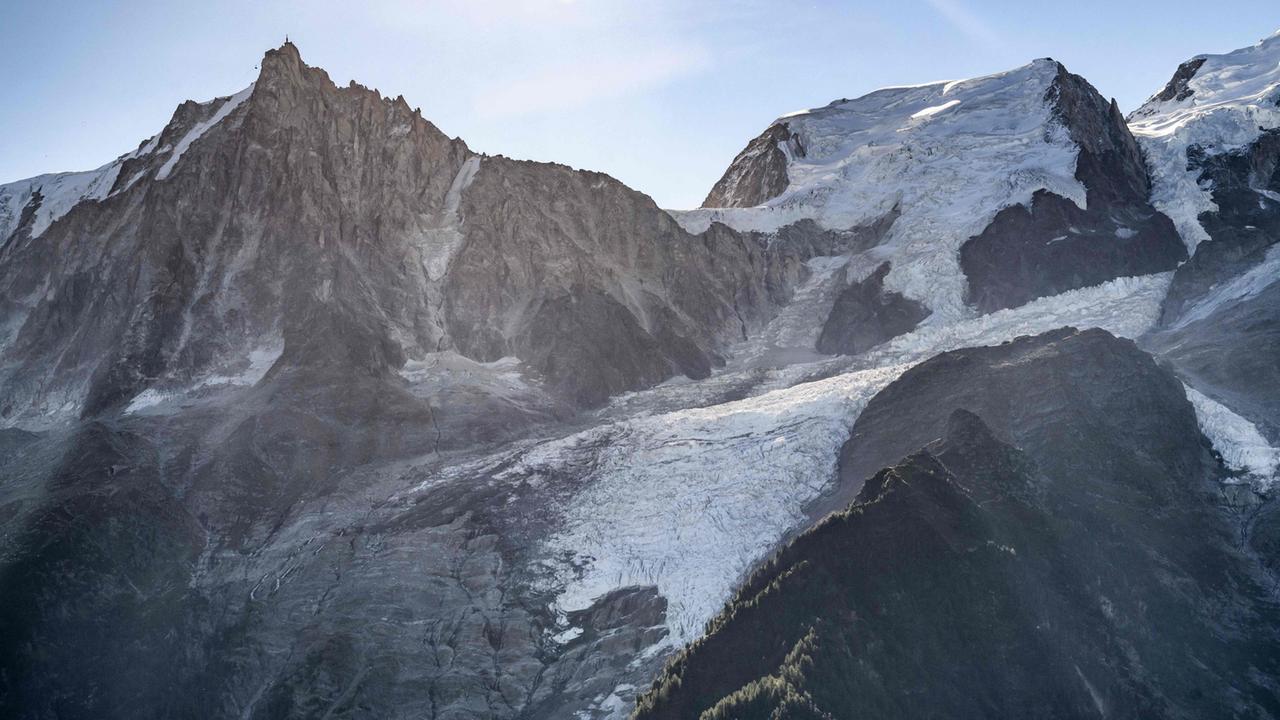
The situation in Germany serves as a poignant microcosm of the global crisis. Germany currently hosts four distinct glaciers: the Schneeferner, the Höllentalferner, the Blaueis, and the Watzmann. According to the new data, all four are marked in red or orange, signaling an inevitable decline.
The Höllentalferner, situated on the Zugspitze, is a primary example of this rapid degradation. Under a 1.5°C warming scenario, it is projected to vanish within 22 years. Under a 2.7°C scenario—a trajectory currently deemed "realistic" by many climate analysts—the glacier is expected to disappear in just 18 years. The loss of these glaciers marks the end of a geological era for Germany, leaving behind barren rock faces where ice has persisted for millennia.
Supporting Data: Global Scenarios and Regional Impacts
The ETH Zurich project aggregates vast datasets to provide a granular look at regional outcomes. The implications for the Alps are particularly dire:
- 1.5°C Scenario: Only 12% of current Alpine glaciers are projected to survive by 2100.
- 2°C Scenario: This figure drops to a mere 8% survival rate.
- 4°C Scenario: The Alps are projected to be virtually ice-free by the end of the century.
These projections are not merely statistical exercises; they are based on rigorous glaciological modeling that accounts for topography, aspect, and altitude. Even in regions previously thought to be more resilient, such as the high-latitude ice fields, the data shows that no region is immune to the cascading effects of global temperature increases.
Implications: More Than Just Scenery
While the loss of glaciers is often lamented for its impact on tourism and the aesthetic beauty of the world’s mountain ranges, the implications for human society are far more pragmatic and severe.
1. The Crisis of Water Security
As Lander Van Tricht emphasizes, "Glaciers are natural water storage units." They function as a "water tower" for the planet, capturing snow in the winter and releasing it as meltwater during the hot, dry summer months when it is most needed. This natural regulation is vital for:
- Hydropower Generation: Many nations rely on glacial runoff to maintain consistent electricity production.
- Agricultural Irrigation: Millions of farmers in regions like the Himalayas, the Andes, and the Alps rely on glacial melt to feed crops during the peak growing season.
- Ecosystem Stability: Rivers fed by glaciers maintain a consistent temperature and flow, which is essential for biodiversity. As glaciers disappear, these rivers face both seasonal drying and temperature spikes, threatening local aquatic species.
2. Geological Instability
The retreat of ice leaves behind unstable slopes. The lack of glacial "buttressing" can lead to increased frequency of landslides, rockfalls, and debris flows, endangering communities and infrastructure located in high-altitude valleys.
3. The Feedback Loop
The disappearance of glaciers contributes to the "albedo effect." Ice and snow reflect a high percentage of solar radiation back into space. As this white surface is replaced by dark rock or water, the earth absorbs more heat, further accelerating the warming process—a dangerous feedback loop that makes future mitigation even more difficult.
Official Responses and the Path Forward
The scientific community has largely responded to the release of this interactive map with a mix of resignation and renewed urgency. Organizations like the IPCC (Intergovernmental Panel on Climate Change) have long warned that the window to prevent the most catastrophic outcomes is closing.
Policy experts argue that the ETH Zurich map provides a vital tool for policymakers. By visualizing the specific impact of 1.5°C versus 4°C, the map transforms abstract policy goals into tangible, visible results. It forces a conversation about "mitigation vs. adaptation." While some glacial loss is now baked into the system due to historical emissions, the difference between a 1.5°C future and a 4°C future represents the difference between a world with some glacial remnants and a world where the cryosphere has been fundamentally dismantled.
Conclusion
The project by Van Tricht and his colleagues is more than an academic achievement; it is a digital witness to a changing planet. As we look at the red-coded glaciers on our screens, we are looking at the direct consequences of industrial progress.
The glaciers are not merely dying; they are signaling that the environment upon which human civilization was built is undergoing a radical shift. The question is no longer whether we can save every glacier—the data shows that many are already lost—but how quickly we can stabilize the global climate to prevent the total collapse of the systems that rely on these frozen reservoirs. The interactive map serves as a stark, unavoidable reminder: the future of our planet’s ice is not written in stone, but in the emissions data we generate today.