In a move that has sent ripples through the Catholic landscape of Eastern Germany, the Diocese of Dresden-Meißen announced on September 2, 2026, that Bishop Heinrich Timmerevers has officially resigned from his post. At 74 years old, the Bishop’s decision to step down prematurely brings an end to a decade-long tenure marked by both humble pastoral outreach and intense institutional challenges.
The announcement, confirmed by the Vatican, notes that Pope Leo XIV has formally accepted the resignation. This action triggers a "Sede Vacante" (Latin for "empty seat"), effectively leaving the bishop’s chair at the Dresden Cathedral vacant until a successor is appointed and consecrated.
The Weight of Office: A Personal Decision
For Bishop Timmerevers, the departure is rooted in the physical and emotional toll of his ministry. In a candid statement released by the diocese, he acknowledged the strain of his responsibilities. "I feel that the multifaceted challenges and tasks involved in this responsibility have demanded an enormous amount of strength," he noted.
Timmerevers expressed a desire to pass the torch, stating his intent to "hand over the leadership of the Diocese of Dresden-Meißen into younger hands." Eschewing the traditional retirement paths often taken by high-ranking clergy, the outgoing Bishop has announced plans to remain in Dresden, opting for a quiet life in a private apartment.

A Chronology of Leadership
Heinrich Timmerevers was appointed to lead the Diocese of Dresden-Meißen in 2016 by Pope Francis, taking over a region where the Catholic Church represents a distinct minority—a "diaspora" diocese where Catholics make up only about 3.5 percent of the population.
- 1980: Ordination to the priesthood in the Münsterland region.
- 2001: Appointed Auxiliary Bishop of Münster, where he gained significant experience in youth and pastoral outreach.
- 2016: Installed as Bishop of Dresden-Meißen, tasked with managing a shrinking congregation in a secularized environment.
- August 2026: Conducted his final major public appearances, including a school year opening in Zwickau, where he emphasized the importance of humility and service over titles.
- September 2, 2026: Formal acceptance of his resignation by the Vatican.
The Mechanics of Transition
Following the declaration of Sede Vacante, the Diocese of Dresden-Meißen enters a period of administrative flux. According to Canon Law, the governing body of the diocese—the Cathedral Chapter, consisting of nine priests—is tasked with electing an interim administrator within the next ten days. This administrator will hold the reins of the diocese, ensuring the continuation of essential services and governance until the Vatican completes the arduous, often year-long process of vetting and appointing a new bishop.
This period of transition is particularly sensitive for the diocese, as it coincides with the planned celebration of Timmerevers’ 25th anniversary of his episcopal ordination, which was scheduled to be attended by high-ranking church officials from across the nation. The event now takes on a valedictory tone.
From Münsterland to the Heart of Saxony
Timmerevers’ career was defined by his transition from the deeply Catholic Münsterland to the secular, post-industrial landscape of Saxony. His time in office was characterized by a pragmatic approach to the reality of the Church in East Germany: a landscape of declining membership, diminishing financial resources, and the need for radical structural changes.
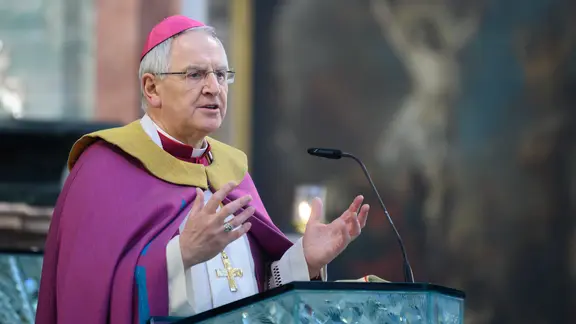
During his tenure, he navigated the complex balancing act of maintaining the Church’s visibility in a predominantly non-religious society while managing the internal decay of traditional parish structures. His supporters often point to his pastoral, down-to-earth demeanor as a key asset in bridging the gap between the institutional Church and the faithful.
Navigating Controversy: The Struggle for Accountability
However, the narrative of his tenure is not without significant friction. A defining, and often contentious, chapter of his leadership involved the handling of sexual abuse cases within the Church. The process of uncovering and addressing historical abuse has been a source of intense public scrutiny and internal debate.
In recent months, the diocese faced sharp criticism from victims’ advocacy groups. Most notably, Sabine Otto, a prominent advocate from Chemnitz, publicly challenged the diocese’s approach to the crisis. The criticism centered on the alleged lack of genuine dialogue with survivors and disputes regarding the independence and composition of the diocese’s investigative commission. While the Bishop’s office maintained that they had provided sufficient avenues for survivor participation, the tension remained a persistent shadow over his final years in office.
Implications for the Future
The resignation of Bishop Timmerevers raises critical questions about the future trajectory of the Diocese of Dresden-Meißen. The Church in Eastern Germany is at a crossroads; it must decide how to remain relevant in a region that is among the most secularized in the world.

Strategic Challenges Ahead:
- Financial Sustainability: With a shrinking tax base, the new administration will need to continue the difficult task of consolidating parish assets and streamlining operations.
- Trust Reconstruction: The new Bishop will inherit the delicate task of reconciling with abuse survivors. Restoring trust in the institution is perhaps the most urgent challenge for the incoming leadership.
- Cultural Integration: The Church must decide whether to continue its traditional role as a community pillar or to pivot toward a more mission-oriented, grassroots approach that appeals to a younger, more diverse generation.
Final Reflection: A Legacy of Humility
Even in his final days of office, Timmerevers remained consistent in his messaging. At the Peter-Breuer-Gymnasium in Zwickau, he told students that "titles and status do not make a person valuable; what is decisive is the willingness to take responsibility for others."
As he transitions into retirement, his legacy remains a subject of ongoing evaluation. He leaves behind a diocese that is smaller than the one he inherited, yet one that has been forced to confront its own vulnerabilities with unprecedented transparency. Whether this foundation will prove sufficient for his successor remains to be seen.
For the Catholics of Saxony, the coming months of the "empty seat" will be a time of prayer and anticipation, as they wait to see who will lead them through the next chapter of their history. The "younger hands" that Timmerevers spoke of will certainly have their work cut out for them, stepping into a role that requires not just spiritual leadership, but the resilience of a crisis manager.
Reported by the MDR Saxony editorial team. Contributions by regional correspondents on church affairs and ecclesiastical law.