
The Call of the High Pastures
In the high-altitude hamlet of Videgg, perched 1,550 meters above the sprawling tourism hub of Schenna in South Tyrol, the landscape is defined by verticality. Here, the modern comforts of the valley—the luxury wellness hotels and the million-plus annual overnight stays—feel like a distant memory. Instead, the skyline is dominated by the Hiaslhof, a mountain farmstead where 15 dairy cows, a handful of breeding calves, and free-roaming chickens dictate the rhythm of life.
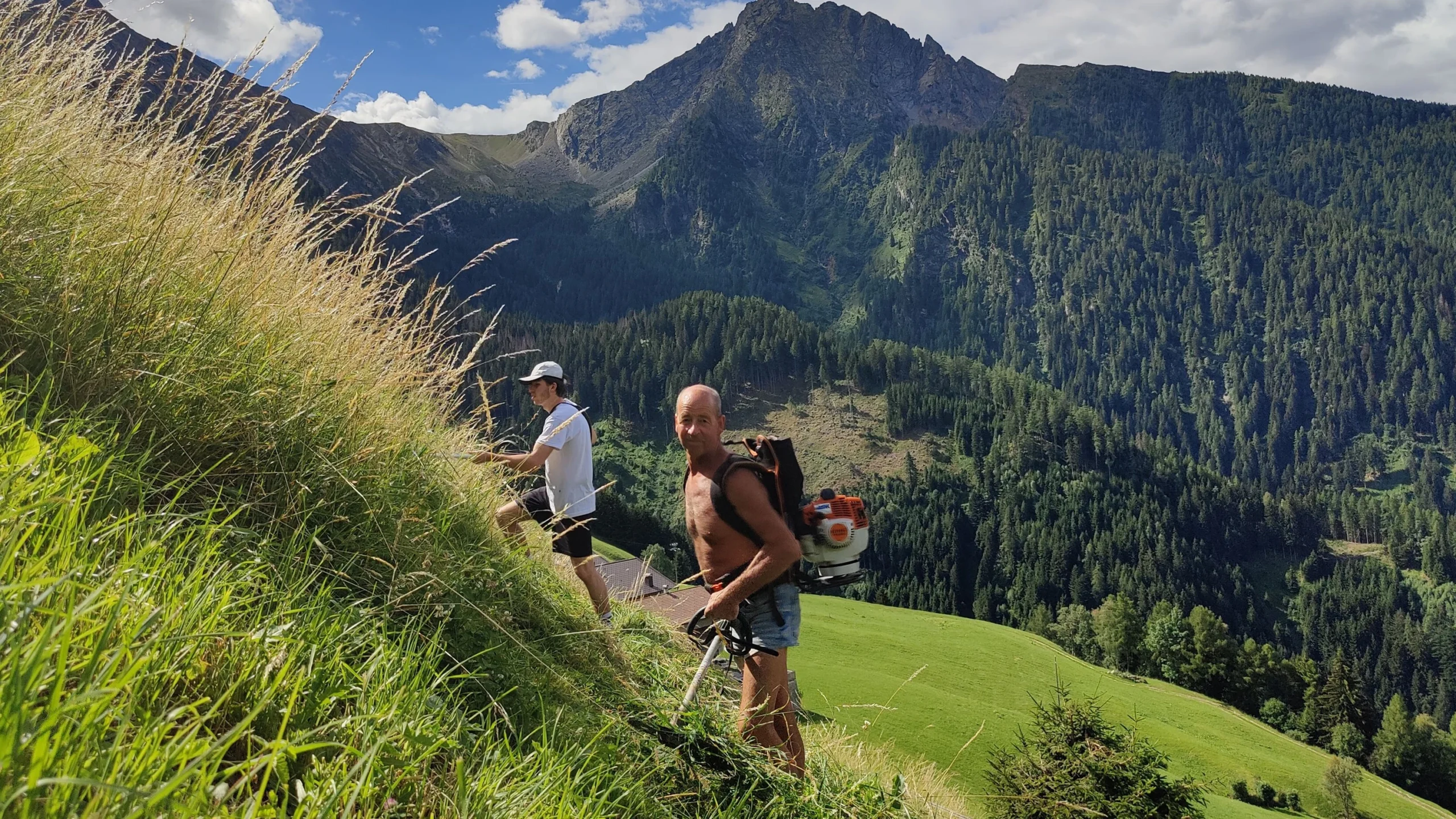
For volunteers like Phil, an 18-year-old from Hanover, and myself, the reality of mountain farming is a stark departure from the leisure hiking we are accustomed to. Upon our arrival, the contrast was immediately visible: the farm owner, Edi Pichler, is tanned from head to toe, his physique hardened by decades of maneuvering on steep slopes. By comparison, we arrived looking distinctly pale, our modern outdoor gear looking suspiciously pristine. As I gestured to the surrounding summits, attempting to establish my alpine credentials, Edi and his wife, Edith, offered only the polite, knowing smiles of people who understand that mountain climbing for sport is a world away from mountain farming for survival.
Chronology of an Alpine Workday
The life of a volunteer on the Hiaslhof is governed by the sun and the terrain. Our days begin before the dew has fully evaporated from the steep meadows.
The Morning Ascent: The workday begins with the familiar sounds of the stable, followed by the trek to the "Loch"—a particularly treacherous, undulating meadow that is inaccessible to mechanical mowers. Here, manual labor is the only option. Edi, ever the mentor, demonstrates the use of a battery-powered brush cutter for Phil, while he shoulders a heavier, gasoline-powered unit. His instructions are precise and safety-oriented: "Always work from the bottom up. Cut across the slope, and when you turn, pivot toward the mountain side—otherwise, the weight will drag you down."
Mid-Day Exhaustion: By midday, the reality of the work sets in. Under a punishing sun, the monotony of raking—throwing the grass, gathering it, and moving it to flatter ground—becomes a meditative yet grueling physical test. My gym-trained muscles quickly prove inadequate for the rugged reality of South Tyrolean farming. When I mention my routine of treadmill training to Edith, she offers a gentle reality check: "This is different. My friends who go to the gym still struggle to keep up when we go mushroom picking on these inclines."
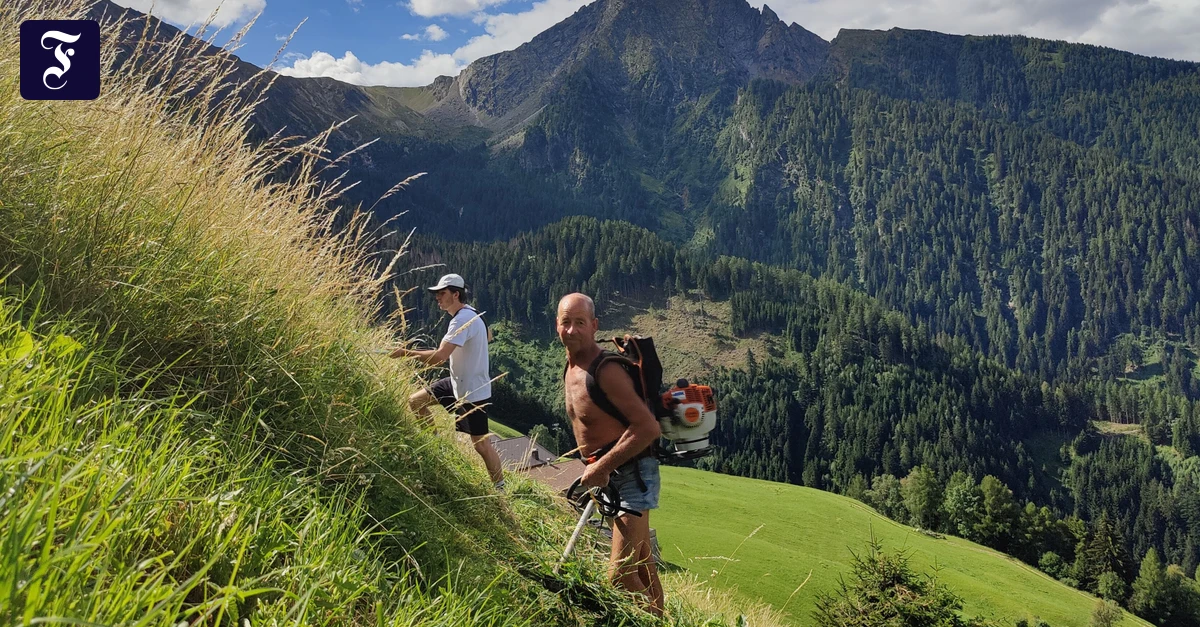
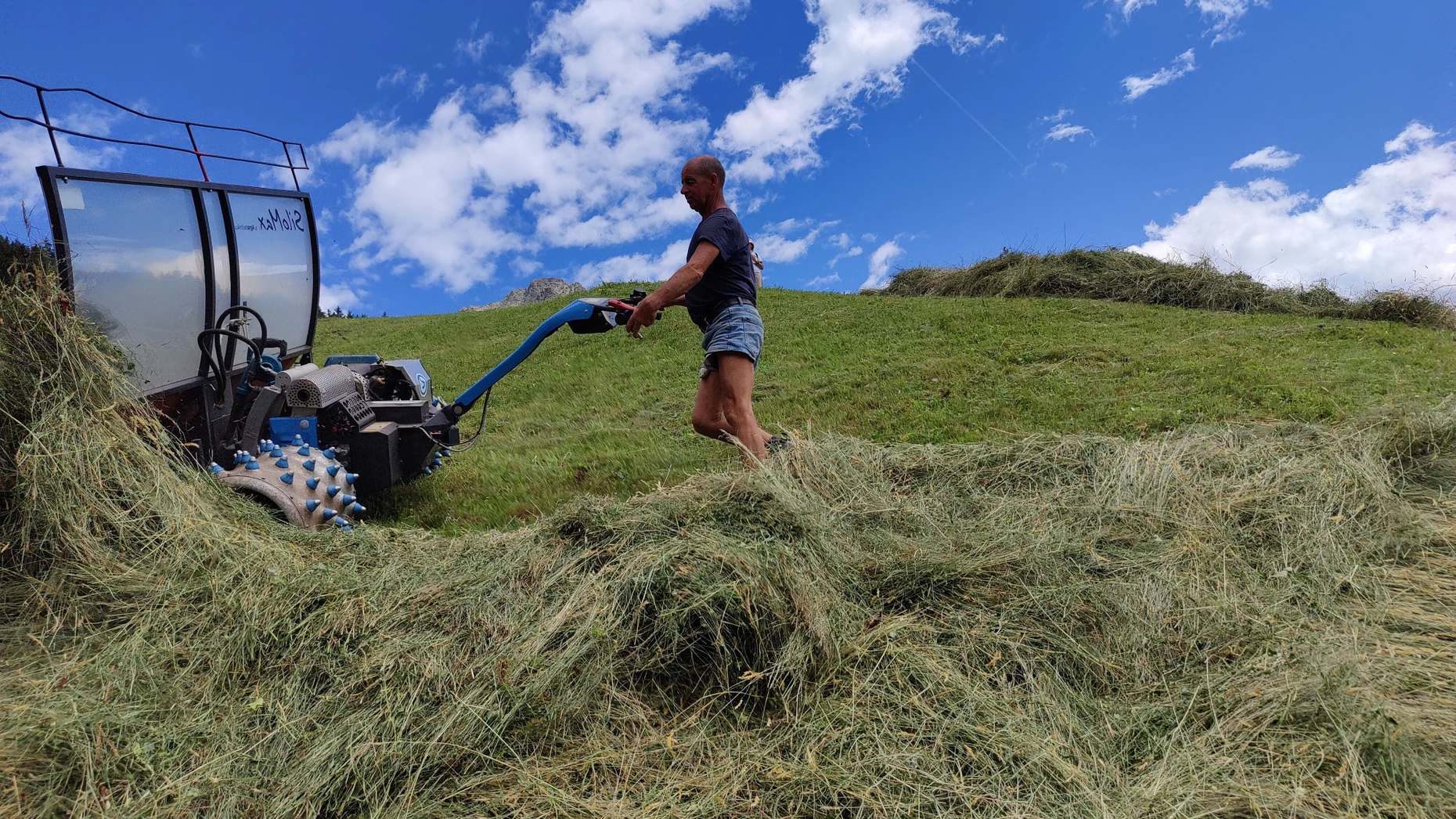
Afternoon Mechanization: As the day progresses, we move to higher, more accessible fields where Edi employs a "hay pusher." This device functions much like a snowplow, forming the hay into long, manageable rows. Our job is to follow the machine, raking the remnants and feeding them into the path of the plow. By this point, the physical toll is evident; my shoulders ache, and the sheer persistence of Edith—who refuses to leave a single blade of grass behind—serves as a constant reminder of the standard of perfection required on a working farm.
Supporting Data: The Economics of the Steep
The necessity for volunteers on the Hiaslhof is not a matter of luxury, but of survival. In South Tyrol, farmers are categorized by "Erschwernispunkte" (hardship points), a metric that accounts for terrain, accessibility, and the feasibility of using machinery.
- The Threshold: Farmers with 60 or more hardship points are eligible to request volunteer assistance.
- The Hiaslhof Reality: With 130 points, the Hiaslhof is significantly above the threshold.
- National Context: There are approximately 250 farms in South Tyrol that rely on these organized volunteer programs annually.
Edi’s background as a former professional chef provides him with a unique perspective on stress. Having left the high-pressure environment of the culinary world to return to his roots, he acknowledges that the farm is technically too large for a "side-hustle" operation. "With the guest house, one could earn more money," he explains, "but I prefer being a farmer." The farm’s survival is a delicate balance of physical endurance and community support, especially given the health challenges that have touched the family, including a scare with a tumor that necessitated external help during a critical harvest season.
Official Perspectives: The Volunteer Network
The organization behind these deployments, the Verein Freiwillige Arbeitseinsätze, acts as a vital bridge between urban volunteers and rural mountain families. Monika Thaler, the coordinator, describes the hosts as "fine, accommodating people." This is not merely public relations; it is a sentiment shared by those who have participated in the program.
The social fabric of the region is stitched together by these volunteer efforts. During our evenings on the terrace, we met two men from Upper Bavaria—former volunteers who had returned to the farm repeatedly. Their bond with the Pichlers transcended the work; they had even met their partners in the valley below, with the Hiaslhof family playing a central role in their wedding celebrations. This continuity of human connection is what sustains the small, isolated communities like Videgg, which are otherwise threatened by the slow creep of modernization and rural depopulation.
Implications: A Dying Art or a New Model?
The work on the Hiaslhof is more than just harvesting hay; it is an act of landscape preservation. If these steep meadows were not mown, the land would quickly revert to scrub, increasing the risk of avalanches and soil erosion that could threaten the villages in the valley below.
However, the future remains uncertain. As Edi notes, the physical toll is high—a fact he knows all too well, having suffered a career-altering injury from a cow during milking years ago. His ability to work is diminished, yet his resolve is not. The "Sonntagstanz" (Sunday dance) and the local festivals, such as the upcoming patronal feast of the Mariä-Heimsuchung chapel, are not just traditions; they are the glue that holds these aging farming communities together.
For the volunteer, the experience is transformative. It strips away the pretense of "outdoor adventure" and replaces it with the raw, repetitive, and deeply rewarding labor of the land. One leaves the Hiaslhof not just with sore muscles and a deeper tan, but with a profound respect for the "hardship points" that represent the true price of the mountain lifestyle.
In the end, as the sun sets over the Vinschgau valley and the Etsch river winds like a green-gray ribbon far below, the lesson of the Hiaslhof is clear: while the world below moves at the speed of tourism, life here moves at the speed of the scythe. It is a slow, rhythmic, and demanding existence, one that relies on the kindness of strangers to ensure that the traditions of the mountains do not simply vanish into the thin alpine air.