The 2026 FIFA World Cup, a tournament defined by expansion, controversy, and high-stakes drama across North America, has reached its conclusion. In a gripping final that stretched into extra time at the MetLife Stadium in New Jersey, Spain emerged victorious, securing a 1-0 win over the defending champions, Argentina. This victory not only cements Spain’s status as the preeminent power in modern football but also signals a seismic shift in the global game as the sport grapples with the pressures of rapid expansion.
The Final Act: Spain’s Strategic Masterclass
The final match was a tactical chess match that tested the nerves of both sides. For 90 minutes, the defensive discipline of Spain under manager Luis de la Fuente proved too much for Lionel Messi’s Argentina. The stalemate was finally broken in extra time by Ferran Torres, whose clinical strike silenced the Argentine faithful and etched his name into the annals of Spanish sporting history.
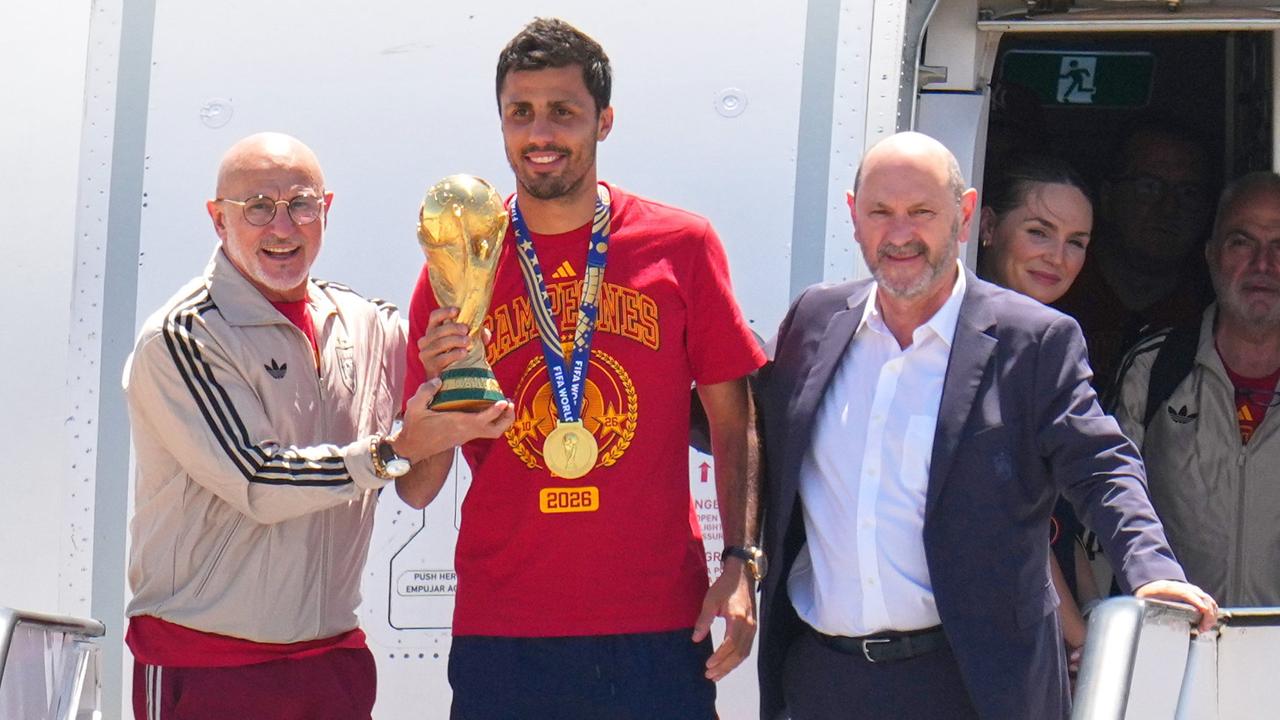
The post-match scenes were a study in contrasts. While the Spanish squad, led by captain Rodri, celebrated their hard-fought triumph, the Argentine side struggled with the bitterness of defeat. Tensions boiled over immediately after the final whistle, with Leandro Paredes involved in a heated altercation that resulted in a straight red card—a chaotic end to a match that had remained tightly contested until the final moments.
A Chronology of a Controversial Tournament
The 2026 tournament was marked by a series of events that will likely be debated for years to come. From the opening ceremonies, which featured an eclectic mix of global superstars and political figures, to the logistical hurdles faced by fans, the tournament was anything but conventional.
- July 19, 2026: The tension peaked as Lionel Messi, participating in his record-breaking sixth World Cup, led Argentina into the final against a young, hungry Spanish side. The pre-match atmosphere was marred by significant entry issues at the MetLife Stadium, where technical failures with ticket-scanning systems left thousands of fans stranded outside as kickoff approached.
- July 20, 2026: As the dust settled on the final, the global football community turned its attention to the administrative fallout. Spain’s triumphant squad returned home to a hero’s welcome in Madrid, with over a million people expected to line the streets for a victory parade, while FIFA President Gianni Infantino began looking toward the future.
FIFA’s Vision: The Push Toward a 64-Team Format
Perhaps the most significant development following the final was FIFA President Gianni Infantino’s renewed call for further expansion. Having already increased the field to 48 teams for the 2026 edition, Infantino has now suggested that the 2030 tournament could feature as many as 64 nations.
"We will see if it will be 48 teams—which was very successful—or perhaps 64," Infantino stated in an official interview. "We must discuss and analyze."
This potential shift has major implications for the 2030 World Cup, which is set to be hosted primarily by Spain, Portugal, and Morocco, with additional matches in Paraguay, Uruguay, and Argentina. If the tournament expands to 64 teams, the South American nations involved might see their role in the tournament grow, potentially hosting more matches than originally planned. Critics, however, argue that such an expansion could dilute the quality of the competition and place an unsustainable burden on host nations.
The "Gold Standard": Spain’s Dominance Across All Tiers
Spain’s victory is not an isolated success. The nation has effectively monopolized the sport over the last five years. By capturing the 2026 World Cup, Spain has now secured 17 major titles across men’s and women’s youth and senior competitions since 2022.
The synergy between the men’s and women’s programs is unprecedented. The women’s team, current world champions, has won 11 titles in this period, while the men have mirrored this success, winning the 2024 European Championship, Olympic gold, and the Nations League. This dominance is bolstered by a conveyor belt of talent, exemplified by 19-year-old Lamine Yamal. By winning both a European Championship and a World Cup before turning 20, Yamal has set a record that puts him in the company of legends like Pelé and Ronaldo Nazário.
The "Championship Ring" and the Americanization of Football
The 2026 tournament also saw the introduction of a controversial innovation: the Championship Ring. Drawing inspiration from major US professional leagues like the NBA and NFL, FIFA awarded each player on the winning team a custom-made ring, alongside a miniature replica of the World Cup trophy.
While the players seemed to embrace the gesture, the move highlights FIFA’s ongoing efforts to "Americanize" the tournament’s presentation to maximize commercial appeal. This trend was further evidenced by the high-profile halftime show and the presence of political figures like U.S. President Donald Trump, whose attendance at the final sparked audible protests from sections of the crowd.
Individual Accolades and Emerging Narratives
While team success dominated the headlines, individual performances defined the narrative arc of the tournament:
- Rodri: The Spanish midfielder was named Player of the Tournament, continuing a streak of individual success that began with his MVP award at Euro 2024.
- Kylian Mbappé: Despite France’s exit, Mbappé surpassed Lionel Messi in the all-time World Cup goal-scoring charts, finishing the tournament with 22 goals to Messi’s 21.
- Thomas Tuchel: The England manager remained a lightning rod for criticism throughout the tournament. Despite a third-place finish and a 6-4 win over France in the bronze medal match, his tactical decisions—specifically those made during the semi-final against Argentina—drew intense scrutiny from pundits and even political figures, though the English FA remains committed to his tenure through 2028.
The Human Cost and the Emotional Toll
Not all news from the tournament was positive. A tragic incident in Ciudad Rodrigo, Spain, where a 13-year-old boy lost his life during celebrations when a stone pillar collapsed, cast a somber shadow over the victory festivities.
Furthermore, the "hauch of farewell" surrounding Lionel Messi became a focal point for the Argentine public. Following the defeat, Messi posted an emotional tribute to his teammates on social media, suggesting that the journey, rather than the titles, defined his career. His potential retirement from international football has triggered a national conversation in Argentina about the end of an era.
Implications for the Future
The 2026 World Cup has left the football world at a crossroads. The economic success—exemplified by the record-breaking $50 million prize pool for the winning team—is undeniable. Yet, the push for a 64-team tournament raises fundamental questions about the soul of the sport.
As Spain begins its reign as the world’s undisputed footballing superpower, the rest of the world must adapt. The rise of Norway, led by Erling Haaland, and the continued competitive edge of South American and African nations suggest that the field is becoming more talented, even if the logistics of managing such a diverse and expansive tournament remain complex.
FIFA’s leadership, led by Infantino, remains focused on aggressive growth. Whether that growth leads to the "greatest human event in history," as Infantino claims, or a fracturing of the game’s traditional foundations, remains to be seen. For now, the world looks toward 2030, a tournament that promises to be as geographically complex as it is ambitious, with Spain at the heart of the footballing universe.
The 2026 World Cup will be remembered for the brilliance of the Spanish "Golden Generation 2.0," the tactical debates that defined the knockout stages, and the ongoing tension between tradition and commercial expansion. Football, in its most global iteration, has proven that while the game remains the same, the stage upon which it is played is changing rapidly.