BMW, the Munich-based automotive titan, finds itself navigating one of the most turbulent periods in its recent history. Caught between a cooling Chinese automotive market, geopolitical instability stemming from the Middle East conflict, and a global shift toward electrification that is proving more costly than anticipated, the company has been forced into a defensive posture. As the group recalibrates its annual outlook, the spotlight turns to its aggressive product strategy, featuring the expedited launch of the BMW i3 and the ambitious, multi-powertrain architecture of the upcoming fifth-generation X5.
Main Facts: A Financial and Strategic Re-alignment
The primary catalyst for the current scrutiny is a downward revision of BMW’s financial guidance. Faced with weakening demand in key regions, the company has lowered its operating profit margin forecast (before interest and taxes) from a previous target range of 4 to 6 percent to approximately 3 percent. This news has weighed heavily on investor sentiment; the company’s stock has endured a significant decline, losing roughly one-third of its value since the beginning of the year.
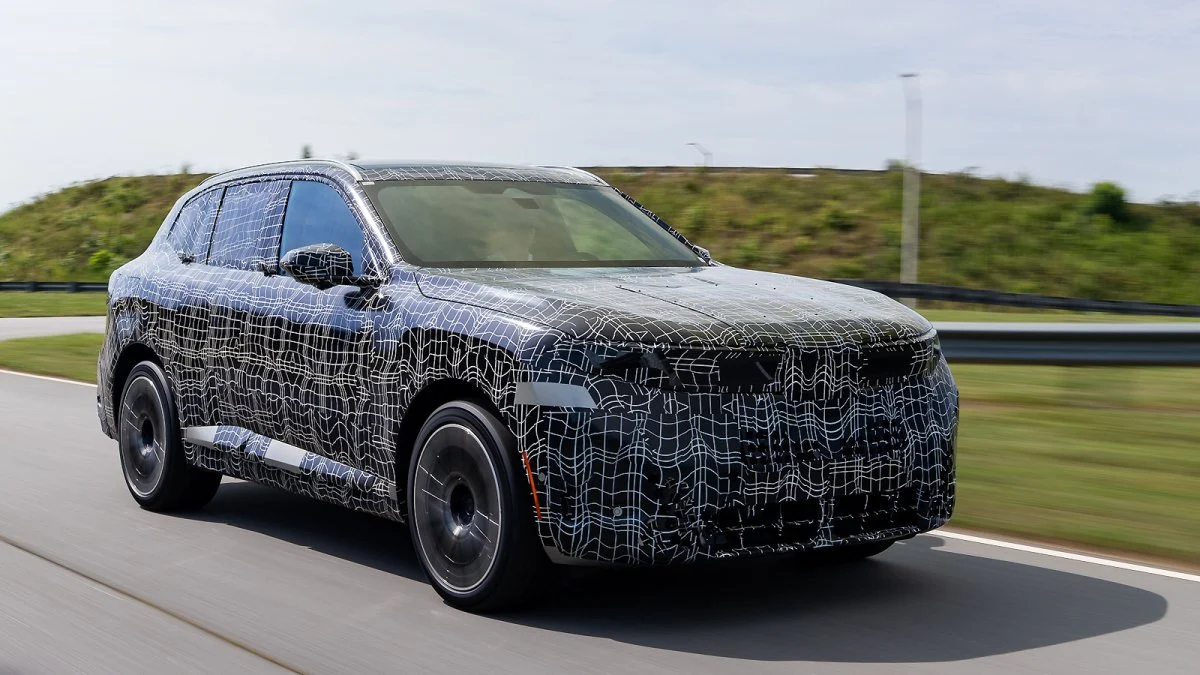
To counter these headwinds, BMW is accelerating its transition to "New Class" (Neue Klasse) technologies. This includes a tactical shift in the release schedule for the new BMW i3. Originally slated for a later debut, the order window for the new model will now open on June 18, as confirmed by reports from the Automobilwoche. Simultaneously, the engineering teams in Munich are finalizing the next generation of the flagship X5 SUV, which is set to be unveiled later this year as a cornerstone of the brand’s "technology-open" strategy.
Chronology of Challenges and Responses
The road to the current situation has been paved with shifting market dynamics:
- Q1-Q2 2024: Persistent geopolitical tensions in the Middle East begin to disrupt global supply chains and dampen consumer confidence, impacting premium automotive sales.
- Early 2024: The Chinese automotive sector, BMW’s largest market, experiences a marked slowdown, exacerbated by aggressive local competition and a shift in domestic consumer preferences toward home-grown EV brands.
- June 2024: BMW officially adjusts its fiscal outlook, citing margin pressures, and announces an accelerated timeline for the new i3 to bolster sales figures for the remainder of the fiscal year.
- Late 2024 (Projected): Official reveal of the fifth-generation BMW X5, showcasing a modular architecture that accommodates combustion, hybrid, and electric powertrains.
- 2028 (Projected): Market entry of the hydrogen-powered X5, marking a significant, if controversial, investment in fuel-cell technology.
Supporting Data: The Technical Specs of the New Portfolio
The BMW i3: 1st Edition vs. Standard Models
The upcoming i3 is positioned as a critical volume driver. While pricing for the base model remains under wraps, it is expected to hover slightly below the iX3, which enters the market in July with a starting price of 63,400 euros.
The "1st Edition" will serve as the launch vehicle, likely featuring high-end trim and a premium price point. Its technical foundation is robust:
- Powertrain: Dual electric motors producing a combined 345 kW (463 hp) and 645 Nm of torque.
- Energy Storage: A 109 kWh battery providing a WLTP range of over 900 kilometers.
- Charging: High-performance charging capability reaching up to 400 kW.
For the mainstream "i3 40" model, specifications are scaled to favor efficiency:
- Powertrain: A single rear-mounted motor generating 235 kW and 500 Nm.
- Energy Storage: An 82.6 kWh battery pack.
- Charging: Peak charging capacity of 300 kW.
- Pricing: Expected to be in the region of 62,000 euros.
The Next-Gen X5: A Modular Powerhouse
The fifth-generation X5 is the embodiment of BMW’s "technology-open" philosophy. By utilizing a highly flexible architecture, BMW intends to offer the X5 with nearly every major propulsion method: mild-hybrid gasoline and diesel engines, plug-in hybrids, battery-electric variants, and eventually, a hydrogen fuel-cell model.
The electric version of the X5 will feature massive battery capacity: 144 kWh for the North American market and 141 kWh for Europe. While specific charging speeds for the X5 have not been disclosed, analysts expect them to align with the 400 kW threshold demonstrated in the iX3. BMW has noted that, currently, these battery sizes represent the physical limits of the platform; further range increases will depend on advancements in volumetric energy density.
Official Responses and Strategic Rationale
BMW executives have consistently defended the "technology-open" approach, arguing that a one-size-fits-all transition to battery-electric vehicles (BEVs) is premature given the disparities in global charging infrastructure.
Regarding the 2028 hydrogen-powered X5, the company maintains that the fuel-cell vehicle (FCV) will utilize a "buffer battery" architecture. This design mitigates the historically sluggish response times of fuel cells during sudden acceleration, as the electric motors will draw power primarily from the battery while the hydrogen system acts as a range-extender.
However, the company remains cautious about the broader viability of hydrogen in the passenger vehicle segment. By ensuring the X5 Hydrogen shares a production line with its combustion and battery-powered siblings, BMW has effectively hedged its bets. Should consumer demand for hydrogen fail to materialize, the modular production line allows the company to scale down production without the catastrophic capital loss associated with dedicated FCV assembly facilities.
Implications: The Industry at a Crossroads
The decision to lean into hydrogen—despite widespread skepticism regarding the efficiency and cost of hydrogen infrastructure—is a high-stakes gamble. Critics point out that the energy-to-wheel efficiency of a hydrogen car is significantly lower than that of a pure BEV, and that the global hydrogen refueling network is not only sparse but currently lacks the momentum for rapid expansion.
Furthermore, the financial strain reflected in BMW’s stock performance underscores the precarious nature of the "transition years." BMW is currently spending billions to maintain internal combustion engine (ICE) development while simultaneously funding the most advanced EV battery research in its history. This "double-investment" strategy is placing extreme pressure on operating margins.
The Outlook
For BMW, the next 24 months will be a litmus test. If the new i3 and the next-gen X5 fail to capture market share in China and maintain profitability in Europe, the company may be forced to abandon its "technology-open" strategy in favor of a more aggressive, purely electric focus.
The company’s ability to remain "technology-open" depends entirely on its ability to manufacture these diverse powertrains profitably on a single line. If the cost of modularity outweighs the benefits of flexibility, BMW could find itself at a disadvantage compared to "pure-play" EV competitors.
As the industry watches, the German automaker is essentially betting that the market will not be defined by a single technology, but by the consumer’s desire for choice. Whether this bet preserves BMW’s legendary status as an engineering powerhouse or leads to a further erosion of shareholder value remains the central question of the German automotive sector. The path forward is narrow, the competition is relentless, and the margin for error is shrinking rapidly.