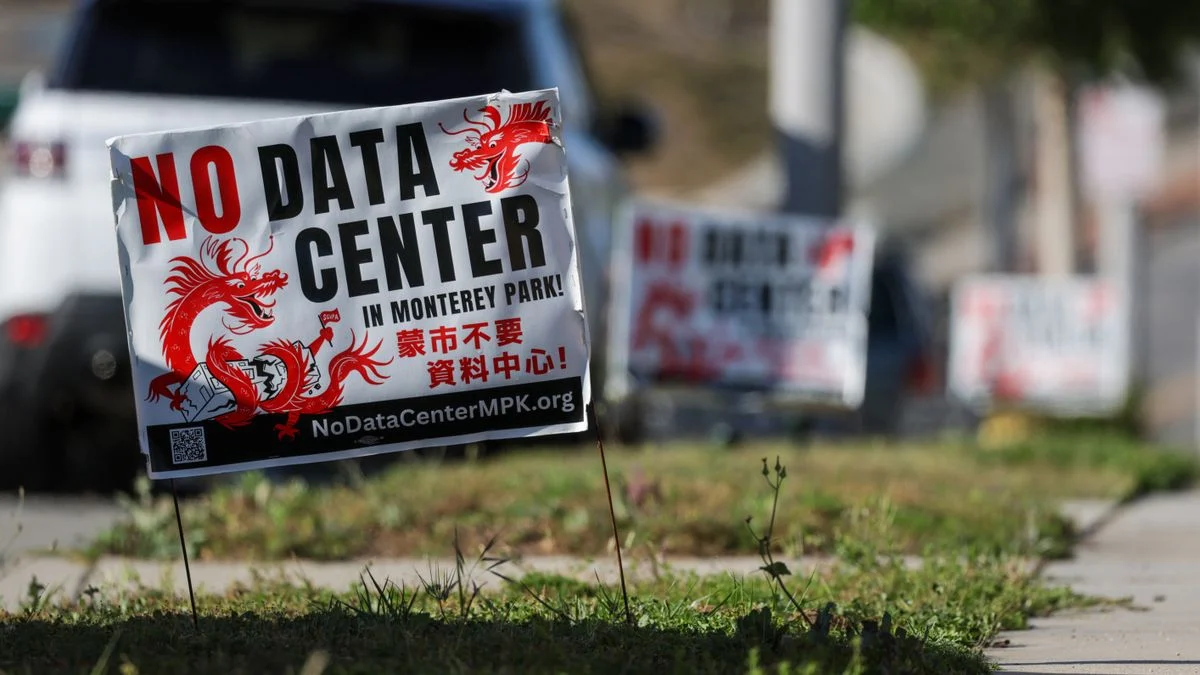
In a move that has sent shockwaves through the technology and infrastructure sectors, the residents of Monterey Park, California, have delivered a resounding "no" to the digital future. In a special election held this Tuesday, the community effectively banned the construction of data centers within city limits, marking a significant and unprecedented escalation in the "Not In My Backyard" (NIMBY) movement against the rapid expansion of artificial intelligence infrastructure.
With approximately 86 percent of voters casting ballots in favor of the ban, the message from the residents of this Los Angeles County suburb was unequivocal. While the turnout—roughly 7,600 out of 60,000 residents—was modest, the legal weight of the decision is absolute. Unlike previous instances where data center projects were stalled through litigation or administrative lobbying, this victory was secured directly at the ballot box, creating a legal hurdle that will be difficult for developers to overcome.
The Catalyst: A $39 Million Gamble
The conflict in Monterey Park began when the Australian firm HMC StratCap purchased a vacant office building for $39 million, intending to repurpose the site into a high-capacity data center. Initially, the municipal government welcomed the proposal, viewing it as a strategic win that would generate essential tax revenue and create local jobs.
However, the local enthusiasm was short-lived. As details about the massive energy and water requirements of such facilities emerged, a grassroots movement took shape. Residents, led by voices like Jackie Morrison, expressed profound concerns regarding the environmental footprint and the potential strain on local resources. "We don’t want them here. Under no circumstances," Morrison stated in an interview with CBS.
The residents’ fears were not merely speculative. Data centers are notoriously power-hungry and water-intensive, requiring constant cooling systems to prevent server overheating. As the demand for AI computation grows exponentially, these "server farms" are often viewed by nearby communities as industrial neighbors that offer little in the way of aesthetic or social value while potentially driving up electricity costs and depleting local infrastructure capacity.
Chronology of a Grassroots Uprising
The trajectory of the Monterey Park dispute serves as a case study for future infrastructure conflicts.
- The Proposal (Phase I): HMC StratCap announces its intent to acquire the office site, framing it as a revitalization project for a dormant commercial space.
- The Mobilization (Phase II): Local community groups begin identifying the specific risks associated with large-scale data hosting, including noise pollution, grid instability, and the visual blight of massive, windowless structures.
- The Legislative Standoff (Phase III): City officials, initially supportive, find themselves caught between economic development incentives and the vocal opposition of their constituents.
- The Special Election (Phase IV): Following months of debate, the city schedules a special election. On the designated Tuesday, the mandate is clear: 86 percent of participants support a permanent ban on data center zoning.
This sequence of events highlights a growing trend: the shift from boardroom negotiations to democratic, community-led intervention. By utilizing a special election, the citizens of Monterey Park have effectively removed the decision-making power from the hands of local planners and vested it in the electorate.
The NIMBY Factor: A Global Phenomenon
The term "NIMBY" (Not In My Backyard) has been used by the Los Angeles Times and other outlets to characterize the resistance in Monterey Park. However, labeling the movement as mere obstructionism may overlook the underlying systemic concerns regarding the rapid, and often opaque, expansion of the tech industry.
Across the United States, tech giants are locked in a "multi-billion-dollar arms race" to build the infrastructure required for generative AI. As these companies seek out locations that offer cheap power and connectivity, they are increasingly running into friction with local populations.
This is not a uniquely American phenomenon. In Germany, for example, the struggle has reached a fever pitch. In Maintal, near Frankfurt, residents successfully thwarted plans by the U.S.-based company Edgeconnex to build a multi-billion-euro data center complex. Similar to the situation in Monterey Park, the German opposition was driven by concerns over energy efficiency and the impact on local sustainability goals.
The Infrastructure Burden: Data Centers and Utility Strains
The tension between the digital economy and local communities centers on three core issues:
1. Energy Consumption
Modern data centers are essentially industrial-scale power consumers. They require constant, high-voltage electricity to run thousands of servers and their associated cooling fans. For a small city like Monterey Park, integrating such a facility can lead to fears of grid instability and potential rate hikes for residential customers as the utility company prioritizes the industrial load.
2. Water Usage
Advanced cooling systems often rely on massive amounts of water, which is a particularly contentious issue in drought-prone regions like Southern California. The prospect of an industrial facility consuming millions of gallons of water annually, while local residents face strict conservation measures, creates a perception of unfairness that fuels political mobilization.
3. Economic Misalignment
While companies promise "jobs and tax revenue," residents often perceive these benefits as negligible compared to the permanent disruption to their neighborhood. Most data centers are largely automated and require minimal permanent staff once operational, meaning the economic benefits for the local community are often seen as "hollow" promises that do not compensate for the loss of residential character.
Official Responses and Industry Implications
Industry analysts are watching the Monterey Park result with concern. If this model of direct-ballot intervention becomes the standard for land-use disputes, the cost and timeline for deploying AI infrastructure could skyrocket.
For HMC StratCap and other developers, the Monterey Park vote serves as a cautionary tale. It suggests that community engagement—or lack thereof—is now a material risk for any large-scale infrastructure project. Tech firms may need to pivot their strategies, perhaps focusing on repurposing existing industrial sites rather than office parks, or investing in community-benefit agreements that provide more tangible, immediate advantages to the neighbors they impact.
Conversely, some argue that the "ban-first" approach could stifle technological progress. If municipalities across the country begin following Monterey Park’s lead, the U.S. could face a significant bottleneck in the hardware infrastructure required to remain competitive in the global AI race.
The Future of Local Governance
The Monterey Park case underscores a fundamental shift in the relationship between tech companies and the public. In the early days of the internet, digital infrastructure was largely invisible, hidden in remote locations or anonymous warehouses. Today, as the demand for "on-demand" AI computation rises, that infrastructure is moving closer to population centers, and with it, the scrutiny of the public.
The legal reality in Monterey Park is now fixed: unless a new referendum is organized to overturn the current mandate, the city is effectively closed to data center development. This provides the community with a sense of agency, but it also highlights the fragility of large-scale project planning in an era of heightened public awareness.
As we look toward the future, the conflict between the need for high-speed digital expansion and the desire for stable, sustainable community environments is likely to intensify. The Monterey Park vote is not merely a local footnote; it is a signal that the era of "easy expansion" for tech infrastructure is over. From here on, companies will have to prove that they are good neighbors—not just as a PR strategy, but as a prerequisite for doing business in the modern, politically engaged city.