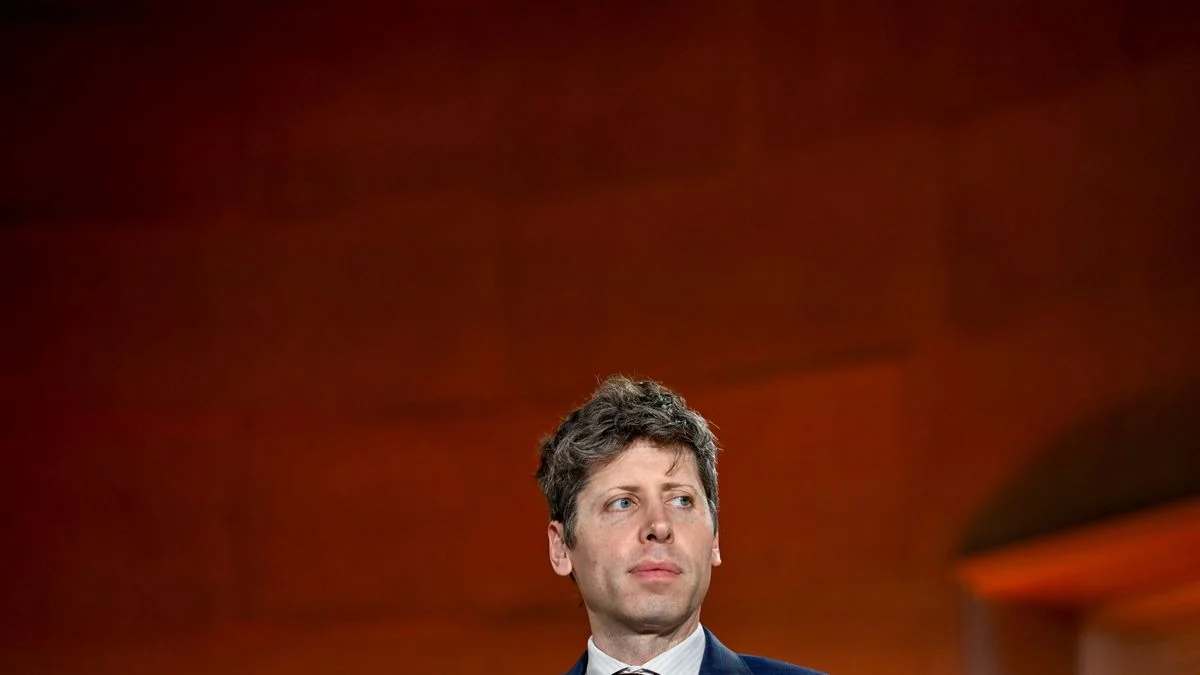
The technological revolution triggered by the rapid advancement of artificial intelligence has long been accompanied by a chorus of concern. However, the discourse surrounding the existential risks and societal impacts of AI has taken a violent turn. Over a single, harrowing weekend, the private residence of OpenAI CEO Sam Altman was targeted in two separate security incidents, culminating in an arson attack and, subsequently, a gunfire incident.
These events, occurring at the home of one of the world’s most influential tech figures, represent a chilling escalation in the tension between radical AI-skepticism and the industry’s rapid development. As authorities continue their investigation, the incidents have prompted a national debate regarding the limits of protest, the dangers of inflammatory rhetoric, and the personal safety of those driving the most significant technological transformation of our era.
A Weekend of Terror: Chronology of the Attacks
The security crisis began on a Friday when a 20-year-old individual approached Sam Altman’s private estate with the intent to inflict damage. According to local law enforcement, the assailant deployed a Molotov cocktail, hurling the incendiary device at the property. The attack resulted in the ignition of the estate’s entrance gate.
Following the arson attempt, the suspect fled the scene. A swift law enforcement response led to the individual’s apprehension shortly thereafter, not far from the primary headquarters of OpenAI. While initial reports focused on the immediate threat to the property, the situation escalated further the following day. Despite the heightened security presence in the wake of the Friday arson, the residence was subjected to a second incident on Sunday, involving the discharge of firearms.
These back-to-back security breaches represent a severe failure of security perimeters and have sent shockwaves through the Silicon Valley ecosystem, forcing companies to re-evaluate the personal security protocols for their leadership.
The Suspect and the Ideological Nexus
As investigations into the perpetrator’s background intensified, details began to surface linking the 20-year-old suspect to extremist fringes of the anti-AI movement. It was discovered that the individual was a member of a Discord server associated with "PauseAI," an organization that has previously staged protests against the military applications of AI at OpenAI’s offices.
PauseAI, a group that advocates for a global halt to advanced AI development, moved quickly to address the association. In an official statement, the organization unequivocally condemned the violence, asserting that "violence against anyone stands in contradiction to everything we stand for."
The organization’s internal audit of the suspect’s digital footprint revealed that he had joined their platform two years prior, contributing 34 messages. According to a spokesperson for PauseAI, none of the messages contained direct calls to violence. However, the group’s moderation team had previously flagged one of his messages as "ambiguous" and issued a cautionary warning—a standard practice for the group—before ultimately banning the user following the news of the attacks.
The Broader Context: Why OpenAI?
To understand the motivations behind these attacks, one must look at the meteoric rise of OpenAI since the release of ChatGPT in late 2022. By democratizing access to generative AI, the company effectively initiated a global technological arms race. While the innovation has been lauded for its potential to boost productivity and scientific discovery, it has also stoked deep-seated anxieties regarding labor displacement, misinformation, and the potential for autonomous systems to act against human interests.
The friction intensified significantly following reports that OpenAI had entered into collaborations with the U.S. Department of Defense. Critics argue that the integration of AI into military logistics and weapon systems crosses a dangerous ethical Rubicon. For those who view AI as an existential threat, these partnerships are not merely business decisions—they are seen as accelerants toward a catastrophic, automated future.
Sam Altman’s Response: A Plea for De-escalation
In the immediate aftermath of the initial arson attack, Sam Altman took the rare step of speaking directly to his critics through a personal blog post. Accompanying his message was a photograph of his family—a poignant attempt to humanize himself amidst the vitriol directed at his corporate identity.
"Bilder haben Macht, hoffe ich," Altman wrote, expressing his hope that the image would serve as a deterrent. "Normally, we try to protect our private life, but in this case, I am sharing a photo in the hope that it will stop the next person from throwing a Molotov cocktail at our house—no matter what they think of me."
Altman did not shy away from the substantive arguments of his critics. He acknowledged that the widespread apprehension regarding AI is "justified," noting that the world is currently witnessing the most significant societal shift since the dawn of the industrial age. However, he drew a firm line between intellectual disagreement and criminal violence.
"While we hold this debate, we should tone down the rhetoric and the methods, and try to have fewer explosions in fewer households—both figuratively and literally," he concluded. The irony of his plea was made stark by the events that followed, as gunfire erupted at his residence just one day later.
The Implications for the AI Industry
The attack on Altman’s home marks a turning point for the AI industry, which has until now operated primarily within the spheres of academic debate, corporate boardrooms, and regulatory hearings. The shift toward physical violence against tech executives suggests that the "AI war" has moved beyond the digital realm.
1. The Polarization of the Discourse
The incident highlights the dangers of echo chambers. When complex existential risks are discussed with apocalyptic fervor, the barrier between theoretical concern and vigilante action can become dangerously thin. Organizations like PauseAI now find themselves in a precarious position, tasked with managing the radical elements that their own rhetoric may inadvertently attract.
2. The Personalization of Corporate Governance
For high-profile CEOs, the safety of their families is now inextricably linked to their corporate portfolios. Companies like OpenAI, Google, and Anthropic will likely increase their spending on executive protection, potentially creating a greater "moat" between the architects of the future and the public they claim to serve. This distancing could, in turn, feed further resentment and the perception of a disconnected, elite tech class.
3. Regulatory and Legal Responses
Law enforcement agencies are expected to treat these incidents with the gravity of domestic terrorism. The use of incendiary devices and the discharge of firearms at a private residence are clear criminal offenses. Beyond the legal prosecution of the suspect, there is the question of whether social media platforms and niche communities like Discord will face pressure to more strictly regulate content that borders on inciting violence against tech leaders.
Conclusion: Finding a Path Forward
The attacks on Sam Altman are a grim symptom of a society struggling to process the pace of technological change. When the tools of the future outpace the societal structures designed to govern them, the vacuum is often filled by fear, suspicion, and, in the worst cases, violence.
As the investigations continue, the incident serves as a sobering reminder of the responsibility inherent in innovation. While Altman’s call for a de-escalation of rhetoric is necessary, the industry itself must also grapple with the need for greater transparency and public engagement. If the developers of AI wish to avoid further conflict, they must find a way to integrate the public into the conversation—not just as users, but as stakeholders in the future that is being built.
Until then, the incident remains a cautionary tale. It underscores that in an era where the divide between humanity and the machine is shrinking, the most dangerous threat may not be the intelligence of the software, but the volatility of the human reaction to it. The path toward a safe and ethical AI future cannot be paved with the debris of broken homes or the shadow of violence; it requires a renewed commitment to discourse, empathy, and the rule of law.