By Science Editorial Desk
Updated: September 17, 2026
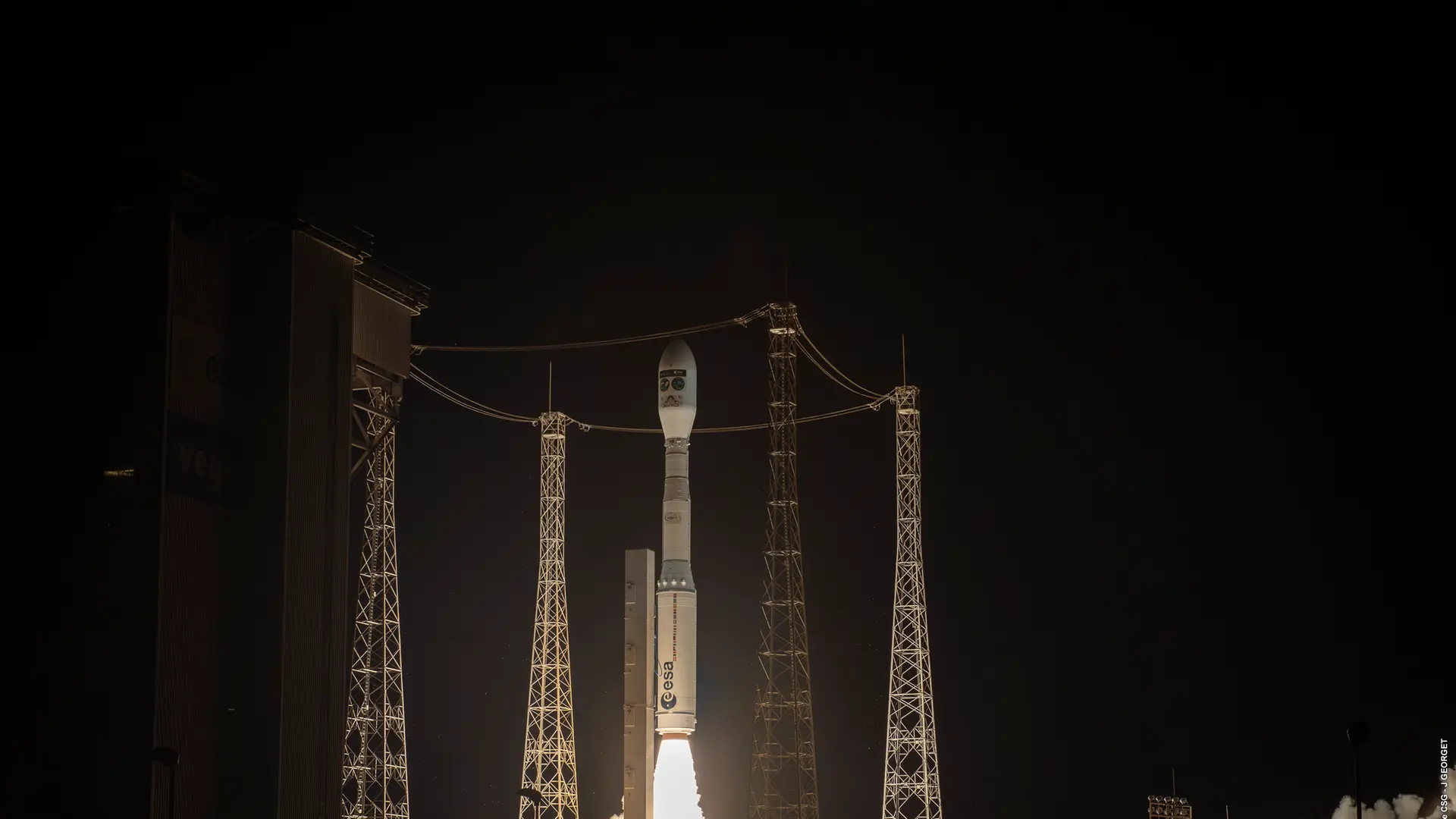
In a milestone achievement for European space exploration, the European Space Agency (ESA) has successfully deployed the FLEX (Fluorescence Explorer) satellite into orbit. Launched in the early hours of Tuesday, September 15, 2026, from the Guiana Space Centre in French Guiana, the mission marks a new era in our ability to monitor the biological health of our planet. Carried aloft by a reliable Vega-C rocket, the satellite successfully entered its intended trajectory alongside the Sentinel-3C environmental monitoring craft.
Within hours of the launch, mission controllers at the European Space Operations Centre (ESOC) in Darmstadt, Germany, received the first telemetry signals, confirming that both satellites had successfully detached from the launch vehicle and were performing within nominal parameters. This dual-satellite deployment is more than a technical success; it is a strategic maneuver designed to provide the most comprehensive assessment of Earth’s vegetation to date.
The Science of Photosynthesis: Why FLEX Matters
At the heart of the FLEX mission lies a fundamental biological question: How efficiently are the Earth’s plants converting sunlight into chemical energy?
Plants perform photosynthesis by absorbing sunlight and converting it into energy for growth. However, they also emit a faint, near-infrared glow known as solar-induced chlorophyll fluorescence (SIF). This fluorescence is so incredibly weak that it is virtually invisible to the naked eye and difficult to detect even from low Earth orbit.
FLEX is designed specifically to capture this signal. By measuring this "photosynthetic heartbeat," scientists will be able to distinguish between healthy, thriving forests and crops struggling under the duress of drought, nutrient deficiency, or disease. As climate change accelerates, causing shifts in rainfall patterns and increasing the frequency of heatwaves, understanding the resilience of our global vegetation is no longer just a biological curiosity—it is an economic and ecological imperative.
A Technical Triumph: Precision Engineering from Jena
The success of this mission is inextricably linked to cutting-edge technology developed in Germany. The "crown jewel" of the FLEX satellite is a high-resolution imaging spectrometer. A specialized research team from the Fraunhofer Institute for Applied Optics and Precision Engineering (IOF) in Jena played a pivotal role in the design and fabrication of the instrument’s core optical components.
These components are feats of precision engineering. Operating from an altitude of approximately 800 kilometers, the spectrometer must filter out the overwhelming glare of reflected sunlight to isolate the minute fluorescence signal emitted by the chlorophyll within plants. The ability to distinguish this signal from the vast, chaotic background of Earth’s surface radiation represents a massive leap forward in optical remote sensing.
Chronology of the Mission
- Early 2026: Final integration of the FLEX and Sentinel-3C payloads with the Vega-C launch vehicle.
- September 15, 2026: Successful liftoff from the Guiana Space Centre.
- September 15, 2026 (Post-launch): ESOC Darmstadt confirms signal acquisition and stable orientation for both satellites.
- Late September – October 2026: Launch and Early Orbit Phase (LEOP), including system calibration, instrument health checks, and antenna deployment.
- November 2026 (Scheduled): Commencement of the scientific commissioning phase.
- Early 2027 (Projected): Start of routine data acquisition and global mapping of chlorophyll fluorescence.
The Tandem Strategy: Synergy with Sentinel-3C
One of the most innovative aspects of the current mission is the pairing of FLEX with the Sentinel-3C satellite. While FLEX focuses on the internal biological processes of vegetation, the Sentinel-3 series provides the broader environmental context.
Sentinel-3C is equipped with a suite of sensors designed to monitor ocean color, sea-surface temperature, and land-surface temperature, while also tracking atmospheric water vapor and cloud cover. By combining the data from both platforms, researchers can create a holistic model of the Earth’s carbon and water cycles.
For instance, if FLEX detects a sudden drop in fluorescence in a specific agricultural region, scientists can immediately cross-reference this with Sentinel-3C data regarding soil moisture and local temperature. This synergy allows for "root-cause" analysis: Is the plant stress due to a lack of water, a heatwave, or a pest infestation? This layered approach turns the satellites from simple observers into powerful diagnostic tools for global food security.
Implications for Climate Science and Agriculture
The implications of the FLEX mission reach far beyond academia. By providing unprecedented detail on the carbon uptake of terrestrial ecosystems, FLEX will help refine global climate models. Currently, there is significant uncertainty regarding how much CO2 the world’s forests and grasslands can absorb as temperatures rise. If plants become less efficient at photosynthesis due to heat stress, they may absorb less carbon, creating a dangerous feedback loop.
Furthermore, the agricultural sector stands to benefit immensely. Precision farming, which relies on satellite data to optimize water and fertilizer use, will receive a massive upgrade. By understanding the real-time photosynthetic activity of crops, farmers can potentially increase yields while simultaneously reducing the chemical burden on the environment.
Official Responses and Future Outlook
"The successful launch of FLEX is a testament to the collaborative power of European space research," said a spokesperson for the European Space Agency during the post-launch press briefing in Darmstadt. "By placing such sensitive instruments into orbit, we are effectively installing a ‘doctor’ for the planet’s vegetation. We look forward to the data that will help us navigate the challenges of the coming decades."
As the mission moves into the calibration phase, the global scientific community is watching with anticipation. The coming weeks will be spent fine-tuning the sensitive optics of the spectrometer. Any minor misalignment could skew the data, so the team in Jena and at ESOC will remain in a state of high alert until the first test images are transmitted back to Earth.
Once the scientific commissioning phase is complete, the data will be made available to researchers worldwide. The expectation is that FLEX will redefine our understanding of the "green lung" of our planet. Whether it is tracking the recovery of the Amazon rainforest or monitoring the productivity of the North American wheat belt, the data provided by this mission will form the bedrock of environmental policy for years to come.
Conclusion
The launch of FLEX, alongside Sentinel-3C, represents a triumph of human ingenuity and international cooperation. By focusing on the microscopic signals of life—the very fluorescence that powers our biosphere—we are gaining a macroscopic view of our planet’s health. As the satellites settle into their operational orbits, they remind us that the key to managing our future on Earth may well lie in our ability to watch over it from the silent, cold expanse of space.
The "plant doctor" is now on call. For the forests, the fields, and the climate scientists tasked with protecting them, the mission has only just begun.