WASHINGTON/BANGALORE – In a move signaling a massive shift in American energy policy, the U.S. government has officially pivoted toward the revitalization of nuclear power. Constellation Energy, the nation’s largest operator of nuclear power plants, has secured a conditional commitment for a $5 billion loan from the Department of Energy (DOE). This strategic financial injection is designed to supercharge the output of existing infrastructure, marking a pivotal step in meeting the explosive electricity demand generated by the digital age.
The announcement, which sent Constellation Energy’s stock climbing by 1.8% on Tuesday, reflects a broader federal initiative to bolster energy security, stabilize the grid, and support the burgeoning needs of the artificial intelligence (AI) and semiconductor sectors.
1. The Core Facts: A Strategic Expansion
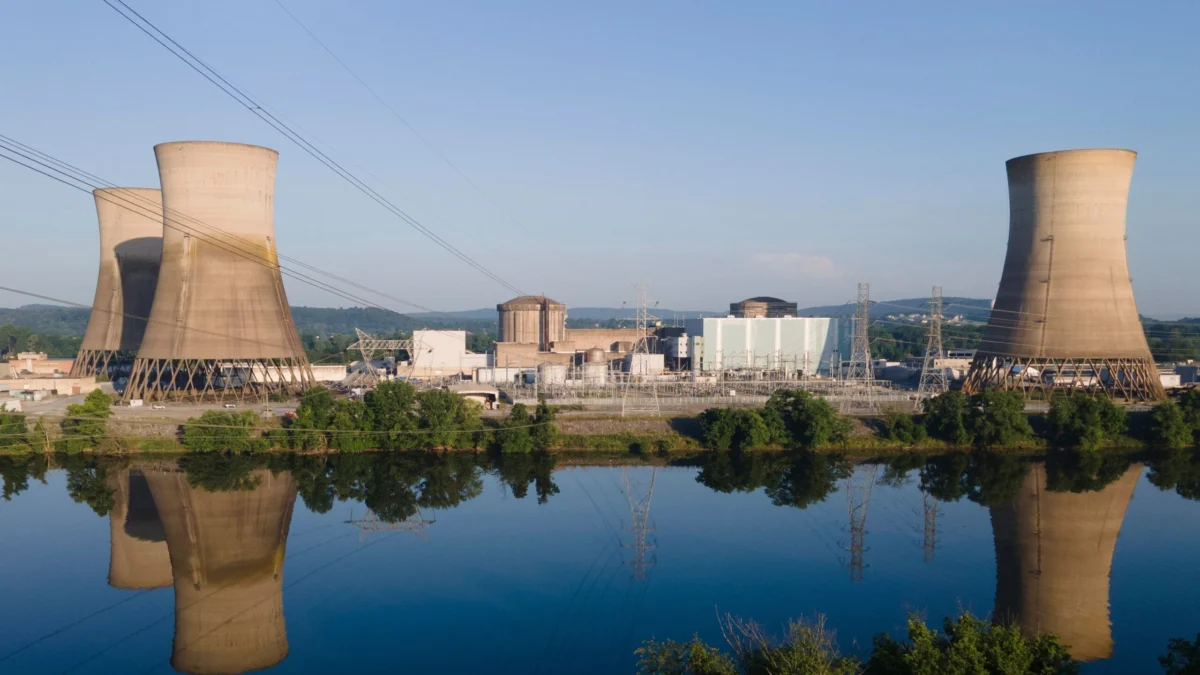
The $5 billion conditional loan represents one of the most significant federal investments in nuclear power in decades. Unlike projects that involve the multi-year, multi-billion-dollar construction of new "greenfield" sites, Constellation Energy’s plan focuses on "power uprates"—the technical optimization and capacity expansion of existing nuclear reactors.
The project aims to increase the capacity of several facilities across Illinois, Maryland, and Pennsylvania by a total of 1.1 gigawatts (GW). To put this into perspective, 1.1 gigawatts is roughly equivalent to the output of a large-scale power plant, capable of energizing over 930,000 homes. By optimizing current assets, Constellation Energy avoids the regulatory hurdles, environmental impact studies, and logistical nightmares associated with building entirely new power plants or massive, high-voltage transmission lines.
2. Chronology: The Road to the Nuclear Resurgence
The path to this investment did not happen in a vacuum. It is the result of years of shifting priorities within the U.S. executive branch and a rapidly changing technological landscape.
- 2020–2022: The U.S. energy sector faces a crisis of reliability. The intermittent nature of wind and solar, combined with the retirement of coal-fired plants, leads to grid instability. Simultaneously, the demand for "baseload" power—the reliable, 24/7 energy required for industrial operations—begins to rise.
- Late 2023: Energy giants, including Constellation, begin discussions with the Biden-Harris administration regarding the role of existing nuclear fleets in achieving climate goals.
- Early 2024: The surge in generative AI—exemplified by companies like OpenAI and Nvidia—creates a sudden, massive need for high-density, reliable power to fuel massive data centers.
- The Trump Administration Transition: President Donald Trump has made energy dominance a cornerstone of his economic platform. His administration has set an aggressive, long-term goal to quadruple the total nuclear power capacity of the United States by 2050, viewing nuclear energy as a matter of national security and economic competitiveness.
- Current Milestone: The Department of Energy, under the leadership of Secretary Chris Wright, formalizes the $5 billion conditional loan to Constellation, signaling that the federal government is prepared to deploy the full force of its credit facilities to meet these targets.
3. Supporting Data: Why the Demand is Skyrocketing
The decision to prioritize nuclear energy is driven by three primary "megatrends" that are currently straining the American power grid.
The AI Data Center Explosion
Artificial Intelligence models require intensive computational power. The data centers that house these processors operate 24/7 and require constant cooling and steady electricity. Unlike renewables, which are weather-dependent, nuclear power provides a consistent, carbon-free baseload, making it the preferred energy source for tech giants like Microsoft, Google, and Amazon, who are all currently exploring nuclear partnerships.
Electrification of the Economy
From the mass adoption of Electric Vehicles (EVs) to the transition of heating systems from gas to electricity, the total load on the U.S. grid is expected to increase significantly over the next two decades. Estimates suggest that the U.S. will need to double its total electricity production by 2040 to maintain current economic growth trajectories.
Cryptocurrency and Industrial Computing
Despite fluctuations in the crypto market, the infrastructure built for mining remains a significant consumer of power. When coupled with the reshoring of semiconductor manufacturing (stimulated by the CHIPS Act), the demand for high-capacity, high-reliability electricity has outpaced the rate of new grid connections.
4. Official Responses and Stakeholder Perspectives
The Department of Energy’s Stance
Secretary of Energy Chris Wright has been vocal about the necessity of this investment. "We are looking at a future where energy demand is not just growing; it is exploding," Wright stated. "The federal government is prepared to leverage hundreds of billions of dollars in loan programs to ensure that our nuclear fleet is not just maintained, but expanded to meet this reality."
Wright emphasized that the loan program is not a subsidy in the traditional sense, but a tool to reduce capital costs and accelerate deployment, ensuring that the U.S. remains at the forefront of nuclear innovation.
Corporate Strategy: Constellation Energy
Constellation’s leadership views the project as a win-win. By focusing on existing sites, the company minimizes the social and environmental friction typically associated with new energy infrastructure. "We are utilizing assets that are already permitted, already integrated into the grid, and already accepted by their local communities," a company spokesperson noted. The goal is to maximize the efficiency of the "uprates" so that they can be operational as quickly as possible, providing a rapid solution to the power crunch.
5. Implications: What This Means for the Future
A Shift in Environmental Policy
The move toward nuclear power marks a pragmatic shift in American environmental policy. While renewables remain central to the long-term vision, policymakers have acknowledged that wind and solar alone cannot provide the stable baseload required for modern industrial needs. The "Nuclear Renaissance" is effectively a recognition that decarbonization and grid reliability must go hand-in-hand.
Economic and Global Competitiveness
If the U.S. fails to meet its power needs, it risks stalling the AI revolution and pushing manufacturing investment to other countries with more stable energy grids. By quadrupling capacity by 2050, the U.S. is positioning itself to be the primary hub for the next generation of digital infrastructure. The $5 billion loan to Constellation is likely the first of many such investments.
Technical Challenges and Grid Stability
While the expansion is positive, it is not without challenges. Integrating an additional 1.1 GW of power requires careful management of existing transmission infrastructure. Furthermore, while these uprates are efficient, the nuclear industry still faces the long-term challenge of radioactive waste management and the need for a highly skilled workforce to manage the upgraded reactors.
Looking Ahead
The conditional loan to Constellation Energy is a bellwether for the energy sector. Investors, policymakers, and industry leaders are watching closely to see how quickly these technical uprates can be implemented. If successful, this model—upgrading existing, proven technology with federal financial backing—could become the blueprint for how the U.S. manages its transition into a high-energy, AI-driven future.
As the U.S. balances the urgency of climate goals with the absolute necessity of energy security, one thing is clear: the atom is returning to the center of the American economy. The next decade will define whether this massive, government-backed bet on nuclear power will successfully light the way for the next phase of the digital revolution.