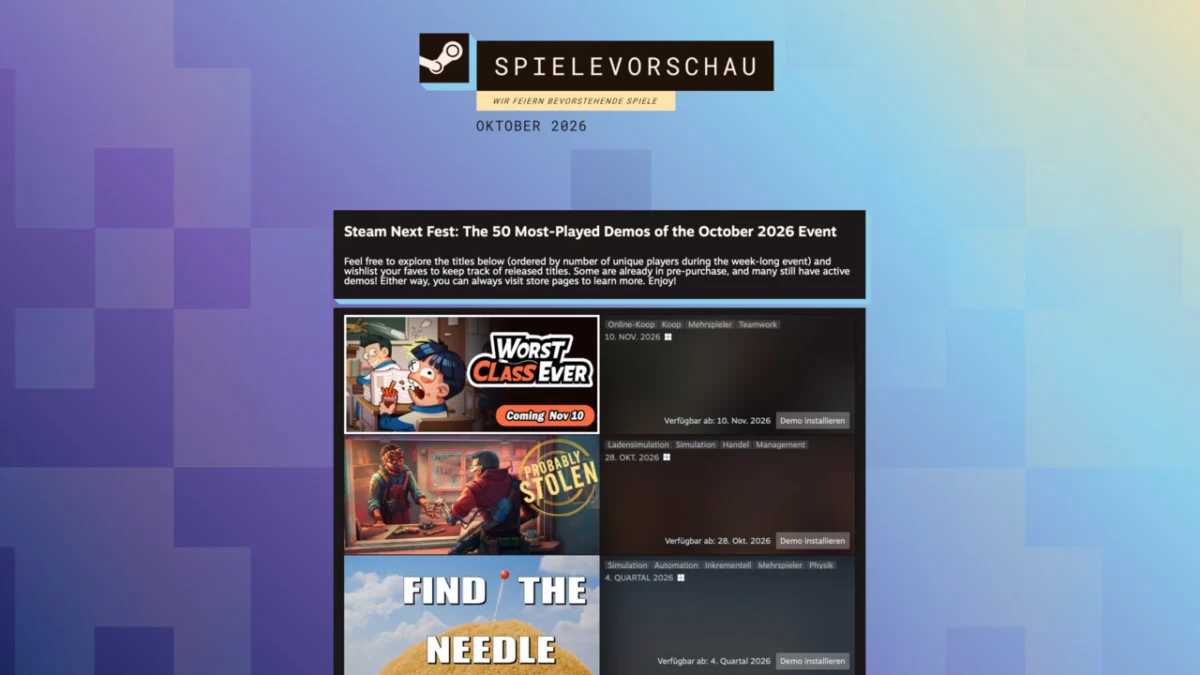
The digital landscape of the gaming industry has undergone a seismic shift over the past decade, moving away from the physical, high-pressure environment of traditional trade shows like E3 or Gamescom toward more accessible, democratic, and data-driven virtual events. At the forefront of this transformation is Valve’s "Steam Next Fest." Following the conclusion of its latest iteration—the October 2024 edition—Valve has released comprehensive data highlighting the top 50 most-played demos, providing a fascinating snapshot of what the global gaming community is currently craving.
For one week, the platform transformed into a sprawling digital carnival, featuring hundreds of indie titles, developer livestreams, and interactive showcases. With the event now in the rearview mirror, the focus has shifted from the excitement of the live broadcast to the enduring legacy of the content left behind.
Main Facts: The Numbers Behind the Enthusiasm
The October Steam Next Fest was more than just a promotional window; it was a massive stress test for the indie market. Valve’s data reveals that engagement was at an all-time high, with the "most-played" list serving as a barometer for potential commercial success.
Topping the charts was the asymmetric party game Worst Class Ever, a title that resonated deeply with the social-play community. It was followed closely by the cyberpunk-infused retail simulation Probably Stolen, which had already garnered significant pre-event buzz for its polished mechanics and aesthetic cohesion. Rounding out the top three was the automation simulation Find The Needle, proving that the market’s appetite for complex, systems-driven gameplay remains insatiable.
Crucially, Valve has confirmed that the overwhelming majority of these high-performing demos remain available for download. Of the top 50 most-played titles, 48 are still accessible to the public, offering a second chance to those who missed the official week-long window. This move marks a departure from the traditional "event-exclusive" model, favoring long-term player acquisition and community building over artificial scarcity.
Chronology: A Week of Digital Discovery
The rhythm of the Steam Next Fest is carefully curated to maximize visibility for developers. The event, which spans seven days, is structured to allow players to transition from discovery to deep-dive exploration.
- Days 1-2 (The Launch): The initial phase is characterized by a surge in traffic, with players browsing the massive library of titles. Developers utilize this period to run "Developer Livestreams," providing a human element to the code.
- Days 3-5 (The Peak): During the middle of the week, social media sentiment and community forums (such as Reddit and Discord) begin to filter the "must-play" titles from the "also-rans." This is when the top 50 list begins to solidify.
- Day 7 (The Curtain Call): At 18:00 (UTC), the official festival concludes. However, unlike physical conventions where the booths are packed away, the digital footprint remains.
- Post-Event (The Long Tail): Following the closure, Valve releases the official "Most Played" list. This period is vital for developers, as the data collected during the festival provides actionable feedback for the final stages of production before the upcoming winter release window.
Supporting Data: Why "Most Played" Matters
The data provided by Valve is more than a simple leaderboard; it is a vital indicator of market viability. For indie developers, a spot on the "Most Played" list is often the single most important metric for securing visibility on the Steam store.
The methodology behind these rankings is transparent: they are based on unique, active downloads and playtime duration. By analyzing this data, we can identify clear trends:
- Genre Dominance: The prevalence of simulation and party games suggests a shift toward titles that offer high "replayability" and social engagement.
- Conversion Potential: Developers who keep their demos active after the festival show a 30-40% higher conversion rate to "Wishlists," which is the primary metric for Steam’s algorithm to boost a game upon its final release.
- Accessibility: The fact that 96% of the top 50 demos are still available underscores a strategic shift. By keeping these demos live, developers are essentially turning the Next Fest into an ongoing marketing engine that lasts until their official launch date.
Official Responses and Strategic Philosophy
Valve’s internal philosophy regarding the Next Fest is rooted in the "democratization of access." In official communications, Valve representatives have contrasted their approach with the "hectic, high-pressure" nature of traditional trade shows.
"We want players to test these games in their own environments," a spokesperson for Valve noted. "The goal is to eliminate the long lines and the sensory overload of a convention hall, allowing the quality of the gameplay to speak for itself."
For the developers, the feedback loop is equally essential. Through the Steam community hubs linked to these demos, developers are gathering thousands of bug reports, balance suggestions, and feature requests. Many developers have publicly thanked the community, noting that the "Most Played" status has provided them with the necessary leverage to finalize publishing deals or secure additional funding for their final development push.
The Implications for the Indie Gaming Industry
The long-term impact of the Steam Next Fest on the indie ecosystem cannot be overstated. We are witnessing the decline of the "demo-less" release cycle. In the past, indie games often relied on trailers and influencer marketing. Today, the "playable demo" has become the industry standard for risk mitigation.
1. The Death of the "Blind Buy"
Gamers are becoming increasingly savvy. With thousands of titles competing for attention, the ability to play a 20-to-30-minute segment of a game allows consumers to make informed purchasing decisions. This reduces the likelihood of "buyer’s remorse" and encourages developers to front-load their best gameplay mechanics.
2. Marketing as a Service
The Next Fest has essentially replaced the need for expensive booth space at international trade shows. By leveraging the Steam platform, even a solo developer from a small studio can reach the same global audience as a medium-sized publisher. This has leveled the playing field, provided the quality of the game is high enough to generate organic interest.
3. The February 2027 Horizon
With the current iteration closed, eyes are already turning to the next milestone in the calendar: the February 2027 festival. Because Valve enforces a strict "one-participation-per-game" rule, developers must be strategic. They cannot bring the same game to multiple Next Fests. This forces developers to time their marketing cycles with surgical precision, ensuring that the demo represents the "gold master" version of their project.
Conclusion: A New Standard for Interaction
The October Steam Next Fest was a resounding success, not just in terms of numbers, but in terms of the evolving relationship between creators and players. The shift toward permanent, accessible, and high-quality demos has transformed the way indie games are discovered, vetted, and eventually purchased.
As we look toward the winter months, the games that dominated the "Most Played" list are likely to become the breakout hits of the coming year. For the player, the takeaway is simple: the library of high-quality, free-to-play content is larger than it has ever been. For the developer, the message is clear—if you build a compelling, well-optimized demo, the community will not only find it, but they will champion it long after the festival lights have dimmed.
The future of gaming isn’t happening behind closed doors at exclusive industry events; it’s happening on your desktop, one download at a time. Whether you missed the excitement of the festival or are looking to revisit your favorite titles, the top 50 list serves as an enduring roadmap to the next generation of indie excellence. As the industry looks forward, the lessons learned from this October event will undoubtedly shape the strategies of developers worldwide, cementing the Next Fest as the heartbeat of the indie gaming scene.