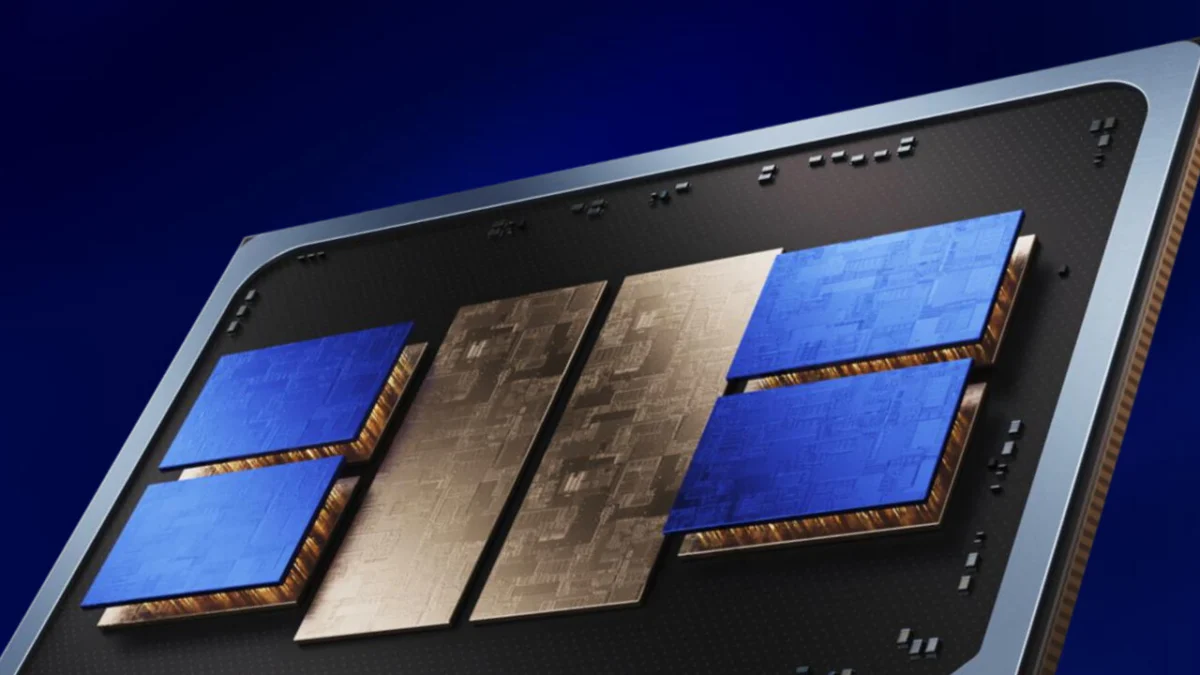
The semiconductor industry is buzzing with the emergence of preliminary benchmark data for Intel’s forthcoming "Nova Lake-S" (NVL-S) processor family. As Intel looks toward the future of its desktop CPU lineup, the discovery of early engineering samples within the PassMark PerformanceTest 11.1 database has provided the first tangible—albeit speculative—glimpse into the performance capabilities of this highly anticipated architecture. While the industry is cautioned to treat these early results with significant restraint, the raw data suggests that Intel is preparing a formidable answer to the current market dominance of AMD’s Ryzen 9000-series and Intel’s own Arrow Lake successors.
Main Facts: A Glimpse into the Silicon Future
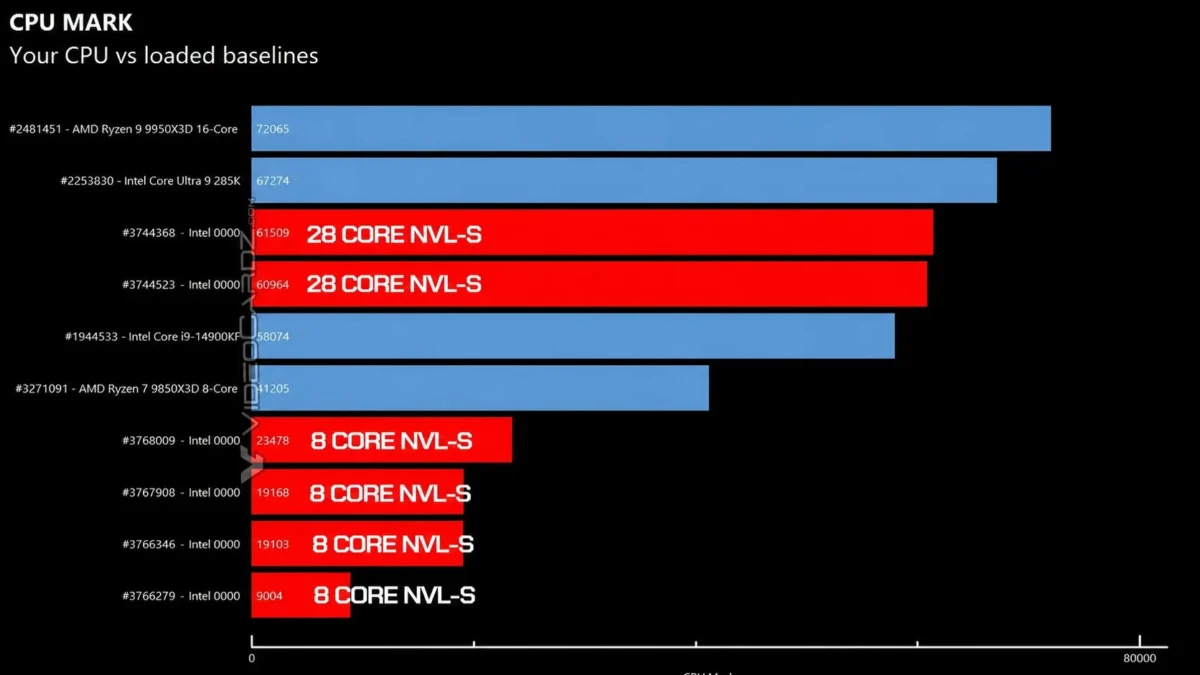
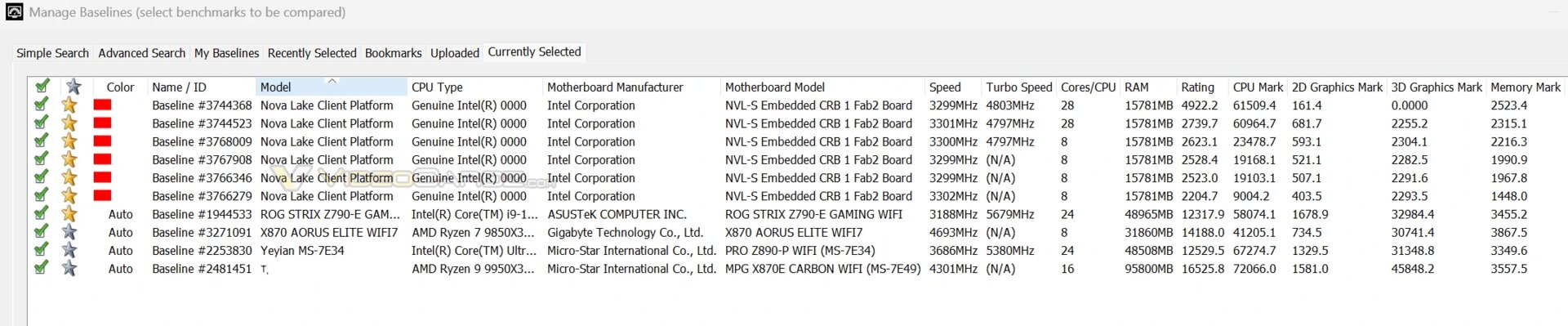
Reports originating from VideoCardz have brought to light several entries in the PassMark database featuring Intel’s next-generation silicon. These engineering samples exhibit a diverse range of configurations, most notably 28-core variants and smaller 8-core iterations.
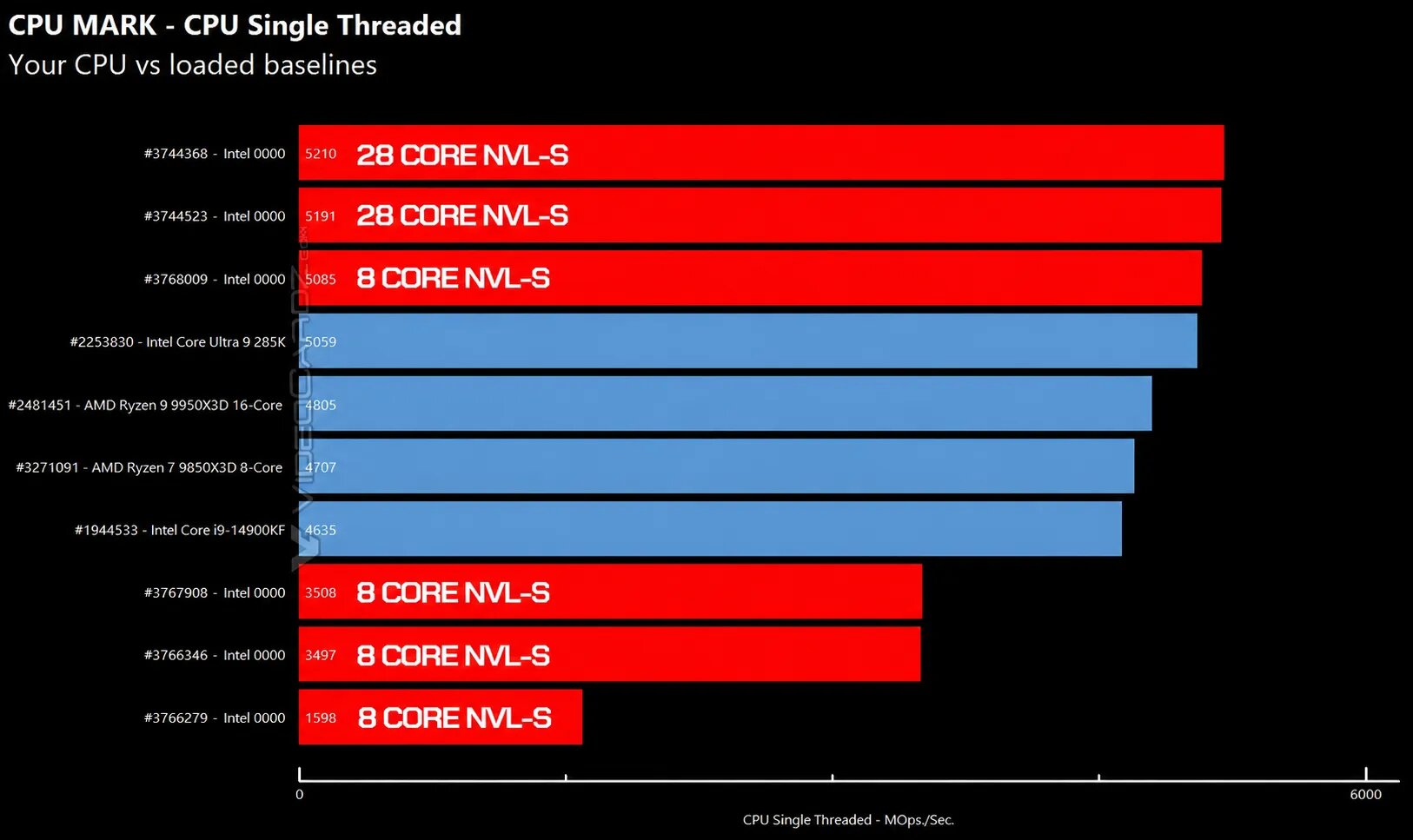
The standout metric from these early leaks is the single-threaded performance. The 28-core samples, operating at a reported boost clock of 4.8 GHz, achieved scores hovering around the 5,200-point mark. In a comparative landscape featuring the Intel Core Ultra 9 285K (Arrow Lake), the AMD Ryzen 9 9950X3D, and the legacy Intel Core i9-14900KF, the Nova Lake samples managed to edge out the competition.
Crucially, the 8-core Nova Lake samples, also reportedly running at a 4.8 GHz turbo frequency, demonstrated enough efficiency and architectural prowess to narrowly surpass the Core Ultra 9 285K in single-threaded tasks. This suggests that the underlying IPC (Instructions Per Clock) improvements in Nova Lake could be substantial, positioning the architecture to reclaim the single-core performance crown that has been fiercely contested over the last two hardware generations.
Chronology of Development: From Concept to Leak
The roadmap for Intel’s desktop processors has been the subject of intense speculation since the launch of Raptor Lake. The journey toward Nova Lake-S follows a strategic progression:
- 2023–2024 (Architectural Foundation): Intel finalized the design goals for the Nova Lake architecture, emphasizing a complete overhaul of the core layout to move away from the limitations observed in the Raptor Lake and Arrow Lake designs.
- Late 2025 (Validation Phase): The first internal silicon samples were produced, entering the "stepping" phase where electrical and thermal characteristics are tested in controlled laboratory environments.
- Early 2026 (Public Exposure): Engineering samples began appearing in third-party software databases, such as PassMark, as part of the broader ecosystem validation process. This is the stage where the current leaks originate.
- Early 2027 (Expected Launch): Industry analysts project that Nova Lake-S will officially enter the consumer market around the middle of the first quarter of 2027.
- Late 2027 (Expansion): The roadmap indicates a wider release, including specialized mobile variants and high-end desktop configurations, potentially scaling up to 52 cores.
Supporting Data: Analyzing the Performance Metrics
To understand the weight of these leaks, one must examine the nuances of the data. While the single-threaded scores are optimistic, the multi-threaded performance of these early samples tells a more complex story.
In the multi-threaded benchmarks, the 28-core Nova Lake samples yielded approximately 61,000 points. While this is an improvement over the Core i9-14900KF, it falls notably short of both the Core Ultra 9 285K and the AMD Ryzen 9 9950X3D. Furthermore, the 8-core samples performed poorly, trailing significantly behind the AMD Ryzen 7 9850X3D.
The IPC Advantage
The most compelling insight comes from a "points-per-GHz" analysis. By normalizing the benchmark data against the reported boost clocks, we see that the Nova Lake architecture achieves roughly 1,085 points per GHz. This represents a potential 15% increase over Arrow Lake and a staggering 29% lead over the current AMD Ryzen flagship (based on manufacturer-specified maximum turbo speeds).
However, these figures are heavily dependent on the validity of the 4.8 GHz clock speed. In early engineering samples, power management firmware is often incomplete, leading to aggressive thermal throttling or unstable voltage tables. If these samples are indeed running at lower-than-intended voltages to manage heat, the final retail product could offer significantly higher performance envelopes.
Official Responses and Industry Context
Intel has maintained its standard policy of not commenting on unreleased hardware or leaks from third-party databases. However, the industry discourse surrounding Nova Lake is heavily focused on the "BFC"—the so-called "Big Fucking Cache."
Rumors have persisted that the Nova Lake-S lineup will feature a high-density L3 cache implementation designed to combat the success of AMD’s 3D V-Cache technology. While the naming convention remains a source of internal debate within the tech community, the technical necessity of such a cache is clear. If Intel is to bridge the performance gap in gaming and cache-sensitive applications, the integration of an expanded L3 cache is widely considered a prerequisite for the success of the Nova Lake platform.
Market analysts suggest that the lower-than-expected multi-threaded scores for the 8-core variants are likely a result of poor optimization in the early BIOS versions or a lack of support for the specific threading topology of the new architecture in the current version of PassMark. It is common for engineering samples to struggle with task distribution, particularly when dealing with entirely new cache hierarchies and power delivery requirements.
Implications for the Future of Desktop Computing
The transition to Nova Lake-S represents a pivotal moment for Intel. After the lukewarm reception of the power-efficiency curves in recent generations, Nova Lake is expected to be the first architecture built from the ground up for a post-Raptor Lake reality.
1. The War for Efficiency
If the 15% to 29% IPC lead holds true in final retail silicon, Intel could effectively decouple performance from raw power consumption. This would allow the company to offer high-performance chips that do not require the massive thermal solutions currently mandatory for high-end desktop gaming systems.
2. The Competitive Landscape
AMD is not standing still. The Ryzen 9000-series and subsequent iterations will likely introduce their own architectural leaps, particularly in the realm of AI-integrated processing and chiplet-to-chiplet interconnect latency. Nova Lake-S must be more than just a speed bump; it must redefine how processors communicate with memory and peripheral buses.
3. The Shift to High-Core Counts
The mention of 52-core variants for the high-end desktop (HEDT) market in late 2027 indicates that Intel is shifting its strategy to accommodate the professional-consumer (prosumer) segment. As creative workflows increasingly rely on multi-core acceleration, providing massive core counts alongside high single-thread IPC will be the key to winning over content creators who have previously been tempted by AMD’s Threadripper or high-end Ryzen platforms.
Conclusion: A Cautious Optimism
The data surfacing from PassMark is undoubtedly intriguing, yet it must be contextualized as a "snapshot in time." Engineering samples are fluid; they change with every iteration of the microcode, the motherboard firmware, and the operating system scheduler.
What we are witnessing with Nova Lake-S is the sound of Intel’s engineering machine shifting gears. The significant IPC gains suggested by the 1,085 points-per-GHz metric provide a strong foundation for the architecture’s success. If the company can resolve the multi-threaded bottlenecks observed in these early samples and successfully deliver the "Big Fucking Cache" as rumored, the 2027 release of Nova Lake-S could indeed signal the beginning of a new era of dominance for Intel.
For the average enthusiast, the takeaway is clear: the hardware landscape for 2027 is shaping up to be one of the most competitive in recent memory. While the current scores are far from definitive, they confirm that the architecture is real, the performance potential is significant, and the race between Intel and AMD is intensifying. As we approach the first quarter of 2027, the industry will be watching closely to see if these early, messy, and intriguing data points translate into the polished, high-performance silicon that the market so desperately craves.