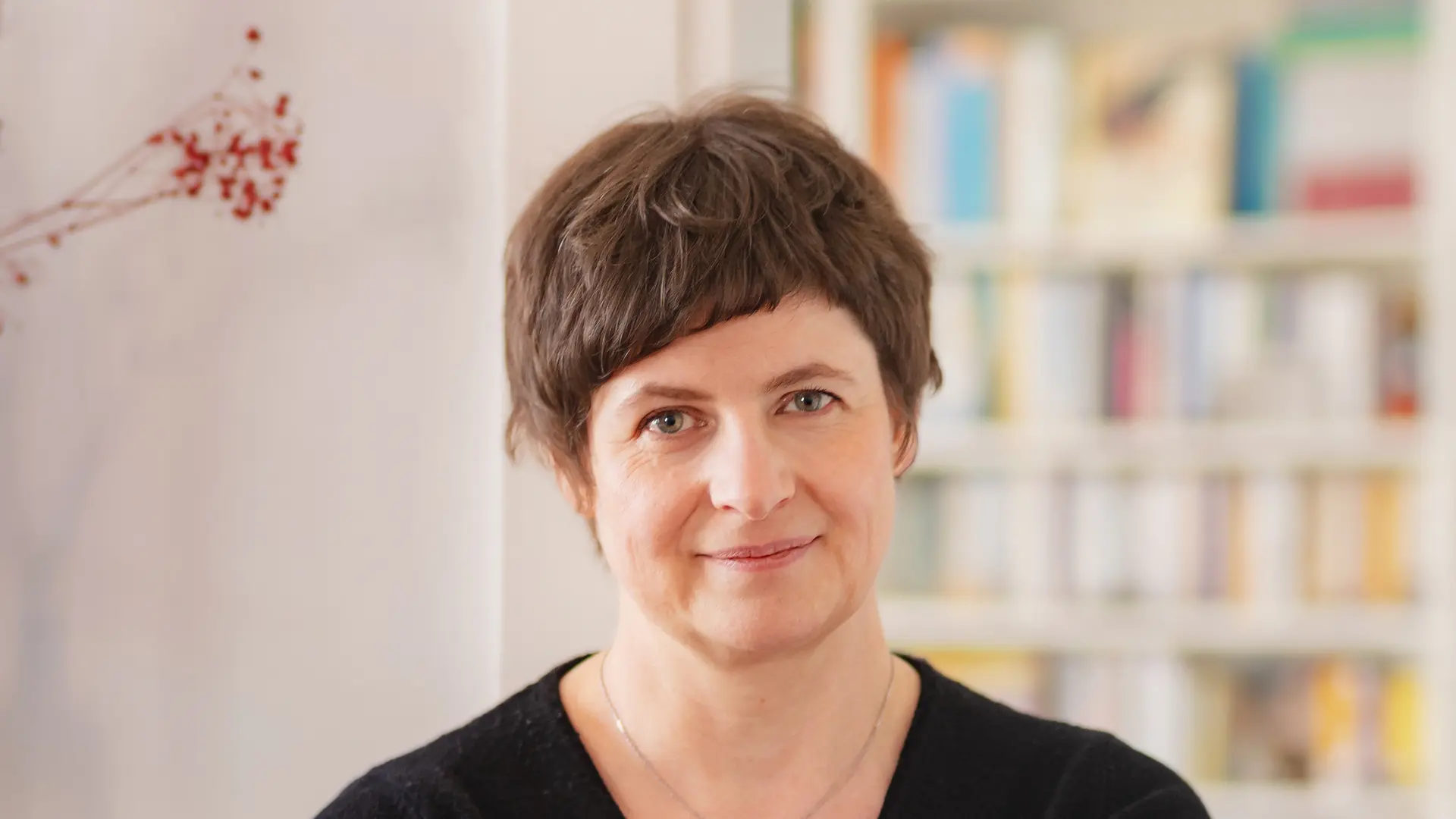
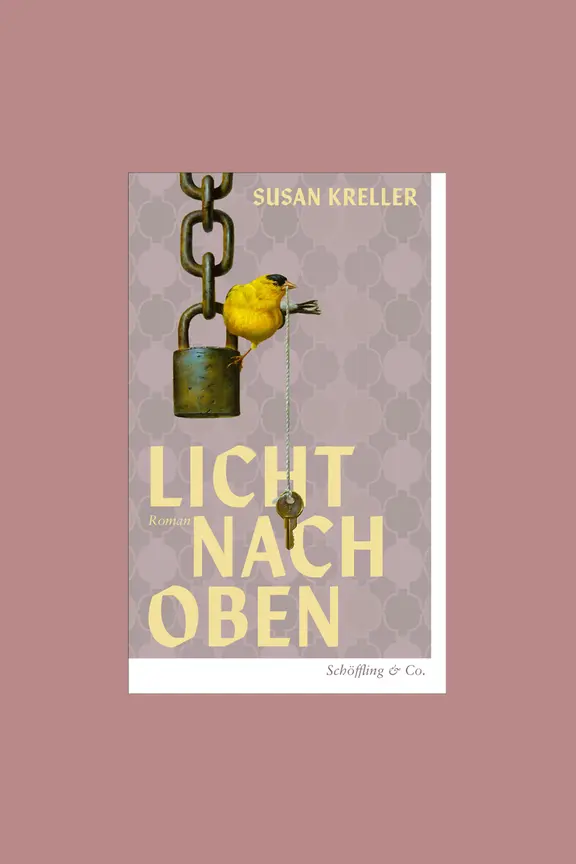
The literary landscape of Germany has long been shaped by voices that bridge the gap between childhood wonder and adult disillusionment. Susan Kreller, a celebrated author known for her nuanced exploration of human vulnerability, has returned with a work that challenges the societal narratives surrounding incarceration and the arduous, often silent process of returning to the fold. Her latest novel, "Licht nach oben" (Light Upwards), currently nominated for the Bavarian Book Prize, offers a poignant, "weightlessly light" meditation on what happens when the prison gates finally swing open.
Main Facts: A Story of Redemption and Small Acts
In Licht nach oben, Kreller introduces us to Arthur, a man whose former life as an apothecary has been eclipsed by a prison sentence for a grave crime. Upon his release, Arthur finds himself in a vacuum: the social ties that once defined his existence have frayed or snapped entirely. Seeking refuge, he turns to the family of his former cellmate, a desperate move that forces him to navigate a rigid, albeit simple, set of conditions for his survival.
To earn his keep, Arthur must perform three distinct tasks: caring for an uncle suffering from dementia, managing the household waste, and assisting in a local stationery shop. On the surface, the novel operates as a character study of a man finding his footing. However, through the lens of MDR Kultur critic Tino Dallmann, the work transcends the trope of the "ex-convict narrative." It is, at its heart, a fabled exploration of human solidarity, where the lines between the "incarcerated" and the "free" blur under the weight of shared loneliness.
The Genesis of a Narrative: Language and Roots
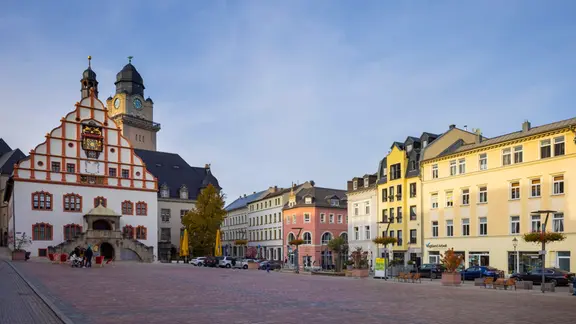
The distinct linguistic rhythm of Kreller’s prose—often described as both precise and poetic—has deep roots in her upbringing in Plauen, Saxony. Kreller describes her childhood home as a "linguistic cosmos," where her grandfather played an instrumental role in shaping her creative relationship with words.

"My grandfather would invent words for everyday phenomena—names for colors or for the way storm clouds gathered," Kreller recalls. This early exposure to the malleability of language, supplemented by the eclectic mix of DEFA film quotes and the vernacular of the local state-run shops (HO-Kaufhalle), gave her the confidence to experiment. She credits her formative years and her extensive reading of GDR-era children’s literature as the foundational elements that allowed her to develop her own unique "language games." This background is not merely biographical trivia; it is the engine behind the novel’s ability to render the mundane—a stationery shop, a dusty shelf, a broken pencil—into a sanctuary of meaning.
Chronology of a Life Interrupted
To understand the emotional arc of Licht nach oben, one must look at the timeline of Arthur’s transition:
- Pre-Incarceration: Arthur leads a life of professional stability as an apothecary, a role defined by order and chemical precision.
- The Incarceration Period: Years lost behind bars, during which the world outside moves on without him. This is the period that Kreller focuses on with the most intensity, not in the retelling of the crime, but in the psychological "stasis" that prison inflicts on the human spirit.
- The Day of Release: The moment of "supposed freedom," which Kreller identifies as the most challenging point of the narrative. The transition from the rigid schedule of prison to the terrifying autonomy of the outside world is the catalyst for the book’s central tension.
- The Resettlement: The current timeline of the novel, where Arthur moves into the home of his former cellmate’s relatives. Here, the clock is no longer set by wardens, but by the needs of a dementia patient and the inventory of a small shop.
Supporting Data: The Stationery Shop as a Microcosm
The setting of the stationery shop serves as the novel’s most critical device. Kreller’s research for this environment began long before she sat down to write; it started with her first pocket money in Plauen.
"I can still tell you today exactly where every stationery store in Plauen was and what each one smelled like," Kreller admits. By placing Arthur in this environment, she highlights the contrast between his past life—a world of heavy, life-altering mistakes—and the world of paper, pens, and greeting cards.
The shop becomes a stage for encounters with the elderly, many of whom are as socially isolated as Arthur. When customers come in for a single refill or a card, they are not just buying stationery; they are engaging in the "small talk of survival." These interactions act as a mirror to Arthur’s own condition. The shop, with its paper jams and price tags, provides the structural support he needs to stop looking at his past and start looking "upward," toward a future that is not yet fully defined but is finally within his reach.
Official Responses and Literary Reception
Since the publication of Licht nach oben, the critical reception has been overwhelmingly positive. Critics have praised Kreller’s ability to handle the "heaviness" of the subject matter without succumbing to grimness or melodrama.

The nomination for the Bavarian Book Prize is a testament to the novel’s impact. The jury and literary critics have noted that Kreller succeeds in writing a "fable for the modern age." By avoiding the sensationalism of a crime thriller—despite the gravity of Arthur’s offense—she invites the reader to empathize with the perpetrator’s quest for human connection. As Tino Dallmann pointed out, it is the "lightness of the tone" that makes the darkness of Arthur’s history feel so much more profound and, ultimately, more reachable.
Implications: A Broader Look at Social Reintegration
The themes explored in Licht nach oben extend far beyond the pages of the book. In an era where the discussion around prison reform and the social stigma of a criminal record is more relevant than ever, Kreller’s work serves as a reminder of the fragility of the social contract.
The Myth of Freedom
Kreller herself notes that her primary interest was not the act of crime, but the "time after." She questions what it truly means to be free when the stigma of incarceration acts as an invisible wall. For Arthur, freedom is not the absence of walls, but the ability to participate in the small, collective rhythms of daily life.
The Role of Community
The novel implies that reintegration is not a solo endeavor. Arthur’s success (or lack thereof) is inextricably linked to the community—however small and eccentric—that chooses to accept him. The relatives of his former cellmate represent a form of "radical empathy" that is often missing from contemporary debates about justice and rehabilitation.

The Language of Outsiders
Kreller uses the stationery shop to explore the concept of "belonging." By giving Arthur tasks that involve communication and organization, she forces him to re-enter the social flow. The shop is a place where every interaction is a negotiation of trust. For those on the margins of society—the elderly, the formerly incarcerated, the lonely—the shop is a sanctuary of normalcy.
Conclusion: Light Upwards
Licht nach oben is more than a story about an ex-convict; it is a profound observation of the human condition. Susan Kreller has crafted a narrative that respects the complexity of her protagonist while acknowledging the damage he has caused. Through her delicate, rhythmic, and deeply sensory prose, she demonstrates that even after a life has been shattered by error and confinement, there is always the possibility of a different trajectory.

As the Bavarian Book Prize ceremony approaches on October 29, 2026, the discussion around Licht nach oben will likely continue to center on its central message: redemption is not a destination, but a series of small, intentional acts. Whether it is helping a patient with dementia or simply ensuring the paper in a printer doesn’t jam, Arthur’s journey is a quiet, powerful testament to the idea that as long as we can look "upward," there is a path back to the light.
Bibliographic Note
- Licht nach oben
- Author: Susan Kreller
- Publisher: Schöffling & Co.
- Length: 230 pages
- ISBN: 978-3-69097-039-6
- Status: Nominated for the Bavarian Book Prize 2026.
Susan Kreller continues to reside and work in Berlin, where she remains a vigilant observer of the quiet, often overlooked stories that define our society. Her work reminds us that in the intersection of memory, language, and community, we find the tools to rebuild what we once thought was lost forever.