In a move that caught the tech industry entirely off guard, Apple has bypassed the traditional pageantry of its upcoming "Pro and Tell" event, scheduled for October 28, 2026, to announce the latest iteration of its smallest tablet via a quiet press release. The new iPad Mini, a device that has spent years in the shadow of its larger counterparts, has received a comprehensive internal and external overhaul.
By launching the device ahead of the marquee event, Apple has signaled a shift in strategy. Analysts speculate that this early release is a tactical decision—perhaps intended to shift the narrative away from the recent "Crackgate" controversy involving structural integrity issues with the iPhone Duo displays. Regardless of the motive, the 2026 iPad Mini is not a minor spec bump; it is a fundamental reimagining of what a compact tablet can achieve.
The Evolution of Form: Slimmer, Sharper, and Stronger
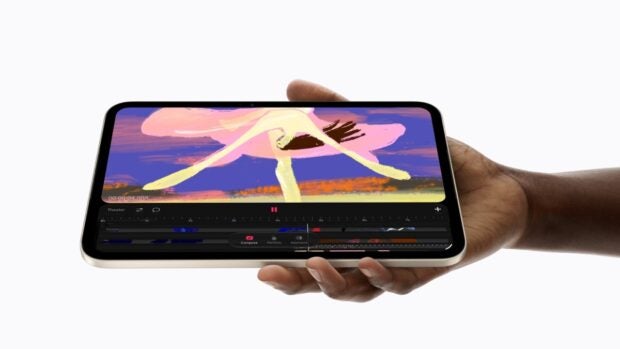
The most immediate physical change is the refined chassis. Apple has managed to trim the thickness of the device from 6.3 millimeters down to a mere 5.4 millimeters. This reduction in profile, paired with a slight adjustment in height (195.3 mm) and width (132.6 mm), makes the device feel significantly more ergonomic.

However, the headline feature is the transition to an OLED display. While the previous generation relied on traditional LCD technology, the 2026 model adopts an OLED panel, delivering the infinite contrast ratios and vibrant color reproduction that users have come to expect from Apple’s flagship mobile devices. The screen size has also seen a modest increase, growing from 8.3 inches to 8.5 inches, thanks to thinner bezels. For professionals and creative enthusiasts, Apple is also offering an optional "Nanotexture glass" coating, a premium finish designed to minimize glare in challenging lighting conditions.
The A20 Pro: An AI Engine in Your Pocket
Beneath the hood, the iPad Mini has been transformed into a computing powerhouse. It now houses the A20 Pro processor—the same silicon driving the high-end iPhone 18 Pro and the flagship iPhone Duo.
The leap in performance is staggering. Apple claims a 4.5x increase in AI-specific tasks compared to the previous model, while graphics performance has seen a 2.7x boost. In real-world usage, this equates to roughly 1.6x faster general processing power. While the previous iPad Mini was already a capable device, the integration of the A20 Pro elevates it into the realm of professional-grade hardware, making it fully optimized for "Apple Intelligence."

A particularly interesting development is the inclusion of a specialized 16-core Neural Engine in the 512GB storage configuration. This specific hardware architecture is optimized for running local Large Language Models (LLMs) and complex AI workflows entirely on-device, bypassing the latency and privacy concerns associated with cloud-based processing.
Connectivity and the N1 Chip
Apple has also introduced its proprietary N1 chip into the iPad Mini, which manages all wireless communications. By integrating support for Wi-Fi 7 and Bluetooth 6, the device is future-proofed for the next generation of home and enterprise networking. The cellular-enabled variants will benefit from the C2 modem, the same hardware found in the iPhone 18 Pro, ensuring peak performance even in congested network environments.
Entertainment, Productivity, and the "Acoustic Display"
Despite the lack of a dedicated keyboard folio, Apple continues to push the iPad Mini as a legitimate productivity tool. The device offers robust support for the Apple Pencil USB-C and the Apple Pencil Pro.
Perhaps the most experimental feature is the new "Acoustic Display." Apple has engineered the screen to function as a sound emitter, integrating tweeters and woofers behind the display panel. By utilizing the screen itself as a transducer, the tablet aims to provide a more immersive, directional sound stage for video consumption and virtual meetings. Whether this technology provides a genuine upgrade over traditional stereo speakers remains to be seen once the device reaches independent reviewers, but it represents a bold step in hardware innovation.
Chronology: From Rumor to Release
- Early 2026: Leaks regarding the "Pro and Tell" event begin to circulate, with industry insiders suggesting a focus on the MacBook Pro line.
- Mid-October 2026: Reports of display issues with the iPhone Duo series (dubbed "Crackgate") hit the headlines, putting pressure on Apple’s PR department.
- October 2026 (Pre-event): Apple announces the iPad Mini via press release, effectively controlling the news cycle before the October 28 event.
- October 28, 2026: Official pre-order window opens at 18:10 local time.
- November 6, 2026: Global retail availability begins.
Supporting Data and Technical Specifications
| Feature | 2026 iPad Mini Specification |
|---|---|
| Processor | A20 Pro Chip |
| Display | 8.5-inch OLED |
| Thickness | 5.4 mm |
| Connectivity | Wi-Fi 7, Bluetooth 6, C2 Modem (Cellular) |
| Storage Options | 128GB, 256GB, 512GB |
| Stylus Support | Apple Pencil (USB-C), Apple Pencil Pro |
| Starting Price | €749 |
Official Responses and Strategic Implications
Apple’s decision to launch the iPad Mini as a standalone product highlights a strategic shift toward segmenting its hardware releases. By positioning the iPad Mini as a high-performance, AI-centric device, Apple is attempting to capture the niche market of users who demand power but refuse to sacrifice portability.
"The 2026 iPad Mini is an acknowledgment that power-users are not defined by the size of their screens," says a representative from Apple’s product marketing team. "By bringing the A20 Pro and OLED technology to our smallest form factor, we are removing the compromise that has historically existed between size and performance."

Market Analysis: The Future of the "Mini"
The implications for the tablet market are significant. With the 8.5-inch OLED screen and the AI-focused neural engine, the iPad Mini is arguably the most capable small-form-factor device on the market. However, the price point—starting at €749—places it firmly in the premium category, potentially alienating casual users who previously viewed the Mini as an entry-level gateway into the Apple ecosystem.
Furthermore, the "Acoustic Display" technology suggests that Apple is looking for ways to reduce internal physical footprints to allow for larger batteries or cooling solutions. If successful, this technology could become a standard across the entire iPad lineup.
Conclusion: A High-Stakes Bet
Apple’s decision to drop the iPad Mini before the main October event is a calculated move to dominate the headlines during a period of scrutiny. By introducing a device that is objectively better in almost every measurable metric, the company is betting that the sheer technological leap will quell market jitters and satisfy demand for innovation.
Whether the device lives up to the promise of its internal hardware—particularly the local AI capabilities and the experimental audio system—will be determined in the coming months. For now, the 2026 iPad Mini stands as a testament to Apple’s ability to refine its hardware at a scale and pace that remains unmatched by its competitors. It is not just a tablet; it is a declaration that even the smallest devices can command the biggest attention.