The global financial landscape is currently undergoing a structural shift driven by the insatiable demand for Artificial Intelligence. On Tuesday, the optimism surrounding the sector reached a fever pitch, as investors in Asian markets reacted to two significant developments: the concrete steps taken by AI powerhouse Anthropic toward an initial public offering (IPO) and Meta’s aggressive new strategy to fund massive infrastructure expansion for its AI ambitions.
As the tech sector continues to be the primary engine of global equity growth, the news from the United States has served as a catalyst for a robust rally across key Asian indices, including the Kospi and the Nikkei.
The Main Facts: A Dual Catalyst for Growth
The market sentiment was primarily buoyed by the formalization of two major narratives. First, Anthropic, the creator of the sophisticated "Claude" chatbot, has officially submitted its registration documents for a U.S. stock market debut. This move marks a milestone for the generative AI industry, as Anthropic is widely viewed as the most formidable competitor to OpenAI.
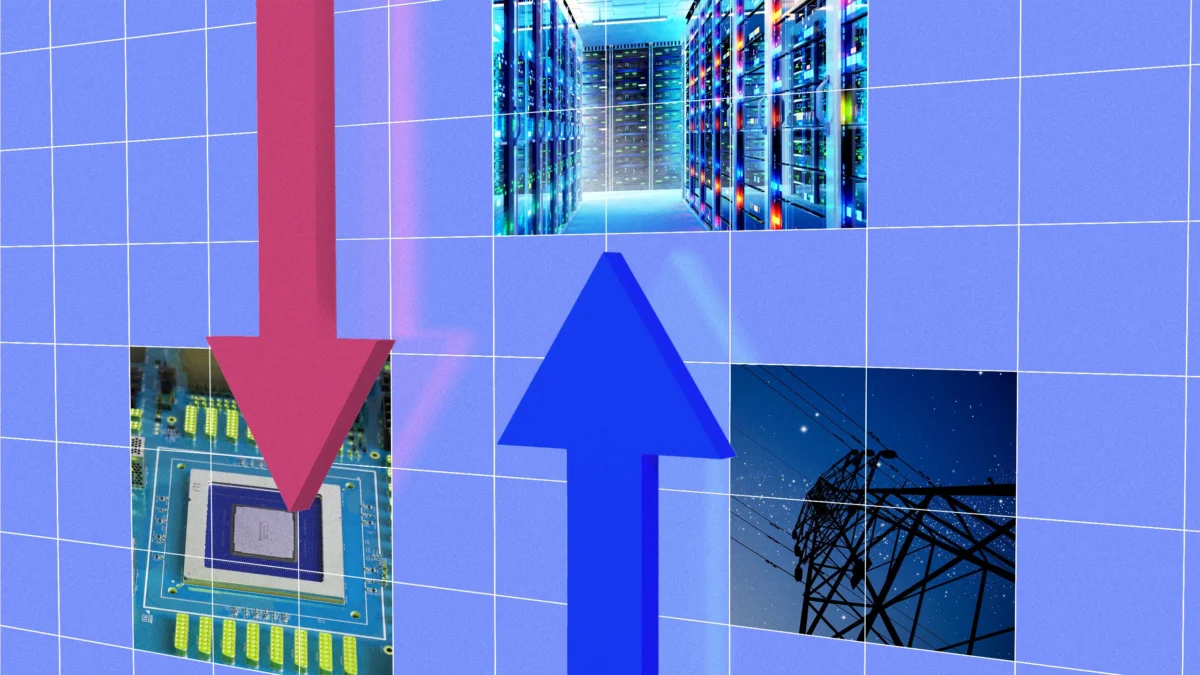
Simultaneously, Meta Platforms, the parent company of Facebook and Instagram, has announced plans to issue new shares to fund the construction and operation of additional, state-of-the-art AI data centers. This decision underscores a critical reality: the "AI race" is a capital-intensive marathon that requires not only intellectual capital but also immense physical infrastructure.
These developments have provided a clear signal to institutional and retail investors alike: the era of AI-driven capital expenditure is only just beginning, and the companies capable of sustaining these investments are being rewarded by the market.
Chronology: How the News Impacted the Markets
The trading session on Tuesday began with a palpable sense of anticipation. As news of Anthropic’s filing circulated through trading desks in Tokyo and Seoul, the initial reaction was one of relief and renewed confidence.
Early Morning (Asian Time): Reports surfaced regarding the filing of Anthropic’s IPO documents. Investors, who had previously been wary of the high burn rates associated with AI startups, interpreted the move as a sign of institutional maturity.
Mid-Morning: Meta’s announcement regarding its share issuance to bolster AI infrastructure hit the wires. This solidified the narrative that major tech firms are doubling down on the technology.
Late Morning (The Rally): The Nikkei 225 saw a significant surge. Semiconductor-related stocks, which had been suffering from recent volatility, saw a massive rebound.
Afternoon: The momentum held, with analysts noting that the rally was broad-based, encompassing not just software developers, but the entire hardware ecosystem—from chip manufacturers to data center equipment suppliers.
Supporting Data: The Anatomy of the Rally
The impact of these announcements on Asian indices was not merely anecdotal; it was reflected in the hard data.
Advantest, a Japanese leader in semiconductor testing equipment, saw its share price soar by ten percent, acting as the primary engine for the Nikkei’s climb. This surge is emblematic of the "picks and shovels" investment strategy: while the software giants (Anthropic/Meta) make the headlines, the companies that manufacture the hardware necessary for AI processing are the immediate beneficiaries of increased capital expenditure.
Furthermore, the SoftBank Group, a bellwether for technology investments, saw its shares rise by nearly seven percent. The market is clearly betting that the influx of cash into the AI sector will result in a long-term valuation boom for tech conglomerates with significant AI portfolios.
Anthropic’s Financial Profile
In its IPO filings, Anthropic revealed a picture of rapid, aggressive scaling. While the company is showing signs of substantial revenue growth, it has also reported significant losses. Financial analysts have pointed out that these losses are largely attributable to the massive compute costs and one-time R&D investments required to train frontier models like Claude 3.5. Despite the red ink, the market’s willingness to embrace the IPO suggests that investors are valuing revenue growth and market positioning over short-term profitability.
Official Responses and Expert Analysis
The reaction from the financial community has been a mixture of excitement and cautious pragmatism. Daisuke Hashizume, a senior strategist at Daiwa Securities, summarized the sentiment during the Tuesday session:
"The market has reacted with clear relief to the news of Anthropic’s IPO. It signals that the pipeline for AI innovation remains open and that the capital markets are still willing to provide the fuel necessary to sustain this growth. Furthermore, the technology heavyweights’ commitment to infrastructure has allowed the US chip indices to stabilize, which in turn has provided a safe harbor for Asian tech stocks."
However, not all analysts are convinced that the current trajectory is sustainable without further proof of monetization. Anthony Saglimbene, Chief Market Strategist at Ameriprise, offered a tempering perspective:
"Investors are finally moving past the ‘hype phase’ and are now demanding evidence of long-term utility. The market needs the confidence that these aggressive, multi-billion dollar capital expenditure cycles are not just a short-term trend, but a response to durable, long-term business needs. We are looking for the ‘killer app’—not just in terms of consumer chatbots, but in terms of enterprise-level productivity gains that actually hit the bottom line."
The Broader Implications: What This Means for the Future
The events of this week highlight three critical implications for the global economy.
1. The Capital Expenditure Super-Cycle
The decision by Meta to issue new shares to finance data centers marks a shift in how tech companies manage their balance sheets. Rather than relying solely on existing cash flows, firms are increasingly willing to dilute equity to ensure they do not lose the AI arms race. This suggests that the next five years will be characterized by the largest infrastructure build-out in the history of the computing industry.
2. The Maturation of the AI Market
Anthropic’s transition from a research-focused startup to a publicly traded entity is a turning point. It forces the sector to move toward greater transparency. As a public company, Anthropic will be subject to rigorous quarterly reporting, which will provide the public with unprecedented insight into the actual costs of training and running LLMs (Large Language Models). This, in turn, will help investors distinguish between companies that are building sustainable moats and those that are merely burning cash.
3. Resilience of Asian Tech Hubs
The sharp rebound in the Nikkei and the Kospi demonstrates that Asian markets remain deeply integrated into the global tech supply chain. While regional concerns—such as local currency fluctuations or domestic interest rate policies—often dominate headlines, the underlying growth narrative is dominated by the global appetite for high-performance computing. As long as the U.S. tech giants continue to invest, Tokyo and Seoul will continue to see capital inflows.
Conclusion: A Cautious Optimism
As the trading week progresses, the focus will shift from the initial excitement of the announcements to the long-term strategic execution of these companies. The market has signaled its approval of the "all-in" approach to AI. However, the underlying skepticism remains: can this level of investment be sustained if the consumer and enterprise adoption rates do not match the pace of infrastructure expansion?
For now, the bulls are in control. The combination of an imminent IPO for an industry leader and the continued, massive funding of AI infrastructure by the giants provides a clear roadmap for where the next phase of economic growth will be found. Investors will continue to watch the semiconductor manufacturers and the data center architects closely, as these companies remain the most reliable indicators of the health and velocity of the AI revolution.
Whether this represents a bubble or the foundation of a new industrial era remains the defining question for the remainder of the year. For the moment, however, the markets have chosen to believe in the potential of the machine.