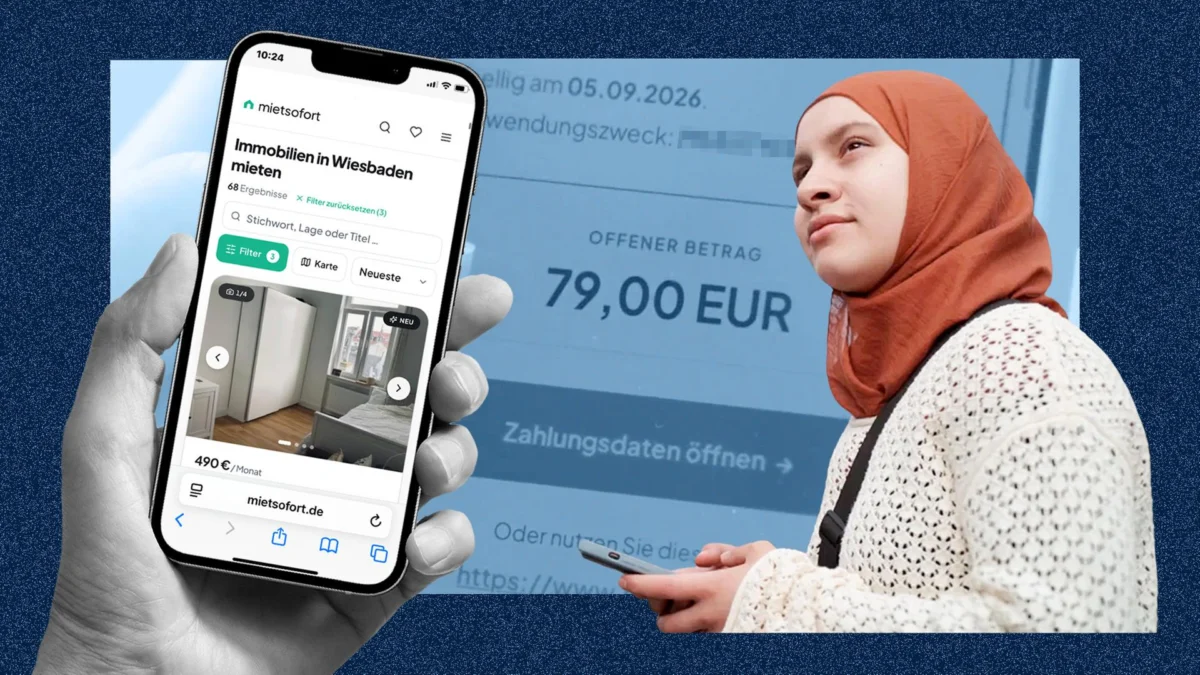
The search for affordable housing in Germany’s major cities has become a grueling marathon for students, young professionals, and families alike. In a market defined by soaring demand and record-low vacancy rates, desperation often overrides caution. It is precisely this vulnerability that online platforms like "MietSofort" appear to be exploiting, leading to a wave of complaints currently flooding the offices of the Consumer Advice Center (Verbraucherzentrale) in Hesse.
What appears to be a helpful digital assistant for house hunting is, according to consumer advocates, a sophisticated cost trap designed to ensnare users before they even realize they have signed a legally binding, high-cost contract.
The Anatomy of the Trap: A Chronology of Deception
The experience of Tuana Mercanli, a student who recently moved to Wiesbaden to begin her studies, serves as a textbook example of the platform’s predatory tactics. Like many others, Mercanli turned to the internet to bridge the gap between her housing needs and the local market’s scarcity. When she stumbled upon "MietSofort," the site promised exactly what she needed: a seamless search experience, real-time notifications for new listings, and an AI-driven application assistant.
The Initial "Click"
For an unsuspecting user, the process begins with a simple registration. The platform presents itself as a modern, efficient tool. However, the user interface is carefully calibrated to mask the financial implications of signing up. Mercanli clicked a button labeled "Unlock Access Data" (Zugangsdaten freischalten), assuming she was merely gaining entry to a database of listings. There was no clear, transparent indication that this action would trigger an immediate financial obligation.
The Financial Shock
Shortly after the registration was confirmed, the reality of the business model became apparent. Instead of a list of potential apartments, Mercanli received an email invoice for 79 euros. The platform justifies this charge by claiming it provides a "software package" for the housing search, including document management and application support.
The Escalation
When Mercanli, shocked by the unexpected bill, immediately attempted to cancel her contract via email, the operator of the portal—a company known as Subscription Cancel LTD, based in Varna, Bulgaria—flatly refused the request. Their legal argument was that the right of withdrawal had already expired, as the user had allegedly consented to a "paid order" at the moment of registration.
The situation then took a more aggressive turn. Within days, Mercanli received correspondence from a collection agency demanding payment, with additional fees ballooning the total debt to approximately 150 euros. For a student living on a tight budget, the intimidation tactic was effective, though it ultimately drove her to seek help from the Consumer Advice Center.
Supporting Data: A Systematic Pattern
Tuana Mercanli is far from an isolated case. The Consumer Advice Center of Hesse has confirmed that they have received a high volume of complaints regarding "MietSofort," suggesting a systematic business model rather than a series of misunderstandings.
Another student, identified as Laura K. from Frankfurt, reported an almost identical experience. Like Mercanli, she was lured in by the promise of easy housing access, only to be met with demands for payment and subsequent threats from collection agencies when she attempted to contest the charges.
The Evolution of the "Dark Pattern"
The platform has shown a degree of reactivity to public pressure, though not in a way that satisfies consumer protection laws. Initially, the registration button was ambiguously labeled "Unlock Access Data." Following mounting criticism, the site changed the label to "Order with costs" (Kostenpflichtig bestellen). However, the Consumer Advice Center argues that this is merely a cosmetic change.
Legal experts point out that:

- The Pricing Display: Even with the new button label, the total price is often presented in a way that is easily overlooked or buried within the fine print of the Terms and Conditions.
- Widerrufsbelehrung (Withdrawal Information): The legal information regarding the right to cancel a contract remains, in the view of the experts, intentionally obscure and legally insufficient.
Official Responses and Legal Perspectives
Peter Lassek, a senior expert at the Consumer Advice Center of Hesse, has become one of the most vocal critics of the "MietSofort" business model. He argues that the platform weaponizes the housing crisis against its users.
"It is designed to look like a standard, professional real estate portal, often featuring enticingly low-priced apartment listings," Lassek explains. "They count on the fact that desperate people will click through the registration process quickly without scrutinizing the fine print."
The Legality of the Contract
From a legal standpoint, the Consumer Advice Center contends that it is highly doubtful whether a valid, enforceable contract is even formed in these cases. Under German law, the "Button Solution" (Button-Lösung) requires that a consumer must be clearly and unambiguously informed of the cost before they complete a transaction.
Furthermore, the platform classifies its service as a "digital service," attempting to use this to argue that the right to withdraw from a contract is waived the moment the account is activated. The Consumer Advice Center vehemently disagrees, arguing that a mere digital instruction manual or a basic application template does not qualify as an "instant service" that would invalidate a user’s right to change their mind.
The Silence of the Provider
Despite repeated attempts by news outlets and consumer protection organizations to obtain a statement, the operators of "MietSofort"—Subscription Cancel LTD—have remained silent. Their lack of transparency reinforces the assessment by advocates that this is a predatory operation designed to exploit the digital divide and the housing shortage.
Broader Implications for the Digital Housing Market
The case of "MietSofort" highlights a growing problem in the digitalization of the rental market. As traditional methods of finding apartments (such as word-of-mouth or local newspapers) are replaced by digital platforms, the barrier to entry for scammers and "dark pattern" operators has lowered.
The Psychology of Exploitation
The success of this scam relies on the psychological state of the user. Someone who has been searching for months for an apartment in a city like Frankfurt or Wiesbaden is under immense stress. This stress lowers one’s natural skepticism. When a site promises a "fast track" to an apartment, the victim is conditioned to trust the process, often ignoring the red flags that would be obvious under different circumstances.
What Consumers Should Do
The advice from the Consumer Advice Center is clear:
- Do Not Pay Immediately: If you receive a surprise invoice from a site you believe to be deceptive, do not rush to pay it out of fear.
- Document Everything: Save screenshots of the registration process, the button labels, and the lack of clear pricing.
- Contest the Contract: Send a formal, written objection to the invoice, stating that you were not sufficiently informed of the costs.
- Seek Professional Help: Contact a local Consumer Advice Center. They have pre-formulated templates for disputing these types of claims and can offer specific advice based on the current legal status of the company.
- Ignore Collection Agency Threats: While the intimidation from collection agencies can be scary, it is often a standard bluff. If the underlying contract is legally invalid, the claims made by the collection agency are equally unenforceable.
A Call for Vigilance
For Tuana Mercanli, the experience served as a harsh lesson in digital literacy. She was fortunate enough to secure a room in a student dormitory, alleviating the pressure to find an apartment through dubious online portals. However, she remains committed to speaking out, hoping that her story will serve as a warning to others.
"Perhaps I had to go through this so that others don’t have to," she reflects.
As the rental crisis in Germany shows no sign of abating, platforms that promise a "shortcut" to a home will continue to thrive. Until stricter regulations are enforced at the European level to curb these deceptive practices, the burden of protection remains on the consumer. In the digital jungle of housing, the most important tool one can possess is a healthy dose of skepticism—and the courage to hit the "back" button before clicking "accept."