In the high-stakes world of retail, where the battle for consumer attention is fought in increasingly crowded digital spaces, one German four-letter discount retailer has mastered the art of the "absurdist pivot." During the bustling Paris Fashion Week this past September, the company orchestrated a marketing stunt so peculiar that it transcended the typical boundaries of retail advertising. By staging a fake in-flight emergency on a mock aircraft, the brand successfully turned a flaky French pastry into a symbol of digital-age consumerism.
The centerpiece of this campaign was the "Neckcroissant"—a travel pillow shaped exactly like the buttery crescent pastry. What began as a quirky giveaway for a select group of passengers has since morphed into a sought-after cultural artifact, sparking a secondary market of resellers and dominating social media discourse.
1. The Anatomy of the Stunt: Main Facts
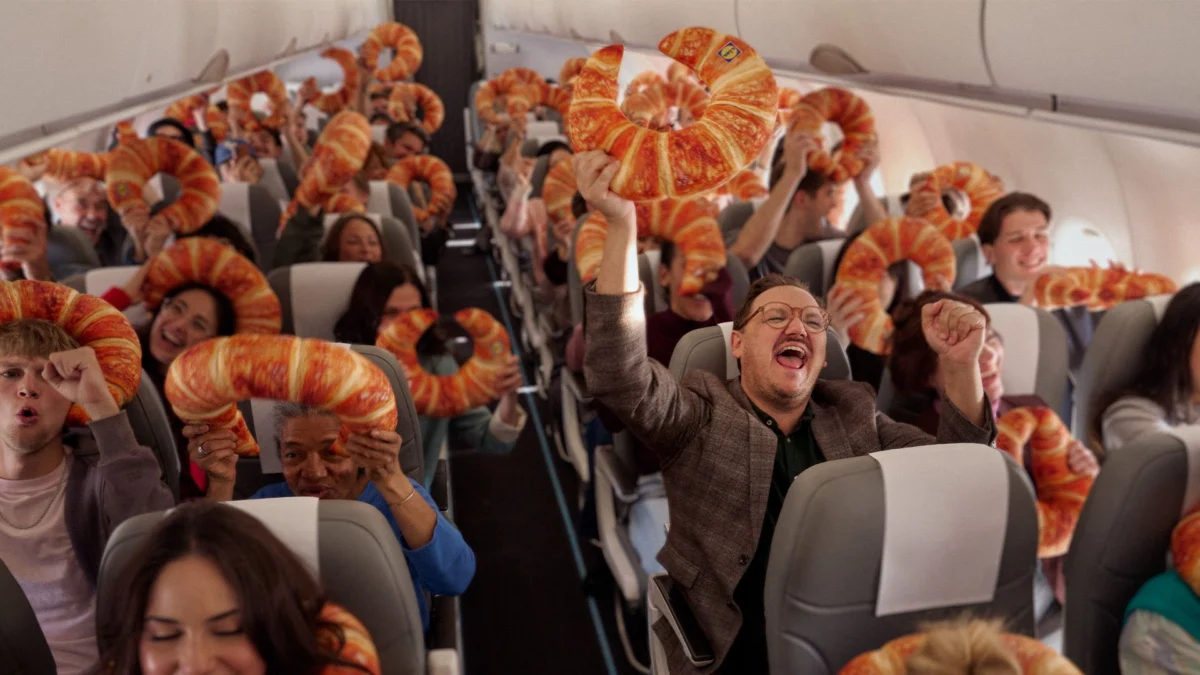
The campaign, which relied heavily on the reach of popular influencers, centered on a staged narrative of travel frustration. In a viral Instagram video, an impeccably dressed pilot interrupts the cabin’s calm, announcing an unexpected diversion from the flight’s original destination to Berlin.

In the real world, such an announcement would trigger immediate outrage, passenger complaints, and potential legal headaches for an airline. However, within the curated, "influencer-first" reality of the campaign, the mood shifted from potential anxiety to excitement. The catalyst for this mood swing was the appearance of "Riton," an influencer with significant sway over the brand’s target demographic, who began distributing the "Neckcroissants" to the confused passengers.
The object itself is a masterclass in kitsch. Visually, the pillow balances on the edge of the uncanny; at a glance, it resembles a pastry, yet from other angles, it can appear like an organic growth or a creature from a science-fiction film. This aesthetic ambiguity, rather than hindering the product, has propelled it into the realm of "ironic chic," making it a perfect prop for Halloween costumes and social media content.
2. A Chronological Breakdown of the "Croissant" Strategy
The success of the "Neckcroissant" is not an isolated incident but the culmination of a months-long strategy.

- Phase I: The Build-up. For months, the retailer had been teasing the "croissant theme" across its digital channels. By consistently pairing their low-cost, store-brand baked goods with high-fashion imagery, the company successfully bridged the gap between the budget-conscious shopper and the aspirational consumer.
- Phase II: The Paris Fashion Week "Diversion." During the height of the September fashion cycle, the brand launched the in-flight video. By timing the release with Paris Fashion Week, the brand borrowed prestige from the luxury sector, creating a stark, humorous contrast between the glitz of the runway and the "cheap" reality of a discount grocery store.
- Phase III: The Scarcity Loop. By limiting the initial run of the pillows, the brand triggered the "FOMO" (fear of missing out) effect. This prompted resellers to list the items on secondary markets for prices rivaling those of high-end travel accessories—a move that, ironically, gave the "Neckcroissant" an unearned sense of value.
- Phase IV: Potential Retail Integration. Following the pattern of previous successful stunts—such as the "Döner-Croissant" hybrid, which transitioned from a viral joke to a permanent fixture in the retailer’s cold-chain aisles—analysts expect the "Neckcroissant" to eventually hit the shelves as a mass-produced item.
3. Supporting Data and Marketing Theory
According to Hans Neubert, author of The Social Media Factor and chairman of the Federal Association for Digital Media, this campaign is a textbook example of "cultural timing."
"The retailer is not just selling pastries; they are selling relevance," Neubert explains. "By repeating the motif over several months, they have moved from a one-off joke to a recognizable brand asset. They have successfully identified that in the current climate, consumers are less interested in traditional hard-sell advertising and more interested in content that allows them to participate in a larger, self-aware joke."
The success of the campaign is measured not just in social media engagement metrics—likes, shares, and comments—but in the organic earned media that followed. When secondary sellers began inflating the price of the pillows, it provided a second wave of news coverage, further cementing the brand’s presence in the public consciousness without the need for additional paid ad spend.

4. Official Responses and Industry Perspectives
While the retailer has remained tight-lipped regarding the internal costs of the campaign, their marketing team has leaned into the irony. The "Neckcroissant" is framed as a playful response to the "drudgery of travel."
Industry experts, however, point to the risks inherent in this strategy. While the humor resonates with a younger, internet-savvy demographic, it risks alienating older, traditional shoppers who may view the "fake emergency" as unnecessarily stressful or wasteful.
"There is a fine line between being ‘in on the joke’ and being perceived as ‘cringe-inducing’ or manipulative," notes one retail consultant. "However, the fact that the brand is willing to risk a negative reaction in favor of high-impact virality shows a shift in the German retail sector. They are no longer just competing on price; they are competing for ‘share of voice’."

5. Implications: What This Means for Future Retail
The "Neckcroissant" saga represents a significant shift in how discounters approach brand identity. By utilizing irony and "best-practice" social media manipulation, the retailer has managed to elevate a commodity item to the status of a collectible.
The Gamification of Shopping
The implication for the future of the grocery industry is clear: the shopping experience is being gamified. By creating artificial scarcity and tying products to viral moments, retailers can drive traffic to their stores. For the consumer, the reward is no longer just a high-quality product at a low price—it is the satisfaction of owning a "piece of the internet."
The Rise of the "Secondary Market"
The fact that people are willing to pay the price of a train ticket to Paris for a polyester-stuffed pastry highlights the power of social media to distort value. This "merchandising of memes" is likely to become a staple of future marketing campaigns, as brands look for ways to turn mundane inventory into "drops" that mimic the hype cycles of streetwear brands like Supreme or luxury houses like Dior.

A Departure from Tradition
Traditionally, German discounters have been known for their stark, utilitarian approach to advertising. The current pivot toward lifestyle branding and influencer-led content signals an admission that the traditional consumer is disappearing. In their place is a generation that values humor, speed, and irony above the long-standing virtues of brand loyalty.
Conclusion: The "Neckcroissant" as a Cultural Mirror
As the viral dust settles, the "Neckcroissant" remains a fascinating study in modern consumer culture. It acts as a mirror to our current landscape: a place where the distance between a budget grocery store and a Paris fashion show is bridged by a single, buttery piece of fabric.
For the critics who find such marketing stunts to be a "waste of time" or "insulting to the intelligence of the consumer," the answer is simple: the engagement numbers do not lie. In a world where the daily news cycle is filled with economic uncertainty and global tension, the "Neckcroissant" offers a brief, absurd, and entirely harmless distraction.

Whether the pillow eventually finds its way into the bargain bins of every local branch or remains a rare, internet-famed collectible, it has already succeeded in its primary goal: it made us look, it made us laugh, and, most importantly, it ensured that for one brief, fleeting moment in October, everyone was talking about a four-letter discount brand.
Perhaps that is the greatest lesson of the "Neckcroissant": in the digital age, if you cannot be the most luxurious, the most innovative, or the most sustainable, you can always choose to be the most memorable. And sometimes, that is enough to win the market.