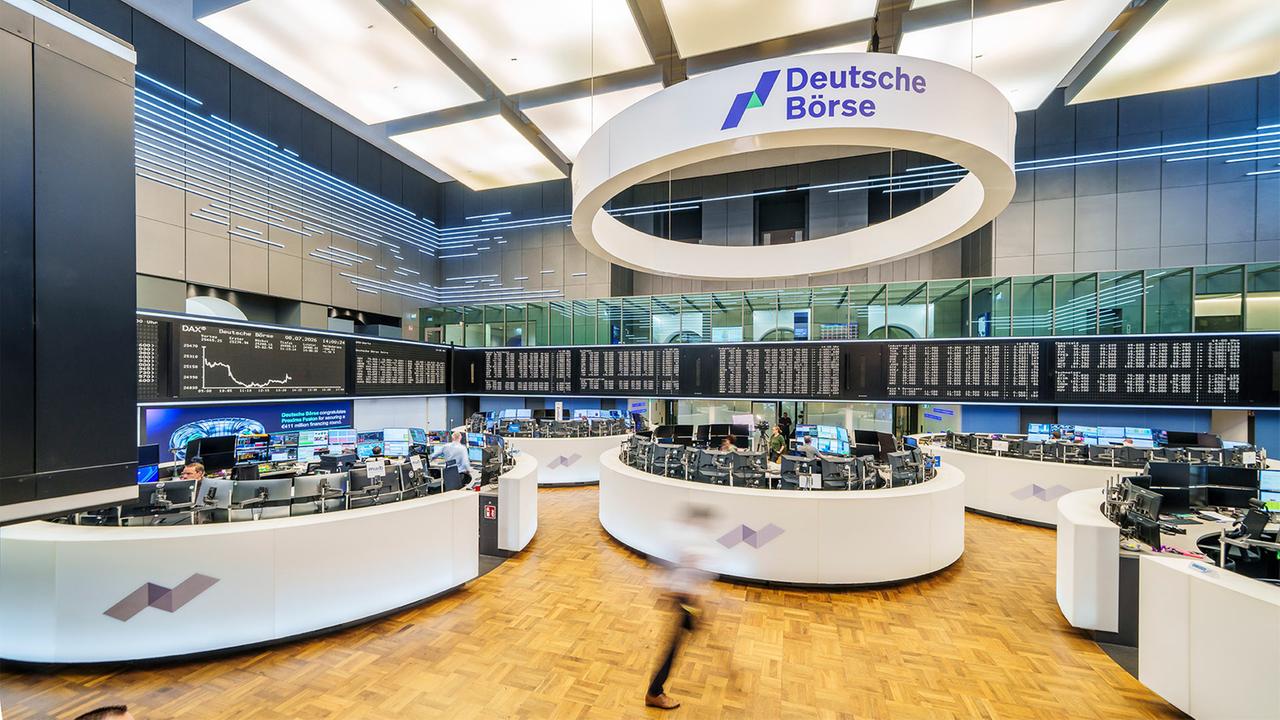
FRANKFURT – As the trading week commences, the mood on the floor of the Frankfurt Stock Exchange remains decidedly cautious. After a period of marked volatility, investors are attempting to stabilize the German DAX, with early indicators suggesting a modest recovery. However, beneath the surface of a projected 0.2% uptick to 25,238 points, market participants are grappling with a confluence of macroeconomic headwinds that threaten to derail any hopes of a sustained year-end rally.
Following a 0.7% decline to 25,181 points at the close of last Friday’s session, the German equity market finds itself in a fragile state. The index has shed 1.7% over the past week, a retreat that reflects a broader investor anxiety regarding the sustainability of current valuations and the persistence of inflationary pressures.
The Triad of Market Pressures
Market analysts point to three primary drivers of the current malaise: the stubborn nature of energy costs, the cooling sentiment surrounding the artificial intelligence (AI) sector, and the looming uncertainty regarding central bank policy.
"We are seeing a convergence of risks," explains Thomas Altmann, portfolio manager at QC Partners. "Beyond the ongoing concerns about high energy prices, there is a growing apprehension that the valuations of AI-driven enterprises have become stretched—perhaps unsustainable. To trigger a genuine year-end rally, the DAX needs more than just a reprieve; it requires fundamentally positive momentum to counter the current ‘sand in the gears’ effect," says Jens Klatt, a market analyst at XTB.
Tech Giants Under the Microscope
The coming days are critical, as the market’s focus shifts to the quarterly earnings reports of the American "Big Tech" titans. Alphabet, Microsoft, and Amazon are all slated to release their financial results, events that will serve as a litmus test for the broader market’s health.
For months, the AI-driven tech boom has been the primary engine of global equity growth. However, this engine is now under intense scrutiny. While strong numbers from these giants could act as a soothing balm for jittery investors, the margin for error is razor-thin. Analysts warn that given the lofty expectations baked into these stock prices, even a minor shortfall could trigger a cascade of volatility, reverberating far beyond Wall Street and impacting the DAX and other European indices.
Corporate Resilience: A Domestic Challenge
The narrative is no different within the DAX components themselves. The ongoing reporting season has been described as "uneven" by Andreas Lipkow of CMC Markets, who notes that many German corporations are struggling to navigate the current macroeconomic landscape.
"The market is no longer satisfied with mere optimism," says Lipkow. "It demands concrete evidence of sustainable growth." This week, investors will receive a comprehensive status update on the German economy as key DAX players—including BASF, Deutsche Bank, and automotive giants Mercedes-Benz and Volkswagen—present their quarterly figures. These reports will be closely scrutinized for signs of margin compression, the impact of high interest rates on financing costs, and the ability of these firms to maintain competitiveness in a cooling global demand environment.
The Central Bank Tightrope Walk
Beyond corporate boardrooms, the most significant influence on market sentiment remains the trajectory of global monetary policy. The US Federal Reserve (Fed) and the European Central Bank (ECB) are both approaching critical decision-making junctures.
The dilemma for both institutions remains unchanged: how to combat persistent inflation without inducing a severe economic contraction. High interest rates, while a necessary tool for cooling inflation, act as a drag on equity markets by increasing the cost of capital and making fixed-income assets, such as government bonds, more attractive to risk-averse investors.
Chronology of Policy Expectations
- The Federal Reserve: Facing a delicate situation, the Fed is meeting just six days prior to the US midterm elections. Historically, the Fed has been known to exercise restraint during politically sensitive periods. However, with US inflation data continuing to run hot, the pressure to maintain a hawkish stance remains high.
- The ECB: Similarly, the European Central Bank is expected to tread carefully. While market participants are hoping for a pause in the aggressive rate-hike cycle, the prevailing consensus is that further tightening may still be on the horizon as the ECB attempts to anchor inflation expectations across the Eurozone.
Robert Greil, chief strategist at the private bank Merck Finck, suggests that while the economic data argues for continued hikes, political and institutional realities may lead to a temporary pause. "We anticipate that both the Fed and the ECB will hold steady this week, but we remain cautious about the prospect of further increases in December," says Greil.
Global Ripple Effects: Asia’s Cautious Stance
The uncertainty in the West has predictably bled into Asian markets. The start of the week saw a broad-based decline across major indices as investors de-risked ahead of the central bank meetings and the deluge of US tech earnings.
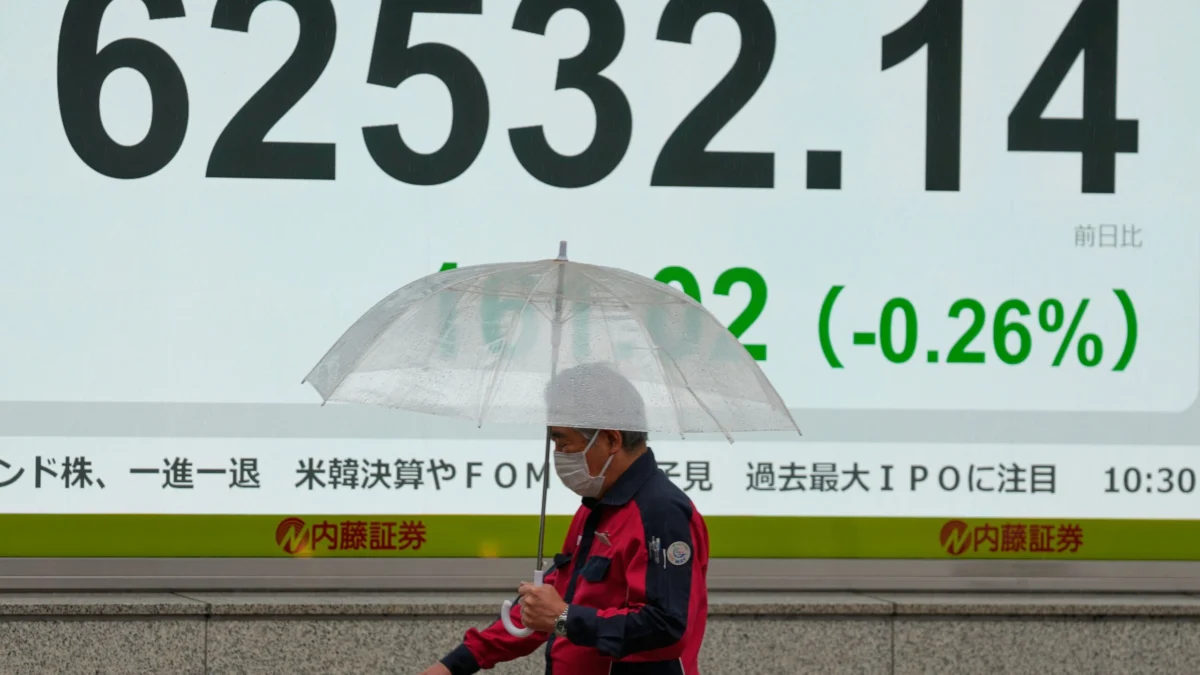
In Japan, the Nikkei index fell 0.4% to 62,431 points. Meanwhile, Chinese markets remained subdued, with the Shanghai Composite slipping 0.2% to 3,683 points, and the CSI 300 index, tracking the largest companies in Shanghai and Shenzhen, dropping 0.5% to 4,083 points. This regional weakness underscores the interconnectedness of global capital flows; when the prospect of "cheap money" fades, the sensitivity of equity markets to valuation becomes the dominant theme, regardless of geography.
Implications for the Investor
The current environment is one of "wait and see." For individual and institutional investors alike, the primary challenge is distinguishing between short-term noise and long-term structural shifts.
Strategic Considerations
- Earnings Quality over Hype: In a high-interest-rate environment, companies with strong cash flows and manageable debt loads are likely to outperform those relying on future growth projections.
- Sensitivity to Policy Signals: Market participants should watch not just for the interest rate decision itself, but for the forward guidance provided by central bank heads. A "dovish" pivot—even if signaled vaguely—could provide the catalyst for the year-end rally that bulls are so desperate to see.
- Sector Rotation: As tech valuations face pressure, capital may rotate into defensive sectors or industries that are traditionally more resilient to inflationary environments, such as consumer staples or healthcare.
Conclusion: The Path Ahead
As we look toward the remainder of the week, the DAX remains in a state of precarious equilibrium. The "wall of worry"—built upon energy prices, tech valuations, and central bank ambiguity—is formidable. However, history suggests that markets have a capacity to absorb negative news once it is fully priced in.
If the upcoming earnings reports from both the US tech giants and the German industrial pillars can provide even a modicum of stability, the market may find a foundation upon which to build. Conversely, if the combination of high interest rates and slowing corporate earnings begins to manifest in widespread guidance downgrades, the "sand in the gears" could turn into a significant bottleneck for the broader economy.
For now, the mantra on the Frankfurt floor remains one of vigilance. The coming days will not only determine the direction of the index through the end of the year but will also provide a definitive answer as to whether the current equity market cycle has sufficient legs to endure the cooling of the post-pandemic economic boom. Investors must remain agile, as the volatility of the coming week is all but guaranteed to keep the markets in a state of high tension.