In a display of nerves, grit, and high-stakes drama, German darts professional Martin Schindler has etched his name into the annals of sporting history. While the ultimate dream of claiming a major title fell just short in a tense finale at Dortmund’s Westfalenhalle, Schindler’s performance at the 2026 Darts European Championship marks a watershed moment for the sport in Germany.
The Main Event: A Title Match for the Ages
The atmosphere inside the Westfalenhalle was nothing short of electric. For the first time in the history of the Professional Darts Corporation (PDC), a German player had breached the final stage of a major European Championship. Martin Schindler, the 28-year-old native of Rodgau, stood on the oche with the hopes of a nation on his shoulders.
However, standing in his way was the formidable Englishman Ross Smith. The final, which concluded late Sunday evening, saw a hard-fought battle that ultimately ended in an 8-11 defeat for the German hopeful. While the loss was undoubtedly a bitter pill to swallow for the man nicknamed "The Wall," the magnitude of the achievement remains unparalleled. Schindler’s progression to the final stands as the deepest run a German athlete has ever made in a PDC major tournament, surpassing the historic efforts of Max Hopp and Gabriel Clemens, who had both previously hit a wall in the semifinal stages of major competitions.
Chronology: From Last-Minute Qualification to the Main Stage
To understand the gravity of Schindler’s run, one must look at the precarious nature of his entry into the tournament. Schindler, who entered the competition as the world’s 23rd-ranked player, had only qualified for the event in the final moments of the qualification window. His journey was far from a comfortable path; it was a gauntlet of elite-level competition that required unwavering consistency.
- The Early Rounds: Schindler opened his campaign with a nail-biting 6-5 victory over Dutchman Wessel Nijman, a win that set the tone for a series of high-pressure finishes.
- Building Momentum: In the following round, he dominated Jermaine Wattimena with a decisive 10-4 scoreline, proving that his game was peaking at the perfect time.
- The Quarterfinal Statement: The match that turned heads across the professional circuit was his quarterfinal demolition of Jonny Clayton. Defeating the world’s number five with a 10-1 masterclass served notice that Schindler was not just a participant, but a legitimate threat to the title.
- The Semifinal Clash: Facing Krzysztof Ratajski—the man who had just stunned the world by eliminating the prodigy Luke Littler—Schindler held his nerve in a 11-6 victory. This win did more than just secure a final spot; it cemented his qualification for the prestigious Grand Slam of Darts.
Supporting Data: Statistical Resilience
Schindler’s performance throughout the weekend was defined by a marked improvement in his doubling efficiency and scoring power under pressure. Entering the tournament with a year defined by inconsistent form and few notable deep runs, the "Rodgau Rocket" found his rhythm in Dortmund.
The financial and ranking implications of his performance are significant. By reaching the final, Schindler secured a prize purse of £80,000, a welcome boost that propelled him back into the top 20 of the PDC Order of Merit. This rise is crucial, as it provides him with better seeding and entry into future televised events, effectively stabilizing his career trajectory for the remainder of the 2026 season.
Ross Smith, on the other hand, solidified his status as a titan of the game. His victory at the European Championship, following his previous successes at the 2022 Euros and the World Series Finals, saw the Englishman climb to sixth in the world rankings. His ability to maintain composure when Schindler began a late-game surge proved to be the deciding factor in the final.
Official Responses and Tactical Analysis
Following the match, the consensus among darts analysts was that while Schindler’s scoring was world-class, his tactical nerves were tested in the final hurdle. "The crowd was incredible, and I felt the weight of the moment," Schindler noted in post-match discussions.
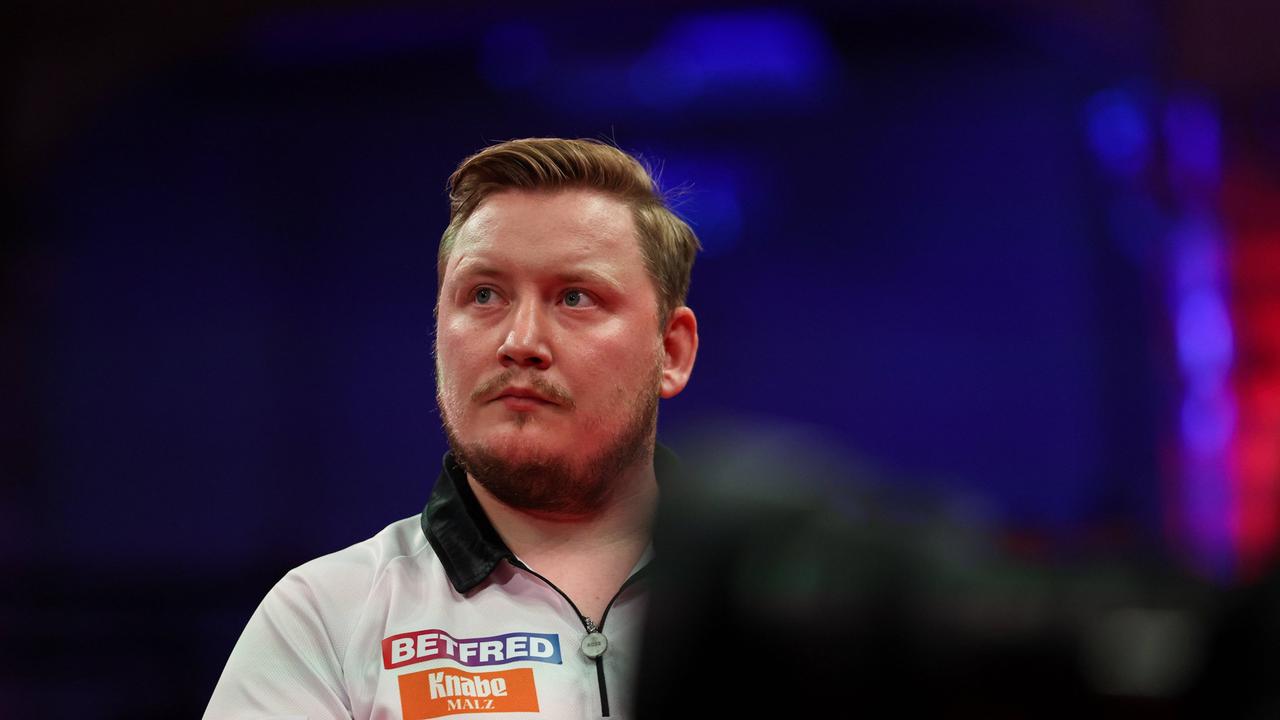
Experts pointed to the difference in experience when facing the pressure of a final. While Schindler started the final match with heavy intent, the sheer intensity of the Westfalenhalle crowd—which was overwhelmingly in his favor—seemed to create a paradoxical pressure. When Ross Smith began to pull away, it looked as if the game might be a runaway for the Englishman. However, Schindler’s late-match rally—where he closed the gap significantly—showed the mental fortitude that has earned him his nickname, "The Wall."
"He didn’t play his best darts in the final, but you have to credit the pressure of being the first German to ever stand there," said one commentator during the post-match breakdown. "He was playing against history as much as he was playing against Ross Smith."
Implications for the Future of German Darts
The implications of this tournament extend far beyond the trophy cabinet of Ross Smith. For years, Germany has been a hotbed for darts fandom, with thousands of fans traveling to tournaments across Europe. However, the domestic game has often struggled to produce a consistent challenger on the world stage.
1. Inspiring a New Generation
Schindler’s run has provided a "Hopp/Clemens effect" on steroids. The visibility of a German finalist in a major televised event is expected to spike viewership numbers for local broadcasts and increase participation in regional leagues. The success serves as a blueprint for younger players in the German PDC circuit, proving that the gap between the European qualifiers and the world’s top ten is not as wide as previously imagined.
2. Market Growth and Commercial Interest
The commercial impact of a homegrown star is undeniable. With Schindler now firmly established in the Top 20, sponsors and media outlets are likely to increase their investment in German darts. The Westfalenhalle proved that the appetite for the sport in Germany is massive; the prospect of a local hero performing at this level ensures that future German-based tournaments will be even more commercially viable.
3. The Professionalization of the "German Circuit"
Schindler’s return to the Top 20 signifies a maturing of his professional life. With the financial security of his £80,000 earnings and the points gained, he can now plan his calendar with more strategic focus. No longer fighting for qualification points in every minor event, he can allocate more time to high-level training and tactical preparation.
Conclusion: A Stepping Stone, Not a Ceiling
As the dust settles on the Westfalenhalle, the narrative surrounding Martin Schindler has shifted. He is no longer just the "promising talent from Rodgau"; he is a proven major finalist. While the title escaped him on this occasion, the experience gained in that final—dealing with the unique pressure of a massive, roaring home crowd and the tension of a major trophy on the line—is an experience that cannot be replicated in practice.
The 2026 European Championship will be remembered not for who won, but for the moment the glass ceiling for German darts was shattered. Martin Schindler may have walked away without the trophy, but he left the arena with something perhaps more valuable: the knowledge that he belongs at the very top of the game. The road to the next major begins now, and for the first time, the path ahead looks brighter than ever for the German contingent. As "The Wall" continues to build his legacy, one thing is certain—he is no longer a player who is just happy to be there; he is a player who is here to win.