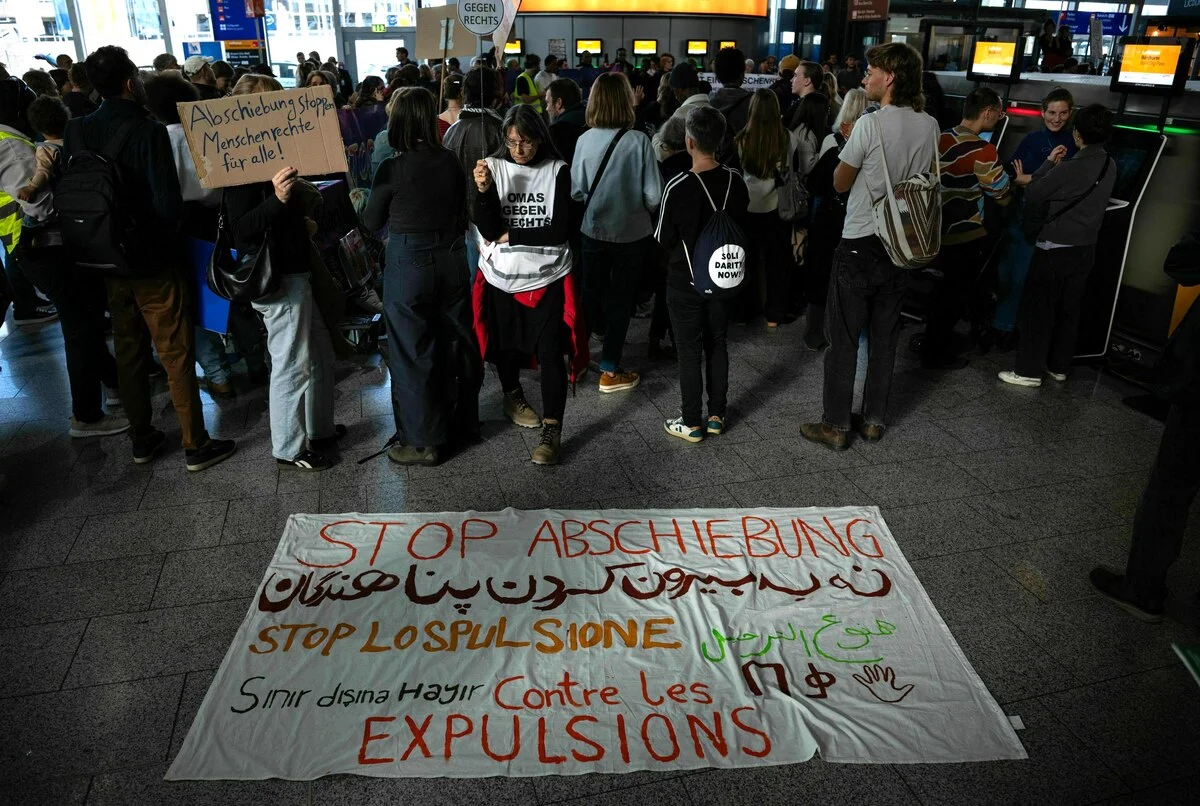
Across Germany, the silence of airport departure halls was punctured this weekend by the voices of thousands of protesters. From Berlin-Brandenburg to Munich, demonstrators gathered to signal their vehement opposition to the escalating practice of deportations and the hardening of asylum policies. This wave of civil unrest comes at a critical juncture, as the European Union prepares to unveil a sweeping legislative overhaul that would transform the border agency, Frontex, into a centralized deportation authority.
The Scope of Dissent: A Coordinated Response
The demonstrations, which took place on Saturday, were characterized by a stark contrast between official police estimates and the figures provided by activist coalitions. While regional police departments reported collective turnouts of roughly 1,700 participants across major transit hubs—including 700 in Munich, 400 in Leipzig, 300 in Frankfurt, and 150 in Berlin—the organizing alliance claimed that “several thousand” people had participated across a broader network of decentralized actions.
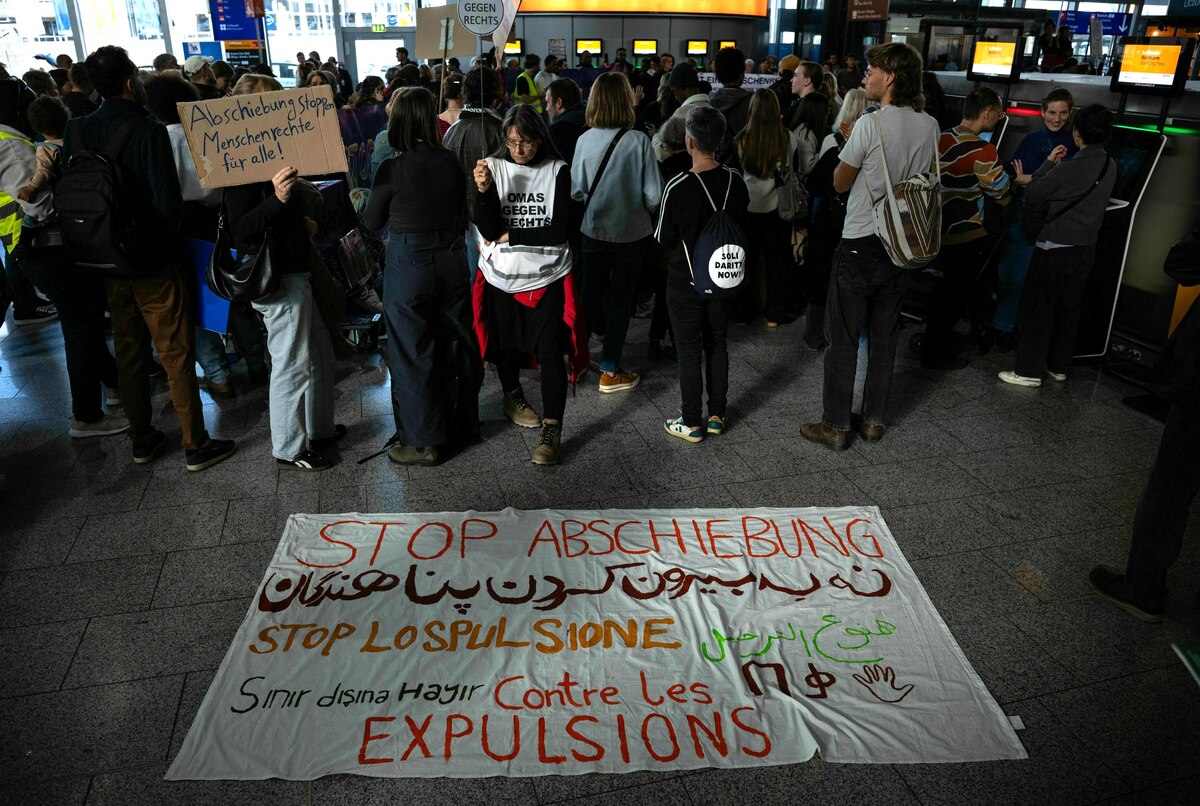
In cities such as Bielefeld and Hanover, supplementary rallies underscored the national scope of the movement. Protesters carried banners with slogans like "Stop Deportation" and "Freedom of Movement for All," articulating a clear rejection of the state’s current migration trajectory. The protests were not merely general demonstrations of solidarity; they were targeted at specific infrastructure projects. In Frankfurt and Munich, activist groups are campaigning against the construction of dedicated "deportation terminals"—specialized facilities designed to expedite and streamline the removal of rejected asylum seekers.
"We oppose any infrastructure that facilitates deportations," a spokesperson for the alliance stated. "The funding diverted to these projects should instead be invested in the integration of those seeking refuge."
Chronology of Escalation: From Local Protests to EU Policy
The tension surrounding deportation flights has been building throughout 2026, particularly concerning charter flights to Afghanistan. Leipzig/Halle Airport has become a focal point for these operations. While authorities maintain that the individuals on these flights are primarily those with criminal records, civil society groups argue that the government is systematically trampling on the fundamental right to asylum.
The controversy is further fueled by the government’s willingness to engage in direct communication with Taliban representatives to facilitate these returns—a practice that critics describe as a moral failure and a breach of humanitarian standards.
Simultaneously, the European Union has been quietly preparing a paradigm shift. According to preliminary reports, the European Commission is set to present a legislative package on October 27, 2026, aimed at a "European migration turnaround." The core of this proposal is the empowerment of Frontex, the European Border and Coast Guard Agency, which would be mandated to act as the primary coordinating body for deportations across all member states.
Supporting Data: The Statistics of Return
The push for stricter enforcement is driven by a significant rise in return rates. EU Expansion Commissioner Magnus Brunner, speaking to the Welt am Sonntag, noted that the return quota for individuals without legal residence in the EU has climbed to over 30 percent in the first ten months of 2026. This marks a notable increase from the 20 percent recorded during the same period in the previous year.

Despite this progress, the Commission maintains that the current figures are insufficient. "Whoever has no right to remain in the EU must actually leave," Brunner stated, framing the new legislative proposal as a necessary measure to ensure the credibility of the European asylum system.
However, the internal mechanics of this system are showing signs of strain. Reports suggest that Frontex, despite its annual budget exceeding one billion euros, has run out of funding for the EU Reintegration Program. This program provides financial assistance to individuals who choose to return to their home countries voluntarily. The shortfall is attributed to an unexpected surge in demand: over 21,200 individuals registered for the program by October—a 59 percent increase compared to the previous year. This discrepancy suggests that while the EU is prioritizing forced removals, the demand for voluntary, supported return is outstripping the current allocation of resources.
Official Responses and Political Rhetoric
The government’s position remains anchored in the argument that a functioning migration policy requires the ability to enforce returns. By centralizing the deportation process, officials argue, the EU can achieve greater efficiency, minimize bureaucratic bottlenecks, and ensure uniform standards across member states.
The plan for a "Deportation Coordination Center" is intended to integrate the fragmented efforts of national border authorities into a cohesive, centralized pipeline. For the EU Commission, this is a matter of administrative necessity; for the protesters at German airports, it is an institutionalization of exclusion.

A representative from the "Abschiebeterminal MUC verhindern!" (Prevent the Munich Deportation Terminal!) campaign articulated the core grievance: "The airport is not just a transit hub; it is becoming an industrial-scale deportation center. By providing this infrastructure, the airport authorities are profiting from the misery of others and actively participating in the dismantling of the right to asylum."
Implications for the Future of Asylum
The convergence of these events—the grassroots protests against local infrastructure and the top-down move toward a centralized EU deportation agency—highlights a deep-seated fracture in European political discourse.
1. The Erosion of Humanitarian Norms
Critics argue that the move to normalize relations with the Taliban for the purpose of repatriations sets a dangerous precedent. It effectively legitimizes a regime known for its human rights abuses in exchange for the domestic political goal of increasing return statistics. The protesters’ demand for an "immediate deportation stop" is rooted in the conviction that no asylum seeker should be returned to a country where their fundamental rights cannot be guaranteed.
2. The Economic Costs of Enforcement
There is a growing debate regarding the opportunity cost of these policies. The massive investment required to build and operate specialized deportation terminals is being contrasted with the chronic underfunding of integration programs. Advocates for refugees argue that if the same resources were allocated to language courses, vocational training, and social support, the long-term economic and social benefits would far outweigh the temporary political gains of high deportation numbers.

3. The Future of Frontex
The transformation of Frontex into a "centralized deportation agency" represents a significant expansion of its mandate. Historically designed for border surveillance and monitoring, the agency is now pivoting toward executive functions in the removal of migrants. This shift raises significant concerns regarding oversight and accountability. If a centralized European body is responsible for these operations, who will hold that body accountable for potential violations of international law or individual human rights during the deportation process?
4. Public Sentiment vs. Institutional Strategy
The events of this past weekend prove that the issue of migration remains the most volatile topic in European politics. The disconnect between a public that continues to organize in solidarity with asylum seekers and an institutional framework that is aggressively pursuing mass return policies suggests that the coming months will be marked by increased friction.
As the EU moves toward the October 27 legislative presentation, the stakes are high. If the proposed "migration turnaround" passes, it will mark the most significant hardening of European border policy since the onset of the 2015 migration crisis. For the thousands of protesters currently lining the fences of Germany’s airports, the struggle is not merely about individual flight paths—it is about the soul of European democracy and its commitment to the universal principles of human dignity and asylum.
As the debate intensifies, the question remains whether the EU can successfully balance the administrative pressures of migration management with its stated commitment to human rights. For now, the crowds at the airports are clear: they believe the current path is the wrong one, and they are prepared to make their voices heard as long as the planes continue to take off.