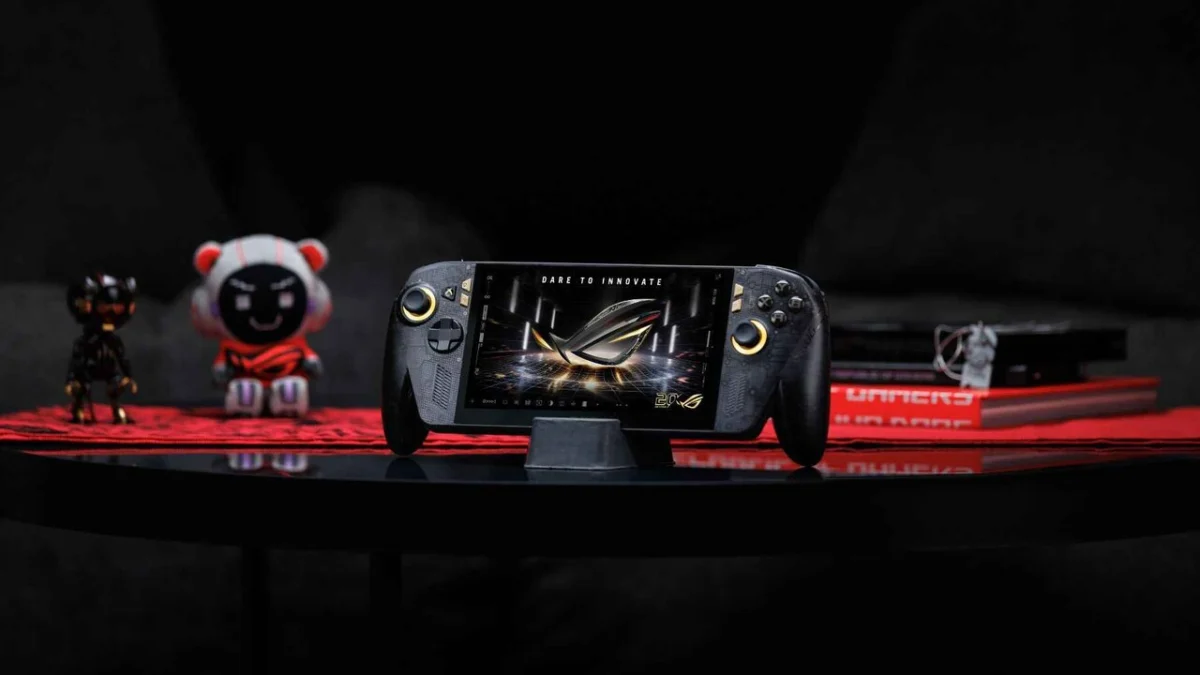
The landscape of handheld PC gaming is currently undergoing a significant shift. While Windows has traditionally been the default operating system for devices like the Asus ROG Ally and the Acer Predator Atlas, the Linux-based distribution Bazzite is rapidly positioning itself as the superior alternative for enthusiasts. By leveraging the power of SteamOS-like interfaces and open-source optimization, Bazzite is bridging the gap between console-like convenience and PC-level performance.
In a recent development, the Bazzite development team—a key player within the Open Gaming Collective (OGC)—has announced preliminary support for two of the most anticipated handheld devices of the year: the Asus ROG Ally X (often referred to as the Ally X20) and the Acer Predator Atlas 8. This expansion marks a pivotal moment for Linux handheld gaming, as developers work to bring parity to hardware that was originally designed exclusively for Microsoft’s ecosystem.
The Core Developments: A New Frontier for Handheld Linux
The Bazzite project, known for its "immutable" Fedora-based architecture, provides a "Steam Deck-like" experience on non-Valve hardware. With the release of their latest testing branch, the team has turned its attention to the Asus ROG Ally X, an iterative update to the original Ally that features a significantly larger battery, refined ergonomics, and improved thermal management.
The Asus ROG Ally X Integration
According to a detailed announcement from the Bazzite development team, the "Testing" branch now allows users to install the distribution on the Ally X. While the experience is not yet "plug-and-play" for the average consumer, it represents a massive milestone for the Linux community.
Key achievements in the current build include:
- Display Optimization: Full support for the 7.4-inch display, including High Dynamic Range (HDR) and Variable Refresh Rate (VRR) capabilities.
- Power Management: Initial TDP (Thermal Design Power) control is functional, allowing users to influence the power envelope of the Z1 Extreme chip.
- Macro Functionality: The two back-mounted macro buttons are now fully mappable, allowing for customized gameplay inputs.
- Sleep/Wake Stability: Preliminary testing indicates that the "Suspend-to-RAM" functionality is stable, a notorious pain point for early-stage Linux ports on handhelds.
However, the team remains transparent about the remaining work. Fan control curves and RGB lighting management are currently under development. Until these features are native to the Bazzite/OpenGamepadUI (OGUI) environment, the team recommends using the well-known "Decky Loader" plugin, specifically the "Panel de Control" tool, to manage thermals and fan profiles manually.
The Acer Predator Atlas 8: A Collaborative Effort
Simultaneously, the Bazzite team has begun the groundwork for supporting the Acer Predator Atlas 8. Unlike the Asus device, which relies on the AMD Ryzen Z1 Extreme, the Predator Atlas 8 utilizes Intel’s Arc G3 (Extreme) architecture. This introduces a unique set of challenges, particularly regarding driver support and kernel-level integration.
Current progress on the Atlas 8 includes:
- Input Mapping: Initial support for remapping buttons, with the "Guide" button successfully triggering the overlay on the left side of the screen.
- Overlay Integration: The dedicated "Predator" button on the device is now mapped to trigger the system menu on the right side of the screen, mirroring the workflow found on the Steam Deck.
Missing features, such as functional back-macro buttons and gyroscope sensor support, are currently on the development roadmap, though a firm timeline for their implementation has not been established.
Chronology of the Bazzite Project
To understand the significance of this update, one must look at the trajectory of Bazzite.
- Phase One (Foundation): Bazzite began as an experiment to bring the SteamOS 3.0 experience (specifically the
gamescopecompositor) to general-purpose Linux distributions. It quickly gained traction for being more "feature-complete" than Valve’s own official SteamOS image, which is technically only supported on the Steam Deck. - Phase Two (Mainstreaming): As the "Handheld PC" market exploded, Bazzite transitioned from a hobbyist project to a polished distribution. By joining the Open Gaming Collective, the team began formalizing the development of standardized kernels and software stacks that could work across multiple vendors.
- Phase Three (Hardware Parity): The current phase, marked by the support for the Ally X and the Predator Atlas 8, represents the transition to "Platform Parity." The goal is to provide a user experience that is indistinguishable from, or superior to, Windows-based handhelds.
Supporting Data: Why Linux Beats Windows for Handhelds
The demand for Bazzite is driven by several performance and architectural advantages:
- Memory Management: By utilizing a highly optimized, gaming-centric kernel, Bazzite often leaves more system RAM available for the game engine compared to the bloated background processes of Windows 11.
- The "Immutable" Advantage: Bazzite utilizes an immutable file system (ostree), which prevents the user from accidentally breaking the operating system through faulty driver updates or configuration changes. This "reset-proof" nature is ideal for a console-style device.
- Shader Pre-caching: Through the integration of Steam’s shader pre-caching mechanism, Bazzite eliminates the "stuttering" often found in Windows-based titles, where shaders are compiled in real-time during gameplay.
Official Responses and the Role of the Open Gaming Collective
The Bazzite team operates with a philosophy of radical transparency. In the forum entry detailing the Ally X support, lead developer "Andy10115" emphasized that while the "heavy lifting" regarding hardware compatibility has been addressed, the community’s role is now critical.
"We have resolved the majority of the major blockers," the developer noted. "However, the handheld space is fragmented. Every manufacturer implements their embedded controller differently. We need the community to report edge cases regarding standby behavior and specific power states to ensure that we don’t cause hardware damage or battery degradation."
The Open Gaming Collective (OGC) serves as the backbone for this effort. By working on a unified kernel driver, the OGC aims to make "plug-and-play" Linux support a standard expectation for future handheld manufacturers, rather than an afterthought.
Implications for the Handheld Market
The success of Bazzite on the ROG Ally X and the Acer Predator Atlas 8 has profound implications for the gaming industry:
1. Consumer Choice
For the first time, consumers can purchase high-end handheld hardware without being tethered to the Windows licensing model. This lowers the entry cost for some users and provides a faster, more responsive UI that respects the user’s privacy and resources.
2. Longevity and Sustainability
Windows-based handhelds often suffer from "software rot"—where updates from the manufacturer stop arriving, and the device becomes sluggish or incompatible with new software. Because Bazzite is open-source, the hardware’s lifespan is theoretically infinite; even if Asus or Acer stop supporting the device, the community can continue to update the Linux kernel and graphics drivers indefinitely.
3. The "SteamOS" Ecosystem
Valve has hinted at releasing a standalone version of SteamOS for other handhelds, but that release has been slow to materialize. Bazzite is essentially acting as a "placeholder" that has become a "standard." If Valve does eventually release SteamOS to the public, the transition for a Bazzite user will be seamless, as the underlying architecture is virtually identical.
4. Pressure on Manufacturers
As more users switch to Linux-based handheld distributions, hardware manufacturers will feel increased pressure to provide open-source documentation for their firmware. If a device is "Bazzite-certified" out of the box, it could potentially become a major selling point, much like the "Works with Chromebook" or "Steam Deck Verified" badges.
Conclusion
The inclusion of the Asus ROG Ally X and the Acer Predator Atlas 8 into the Bazzite testing branch is more than just a software update; it is a declaration of intent. The Linux gaming community is no longer just "making it work"; they are building a robust, high-performance platform that rivals the giants of the tech industry.
As testing continues, the Bazzite team encourages early adopters to exercise caution. Installing a testing branch carries inherent risks, but for those willing to participate in the development process, the rewards are clear: a faster, cleaner, and more efficient way to play the latest titles on the most powerful hardware currently available. As the OGC continues its work, the day when Linux is the default operating system for handheld gaming feels closer than ever.