Frankfurt am Main, Germany – October 25, 2026 – Hundreds of activists converged on major German airports today, staging coordinated demonstrations against the nation’s deportation policies and the practice of detention pending deportation. Organized by a broad "Alliance Against Deportations" (Aktionsbündnis gegen Abschiebungen), the protests aimed to draw public attention to what organizers describe as inhumane practices and controversial cooperation with regimes such as the Taliban in Afghanistan. While the demonstrations garnered significant public attention and media coverage, federal police reported no significant disruptions to flight operations across the affected airports.
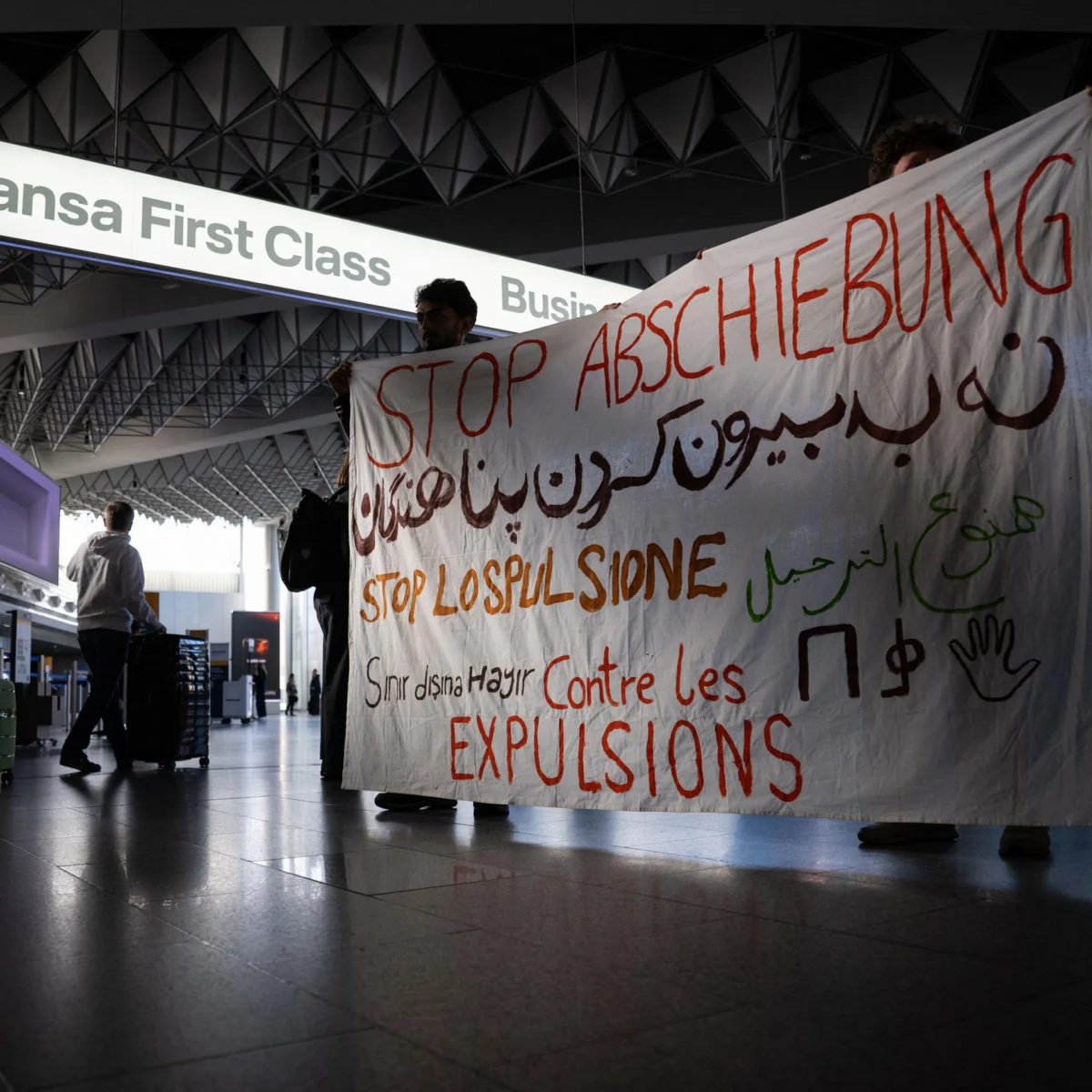
The synchronized actions unfolded at key aviation hubs including Frankfurt am Main, Leipzig/Halle, Cologne, Munich, Düsseldorf, Hanover, and Berlin. At Leipzig/Halle airport, organizers reported a turnout of approximately 500 participants, highlighting the scale of the mobilization. Demonstrators, holding banners proclaiming "Stop Abschiebung" (Stop Deportation) and "Human Rights Before Border Control," voiced their fervent opposition to the government’s approach to asylum and migration.
A central point of contention for the protesters was Germany’s continued policy of deporting individuals to Afghanistan, a country now under Taliban rule. Critics argue that such cooperation not only legitimizes a regime known for severe human rights abuses but also places returnees in grave danger. The protests underscore a growing societal divide over the balance between national sovereignty, international law, and humanitarian obligations in Germany’s immigration discourse.
Main Facts
Today’s widespread protests marked a significant escalation in civil society’s opposition to Germany’s deportation practices. Organized under the umbrella of the "Alliance Against Deportations," a coalition of human rights organizations, refugee aid groups, and activist networks, the demonstrations targeted seven of Germany’s busiest airports. The primary objective was to halt all deportations, particularly those to regions deemed unsafe or governed by oppressive regimes, and to abolish the practice of detention pending deportation, which activists contend violates fundamental human rights.
The largest reported turnout occurred at Leipzig/Halle Airport, where around 500 individuals gathered. Smaller but equally determined groups assembled at other major international airports, including Frankfurt, Germany’s largest air hub, as well as Cologne/Bonn, Munich, Düsseldorf, Hanover, and Berlin Brandenburg (BER). The choice of airports was strategic, as these facilities are frequently used for charter deportation flights.
Key demands articulated by the demonstrators included:
- An immediate moratorium on all deportations to Afghanistan and other conflict zones.
- Cessation of all forms of cooperation with the Taliban or other authoritarian regimes concerning migration matters.
- An end to detention pending deportation, with calls for alternative, humane solutions for individuals awaiting removal decisions.
- Increased transparency regarding deportation procedures and destinations.
Despite the broad scope and significant participant numbers, the Federal Police, responsible for security at German airports, confirmed that there were no major impacts on flight schedules or airport operations. The protests remained largely peaceful, characterized by static demonstrations, banner displays, and speeches rather than attempts to breach security perimeters or obstruct runways. This outcome reflects both the strategic planning of the activists to maximize visibility without causing undue disruption to the general public, and the preparedness of law enforcement to manage the gatherings. The events, broadcast widely by national media, have reignited a passionate debate about Germany’s role in international migration and human rights.
Chronology of Discontent
The roots of today’s protests are deeply embedded in Germany’s evolving migration landscape and a series of policy decisions that have increasingly prioritized deportation efficiency.
Background to the Protests
Germany, a primary destination for asylum seekers within the European Union, has faced continuous challenges in managing its immigration system. Following the significant influx of refugees in 2015, public and political pressure mounted to expedite asylum procedures and increase the rate of deportations for those whose applications were rejected or who committed crimes. Over the past few years, the government, across various coalition formations, has implemented stricter asylum laws, expanded the list of "safe countries of origin," and intensified efforts to conclude repatriation agreements with origin countries.
A particularly contentious aspect has been the situation in Afghanistan. Despite the Taliban’s takeover in August 2021 and the subsequent humanitarian crisis and widespread human rights abuses, Germany has, at times, continued to carry out deportations to the country, albeit often under specific conditions or to neighboring countries from which further removal to Afghanistan was possible. This policy has drawn consistent condemnation from human rights organizations, who argue that no part of Afghanistan can be considered safe for returnees, especially for women, ethnic minorities, or individuals with connections to Western organizations. The perceived cooperation, however indirect, with the de facto Taliban authorities for the purpose of facilitating returns has been a flashpoint, fueling moral outrage among activists.
Moreover, the practice of Abschiebehaft (detention pending deportation) has been a long-standing point of criticism. Human rights advocates argue that detaining individuals who have not committed a crime, solely for administrative purposes, often in conditions akin to penal incarceration, violates international human rights standards. These factors collectively built a strong foundation of discontent, culminating in the coordinated action seen today.
Pre-Event Build-Up
The "Alliance Against Deportations" did not emerge overnight. It represents a consolidation of various grassroots initiatives, national NGOs like Pro Asyl and Amnesty International Germany, and church-based aid groups that have been actively campaigning against deportations for years. The decision to stage a nationwide airport protest was meticulously planned over several months.
Social media played a crucial role in mobilizing support. Campaigners used platforms to share stories of individuals facing deportation, highlight the dangers awaiting them in their home countries, and expose alleged systemic flaws in the asylum process. Webinars and online meetings were held to coordinate strategies, share legal advice, and train activists in non-violent direct action. Physical meetings and local outreach efforts in cities across Germany ensured that the message resonated with a diverse audience, from seasoned activists to concerned citizens. Flyers, posters, and press releases were distributed widely, announcing the date and locations of the protests and outlining the specific demands. The alliance consciously sought to frame the issue not just as a legal one, but as a moral imperative, emphasizing solidarity with those affected by deportation policies.
Day of the Protests
The protests unfolded largely as planned, beginning early on the morning of October 25th.
- Frankfurt am Main: Activists gathered outside Terminal 1, holding a prominent banner stating "Stop Abschiebung – No Deal with the Taliban." Speeches highlighted individual cases and condemned government policies. The atmosphere was determined but peaceful, with a visible police presence ensuring order.
- Leipzig/Halle: As the designated focal point, the protest here was the largest. Participants formed a human chain, chanting slogans such as "Bleiberecht für Alle!" (Right to Stay for Everyone!) and "Kein Mensch ist illegal!" (No Human is Illegal!). Organizers set up information booths, offering leaflets and engaging with passersby.
- Munich: Demonstrators held a silent vigil near the departure halls, holding up signs with the names and ages of individuals recently deported or facing deportation. This symbolic act aimed to personalize the issue and underscore the human cost of current policies.
- Cologne, Düsseldorf, Hanover, Berlin: Similar scenes played out, with activists displaying banners, distributing flyers, and engaging in chants. The protests were strategically located in areas accessible to the public and visible to arriving and departing passengers, ensuring maximum exposure.
Throughout the day, police maintained a perimeter around the protest areas, ensuring that airport operations remained unhindered. While there were isolated instances of verbal exchanges between demonstrators and counter-protesters or frustrated travelers, no arrests were reported, and the overall mood remained one of disciplined civil disobedience. The events concluded in the late afternoon, with organizers vowing to continue their campaign until their demands are met.
Supporting Data and Context
Understanding the protests requires a deeper dive into the statistical realities and human rights dimensions of Germany’s deportation policies.
Statistics on Deportations
Germany consistently ranks among the top European nations in terms of asylum applications and subsequent deportations. While precise figures for 2026 are still evolving, extrapolations from previous years paint a clear picture. In recent years, Germany has annually deported between 20,000 and 30,000 individuals whose asylum claims were rejected or whose right of residence expired. An additional tens of thousands leave voluntarily, often with financial incentives.
The vast majority of deportations are carried out to European countries (e.g., Balkan states under the "safe countries of origin" designation) or to countries with established repatriation agreements. However, a significant number also target countries outside Europe, including various African nations, and controversially, Afghanistan. While direct charter flights to Kabul have been suspended at various points due since the Taliban takeover, indirect deportations via third countries or to bordering nations with subsequent transfers have continued, albeit in smaller numbers. The critics argue that even a single deportation to an unstable or oppressive regime is one too many, given the potential for severe harm. The detention pending deportation facilities across Germany house thousands annually, with stays ranging from a few days to several months, impacting individuals who often have deep roots in Germany but lack legal status.
Human Rights Concerns
The core of the "Alliance Against Deportations’" criticism rests on fundamental human rights principles.
- Non-Refoulement: The principle of non-refoulement, enshrined in international refugee law, prohibits states from returning individuals to countries where they would face persecution, torture, or other irreparable harm. Activists argue that deportations to Afghanistan, under Taliban rule, demonstrably violate this principle. The Taliban’s brutal repression of women, ethnic minorities, journalists, and anyone perceived as opposing their ideology creates an environment where safe return is impossible for many.
- Cooperation with the Taliban: The perceived engagement with the Taliban, even if indirect or purely administrative, is viewed by protesters as a moral compromise. They argue that any interaction that facilitates deportations lends legitimacy to a regime that lacks international recognition due to its human rights record. Critics demand that Germany uphold its stated values by refusing to engage with such regimes on matters that compromise human dignity.
- Conditions of Detention Pending Deportation: Detention pending deportation is heavily scrutinized. Human rights bodies, including the UN Committee against Torture, have raised concerns about the conditions in these facilities, which often resemble prisons. Critics argue that detaining individuals who have committed no crime, merely for administrative purposes, without proper judicial oversight and access to legal remedies, constitutes arbitrary detention. They advocate for community-based alternatives that are less restrictive and more humane.
- Impact on Families and Children: Deportations frequently separate families, leaving children born and raised in Germany to face an uncertain future in a country they may have never known. The psychological trauma inflicted on individuals and families by the threat or reality of deportation is a significant concern for humanitarian organizations.
Organizational Structure of the "Alliance Against Deportations"
The "Alliance Against Deportations" is not a single entity but a dynamic coalition. It includes:
- National NGOs: Organizations like Pro Asyl, Germany’s leading refugee advocacy group, provide legal expertise, lobby politicians, and coordinate national campaigns. Amnesty International Germany contributes its global human rights monitoring perspective.
- Local Initiatives: Numerous smaller, grassroots groups in towns and cities across Germany focus on direct support for refugees, organizing local protests, and providing practical aid.
- Church and Faith-Based Organizations: Several Protestant and Catholic church aid organizations are deeply involved, driven by humanitarian and ethical considerations, often offering sanctuary and legal support.
- Student and Youth Activist Networks: A significant portion of the demonstrators are young people, energized by global justice movements and climate activism, who see migration rights as an integral part of human rights.
- Migrant Self-Organizations: Groups formed by migrants and refugees themselves play a crucial role in amplifying voices, sharing experiences, and shaping the alliance’s demands.
This decentralized yet coordinated structure allows for broad mobilization, diverse perspectives, and sustained advocacy efforts, making the alliance a formidable voice in the German human rights landscape.
Official Responses
The protests have elicited varied responses from government officials and political parties, reflecting the complex and often polarized nature of the migration debate in Germany.
Government Stance
The German federal government, through the Federal Ministry of the Interior and Community, reiterated its commitment to upholding the rule of law. A spokesperson for the Interior Ministry, while acknowledging the right to peaceful protest, stated that deportations are a necessary component of a functioning asylum system. "Those who have exhausted all legal avenues and whose asylum applications have been definitively rejected are obliged to leave the country," the spokesperson emphasized. "This principle is essential for maintaining the integrity and sustainability of our asylum system."
Regarding the contentious issue of Afghanistan, the government typically maintains that each case is assessed individually, taking into account the security situation on the ground and the personal circumstances of the individual. While direct diplomatic relations with the Taliban government are not officially recognized, the government has previously stated that communication channels may be necessary for administrative purposes, such as securing safe passage for German citizens or facilitating humanitarian aid, and in some instances, for the logistical arrangements of returns. Officials often stress that humanitarian considerations are paramount, but that the state also has a responsibility to enforce its laws. The government also points to its extensive integration programs for recognized refugees and legal pathways for skilled migration as evidence of a comprehensive and balanced approach to immigration.
Federal Police Statement
The Federal Police (Bundespolizei) issued a statement confirming that the protests were managed effectively, and public order was maintained. "The safety and security of passengers and airport operations were our top priority," a police spokesperson noted. "Thanks to comprehensive planning and the largely peaceful conduct of the demonstrators, we were able to ensure that there were no significant disruptions to flight schedules or airport infrastructure." The statement highlighted the police’s role in balancing the constitutional right to assembly with the need to protect critical infrastructure and public safety. No major incidents or arrests were reported, which the police attributed to successful de-escalation strategies and clear communication with protest organizers.
Airport Authorities
Airport operating companies, such as Fraport AG (Frankfurt) and Mitteldeutsche Flughafen AG (Leipzig/Halle), largely deferred to the Federal Police regarding security matters. Their statements typically focused on ensuring passenger comfort and operational continuity. They confirmed that, despite the increased police presence and the visible demonstrations, airport services functioned normally throughout the day. While acknowledging the public’s right to express opinions, airport authorities prioritize the smooth flow of air traffic and passenger experience.
Political Spectrum Reactions
The political reactions mirrored existing divisions within the German Bundestag:
- The Green Party and The Left Party: Strongly supported the protests, reiterating their long-standing calls for a more humane asylum policy, an end to deportations to unsafe countries, and the abolition of detention pending deportation. Members of parliament from these parties often joined the demonstrations or issued statements of solidarity. They criticized the government’s "pragmatic" approach to deportations as morally indefensible and counterproductive.
- The Social Democratic Party (SPD): As part of the ruling coalition, the SPD’s response was more nuanced. While acknowledging the humanitarian concerns raised by the protesters, SPD representatives typically emphasized the need for a functioning rule of law and the enforceability of deportation decisions. They often highlight efforts within the coalition to improve asylum procedures and integrate those with a legal right to stay.
- The Christian Democratic Union/Christian Social Union (CDU/CSU): The main opposition bloc, generally took a firm stance, emphasizing the importance of consistent enforcement of immigration laws. They criticized the protests as undermining state authority and advocated for even stricter controls and faster deportations for rejected asylum seekers, particularly those who commit crimes.
- Alternative for Germany (AfD): The far-right party predictably condemned the protests, framing them as an attack on German sovereignty and security. They called for an even more restrictive immigration policy and swift deportations for all non-citizens without legal status.
These diverse reactions highlight the profound political and societal schism over Germany’s migration policies, making the issue a perennial battleground in public discourse.
Implications
Today’s nationwide airport protests, while not immediately altering government policy, carry significant implications for the ongoing debate on migration and human rights in Germany.
Impact on Policy
Direct and immediate policy shifts as a result of a single day of protests are unlikely. Government policy on deportations is often shaped by complex domestic political considerations, European Union agreements, and international relations. However, these protests contribute to a cumulative pressure on policymakers. They force the government to repeatedly defend its stance, highlight the ethical dilemmas inherent in current practices, and keep the issue in the public eye. Over time, sustained activism can influence public opinion, which in turn can sway political priorities. For example, the specific criticism regarding cooperation with the Taliban may lead to greater scrutiny of such interactions and potentially a more cautious approach to future deportations to Afghanistan, especially if the security situation further deteriorates. The long-term impact will depend on the sustained nature of the activism and the evolving political landscape.
Public Opinion
The protests are likely to further polarize public opinion on migration. For those already sympathetic to the plight of refugees and critical of government policies, the demonstrations will reinforce their convictions and provide a sense of solidarity. For those who prioritize border control and the rule of law, the protests may be viewed as disruptive or as an attempt to undermine state authority. The images of peaceful demonstrators holding clear messages, juxtaposed with the government’s official statements, will likely fuel ongoing discussions in media and private households. The debate around "humanity versus legality" will continue to be a defining feature of Germany’s social discourse.
Future Actions
The "Alliance Against Deportations" has indicated that these protests are not a one-off event but part of an ongoing campaign. Future actions could include:
- Targeted Protests: Focusing on specific deportation flights or individual cases to prevent removals.
- Legal Challenges: Continuing to support legal appeals against deportation orders and challenging the legality of detention pending deportation.
- Public Awareness Campaigns: Intensifying efforts to educate the public on the realities of deportation and the human rights concerns involved.
- International Networking: Collaborating with human rights organizations in other European countries to advocate for a more humane and unified EU migration policy.
The alliance’s ability to maintain momentum and broaden its base of support will be crucial for its long-term effectiveness.
International Context
Germany’s deportation policies are not isolated but are part of a broader European and international trend towards stricter border controls and increased deportations. Many European countries face similar dilemmas regarding the return of rejected asylum seekers, particularly to unstable regions. The German protests, therefore, resonate with activists and policymakers across the continent. They highlight the ongoing tension between national sovereignty, the imperatives of international human rights law, and the realities of global migration. How Germany navigates this complex terrain will continue to be closely watched, both within the EU and by human rights advocates worldwide. The events of October 25, 2026, serve as a stark reminder that the debate over migration and human rights in Germany remains fervent and far from settled.