Washington D.C. – October 25, 2018 – With less than two weeks remaining until the critical U.S. midterm elections, former President Barack Obama has re-entered the political arena with characteristic vigor, delivering sharp condemnations of his successor, Donald Trump. In impassioned appearances across key battleground states like Michigan and Ohio, Obama accused President Trump of unprecedented corruption and leadership failures, while simultaneously rallying Democratic voters to serve as a crucial "handbrake" against the perceived excesses of the administration.
The former president’s intervention comes at a pivotal moment, as Democrats vie to reclaim majorities in Congress, hoping to significantly impede President Trump’s legislative agenda. His remarks, delivered to enthusiastic crowds, underscore the deeply polarized political climate and the enduring influence of presidential figures, even years after leaving office.
President Trump, for his part, quickly dismissed Obama’s allegations, turning the accusations back on the Democratic Party and reiterating his long-standing, unsubstantiated claims of widespread electoral fraud. The exchange highlights the intense ideological struggle defining American politics, with the upcoming November 3rd elections poised to reshape the balance of power in Washington.
A Return to the Fray: Obama’s Campaign Blitz
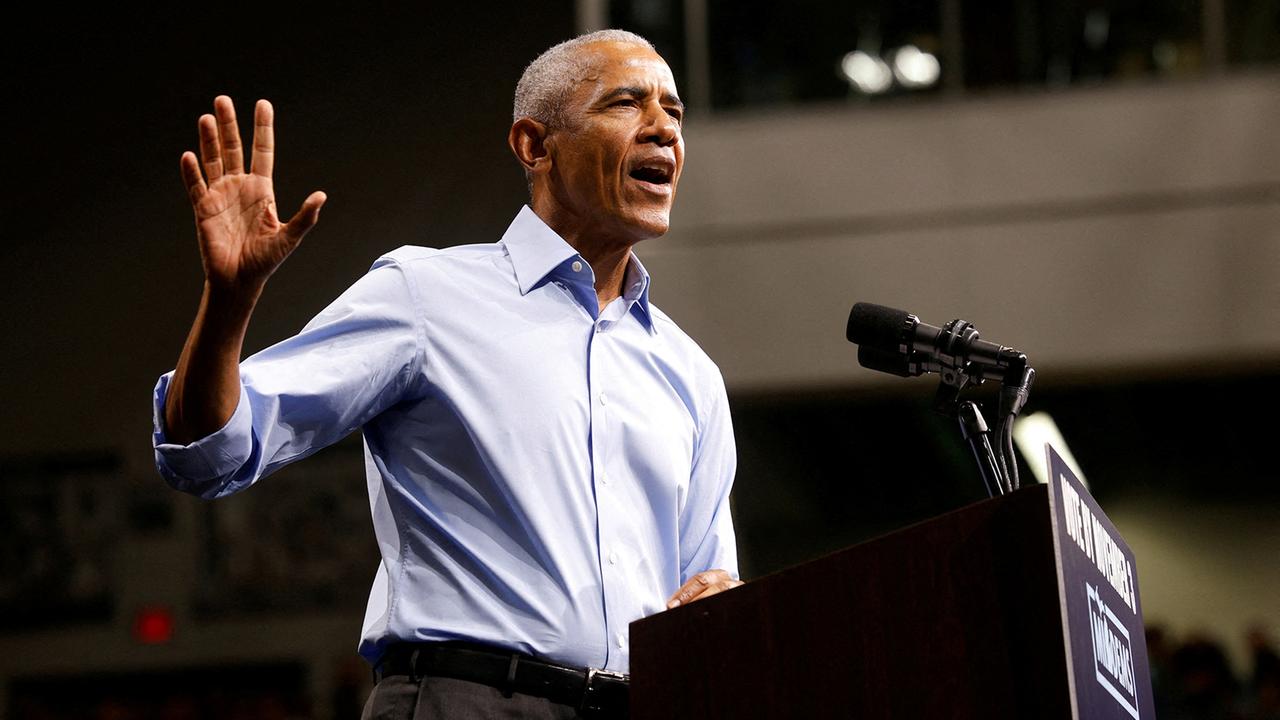
Barack Obama, whose post-presidency has largely focused on his foundation and global initiatives, stepped back into the domestic political spotlight with a series of high-profile campaign stops. His presence on the trail, a stark contrast to the more reserved role typically adopted by former presidents, signals the gravity with which Democrats view the upcoming elections. His appearances in Cleveland and Detroit were not merely endorsements; they were robust rhetorical assaults on the Trump presidency, designed to energize the Democratic base and sway undecided voters.
Accusations of Unprecedented Corruption
At the heart of Obama’s message was a scathing indictment of President Trump’s conduct in office, centered on allegations of self-enrichment and a disregard for ethical norms. Addressing a rally in Michigan in support of then-senatorial candidate Abdul El-Sayed, Obama did not mince words. "We have never seen a president who has so brazenly enriched himself at your expense," he declared, his voice resonating with conviction. This charge touched upon a sensitive nerve for many critics of the Trump administration, who frequently pointed to the President’s business holdings and their potential conflicts of interest as evidence of ethical breaches.
Obama went further, suggesting that the Republican Party, under Trump’s leadership, had lost its moral compass. "The Republican Party now seems to stand for a corrupt government, an incompetent leadership, or no government at all," he asserted. This broad accusation aimed to paint the entire party as complicit in what he described as a decline in governance standards. The former president’s remarks echoed concerns raised by ethics watchdogs and some bipartisan observers regarding the blurred lines between public service and private gain during the Trump administration, particularly concerning the emoluments clauses of the U.S. Constitution.
The "Saddam Hussein’s Cheesecake Factory" Barb
Beyond the serious accusations of corruption, Obama also deployed his signature wit, delivering a memorable and widely quoted jab at President Trump’s aesthetic choices regarding the White House. Referring to renovations undertaken by the Trump administration, Obama quipped, "He made the White House look like Saddam Hussein opened a Cheesecake Factory." This colorful analogy, though humorous, served a dual purpose: to mock what he perceived as gaudy taste and to subtly underscore a perceived authoritarian streak in Trump’s leadership style, drawing a controversial parallel to a notorious dictator. The comment quickly went viral, becoming a talking point that encapsulated the cultural and stylistic clash between the two administrations.
The renovations in question included updates to the Oval Office, the Cabinet Room, and other state rooms, which are standard practice during presidential transitions. However, the opulent styling and certain design choices under the Trump administration drew criticism from those who felt they departed from the historical elegance of the Executive Mansion. Obama’s remark cleverly combined aesthetic critique with a political punch, suggesting a lack of decorum and a misplaced sense of grandeur.
A Call for a "Handbrake"
Ultimately, Obama framed the midterm elections as a critical opportunity for American voters to exert control over the nation’s trajectory. He urged constituents to cast their ballots as a "handbrake" to "at least contain some of the madness" of the Trump presidency. This appeal positioned the elections not merely as a choice between parties, but as a referendum on the very character and direction of the country. The "handbrake" metaphor resonated with many Democrats and independents who felt a sense of alarm regarding the administration’s policies and rhetoric, from immigration to environmental regulations, and sought a mechanism to temper its influence.
Obama’s message was clear: a Democratic majority in either chamber of Congress would provide a vital check on presidential power, preventing the unchecked implementation of policies they deemed detrimental and potentially paving the way for greater accountability. He implored voters to recognize the profound impact their participation could have on issues ranging from healthcare to judicial appointments.
The Stakes of the Midterm Elections
The 2018 midterm elections were, indeed, high-stakes affairs, with the potential to fundamentally alter the political landscape of Washington D.C. These elections, occurring two years into a presidential term, often serve as a referendum on the sitting president’s performance and the direction of the country.
Historical Context and Political Landscape
Historically, the party occupying the White House often loses seats in Congress during midterm elections. This trend is typically attributed to voter fatigue, dissatisfaction with the president’s performance, or a desire for political balance. For Democrats, the 2018 midterms represented their first significant opportunity to regain power after the surprising loss of the presidency in 2016. The political climate was intensely partisan, marked by deep divisions over social issues, economic policies, and the very norms of democratic governance.
All 435 seats in the House of Representatives were up for grabs, along with 35 of the 100 Senate seats. At the time, Republicans held narrow majorities in both chambers. A shift in control would have profound implications for legislative priorities, presidential appointments, and the overall governance of the nation.
The Power of the Purse and Legislative Control
Should Democrats manage to secure a majority in either the House or the Senate, or ideally both, they would gain significant power to obstruct President Trump’s agenda. Control of the House, in particular, grants the majority party the ability to initiate impeachment proceedings, control committee investigations, and shape the national legislative agenda. A Democratic-controlled House could, for instance, block funding for key administration initiatives, launch investigations into various aspects of the Trump presidency, and subpoena administration officials.
Similarly, a Democratic Senate would have the power to block presidential appointments, including cabinet secretaries and federal judges, and significantly influence the legislative calendar. The prospect of a divided government loomed large, promising potential legislative gridlock and heightened political tension for the remainder of President Trump’s term.
President Trump’s Counter-Offensive
As expected, President Trump did not allow Obama’s criticisms to go unanswered. His response was swift and characteristic, blending defiance with counter-accusations and a reiteration of his long-standing grievances.
Dismissing Corruption and Alleging Democratic Misdeeds
When confronted by journalists about the corruption allegations during his own early voting appearance, President Trump vehemently rejected the claims. He asserted that "the real corruption" lay with the opposition Democrats, a common refrain in his political rhetoric. Without offering specific evidence, he often accused his political adversaries of various forms of malfeasance, attempting to deflect criticism and undermine their credibility. This tactic of "whataboutism" or turning the tables on accusers was a consistent feature of his public communications.
Trump’s campaign and Republican allies often portrayed the Democratic Party as being out of touch with mainstream Americans, beholden to special interests, or pursuing policies that would harm the economy. They sought to discredit any accusations of corruption against the President by casting doubt on the motives and integrity of the accusers.
The Shadow of 2020: Persistent Election Fraud Claims
In a particularly striking moment, President Trump used the opportunity to cast doubt on the integrity of elections, specifically referencing the 2020 presidential election. "It was a rigged election, but I won by millions of votes," he claimed, repeating the false narrative that he had been defrauded of a victory. This statement, made in the context of an election occurring two years before the 2020 contest, underscores the persistent nature of his election fraud claims.
While Obama’s campaign appearances were primarily focused on the 2018 midterms, Trump’s response showcased his consistent pattern of questioning electoral outcomes, a rhetoric that intensified significantly after the 2020 presidential election. Observers and political analysts have expressed deep concern that such unsubstantiated claims erode public trust in democratic institutions and can incite political unrest. The fear was, and remains, that if his Republican Party faced setbacks in the midterms, Trump would again resort to allegations of widespread fraud, a tactic he employed after the 2020 election results were certified. This recurring narrative of a "rigged system" became a hallmark of his political movement.
Early Voting Amidst Mail-in Ballot Controversy
President Trump himself cast an early ballot in West Palm Beach, Florida, proudly displaying an "I Voted" sticker on his lapel. This act, however, drew scrutiny from critics who highlighted his administration’s repeated attempts to significantly tighten mail-in voting regulations. Trump had frequently railed against mail-in ballots, claiming they were susceptible to fraud, despite evidence to the contrary and the widespread use of such methods by both parties.
His critics pointed out the apparent hypocrisy of his personal use of early voting or absentee ballots while simultaneously seeking to restrict these options for the general populace. They argued that his efforts to tighten voting rules were not genuinely aimed at combating fraud, but rather at suppressing the vote among demographics more likely to vote Democrat, who traditionally rely more heavily on mail-in or early voting options. The debate over voting access and election security became a highly politicized issue, with profound implications for democratic participation.
The Broader Implications
The clash between Obama and Trump leading up to the midterms was more than just a political skirmish; it carried significant implications for the future of American democracy, political discourse, and the role of former presidents.
The Enduring Legacy of Presidential Engagement
Obama’s active role in the midterm campaign underscored the enduring power and influence of former presidents in American politics. While typically presidents step back to allow their successors to govern, the highly polarized environment and the perceived existential threat posed by the Trump administration prompted Obama to take a more assertive stance. His ability to draw large crowds and deliver impactful speeches demonstrated his continued popularity and capacity to mobilize the Democratic base.
This engagement set a precedent, illustrating that in an era of hyper-partisanship, former leaders might feel compelled to re-enter the fray more directly, blurring the lines of traditional post-presidency conduct. It also highlighted the stark ideological divide within the country, with two former and current presidents representing fundamentally different visions for America.
Polarized Politics and the Future of Governance
The tenor of the campaign, characterized by sharp accusations and counter-accusations, reflected the deeply entrenched polarization within American society. The midterms were not just about policy differences but about competing narratives regarding integrity, competence, and the very values that define the nation. This level of animosity between political figures, particularly between a former and sitting president, further solidified the partisan trenches, making bipartisan cooperation increasingly difficult.
The outcome of the elections would determine whether the country would move towards a period of intense legislative struggle and oversight, or if the executive branch would continue to operate with fewer checks and balances. Regardless of the results, the campaign demonstrated that the political fault lines were hardening, promising continued ideological battles in the years to come.
The Integrity of Elections: A Lingering Concern
President Trump’s repeated claims of election fraud, even when not directly relevant to the immediate election cycle, introduced a dangerous element into the democratic process. By consistently questioning the legitimacy of electoral outcomes, he sowed seeds of doubt among a significant portion of the electorate, potentially undermining faith in the foundational mechanisms of democracy. This rhetoric, particularly when combined with efforts to restrict voting access, raised serious concerns among civil liberties advocates and election integrity experts.
The midterms became a proving ground for the resilience of the American electoral system against both external interference and internal challenges to its legitimacy. The implications of these ongoing debates over election integrity extend far beyond any single election, threatening the long-term stability and perceived fairness of democratic governance.
Conclusion
The final stretch of the midterm election campaign, marked by the powerful rhetorical clash between Barack Obama and Donald Trump, offered a vivid snapshot of America’s deeply divided political landscape. Obama’s impassioned appeals for accountability and a "handbrake" against perceived excesses contrasted sharply with Trump’s defiant counter-attacks and persistent questioning of election legitimacy.
As voters headed to the polls, the choice before them was clear: to either endorse the continuation of the Trump agenda or to empower Democrats to act as a legislative check on presidential power. The results of the November 3rd elections would not only determine the composition of Congress but also signal the ongoing trajectory of American political discourse and governance in an era defined by unprecedented ideological conflict and the powerful, lingering shadows of past and present presidencies. The battle for the soul of the nation, as many described it, was playing out directly on the campaign trail, with two of America’s most prominent political figures leading the charge.