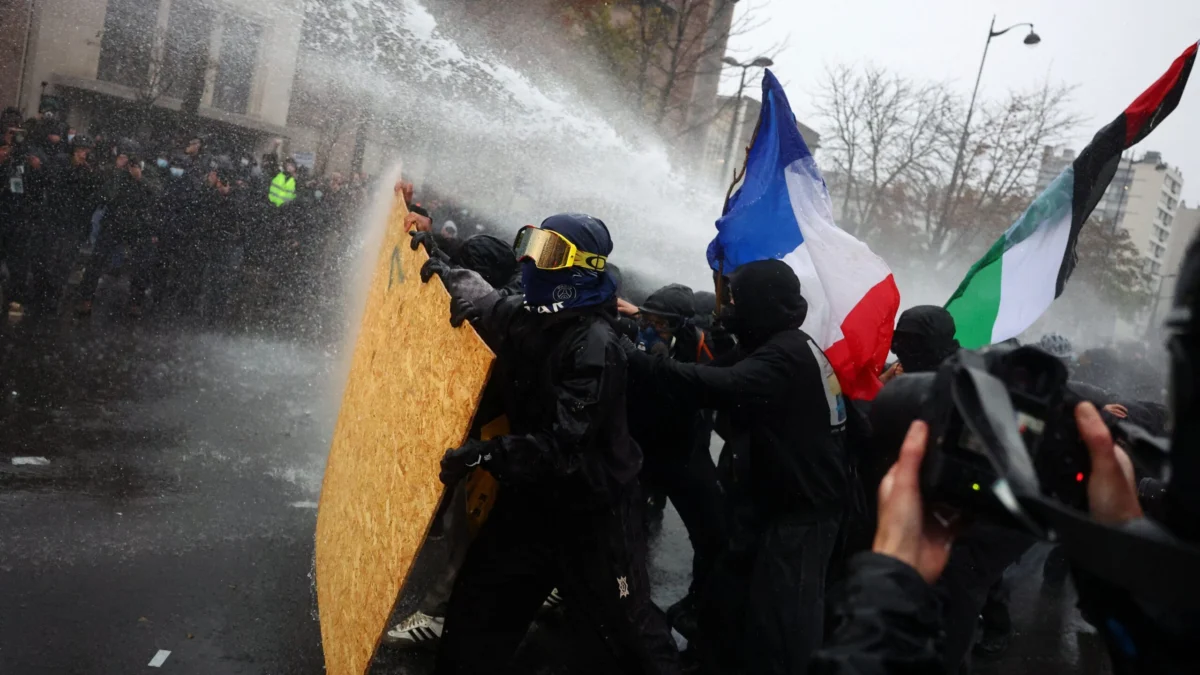
Paris, France – A recent day of nationwide protests across France, initially spurred by calls for improved school funding, has once again been marred by sporadic violence and widespread arrests, despite intensified security measures. The demonstrations, which saw hundreds of thousands take to the streets, underscored a persistent undercurrent of societal discontent, now significantly amplified by concerns over the soaring cost of living. While authorities reported a measurable reduction in the severity of property damage and looting compared to previous outbreaks, the sheer scale of arrests – nearing 1,000 nationwide – paints a stark picture of ongoing tensions.
Interior Minister Laurent Nuñez confirmed late yesterday that approximately 1,000 individuals had been detained across the country, a figure he indicated was still provisional and likely to climb as final assessments were concluded. He credited robust policing with thwarting "numerous looting attempts," acknowledging, however, that instances of vandalism and theft did occur. Crucially, Nuñez highlighted that the level of destruction, while regrettable, did not reach the alarming proportions witnessed during the preceding week’s more volatile demonstrations. This nuanced assessment reflects the tightrope walk authorities are attempting: managing widespread dissent while preventing a descent into widespread civil disorder.
The latest wave of unrest comes against a backdrop of heightened public anxiety and a government determined to maintain order. The deployment of an unprecedented 70,000 police and gendarme personnel across the weekend, supported by water cannons and armored vehicles, signaled the state’s resolve. In Paris, a city particularly scarred by past unrest, shop owners had taken pre-emptive measures, boarding up windows to shield their businesses from potential damage. Several cities also implemented pre-emptive assembly bans in designated zones and curfews, reflecting the depth of official concern.
According to figures released by the Interior Ministry, approximately 410,000 people participated in the demonstrations nationwide. The capital, Paris, alone accounted for an estimated 110,000 protesters, showcasing the significant mobilization capacity of various activist groups. While the initial impetus for these protests stemmed from student and youth movements demanding better resources for educational institutions, their ranks have swelled to include a broader coalition of citizens vocalizing their frustration with the escalating cost of living, a grievance that resonates deeply across diverse demographics in contemporary France.
Main Facts: A Nation on Edge
The latest day of protest in France serves as a potent reminder of the fragility of social peace in a nation frequently prone to public expressions of discontent. The core facts emerging from the recent demonstrations highlight a complex interplay between legitimate protest, preventative policing, and destructive fringe elements:
Firstly, the sheer scale of the security deployment—70,000 officers and gendarmes—was a direct response to the prior week’s severe clashes, signaling the government’s determination to prevent a repeat of widespread urban disorder. This extensive mobilization included specialized units, riot police (CRS), and the gendarmerie, equipped with a full array of crowd control tools, from tear gas to water cannons and armored vehicles, strategically positioned in major urban centers. The visible presence of such a force aimed to deter potential troublemakers and ensure rapid intervention.
Secondly, the arrest tally, nearing 1,000 individuals nationwide, underscores the significant number of confrontations and infractions that occurred despite the preventative measures. These arrests spanned a range of offenses, including public disorder, vandalism, assault on law enforcement officers, and participation in unauthorized assemblies. While the Interior Minister lauded the prevention of "numerous looting attempts," the ongoing arrests suggest that criminal elements or radical fringes continued to exploit the demonstrations for illicit activities, albeit on a reduced scale compared to previous incidents. This duality—prevention alongside persistent infractions—characterizes the ongoing challenge for French authorities.
Thirdly, the broadening scope of grievances is a critical development. What began as a focused protest by young people advocating for better school resources has evolved into a broader expression of public anger. The integration of demands related to the "high cost of living" signifies a convergence of various social movements, tapping into a widespread sense of economic insecurity and injustice affecting a significant portion of the French populace. This expansion makes the protest movement more diffuse, harder to address with single policy solutions, and potentially more enduring. Inflation, energy prices, and stagnant wages are no longer abstract economic indicators but tangible daily struggles that fuel a palpable frustration on the streets.
Finally, the comparison by Minister Nuñez that the recent damage was "not comparable with those of the past week" offers a cautious note of relief for authorities, suggesting that the heightened security posture may have had its intended effect. This assessment, however, must be balanced against the significant disruption caused, the ongoing property damage, and the social cost of such large-scale mobilizations, both for the state and for the participating citizens. The boarding up of shops in Paris, a symbolic act of fear and anticipation, further illustrates the pervasive sense of unease that grips urban centers during these periods of unrest.
Chronology: A Trajectory of Discontent
The recent protest day is not an isolated incident but rather the latest chapter in a long-standing narrative of social and political agitation in France. Understanding its context requires a look back at the escalating tensions and the confluence of factors that have brought the nation to this point.
Background of French Protests
France has a rich and often turbulent history of public demonstrations, serving as a vital mechanism for citizens to express dissent and influence policy. From the revolutionary fervor of 1789 to the student uprisings of May 1968, and more recently the "Gilets Jaunes" (Yellow Vests) movement of 2018-2019 and the widespread opposition to pension reforms in early 2023, street protests are deeply embedded in the national psyche. These movements often emerge from a sense of social injustice or economic hardship, and while many remain peaceful, a recurring pattern involves clashes between protesters and security forces, often instigated by radical elements or escalating from police interventions.
The specific genesis of the current wave of demonstrations can be traced back to student and youth groups campaigning for improved conditions and resources within the French education system. These initial demands, focused on issues like dilapidated school buildings, understaffing, and a lack of essential learning materials, resonated with a segment of the population deeply concerned about the future of public education. These initial, often localized, protests began to gain traction, setting the stage for broader mobilization.
However, the landscape of grievances quickly expanded. As the cost of living crisis began to bite deeper into household budgets across France, fueled by global inflationary pressures, rising energy prices, and persistent wage stagnation, the student-led movement found common cause with other disaffected groups. Unions, social justice advocates, and ordinary citizens struggling to make ends meet began to join the chorus of protest, transforming what was a sectoral concern into a national outcry against economic hardship. This broadening of the protest base is a critical factor, making the movement more formidable and politically challenging for the government.
Escalation and Previous Incidents
The path to the recent nationwide demonstrations was marked by a significant escalation in violence during earlier protest actions. The Interior Minister’s statement specifically referenced "severe clashes" that occurred on October 17th. While the original source does not detail these clashes, journalistic reporting from similar events in France typically describes scenes of intense confrontation: protesters building makeshift barricades, setting bins on fire, and throwing projectiles (cobblestones, bottles, flares) at police. In turn, security forces often respond with tear gas, stun grenades, and baton charges to disperse crowds.
These earlier incidents likely saw significant property damage, particularly targeting symbols of capitalism or the state, such as banks, luxury stores, corporate offices, and government buildings. Vehicle fires, widespread vandalism of public infrastructure, and injuries to both protesters and police officers would have characterized these more severe outbreaks. Such events not only cause material damage but also deepen public fear and resentment, creating a cycle of escalating tension between demonstrators and law enforcement. The memory of these clashes directly informed the government’s decision to implement a far more robust security strategy for the subsequent protest day.
The Latest Protest Day
The day of the latest protests began with palpable tension. In the hours leading up to the planned demonstrations, cities across France, particularly Paris, transformed into fortified zones. Shopkeepers, wary of past destruction, spent the morning boarding up their storefronts with plywood, a visual testament to the fear of renewed violence. Public transport services were often curtailed or rerouted, and certain urban areas were declared no-go zones, enforced by police checkpoints.
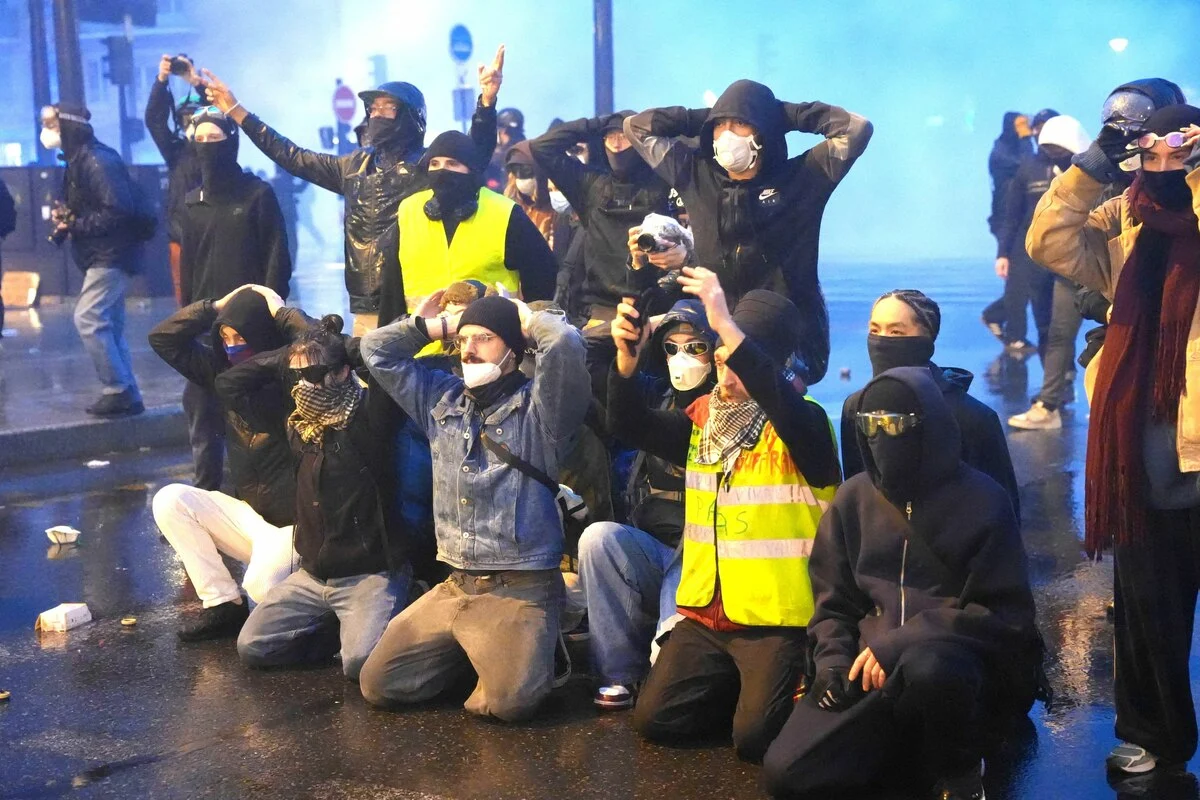
As the afternoon progressed, thousands gathered in designated protest assembly points. The initial hours of the marches were, in many locations, largely peaceful, characterized by banners, chants, and a visible diversity of participants – from students to pensioners, union members to families. However, as the day wore on, particularly in larger urban centers like Paris, Marseille, Lyon, and Nantes, the atmosphere began to shift. Black bloc elements, often masked and dressed in dark clothing, attempted to infiltrate the main processions or form separate, more confrontational groups.
These groups frequently targeted specific areas, clashing with police lines, attempting to break away from approved routes, or engaging in acts of vandalism. While the scale of these incidents was reportedly less severe than the previous week, isolated skirmishes erupted, leading to property damage, fires, and direct confrontations with security forces. Police, in turn, employed their extensive resources to contain these outbreaks, using tear gas to disperse aggressive crowds and making numerous arrests. The day concluded with a clearer picture of arrests and damages emerging, allowing the Interior Minister to provide his initial assessment late yesterday evening.
Supporting Data: Quantifying the Unrest
The official figures and anecdotal evidence surrounding the protests offer crucial insights into the scale of the mobilization, the effectiveness of security measures, and the persistent challenges facing French society.
Arrests and Incident Reports
The statistic of "almost 1,000 arrests nationwide" is a significant indicator of the level of police activity and the number of individuals involved in illicit acts. While the specific charges for all these arrests are not detailed in the initial report, common offenses during such protests include:
- Public Disorder: Participating in unauthorized assemblies, refusing to disperse, obstructing public pathways.
- Vandalism and Property Damage: Destroying public or private property (e.g., street furniture, bus shelters, shop windows).
- Assault: Attacking police officers or other individuals.
- Looting: Stealing goods from damaged shops.
- Possession of Weapons: Carrying prohibited items (e.g., knives, projectiles, incendiary devices).
Minister Nuñez’s assertion that "numerous lootings are prevented" suggests a proactive policing strategy. This would have involved rapid deployment of intervention units to specific locations where looting was attempted, as well as intelligence gathering to anticipate potential targets. Typical targets for looting during French protests often include high-end boutiques, electronics stores, and even supermarkets, as opportunistic individuals exploit the chaos. The reduced scale of successful looting compared to the previous week indicates a relative success of this preventative approach, potentially saving businesses millions in damages and lost inventory. However, the fact that some "damage and looting" still occurred underscores the limits of even extensive security operations when faced with determined and agile groups.
Mobilization Statistics
The deployment of "70,000 police forces and gendarmes" over the weekend represents a massive commitment of state resources. This figure likely includes:
- Compagnies Républicaines de Sécurité (CRS): France’s national riot police, highly trained in crowd control.
- Gendarmerie Mobile: Military-status police units also specializing in public order, often deployed in rural areas and increasingly in urban settings during major events.
- Local Police (Police Nationale and Police Municipale): Involved in maintaining order, traffic control, and patrolling.
- Specialized Units: Such as the BAC (Anti-Criminality Brigades) for rapid intervention and plainclothes operations.
The sheer number reflects a strategic decision to saturate key areas, providing a visible deterrent and ensuring swift response capabilities. The presence of water cannons and armored vehicles is standard for large-scale French protests, used to disperse dense crowds, clear barricades, and protect officers from projectiles.
The Interior Ministry’s estimate of "410,000 people at nationwide protests" with "approximately 110,000 in Paris" provides a measure of the protest’s overall reach. These figures are typically compiled using aerial surveillance, ground spotters, and calculations based on crowd density in specific areas. It’s common for unions or protest organizers to provide higher estimates, leading to a perennial debate over protest attendance figures in France. Regardless, these numbers signify a substantial mobilization, indicative of deep-seated public grievances. While not reaching the peak participation levels of some historic French movements, the figures are significant enough to warrant serious government attention.
In Paris, the police prefecture reported "more than 3,000 controls carried out and 65 people arrested." These controls likely involved stop-and-search operations at entry points to protest routes or in designated sensitive zones, aimed at identifying individuals carrying prohibited items (weapons, protective gear for violence like gas masks, or materials for vandalism) or those suspected of intending to cause trouble. The high number of controls relative to arrests in Paris suggests a broad, preventative screening effort, with arrests made when clear infractions or suspicious intentions were identified.
Economic and Social Grievances
The underlying drivers of the expanded protests are crucial for understanding their persistence. The initial demands for "better equipment for schools" are rooted in genuine concerns about public education. This can encompass a range of issues:
- Funding Shortfalls: Leading to outdated textbooks, lack of digital resources, and insufficient maintenance of school buildings.
- Teacher Shortages: Resulting in overcrowded classrooms and reduced quality of instruction.
- Resource Inequality: Disparities in resources between schools in affluent and less privileged areas.
The addition of "high cost of living" as a major grievance dramatically broadens the movement’s appeal. France, like much of Europe, has experienced significant inflation in recent years, particularly in:
- Energy Prices: Electricity and gas bills have soared, impacting households and businesses.
- Food Costs: Basic necessities have become more expensive, disproportionately affecting lower-income families.
- Housing: Rent and property prices, especially in urban centers, continue to be a major burden.
- Fuel Prices: Directly impacting commuters and transportation costs for goods.
These economic pressures contribute to a sense of declining purchasing power and a perceived erosion of the social contract. For many, the ability to maintain a decent standard of living feels increasingly out of reach, fueling frustration and a desire for systemic change. This convergence of educational concerns with broader economic hardship creates a potent cocktail of discontent that challenges the government on multiple fronts.
Official Responses: A Balancing Act of Order and Dialogue
The French government’s response to the ongoing protests has been characterized by a delicate balancing act: asserting the state’s authority to maintain public order while simultaneously attempting to address, or at least acknowledge, the underlying grievances.
Government Stance
Interior Minister Laurent Nuñez has been the principal voice of the government during this period of unrest. His statements reflect a clear priority: to prevent a repeat of the widespread destruction seen in previous protest waves. By highlighting the prevention of "numerous lootings" and emphasizing that the violence was "not comparable" to the prior week, he aimed to project an image of a government effectively managing a challenging situation. This narrative serves several purposes: to reassure the public, to commend the security forces, and to potentially temper international perceptions of France as a nation in constant turmoil.
The government’s dual approach is evident: allowing peaceful assembly as a fundamental democratic right, while unequivocally condemning and cracking down on any acts of violence, vandalism, or looting. This distinction is consistently made in official communications, seeking to separate legitimate protesters from "casseurs" (breakers) or "black blocs" who are often blamed for the destructive elements. President Emmanuel Macron and Prime Minister Élisabeth Borne, while perhaps not directly commenting on the day’s arrest figures, have consistently reiterated the government’s commitment to both democratic freedoms and the rule of law. Their general messaging has often acknowledged public anxieties, particularly regarding inflation, while defending their economic policies as necessary for long-term national stability.
The pre-emptive measures, such as assembly bans in specific zones and curfews in certain cities, illustrate the government’s willingness to use its full legal authority to preempt potential disorder. These measures, while controversial among civil liberties advocates, are justified by authorities as essential tools to protect property and ensure public safety in areas deemed high-risk.
Law Enforcement Strategy
The "alarm readiness" declared for security forces following the October 17th clashes translated into a highly visible and proactive policing strategy. The deployment of 70,000 officers was not merely a numerical show of force but a strategic decision to:
- Deter: The sheer volume of personnel aimed to dissuade potential troublemakers.
- Contain: Police lines were designed to control protest routes, prevent splinter groups from deviating, and protect sensitive areas (e.g., government buildings, luxury shopping districts).
- Intervene Rapidly: Mobile units were positioned for swift deployment to any emerging hotspots of violence.
The readiness of water cannons and armored vehicles signifies a prepared response for high-intensity confrontations. Water cannons are used for crowd dispersal, particularly effective against large, dense groups or when facing barricades. Armored vehicles provide protection for officers and can be used to clear obstacles or secure perimeters.
The preventative actions taken by shop owners in Paris—boarding up windows—though not an official response, reflect the public’s perception of the security situation and the credibility of government warnings. This widespread precaution underscores the level of fear and economic anxiety that accompanies such protest days, transforming parts of the city into a visual representation of impending conflict. For businesses, these measures represent not only a financial cost but also a disruption to daily operations and a psychological toll.
Implications: The Enduring Challenge to French Stability
The recent wave of protests, despite the government’s efforts to contain violence, carries significant implications for France’s short-term stability and long-term societal cohesion.
Short-Term Impact
In the immediate aftermath of the protest day, the focus shifts to processing the nearly 1,000 arrested individuals, conducting investigations, and managing the legal fallout. Clean-up operations begin, assessing the full extent of property damage, while public debate intensifies over the efficacy of police tactics versus the legitimacy of protester grievances. For residents in affected areas, the day brings disruption to daily routines, transport, and commerce, fostering a sense of fatigue and frustration with repeated cycles of unrest. The economic cost, both in terms of property damage and lost business, adds to existing pressures.
Long-Term Societal and Political Ramifications
The persistent nature of social unrest poses a significant challenge to President Macron’s government and its reform agenda. Repeated protests, particularly when they broaden in scope to include fundamental issues like the cost of living, can erode public trust in political institutions and make it harder for the government to implement necessary, albeit sometimes unpopular, policies. The current protests, by uniting diverse groups under a banner of economic grievance, signal a deep-seated frustration that transcends specific policy debates and touches upon the perceived fairness and equity of French society.
The role of youth in these protests, initially advocating for school improvements, is particularly noteworthy. It suggests a new generation is actively engaging in political expression, potentially shaping the future of French activism. Their integration with broader movements signals a potential for enduring cross-generational solidarity in future mobilizations.
Looking ahead, the potential for future escalation or de-escalation remains uncertain. If economic conditions worsen or if the government fails to effectively address the core grievances of inflation and purchasing power, the protests could reignite with renewed intensity. Conversely, if the government can demonstrate tangible progress on these issues or if the protest movement loses momentum due to fatigue or internal divisions, the intensity might wane. However, the deep structural issues underpinning French social unrest—economic inequality, perceptions of an elite disconnect, and a strong tradition of public protest—suggest that periods of calm are often merely interludes between waves of agitation.
The economic consequences of repeated unrest are also considerable. Beyond immediate property damage, frequent protests can deter tourism, reduce foreign investment, and negatively impact business confidence. For a nation like France, reliant on its cultural allure and economic dynamism, sustained periods of instability can have long-term detrimental effects on its international standing and economic health.
Ultimately, the challenge for France lies in balancing the fundamental democratic right to peaceful assembly with the imperative of maintaining public order and protecting citizens and property. The ongoing protests underscore the vital need for inclusive dialogue, effective policy responses to economic hardship, and a renewed effort to bridge the divides that continue to fuel discontent across the nation. The outcome of this delicate balancing act will significantly shape the trajectory of French society and politics in the years to come.