Paris, France – France once again found itself at a critical juncture this past weekend, as hundreds of thousands of citizens took to the streets in a nationwide demonstration marked by a stark duality: widespread peaceful protest against government policies and the rising cost of living, contrasted sharply with pockets of intense violence and clashes with security forces. Despite an unprecedented police presence mobilized across the country, several cities witnessed significant unrest, property damage, and nearly a thousand arrests, underscoring deep-seated societal frustrations.
The protests, initially driven by young people advocating for improved school resources, quickly broadened to encompass a diverse array of grievances, including the soaring cost of living and general dissatisfaction with the government’s direction. While Interior Minister Laurent Nuñez reported a substantial number of arrests and highlighted preventative police actions, the recurring pattern of peaceful dissent escalating into confrontation poses a persistent challenge to French authorities and President Emmanuel Macron’s administration.
Chronology of a Volatile Weekend
The weekend’s events did not unfold in a vacuum but were rather a continuation of a period of heightened social tension in France, particularly following severe disturbances on October 17th. In anticipation of renewed unrest, the French government enacted a formidable security apparatus, deploying an estimated 70,000 police officers and gendarmes nationwide. This massive contingent was backed by specialized equipment, including water cannons and armored vehicles, signaling the authorities’ determination to prevent a repeat of previous escalations.
Pre-emptive Measures and Urban Fortifications:
In major urban centers like Paris, a palpable sense of apprehension preceded the demonstrations. Shop owners, particularly in high-risk areas, boarded up their windows with plywood sheets, a stark visual testament to the fear of looting and vandalism. Local prefectures in several cities implemented stringent measures, including assembly bans in specific zones and even curfews, aiming to preemptively contain potential flashpoints. These preparations highlighted the government’s recognition of the volatile atmosphere and its resolve to maintain public order.
The Day Unfolds: A Sea of Peaceful Demonstrators:
Despite the looming threat of violence, the initial phase of the protests on Saturday saw hundreds of thousands of French citizens participating in largely peaceful marches. According to figures released by the Interior Ministry, approximately 410,000 people took part in demonstrations across the country, with Paris alone accounting for around 110,000 participants. However, the labor union confederation CGT, known for its larger estimates, reported a significantly higher figure of approximately 800,000 attendees, reflecting the difficulty in precisely quantifying such widespread movements and often indicating differing methodologies or political interpretations.
The demographic of the protesters was notably diverse. While the initial impetus came from young people advocating for better school equipment and resources – a critical concern given perceived underfunding and teacher shortages – their ranks were swelled by various other groups. Trade unions, activist organizations, and ordinary citizens joined in, channeling their collective discontent over the spiraling cost of living, which has seen energy prices, food costs, and housing expenses rise dramatically in recent months. The atmosphere in these main processions was predominantly one of solidarity and determined, albeit peaceful, protest, with banners and chants reflecting a broad spectrum of social and economic grievances.
Escalation and Confrontation in Urban Centers:
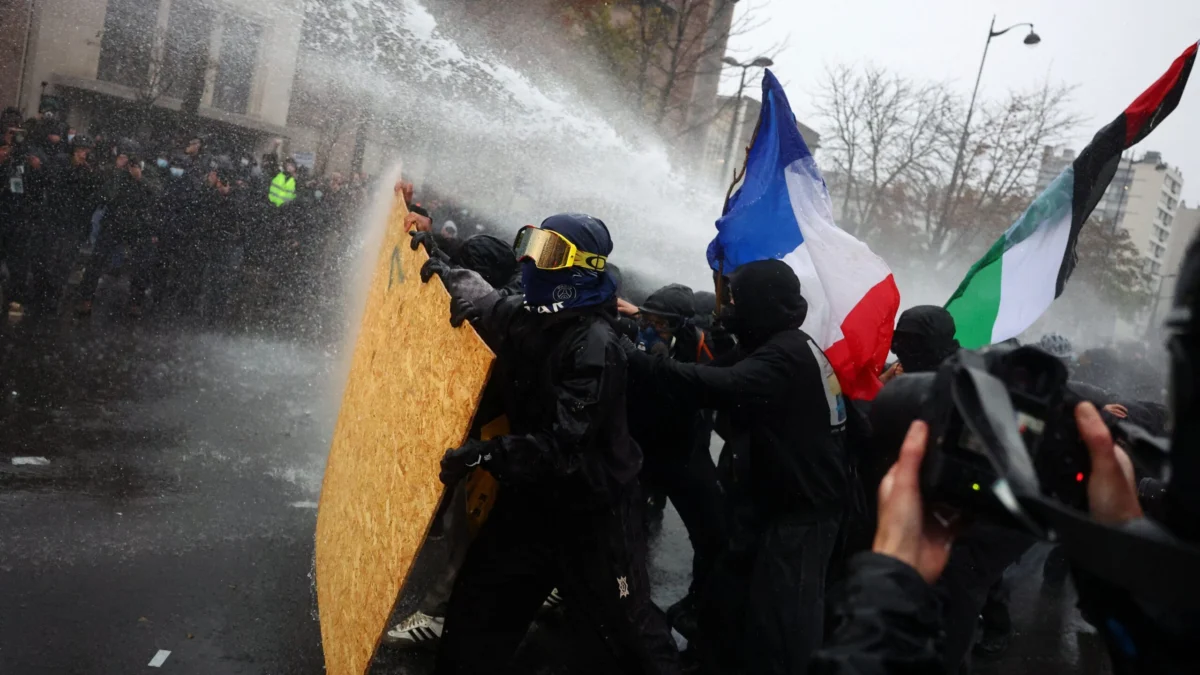
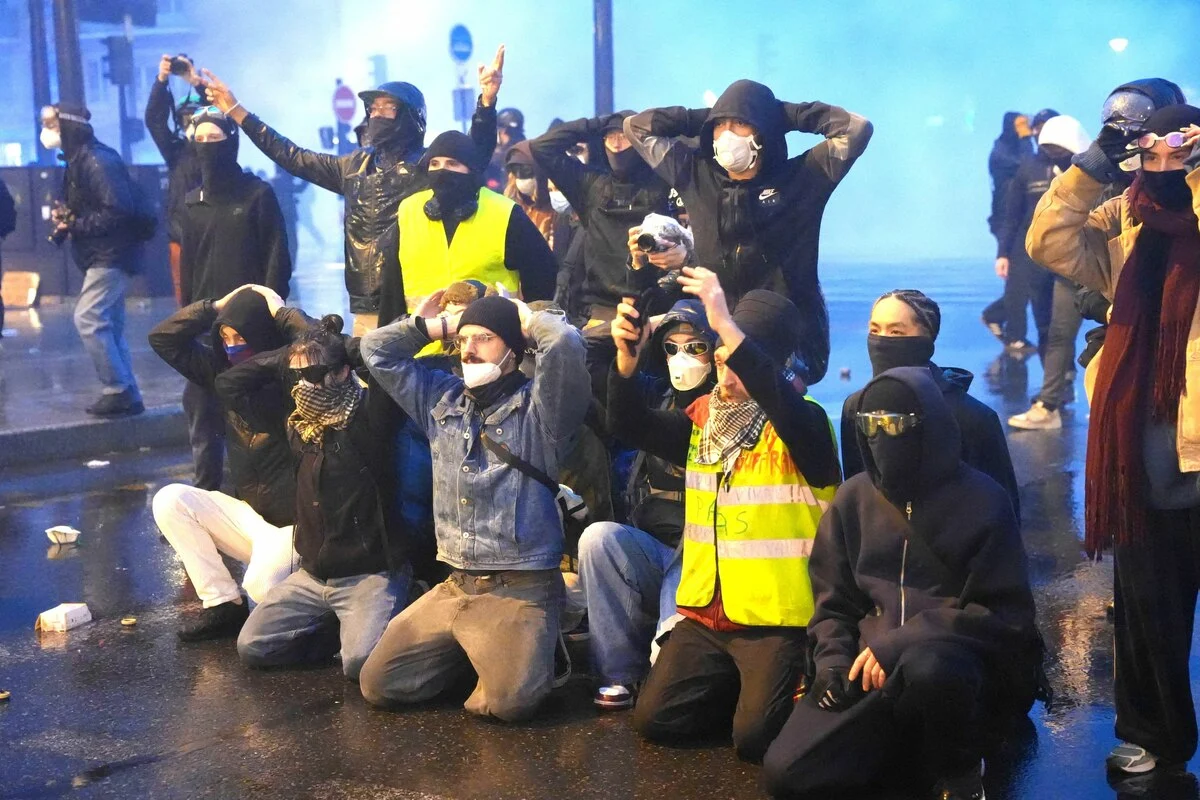
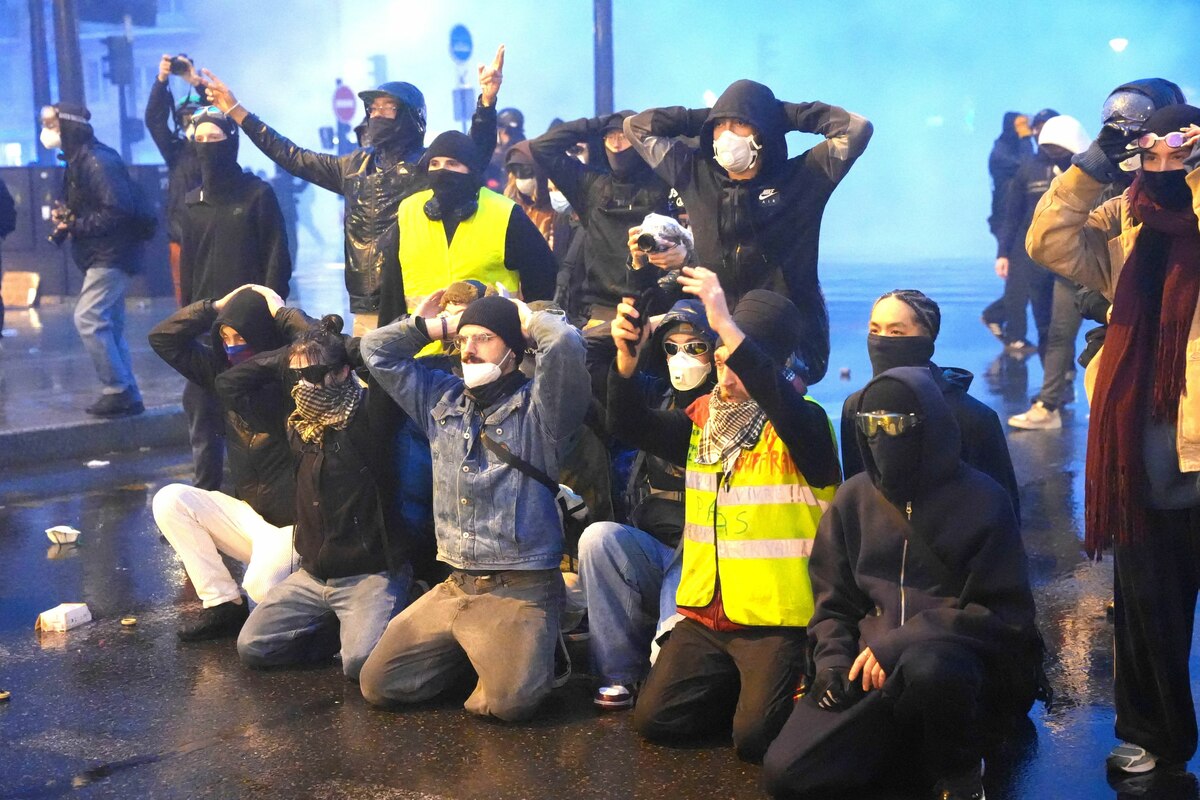
As the day progressed, the initial calm began to fracture in several locations. Interior Minister Nuñez observed that while the main demonstrations largely proceeded smoothly, "risk groups" consistently formed at the periphery of nearly every gathering. These groups, often described as following a "classic pattern," would detach themselves from the main processions with the explicit intent of instigating clashes and violence, primarily targeting security forces. Eyewitness accounts and official reports identified many of these individuals as black-clad and masked, a characteristic often associated with radical elements. Nuñez explicitly attributed responsibility for these actions to the "radical extreme left, the ultraleft."
In Paris, the main demonstration, which had been rerouted to the city’s outskirts, maintained its peaceful character for much of its duration, attracting people of all ages. However, as the march drew to a close, the situation deteriorated rapidly. Images from the scene depicted dense clouds of tear gas enveloping streets, the detonation of fireworks, and the deployment of water cannons by police to disperse unruly elements. The sounds of explosions and sirens filled the air, and photographs showed burning rubbish bins, symbols of urban revolt. The Paris police prefecture reported on social media platform X (formerly Twitter) that rioters had attempted to break into a car dealership at the tail end of the procession, an action swiftly thwarted by the rapid intervention of law enforcement.
The violence was not confined to the capital. Reports from other major cities painted a similar picture of unrest. In Lyon, Bordeaux, and Marseille, images circulated showing streets choked with tear gas and small fires burning, as clashes erupted between demonstrators and police. The Interior Ministry confirmed disturbances of public order in multiple urban areas. In Nantes, located in northwestern France, authorities reported acts of vandalism and looting in at least one store, leading to six arrests by security forces. Perhaps most concerning were the reports from Clermont-Ferrand and Toulouse, where Minister Nuñez confirmed that two individuals sustained severe injuries during intense clashes involving police operations, raising questions about the intensity of the confrontations and the methods employed.
Deepening the Grievances: Supporting Data and Context
The recurrent waves of protest in France are symptomatic of profound and multifaceted societal discontent that extends far beyond the immediate trigger events. While the specific demands for better school equipment and against the high cost of living are immediate concerns, they tap into a deeper well of frustration with government policies, perceived economic inequality, and a sense of democratic disillusionment.
The Roots of Educational Discontent:
The call for "better equipment for schools" reflects widespread concerns about the state of public education in France. Years of perceived underfunding have led to overcrowded classrooms, dilapidated infrastructure, and shortages of essential learning materials. Teachers frequently report inadequate resources and a lack of support, while students and parents voice anxieties about the quality of instruction and the preparedness of the next generation. These grievances are often exacerbated by government reforms that are seen as top-down and unresponsive to the needs of the educational community. The youth participation in these protests is not merely about specific items but about the future prospects offered by the public education system.
The Burden of the Cost of Living Crisis:
The "high cost of living" has become a rallying cry across France, unifying disparate groups under a common banner of economic hardship. Inflation, spurred by global supply chain disruptions and the war in Ukraine, has significantly eroded the purchasing power of households. Energy prices, particularly for gas and electricity, have surged, placing immense pressure on family budgets. Food prices have also climbed steadily, making daily necessities more expensive. For many, especially working-class families, retirees, and young people entering the job market, wages have not kept pace with these rising costs, leading to a tangible decline in living standards. The protests are a direct expression of this economic squeeze, with calls for higher wages, price controls, and more robust social safety nets.

Broader Socio-Political Tensions:
These specific grievances are overlaid with a broader atmosphere of socio-political tension. The controversial pension reform, pushed through by President Macron’s government earlier in the year despite massive public opposition and widespread strikes, left a lingering sense of resentment and a feeling that democratic processes were sidestepped. There is also a persistent perception among a significant portion of the population that the government is out of touch with the realities faced by ordinary citizens. This alienation fuels distrust in institutions and contributes to the volatility of public demonstrations.
The "Risk Groups" and Their Destructive Impact:
The interior minister’s focus on "radical extreme left" and "ultraleft" groups highlights a recurring challenge for French authorities: the presence of highly organized and often violent fringes within broader protest movements. These groups often use peaceful demonstrations as a cover for their disruptive and destructive actions, aiming to provoke clashes with police, damage property, and create chaos. Their tactics, including wearing masks and dark clothing, are designed to evade identification and maximize impact. While they represent a small minority of protesters, their actions frequently overshadow the legitimate grievances of the peaceful majority, allowing the government to shift the narrative towards law and order and away from the underlying causes of discontent. Their destructive behavior also alienates many ordinary citizens and can undermine public support for the protest movement itself.
The human toll of these clashes, including the two severely injured individuals in Clermont-Ferrand and Toulouse, underscores the inherent dangers of such confrontations, both for protesters and security forces. The economic impact, though not yet fully quantified for this specific weekend, contributes to the ongoing challenges faced by businesses, particularly those already struggling in a post-pandemic, high-inflation environment.
Official Responses and Government Stance
In the immediate aftermath of the weekend’s events, Interior Minister Laurent Nuñez served as the primary government spokesperson, offering an assessment that sought to balance acknowledgment of the unrest with an emphasis on the efficacy of police action. His statements provided insight into the government’s narrative and its strategy for managing the ongoing social turmoil.
Nuñez’s primary message was one of firm control, despite the outbreaks of violence. He reported nearly 1,000 arrests nationwide, emphasizing that this number was still preliminary and expected to rise as investigations continued. Crucially, he highlighted the success of security forces in "preventing numerous lootings," suggesting that while some damage occurred, a far worse scenario had been averted through proactive policing. This framing aimed to reassure the public of the government’s capacity to maintain order, even in the face of significant challenges.
While acknowledging that property damage and looting did occur, Nuñez made a point of stating that these incidents were "not comparable with those of the past week." This distinction aimed to de-escalate perceptions of a spiraling crisis, suggesting that the heightened security measures had indeed had a measurable impact on the scale and intensity of destructive acts.

However, the minister’s rhetoric also included a clear attribution of blame. By singling out the "radical extreme left, the ultraleft" and describing their actions as following a "classic pattern" of detachment from peaceful marches to attack security forces and commit acts of vandalism, Nuñez reinforced the government’s strategy of separating legitimate protesters from violent agitators. This narrative allows the government to condemn the violence unequivocally while potentially avoiding a direct engagement with the broader socio-economic grievances that fuel the larger, peaceful demonstrations. It frames the issue as one of law enforcement dealing with criminal elements, rather than a political response to widespread popular discontent.
The government’s overall stance, as articulated by Nuñez, appears to be a dual approach: a robust commitment to maintaining public order through overwhelming police presence and swift arrests, coupled with an attempt to delegitimize the violent fringes by explicitly identifying and blaming specific ideological groups. This approach allows President Macron’s administration to project an image of strength and resolve, which is crucial for a government that has recently faced accusations of being out of touch and authoritarian following the pension reforms. The challenge, however, lies in whether this strategy can effectively address the underlying causes of frustration that continue to draw hundreds of thousands to the streets.
Implicit in the discussion of severe injuries during police operations is the ongoing scrutiny of police tactics in France. While Nuñez did not explicitly address this, such incidents invariably spark debate among human rights organizations and political opponents about the appropriate use of force and de-escalation strategies in crowd control, adding another layer of complexity to the government’s response.
The Road Ahead: Implications and Future Outlook
The past weekend’s events in France underscore a deeply entrenched societal tension and pose significant implications for the country’s immediate future and the stability of President Macron’s government. The recurring cycle of large-scale protests, coupled with persistent violence, suggests that the underlying grievances are far from resolved.
Persistence of Protest and the Yellow Vests’ Resurgence:
Perhaps the most immediate implication is the announced continuation of protests. The "Yellow Vest" (Gilets Jaunes) movement, a powerful force in French politics a few years ago, has already declared its intent for a "3rd Act" of demonstrations on Saturday, October 31st. This call for rallies and sit-ins in front of the National Assembly and town halls across France signals a renewed mobilization of a movement known for its sustained pressure and willingness to confront authorities. Furthermore, the announcement of a "Casserolade" – a protest involving making noise with pots and pans – for the preceding Friday, indicates a creative and disruptive approach to expressing dissent, often employed to highlight government inaction or insensitivity. The resurgence of the Yellow Vests, even in a modified form, is particularly significant, as their original protests exposed deep rifts between urban elites and rural working classes and posed one of the most severe challenges to Macron’s presidency.
Political Challenge for Macron’s Government:
For President Macron and his administration, the sustained protests represent a significant political challenge. Having just pushed through controversial pension reforms, the government is already struggling with low approval ratings and a perception of democratic deficit. The ongoing unrest, fueled by the cost of living crisis and educational concerns, further erodes public trust and makes it increasingly difficult for the government to implement its reform agenda. Each weekend of violence drains public resources, damages property, and, perhaps most critically, deepens the sense of social fragmentation. The government faces the delicate task of addressing legitimate public grievances without appearing to capitulate to pressure from the streets, all while maintaining law and order. The risk of political paralysis or further erosion of the government’s mandate remains high.

Deepening Societal Divisions:
The protests also highlight and exacerbate existing societal divisions. The stark contrast between the peaceful demonstrators and the violent "risk groups" creates a complex narrative that can be exploited by various political factions. While the government attempts to isolate and condemn the violent elements, the broader movement represents a diverse coalition united by a sense of being unheard and disenfranchised. The blame attributed to the "ultraleft" by the Interior Minister, while possibly accurate regarding specific instigators of violence, also risks alienating broader left-wing political forces and movements that support the core demands of the peaceful protesters. This polarization could make genuine dialogue and reconciliation more difficult, leading to a more fractured and confrontational political landscape.
Economic and Social Costs:
Beyond the immediate damage and arrests, the ongoing unrest carries significant economic and social costs. Businesses, particularly in urban centers, face continued disruption and the financial burden of protecting their premises. The repeated mobilization of thousands of police officers diverts resources and places immense strain on law enforcement. Socially, the constant tension and clashes can foster a climate of fear and mistrust, impacting community cohesion and the sense of public safety.
In conclusion, France finds itself at a critical juncture, grappling with a complex interplay of legitimate social grievances, democratic expression, and persistent urban violence. The dual nature of the weekend’s protests – massive peaceful turnout alongside destructive clashes – underscores the depth of discontent within French society. As the Yellow Vest movement signals its renewed intent to mobilize, President Macron’s government faces the formidable task of navigating these turbulent waters, seeking to restore public order while also addressing the profound economic and social anxieties that continue to fuel the flames of dissent across the nation. The coming weeks will undoubtedly be a test of resilience for both the French populace and its leadership.