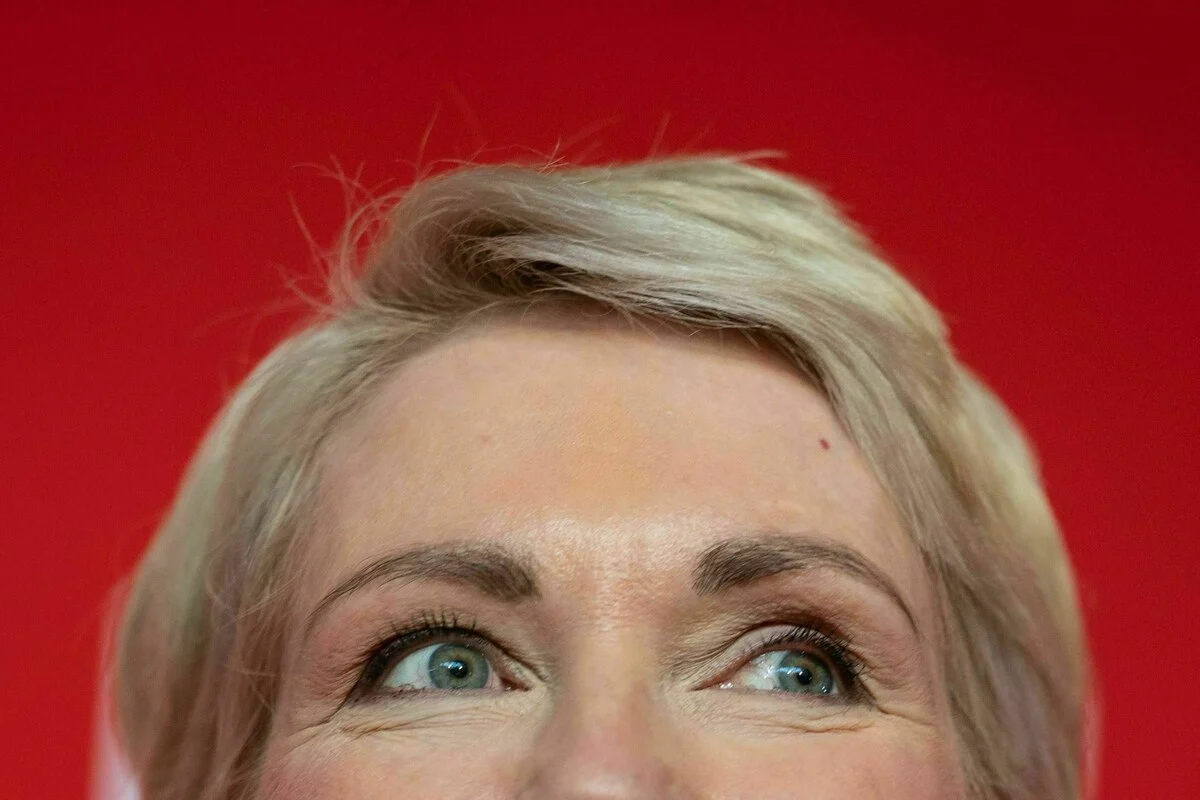
The Social Democratic Party of Germany (SPD) finds itself at a historical crossroads. As the party grapples with dwindling approval ratings, a perceived identity crisis, and a persistent internal struggle regarding gender equity, all eyes are turning toward the north. In the serene surroundings of the Schwerin Castle, Mecklenburg-Vorpommern’s Minister-President Manuela Schwesig sits, exuding a calm that has become her trademark. While the national party apparatus in Berlin descends into procedural chaos and debates over leadership succession, Schwesig remains a steady, potent force.
As the SPD reflects on the resignation of Bärbel Bas and the dominance of an "all-male" leadership core in Berlin, the question is no longer if the party needs change, but whether Manuela Schwesig is willing—and allowed—to lead it.
The State of the Party: A Masculine Fortress
The departure of Bärbel Bas from the top ranks of the party has laid bare a structural deficit within the SPD. Despite its historical roots in social justice and equality, the current power structure of the party is strikingly homogenous. A glance at the party’s central leadership reveals a pattern: Lars Klingbeil (Party Chair), Matthias Miersch (Parliamentary Group Leader), Dirk Wiese (Parliamentary Secretary), and Tim Klüssendorf (General Secretary).
"Alexander, Boris, Lars, Matthias, Dirk, and Tim," remarked one senior SPD politician, noting the lack of diversity in a party that claims to represent the heartbeat of German society. This "men’s club" atmosphere has led to growing resentment among party members, particularly within the Arbeitsgemeinschaft Sozialdemokratischer Frauen (ASF). Critics argue that the SPD has failed to translate its rhetoric on equality into its own internal appointments, often sidelining qualified women in favor of traditional male hierarchies.
A Historical Pattern of Exclusion
Historian Heike Specht, author of Die ersten ihrer Art (The First of Their Kind), suggests that the struggle for women in the SPD is not a modern anomaly but a historical burden. From the days of Elisabeth Selbert, who fought internal resistance to enshrine gender equality in Article 3 of the Basic Law, to the "witches’ breakfasts" of the red-green coalition era in the early 2000s, women in the SPD have consistently had to fight for their seats at the table.
Specht points out that the party has a tendency to sideline women during crucial transitions. "Whenever things got serious, a man was given the preference," Specht argues. Even in recent years, the party’s attempts at gender-balanced leadership have been fraught with friction. The failure of recent dual-leadership models has led to accusations that the party establishment is not providing genuine support for its female leaders, but rather setting them up for a cycle of high-pressure failure.
The "Schwesig Hype": Why Manuela?
Manuela Schwesig has emerged as a beacon of stability for a party in search of direction. Her political success in East Germany—where she has secured over 35 percent of the vote—stands in stark contrast to the party’s national struggles. Recent polling confirms her status; she is currently the second most popular politician in Germany, trailing only Boris Pistorius. Furthermore, approximately 82 percent of SPD supporters have expressed a desire to see her take the helm as party chair.
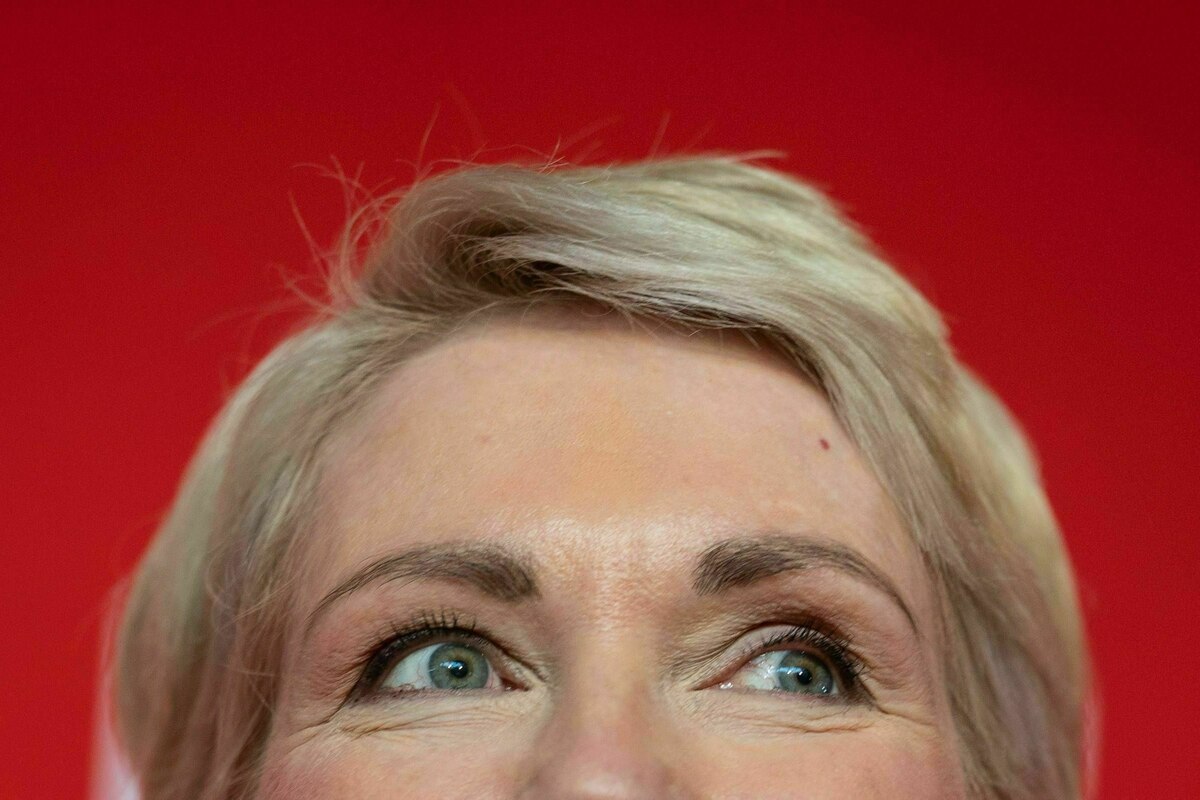
Schwesig’s appeal lies in her ability to navigate complex political terrain while maintaining a focus on "bread-and-butter" issues: childcare, family policy, and affordability. During her last campaign, she branded herself as a "woman against blue," positioning herself as a bulwark against the rise of the AfD. Her supporters argue that she is the only figure capable of bridging the gap between the party’s base and the disillusioned electorate in the center.
The Union’s Reaction: A "Sexism with System"
The recognition of Schwesig’s political power has not gone unnoticed by the opposition. The Christian Union (CDU/CSU) has identified her as a significant threat, leading to a series of sharp, and sometimes personal, attacks. When Chancellor Olaf Scholz and Friedrich Merz clashed recently, Schwesig was caught in the crossfire of accusations regarding the Nord Stream pipeline and her past policies.
Carmen Wegge, chair of the ASF, has been vocal in denouncing these attacks, labeling them as "sexism with system." Wegge argues that powerful women in the SPD are not treated as political opponents but are instead targeted personally, with their competence questioned and their credibility systematically undermined. "I don’t want them to pick the next woman they think they can destroy," Wegge stated, calling for a more robust defense of female colleagues by the male members of the party.
The Path Forward: Leadership or Kanzlerkandidatur?
As of November, the SPD is expected to decide on its future course. While Schwesig has not explicitly ruled out a run for the party chair, she is reportedly waiting for the stabilization of her coalition in Schwerin. The dilemma she faces is twofold:
- The Trap of the Party Chair: If she accepts the role of party chair, she faces the risk of being constrained by the party’s existing, male-dominated infrastructure. Many of her supporters hope she will act alone, fearing that a dual-leadership model would force her to spend her energy managing compromises rather than setting a new agenda.
- The Kanzlerkandidatur: There is growing speculation that Schwesig might bypass the party chair entirely to focus on a bid for the Chancellorship. As the first potential female Chancellor candidate in SPD history, this would be a monumental shift. It would allow her to avoid defending the party’s current policy failures while offering a fresh, credible alternative to the electorate.
Conclusion: The Need for Radical Change
The case of the "viral" Boris Pistorius appearance on a beverage crate, which was actually ideologically fueled by Maja Wallstein, serves as a poignant metaphor for the party’s current state. The male leader receives the spotlight, while the female strategist behind the scene remains largely anonymous.
For the SPD to survive, the party must move beyond mere symbolic gestures. It must address the systemic barriers that prevent women from rising to the highest echelons of power. Whether Manuela Schwesig becomes the next chair or the next chancellor candidate, her ascent represents more than just a change in personnel. It represents a fundamental choice: will the SPD continue to be a club for the established, or will it embrace the leadership of the women who have, for too long, been the architects of its successes without the recognition they deserve?
As one senior socialist put it: "The demand for equality is not being met. It is time for a change that is not just heard, but seen." The winter fairy tale in Schwerin may yet become the catalyst for a new, more inclusive chapter in German Social Democracy.