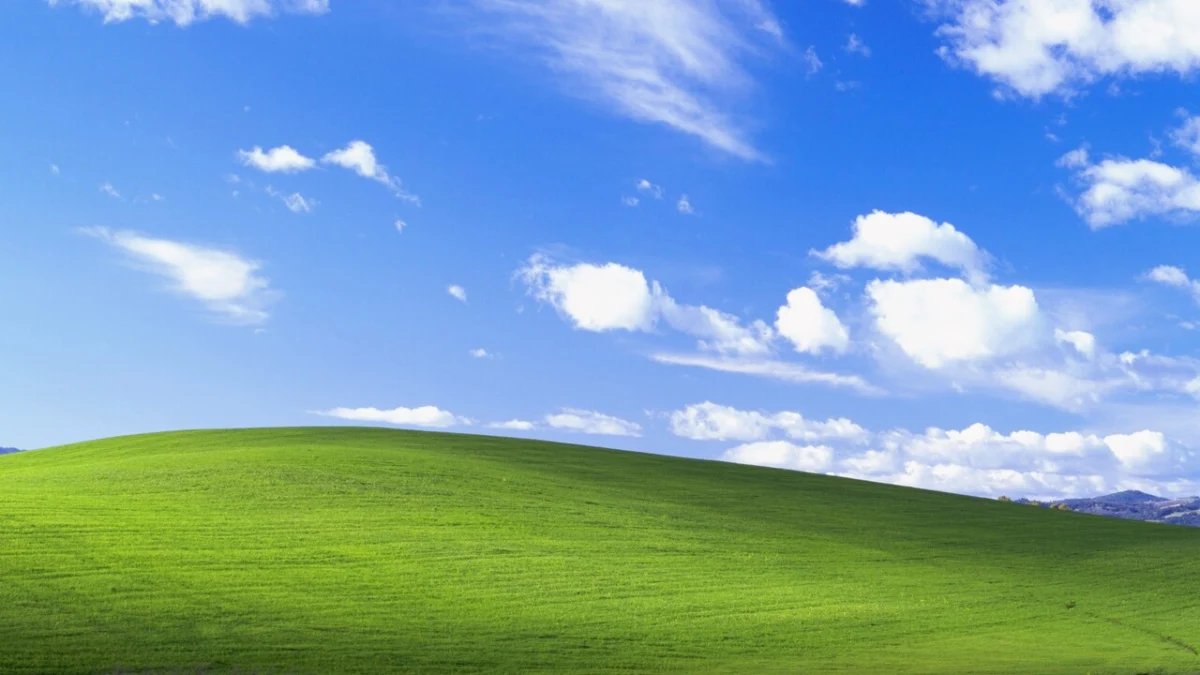
On October 25, 2001, Microsoft unleashed a product that would fundamentally alter the landscape of personal computing. Windows XP, characterized by its vibrant blue "Bliss" wallpaper and the distinctive "Luna" interface, arrived not merely as an operating system, but as a cultural phenomenon. More than two decades later, it remains one of the most cherished versions of Windows in history—a testament to its unprecedented longevity and its role as the bridge between the chaotic era of MS-DOS and the modern, internet-connected world.
However, beneath the veneer of nostalgia lies a complex legacy. While Windows XP is rightly celebrated for its stability and massive adoption, it also marked the beginning of modern user grievances: the birth of restrictive product activation, the aggressive integration of web-based ecosystems, and the long-standing battle between Microsoft and antitrust regulators.
The All-Time Favorite: A Data-Driven Perspective
To understand the enduring popularity of Windows XP, one must look at how it compares to its successors. In a recent poll conducted by ComputerBase in March 2025, commemorating Microsoft’s 50th anniversary, users were asked to identify their all-time favorite Windows OS.
Windows 7 secured the top spot, a result that surprised few given its reputation as the "perfected" version of the NT architecture. Yet, Windows XP captured a solid second place, significantly outperforming Windows 10—a modern OS that benefits from constant updates and a massive, current user base. This preference is not merely about functionality; it is driven by a deep-seated nostalgia for an era when the PC was the undisputed king of digital life, unburdened by the aggressive telemetry and mobile-first design philosophies that define today’s operating systems.
At its peak, Windows XP boasted an adoption rate of nearly 90 percent among enthusiasts and general users alike. It was a time when competition in the mobile space was virtually non-existent, leaving the PC as the central hub for gaming, productivity, and entertainment. No subsequent version of Windows has ever achieved such absolute market dominance.
Chronology of an Icon: From Revolution to Retirement
The Great Transition: Moving Beyond DOS
Before Windows XP, Microsoft’s consumer line was built on the shaky foundations of MS-DOS. Windows 95, 98, and Millennium Edition (Me) were 32-bit systems that relied on a 16-bit DOS kernel for legacy compatibility. While this approach lowered hardware requirements and ensured broad support for older applications, it was a technical nightmare prone to frequent "Blue Screens of Death" (BSOD) and system instability.
Windows XP changed everything. It was the first consumer-facing version of Windows to adopt the Windows NT (New Technology) kernel. Previously reserved for workstations and servers, the NT kernel offered robust multitasking, better memory management, and a level of stability that transformed the user experience.
The Vista Stagnation
The longevity of Windows XP was unintentionally extended by the disastrous launch of its successor, Windows Vista. While Microsoft had intended for XP to have a standard product lifecycle, the delay in the development of "Longhorn" (the project that became Vista) meant that XP had to survive years beyond its expected retirement. During this time, Microsoft released two major Service Packs (SP2 and SP3), which refined the OS to such a degree that many corporate IT departments deemed it "unbreakable."
When Windows Vista finally arrived in 2006, it was met with intense criticism regarding its hardware demands and the intrusive nature of the new "Aero" visual interface. Companies, already comfortable with the stability of XP, largely skipped the Vista generation entirely, waiting until the release of Windows 7 to initiate mass migrations. This prolonged the, "XP-era" well into the early 2010s, with support finally ending on April 8, 2014—an astounding 4,548 days after its release.
Technical Foundations and Hardware Shifts
The transition to the NT kernel was not without its "growing pains." Windows XP demanded significantly more hardware than its predecessors. While Windows Me could scrape by on 32MB of RAM, Microsoft recommended at least 64MB for XP, with 128MB being the sweet spot for performance.

This demand for power served as a catalyst for the hardware industry. It spurred a new generation of PC builds, favoring higher clock speeds and increased memory capacity. However, the shift away from the DOS-based architecture meant that many legacy peripherals and older gaming titles simply stopped working. This created a period of friction for users who had grown accustomed to the "plug-and-play" simplicity of the 90s, forcing them to navigate the new, sometimes cryptic world of modern hardware drivers.
The Seeds of Discontent: Activation and Ecosystems
If Windows XP was the pinnacle of stability, it was also the laboratory for Microsoft’s most controversial business strategies.
The Birth of Product Activation
In 2001, Microsoft introduced "Product Activation." For the first time, users were required to verify their copy of Windows by connecting to Microsoft servers or calling a telephone hotline. If the hardware configuration changed too significantly, the OS would lock itself, demanding re-activation.
While common today, this move sparked widespread outrage. Critics argued that it penalized legitimate users while doing little to stop sophisticated piracy. In a humorous twist of history, the infamous "FCKGW" volume license key became one of the most widely used codes in the world, allowing millions of users to bypass the activation process entirely. Microsoft eventually softened these requirements, but the precedent was set: the user’s device was now tethered to Microsoft’s authorization servers.
The Rise of the Microsoft Account
Windows XP also marked the beginning of Microsoft’s push for a centralized identity system through the "Passport" service. The system frequently prompted users to sign in to access web features, a precursor to the mandatory Microsoft Account integration found in Windows 11 today. Back in 2001, the Washington Post famously described the experience as "stable, but often annoying," a sentiment that resonates with modern users who find the current OS to be increasingly cluttered with marketing and account prompts.
The Browser Wars and Antitrust
Windows XP was at the center of the largest antitrust battle in tech history. Microsoft’s insistence on bundling Internet Explorer 6 and Windows Media Player led to massive intervention by the US Department of Justice and the European Commission. The EU eventually forced Microsoft to release a version of Windows XP without the Media Player, a move that highlighted the tension between Microsoft’s desire for an integrated ecosystem and the regulators’ demand for a competitive, open market.
Implications for the Modern Era
When we reflect on the legacy of Windows XP, we see the blueprint for modern computing. The move to the NT kernel provided the stability that defines modern operating systems, while the introduction of product activation and web-integrated services created the "walled garden" model that dominates software today.
For many, Windows XP represents the "Golden Age" of the PC—a time when the operating system felt like a tool for the user, rather than a service for the vendor. As Microsoft continues to evolve Windows 11 and beyond, the shadow of Windows XP looms large. The struggle to modernize the OS without alienating the user base—a struggle that started in 2001—continues to this day.
The history of Windows XP is a reminder that technical superiority is only one half of the equation; the other half is the relationship between the developer and the user. As we look at the trajectory of Windows, from the simple, stable utility of 2001 to the feature-rich, connected ecosystem of 2025, one question remains: Has the march toward progress sacrificed the simplicity that made the PC the most important tool in human history?
Windows XP was, in many ways, the last version of Windows that felt like a standalone product. Its 4,548 days of support were not just a feat of engineering; they were a reflection of a generation of users who found in XP the perfect balance between power, stability, and control. As the digital landscape continues to change, that blue sky and green hill will likely remain the enduring symbol of a simpler, more powerful computing era.