HEUCHELHEIM, Germany – A significant industrial incident brought the quiet municipality of Heuchelheim, located in the district of Gießen, to a standstill this Saturday. A powerful deflagration—a rapid combustion event—occurred on a local business premises, triggering a massive, multi-agency emergency response that saw the mobilization of fire departments, police units, and emergency medical services from across the region.
The incident, which resulted in a dense, dark plume of smoke visible for several kilometers, prompted authorities to issue an urgent public safety warning that remained in effect for several hours. As the situation unfolded throughout the afternoon, residents were urged to take immediate precautions to mitigate the risks posed by the release of potentially hazardous combustion gases.
Main Facts: The Scope of the Incident
At the center of the incident is a commercial facility in Heuchelheim, where an unspecified technical failure triggered a sudden deflagration. Unlike a high-order explosion, a deflagration involves rapid combustion that propagates through heat transfer, often causing significant structural distress and immediate, thick smoke development.
- Location: Heuchelheim, District of Gießen, Hesse, Germany.
- Primary Hazard: Intense smoke development and the release of combustion gases.
- Casualties: None reported at this time; site cleared and secured by emergency teams.
- Emergency Response: Large-scale deployment of local fire services, HAZMAT units, and police containment zones.
- Public Impact: Regional safety warnings issued via cellular broadcast (Warnapps) and radio; temporary road closures and "stay-indoors" mandates for residents.
Chronology of Events
The unfolding of the event followed a rapid escalation pattern, requiring swift decision-making from municipal authorities.
Phase 1: The Initial Trigger (Early Afternoon)
Around midday, emergency dispatchers began receiving multiple calls regarding an audible "boom" followed by rapidly expanding smoke on a business property in the industrial sector of Heuchelheim. By 1:00 PM, the first fire engines arrived on the scene to find the site partially engulfed in thick, acrid smoke.
Phase 2: Escalation and Public Warning
By 1:30 PM, the Incident Commander declared a "Großalarm" (Major Alarm), recognizing that the smoke plume posed a regional threat. Authorities utilized the modular warning system (MoWaS) to broadcast alerts to residents across the entire Gießen district. The message was clear: stay indoors, keep windows and doors sealed, and turn off all ventilation or air conditioning systems to prevent the ingress of potentially toxic smoke.
Phase 3: Containment and Search
While fire crews established a perimeter and began cooling the site to prevent secondary fires, specialized teams were dispatched to search the facility. Their primary objective was to ensure that no personnel were trapped inside the structure and to monitor air quality levels to determine if the combustion gases contained hazardous chemical components.
Phase 4: De-escalation (Late Afternoon)
By 4:00 PM, the fire was largely contained, and atmospheric measurements confirmed that the threat levels had subsided significantly. Authorities officially lifted the road blocks that had been established around the industrial park, allowing for the restoration of traffic flow. The emergency warning was formally retracted shortly thereafter.
Official Responses and Investigative Status
The investigation into the exact cause of the deflagration is currently being led by local criminal investigation units. While initial assessments suggest a technical defect, investigators are not ruling out other variables.
The Police Perspective
A spokesperson for the Gießen Police Department confirmed that the incident was categorized as a "Verpuffung," or deflagration. "We are currently in the process of gathering forensic evidence to determine how a technical malfunction could escalate into an event of this magnitude," the spokesperson noted. "At this stage, we have no evidence of criminal negligence, but the investigation remains open."

Fire Service Operations
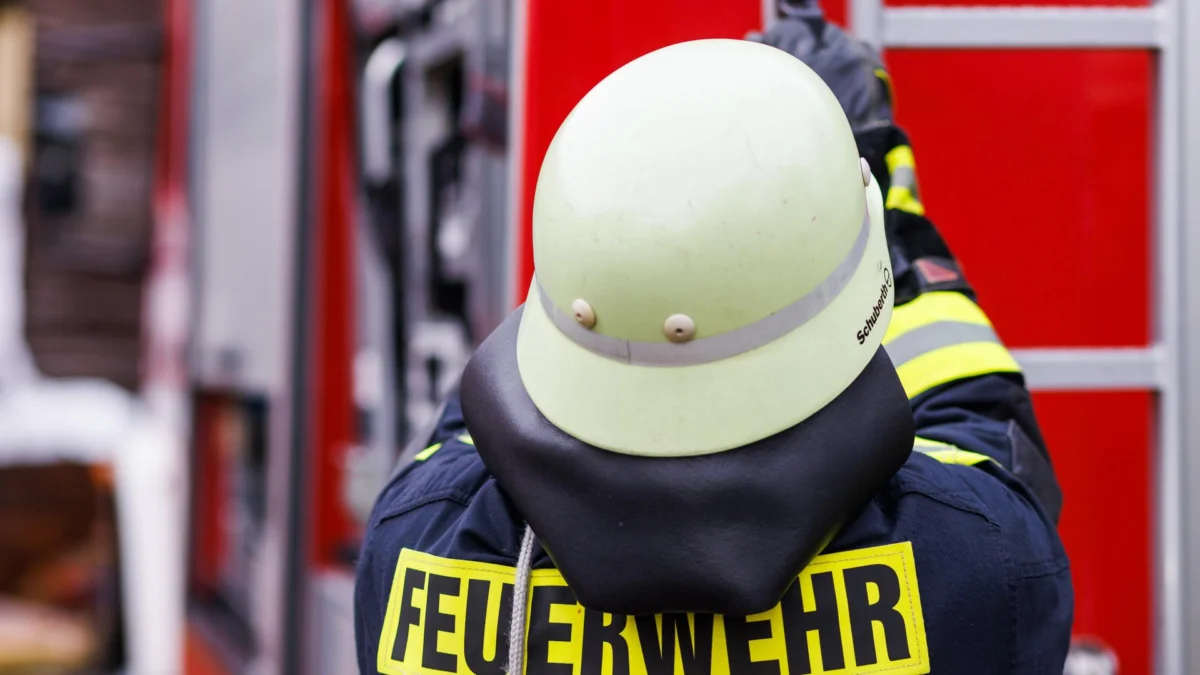
The fire department faced significant challenges in the initial stages of the response. The primary concern was the containment of the smoke, which, depending on the materials stored within the facility, could have carried toxic particles. Firefighters utilized specialized gear to enter the structure to verify that the core of the fire was extinguished and that no smoldering pockets remained that could reignite the smoke production.
Implications: Safety, Infrastructure, and Future Oversight
The Heuchelheim incident serves as a stark reminder of the inherent risks associated with industrial activity in densely populated or mixed-use regions.
Environmental and Health Considerations
The immediate health implications of such incidents are twofold: acute respiratory irritation from smoke inhalation and long-term exposure to fine particulate matter. The rapid distribution of warnings via smartphone apps played a critical role in minimizing the number of people exposed to the smoke. Public health experts reiterate that in such scenarios, even if the smoke appears to be "just" burning plastic or wood, the concentration of carbon monoxide and other combustion byproducts is sufficient to cause immediate distress to children, the elderly, and those with pre-existing respiratory conditions.
Economic and Infrastructure Impact
While the physical damage to the facility remains uncalculated, the broader economic impact on the local community is notable. The closure of roads caused significant delays for commuters and logistical disruptions for nearby businesses. Furthermore, the incident will likely trigger a mandatory review of the site’s safety protocols by the industrial oversight board. Businesses operating in the Gießen district are expected to face increased scrutiny regarding their fire suppression systems and chemical storage safety audits in the coming months.
The Role of Technology in Public Safety
The efficiency of the "Warnapps" used during the incident highlights the evolution of crisis communication in Germany. By leveraging digital infrastructure to reach thousands of residents in seconds, the authorities were able to prevent panic and, arguably, prevent significant health-related incidents. However, the reliance on digital alerts also brings up the issue of digital equity, particularly for elderly residents who may not utilize smartphone technology, necessitating the continued use of traditional media, such as radio broadcasts, which remained a key component of the warning strategy on Saturday.
Conclusion: A Community’s Resilience
As the sun set on Heuchelheim, the emergency sirens had faded, and the blue lights of the police cruisers were replaced by the routine activity of an evening in Hesse. The event was a test of the region’s civil protection capabilities, and by all accounts, the system performed as designed.
The focus now shifts from emergency response to recovery and forensic analysis. Business owners at the affected site are cooperating with authorities to assess the structural integrity of the facility and the estimated financial losses. For the residents of Heuchelheim, the event serves as a sobering reminder of the proximity of industrial operations to residential life.
Moving forward, the local government has indicated that it will hold a briefing with the fire department to review the response timeline. Lessons learned from the Saturday afternoon incident will likely be incorporated into the district’s future disaster management plans, ensuring that if a similar event occurs, the community remains as resilient and well-informed as it proved to be this weekend.
The lack of casualties is undoubtedly the most positive outcome of the day. In the world of industrial safety, where the margin for error is often razor-thin, the absence of injury is a testament to the rapid response of the fire crews and the compliance of the public with the safety mandates issued during the peak of the crisis.