In a move that marks a watershed moment for the German automotive industry, Audi has confirmed its plans to establish its first dedicated manufacturing facility on U.S. soil. The project, valued at $4.2 billion, is set to be located in Georgia, representing a massive bet on the future of the American market—and a critical lifeline for a brand currently grappling with global headwinds.
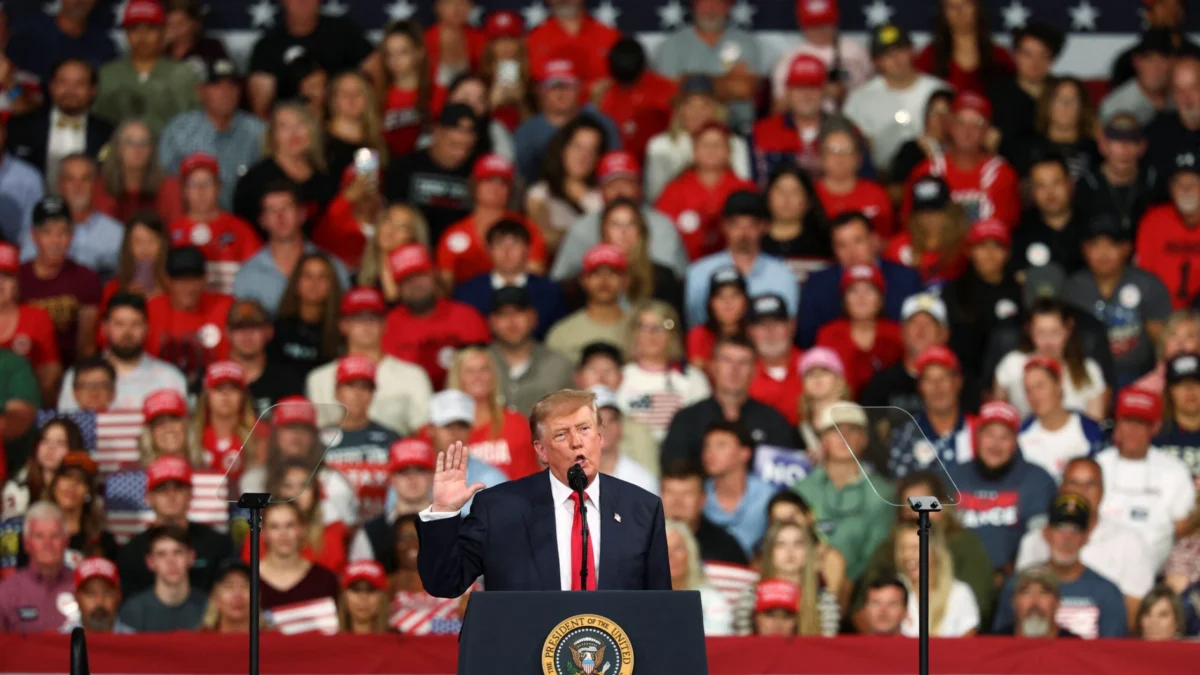
The announcement was made in a dramatic setting: a campaign rally in Perry, Georgia, where U.S. President Donald Trump took to the stage to herald the investment. "I am thrilled to announce a massive investment in the automotive sector in the great state of Georgia by a fantastic company," Trump declared to a cheering crowd. For the embattled manufacturer, the move is more than just an expansion; it is a strategic necessity to circumvent rising trade barriers and secure its footing in one of the world’s most profitable automotive markets.
The Core Facts: A Gigafactory for the Future
Audi’s investment, estimated at $4.2 billion, is poised to become one of the largest single industrial investments in the history of the U.S. automotive sector. The facility, to be situated on the "Middle Georgia Megasite"—a sprawling 620-hectare industrial zone near Macon—is designed to have an annual production capacity of 200,000 vehicles.

The project is ambitious in both scale and timeline. According to company communications, earthworks are scheduled to commence later this year, with full-scale construction slated for 2028. The plant is expected to reach its full operational capacity by 2031, creating approximately 4,500 direct jobs in the region. The site is intended to be a flagship for high-end SUV production, specifically targeting the U.S. market’s voracious appetite for large, luxury vehicles, including the Q7 and the upcoming Q9 models.
Chronology: From Secret Talks to Presidential Spotlight
The path to this announcement has been paved with months of intensive, behind-the-scenes negotiations. The German automaker, represented at the highest levels, has been in constant contact with both U.S. federal authorities and the leadership of Georgia.
- Early 2024: Reports emerge of Audi’s "America Plan," a strategic initiative aimed at insulating the brand from the volatility of international trade policies.
- Early December 2024: Audi’s Supervisory Board Chairman, Manfred Döss, makes a high-profile visit to Washington, D.C., to finalize the framework for the investment.
- Thursday: News breaks via Handelsblatt detailing the impending investment and the ongoing high-stakes talks regarding financial incentives and trade policy.
- Saturday Night: During a rally in Perry, Georgia, Donald Trump publicly confirms the investment, bringing Audi CEO Gernot Döllner onto the stage to cement the deal. The optics of the event—featuring the German CEO thanking the American President—underscored the geopolitical nature of the agreement.
Supporting Data: Why Georgia? Why Now?
The selection of the "Middle Georgia Megasite" was not incidental. The location was explicitly developed and marketed to attract automotive giants, with infrastructure plans already including provisions for a dedicated test track.

However, the economic reality behind the investment is stark. Audi has been severely impacted by the current U.S. tariff regime on imported vehicles. The company has reported losses exceeding one billion euros last year, with projections for this year hovering around an 800-million-euro deficit. Industry insiders suggest that without this U.S. production footprint, the brand faced the genuine risk of a phased withdrawal from the American market.
Simultaneously, the brand is facing a "scissors crisis." While the U.S. market is proving hostile to imports due to tariffs, the Chinese market—historically a primary driver of Audi’s profitability—is seeing massive sales declines. With global production capacity currently sitting at just over two million vehicles, and actual output trending below the 1.6 million mark seen in previous years, Audi is fighting to maintain factory utilization rates that keep its operations sustainable.
Official Responses and Political Implications
The announcement arrived in the heat of the U.S. election cycle, where the economic narrative is as volatile as the political one. Governor Brian Kemp, a Republican, welcomed the investment with open arms. "We are proud that Audi has selected Georgia for its first U.S. plant," Kemp stated, emphasizing the job creation aspect of the deal.

For President Trump, the rally served as a platform to project strength in economic management, particularly in states where his administration’s policies are under scrutiny. By bringing in a major European player to invest billions in a "red state," the administration aims to counter criticism regarding its economic and trade policies.
CEO Gernot Döllner’s appearance on stage was a calculated move. Despite the political spectacle, Döllner’s message was one of long-term commitment: "This is a long-term investment because we believe in the American market." His gratitude for the President’s support suggests that the "deal" involves more than just tax breaks; it likely encompasses broader trade accommodations, including potential tariff relief for the wider Volkswagen Group, of which Audi is a key subsidiary.
Implications: A High-Stakes Transformation
The implications of this move for the Volkswagen Group and the global automotive landscape are profound.

1. The Two-Step Strategy
Audi is not waiting for the Georgia plant to be built to increase its presence. As a stopgap measure, the brand will utilize the "Scout" plant in South Carolina, a brand acquired by VW in 2021. By building a U.S.-specific model on the Scout platform, Audi gains immediate access to local production benefits before its own Georgia facility comes online in 2031.
2. The Tariff Tug-of-War
The "hidden" component of this deal is the negotiation over tariffs. Volkswagen has been lobbying for reduced import duties for its entire fleet in exchange for this commitment to domestic production. If successful, this could set a precedent for other European manufacturers, effectively allowing them to "buy" their way out of trade penalties through domestic industrial investment.
3. The China Problem
Perhaps the most significant long-term challenge for Audi remains its struggle in China. The "Audi" sub-brand launched in cooperation with SAIC has struggled to gain traction. Positioned as a value-oriented brand to capture a younger, tech-savvy demographic, it has failed to ignite the market. With global capacity expanding toward 2.5 million units thanks to the Georgia plant, the pressure to find buyers for these vehicles is immense. If the China turnaround continues to falter, Audi will be forced to rely even more heavily on the success of its U.S. operations.

4. Regionalization vs. Globalization
Audi’s move signifies a shift away from the era of globalized production toward a model of regional self-sufficiency. By producing in the markets where it sells, the brand is attempting to insulate itself from the "polycrisis" of trade wars, logistical bottlenecks, and shifting geopolitical alliances. However, this strategy carries the risk of over-capacity if global demand does not meet the high-growth expectations of the next decade.
Conclusion: A Turning Point for the Four Rings
Audi’s $4.2 billion investment in Georgia is a daring, high-stakes pivot. It is an acknowledgement that the "export-from-home" model that fueled the success of German luxury cars for decades is no longer viable in the face of modern protectionism.
While the political theater of the Georgia rally highlighted the immediate domestic benefits—jobs, infrastructure, and a boost to local manufacturing—the deeper story is one of a legendary brand fighting for its future in an increasingly fragmented world economy. Whether this massive bet will yield the necessary returns by 2031 depends not only on the success of the Georgia plant but also on Audi’s ability to navigate the treacherous waters of the Chinese market and the shifting sands of global trade policy.

As it stands, Audi has staked its future on the American Dream. It is a gamble that carries the potential to redefine the company’s global footprint, but it leaves little room for error. The road ahead to 2031 will be defined by whether this investment acts as a foundation for a new era of growth or as a costly attempt to outrun the inevitable decline of traditional automotive dominance.