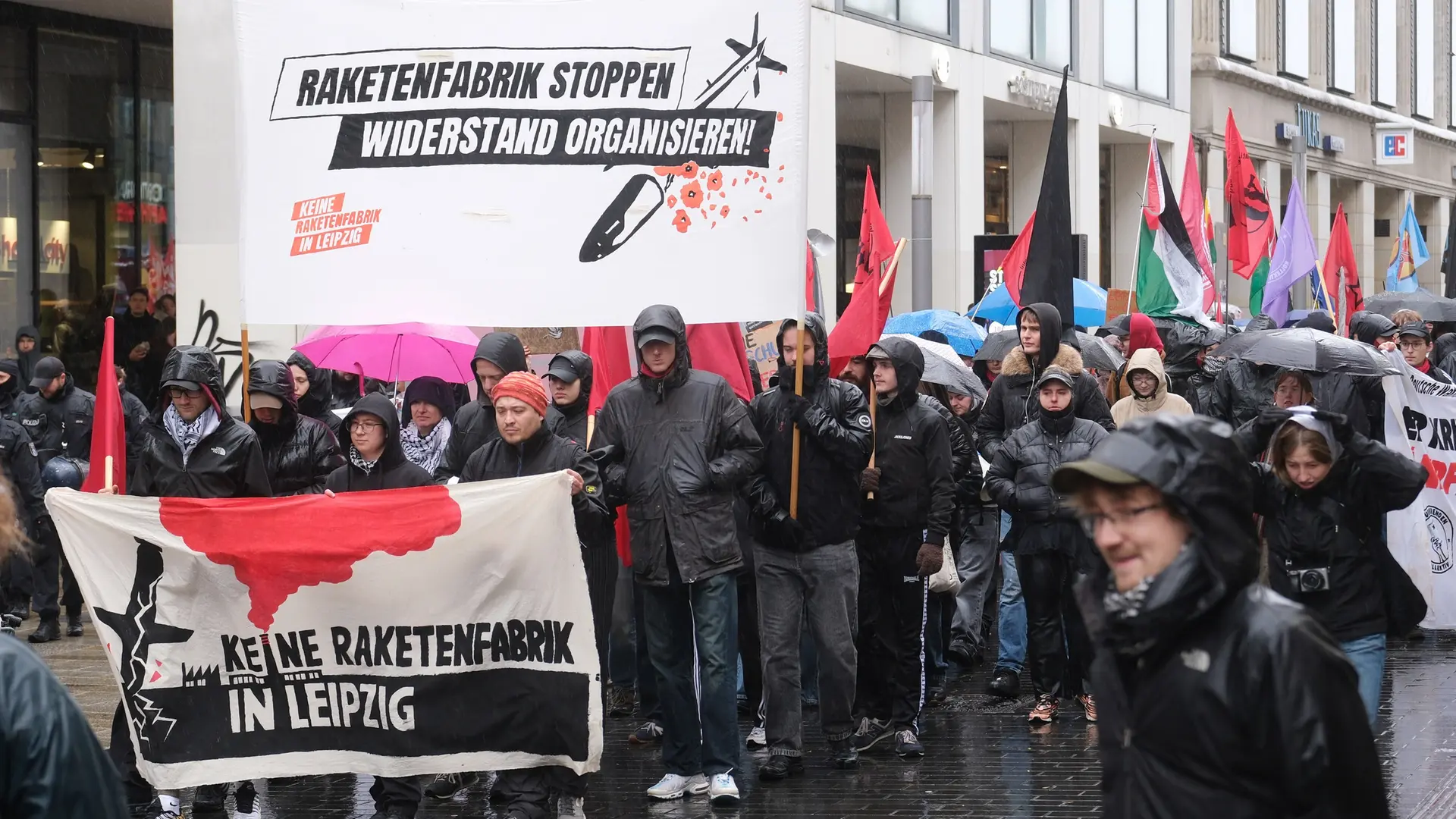
LEIPZIG, GERMANY — The city of Leipzig, long celebrated as a hub of culture, commerce, and the peaceful revolution of 1989, finds itself at the center of a deepening sociopolitical divide. The recent establishment of a production facility by the U.S.-based defense contractor Covenant has ignited a firestorm of controversy, culminating in a demonstration on Saturday that saw approximately 400 protesters march through the city center to voice their opposition.
The protest, which featured a visible presence of left-wing political groups and symbols, highlights a growing friction between the city’s economic aspirations—which include attracting high-tech foreign investment—and a vocal segment of the population that rejects the militarization of their local economy.
Main Facts: The Covenant Presence
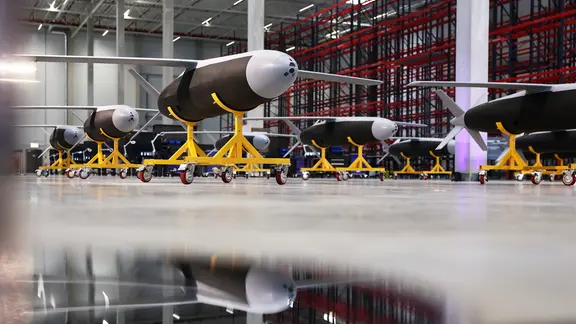
The source of the unrest is the decision by the American defense giant, Covenant, to establish its first European production site within the Leipzig metropolitan area. Announced in early October, the project is not merely an assembly plant; it represents a significant shift in the regional industrial landscape.
According to public filings and company statements, Covenant intends to begin the production of long-range cruise missiles by 2027. For the city of Leipzig, the investment promises hundreds of high-skilled engineering jobs and a boost to the local tax base. For the protesters, however, the facility represents a moral transgression. The "Anti-Covenant" demonstration, organized via social media under the handle keineraketenfabrikleipzig ("no missile factory Leipzig"), served as a public declaration that many residents refuse to allow their city to become a node in the global arms trade.

A Chronology of Escalation
The path to Saturday’s protest was paved by several months of mounting tension:
- Early 2026: Initial reports emerge regarding a mystery investor scouting industrial sites in the northern outskirts of Leipzig.
- October 2026: Covenant officially confirms the lease of a large production facility. The announcement triggers immediate debate within the Leipzig City Council.
- Mid-October 2026: A series of informal town hall meetings and digital campaigns begin to mobilize opposition, focusing on the ethical implications of producing weaponry in a city known for its historical commitment to pacifism.
- October 24, 2026: The organized march takes place. Starting at the historic Augustusplatz, the route wound through the city’s commercial heart—including the Grimmaische and Nikolaistraße—before concluding at the market square.
- Present Day: The city remains in a state of unease as both proponents of the investment and local activists prepare for further legal and public challenges.
Supporting Data and Socio-Political Context
To understand the scale of the reaction, one must look at the demographics of the opposition. The 400 participants on Saturday represented a cross-section of Leipzig’s activist scene. Observers noted the presence of various left-wing factions, as well as participants carrying Palestinian flags—a sign that the protest is becoming a nexus for multiple, overlapping anti-establishment movements.
The police response was measured; no significant traffic disruptions or violence were reported, a testament to the city’s well-practiced approach to managing civil unrest. However, the presence of a counter-demonstration—a small, cryptic group titled "Covenant Welcome"—has added a layer of confusion. Whether this group is a genuine pro-industry movement or a satirical effort meant to highlight the absurdity of the situation remains a subject of intense speculation on local social media forums.
Official Responses and Corporate Strategy
The municipal government of Leipzig finds itself in a precarious position. On one hand, the local administration is eager to maintain Leipzig’s reputation as an attractive destination for global companies, particularly those involved in high-tech manufacturing. The promise of stable employment is a strong incentive for a region still transitioning from its post-industrial past.
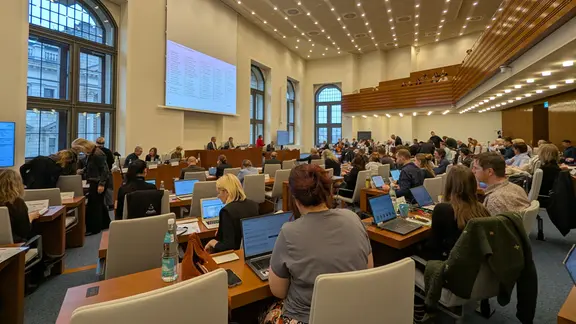
On the other hand, the local political climate is sensitive to the "peace movement" heritage of the city. Officials have attempted to remain neutral, emphasizing the legality of the planning process and the adherence to German arms export laws, which are among the strictest in the world.
Covenant, for its part, has maintained a relatively low profile. In previous press statements, the company has emphasized that its European operations will strictly adhere to NATO guidelines and that the production of cruise missiles is intended to bolster the security architecture of the European Union in a time of heightened geopolitical instability.

Implications for the Future of Leipzig
The presence of a defense contractor in a city with such a vibrant civil society is an experiment in industrial integration. The implications are profound:
1. The Erosion of the "Peaceful City" Identity
Leipzig has long prided itself on being a bastion of non-violent political change. The arrival of an arms manufacturer challenges the city’s self-image. Activists argue that the "Covenant effect" will inevitably normalize the presence of the military-industrial complex in daily civic life, making it harder to oppose future expansions.

2. Economic Diversification vs. Ethical Values
Economic analysts argue that the influx of high-tech defense manufacturing could catalyze a broader technological boom in the region, drawing in supporting industries such as software development and advanced logistics. However, critics counter that this is a "dirty" form of growth that compromises the city’s long-term ethical standing. If Leipzig becomes known as a center for arms production, will it lose its appeal to international cultural institutions or sustainable tech startups that prioritize corporate social responsibility (CSR)?
3. Political Polarization
The protest on Saturday is unlikely to be the last. As the 2027 production start date approaches, observers expect the conflict to shift from street marches to the legislative arena. Local elections may soon turn on the issue of the "Covenant plant," forcing candidates to take definitive stances on an issue that divides the electorate along ideological lines.

4. Security and Policing
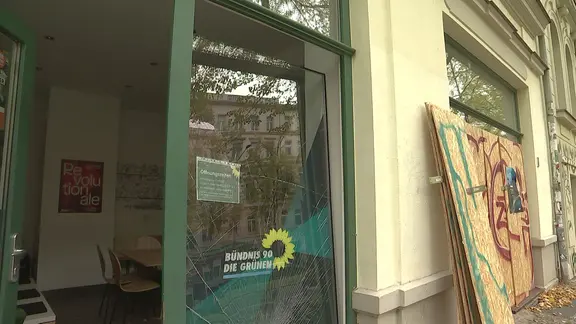
The existence of the plant poses a logistical and security challenge. The state police will likely face a permanent need to monitor for potential sabotage or civil disobedience directed at the facility. This creates a lasting fiscal burden on the city and state, which raises the question: is the economic gain of the factory offset by the cost of the social and security friction it generates?
Conclusion: A City Divided
As the sun set on the market square this past Saturday, the crowd dispersed, but the questions remained. Leipzig is now a testing ground for how a modern, democratic city balances the hard realities of national and continental security against the softer, often idealistic values of its citizenry.
The Covenant facility is currently a structure of steel and concrete, but in the minds of the people of Leipzig, it is a symbol of a changing world. The debate over its existence is not merely about a factory; it is about the future of the city itself. Will Leipzig become a leader in the new European defense landscape, or will the weight of public opposition force the company to rethink its strategy?
For now, the only certainty is that the quiet streets of Leipzig will continue to witness the clash of competing visions for the future. As the construction continues, the city will remain, as it has been so often in its history, a central stage where the major contradictions of the era play out in real-time. Whether that stage produces a synthesis of these opposing forces or a deepening fracture remains to be seen. The coming months will be critical, as the city council, the company, and the citizens navigate the complexities of this modern industrial conflict.