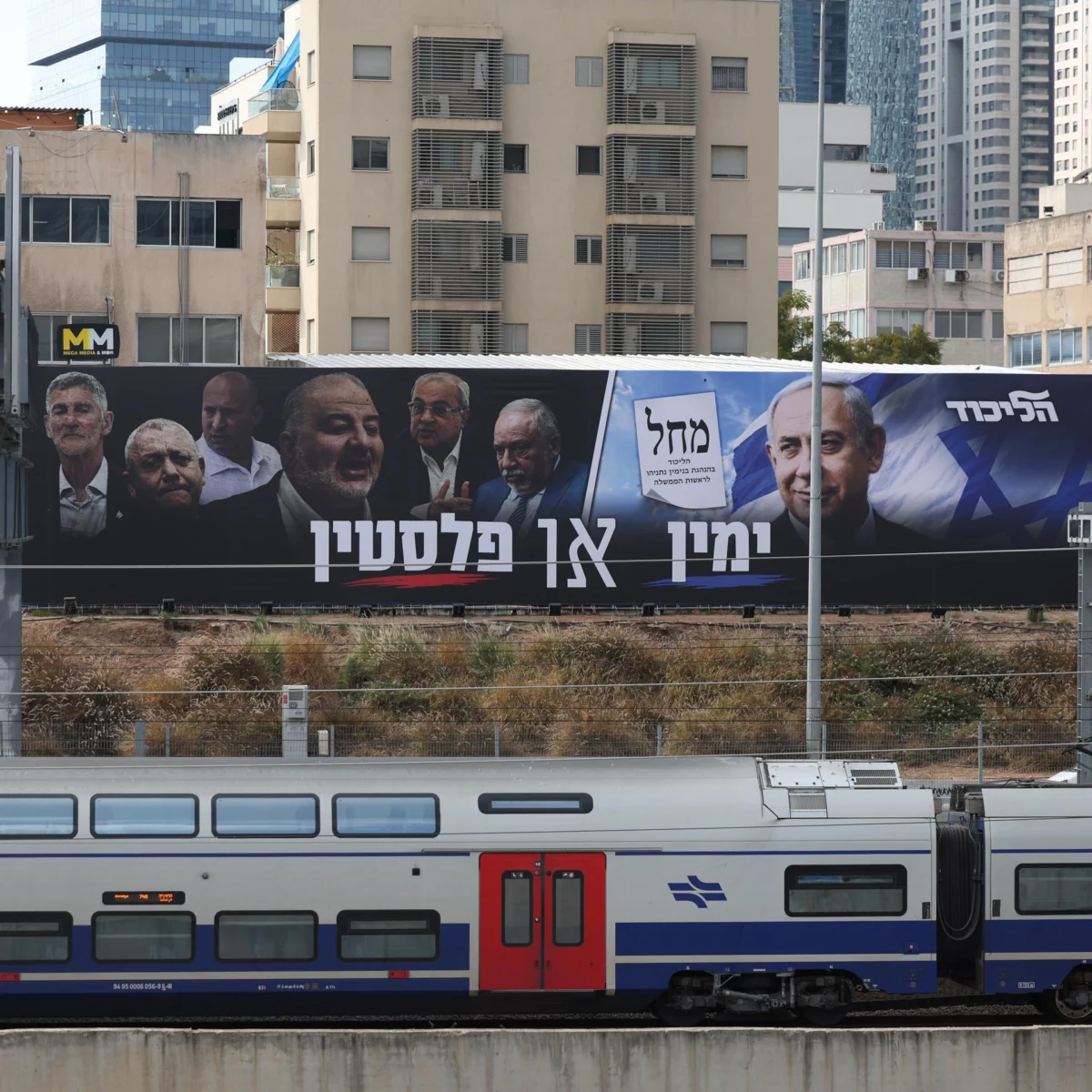
JERUSALEM – October 24, 2026 – Israel stands on the precipice of a pivotal parliamentary election this coming Tuesday, October 28, 2026, an electoral contest widely perceived as a national referendum on the leadership and policies of Prime Minister Benjamin Netanyahu. Occurring precisely three years after the devastating Hamas attack of October 7, 2023, the vote is set to gauge public sentiment regarding the nation’s security, its future direction, and accountability for past failures. The political landscape, characterized by deep divisions and a yearning for stability, has seen a dramatic surge in support for an emerging opposition bloc, signaling a potentially seismic shift in Israeli governance.
Recent weeks have witnessed a significant groundswell of momentum for opposition forces, with former Chief of Staff Gadi Eisenkot emerging as the formidable challenger to Netanyahu’s protracted political reign. His centrist Yeshar party, forging alliances and capitalizing on widespread dissatisfaction, now stands neck-and-neck with Netanyahu’s incumbent coalition in opinion polls, portending a fiercely contested election with an uncertain outcome. The stakes could not be higher for a nation grappling with ongoing security challenges, profound societal rifts, and an urgent need for cohesive leadership.
Main Facts: A Nation Divided and Seeking Direction
Israel’s upcoming general election is far from a routine democratic exercise; it is a profound moment of national introspection following the unprecedented trauma of the October 7, 2023, attacks. The ballot boxes will not only determine the composition of the 25th Knesset but will also serve as a popular verdict on Prime Minister Benjamin Netanyahu’s nearly two-decade-long tenure, particularly his handling of security, governance, and national unity in the aftermath of the deadliest single day in Israel’s history.
At the heart of this electoral battle is the contest between the veteran Likud leader, Benjamin Netanyahu, now 77, and his primary opponent, 66-year-old Gadi Eisenkot, a decorated former military chief of staff leading the centrist Yeshar party. Eisenkot’s ascent has been meteoric, driven by a platform emphasizing accountability, national unity, and a more robust security posture, contrasting sharply with Netanyahu’s long-standing right-wing coalition. Polls consistently indicate a near-perfect deadlock, with neither the pro-Netanyahu bloc nor the opposition bloc projected to secure a clear majority of the 120 Knesset seats, raising the specter of prolonged coalition negotiations or even another snap election.
Key policy debates dominating the campaign include the establishment of an independent commission to investigate the intelligence and operational failures preceding October 7, the contentious issue of conscription for ultra-Orthodox Jews and Arab citizens, and the broader vision for Israel’s security and regional standing. While Eisenkot advocates for mandatory conscription for all eligible citizens and a truly independent investigative body, Netanyahu’s government has sought to shield itself from direct responsibility and maintain the long-standing exemptions for the ultra-Orthodox, a key demographic within his political base. The election is also unfolding amidst ongoing military operations and heightened regional tensions, underscoring the urgency of choosing a leadership capable of navigating complex geopolitical challenges.
Chronology of a Nation Under Strain: From Trauma to the Ballot Box
The path to this critical election is deeply rooted in a series of seismic events and enduring political fault lines that have reshaped Israeli society and its leadership.
October 7, 2023: The Catalyst: The defining moment that irrevocably altered Israel’s political landscape was the devastating multi-pronged attack by Hamas on southern Israel. The brutal assault resulted in the deaths of over 1,200 Israelis, primarily civilians, and the abduction of hundreds more, plunging the nation into a profound state of shock, grief, and fury. This day exposed critical failures in Israel’s intelligence, defense, and political leadership, sparking immediate and widespread calls for accountability and a fundamental reassessment of national security doctrines.
Immediate Aftermath and War: In the days and weeks following October 7, Israel launched a comprehensive military response in Gaza, dubbed "Operation Iron Swords," aimed at dismantling Hamas’s military and governance capabilities and rescuing hostages. Domestically, a unity government was formed, bringing together Netanyahu’s Likud with opposition figures, including Benny Gantz and Gadi Eisenkot, the latter joining as an observer in the War Cabinet. This temporary alliance, forged in crisis, initially sought to project national cohesion, but underlying political tensions persisted.
Growing Discontent and Calls for Accountability (Late 2023 – Mid 2024): As the war in Gaza intensified and the human cost mounted, public dissatisfaction with the government’s performance grew. The initial shock gave way to persistent questions regarding the preparedness for October 7, the strategy for securing the release of hostages, and the broader vision for post-war Gaza. Protests demanding the government’s resignation and an independent investigation into the October 7 failures became a regular feature of Israeli public life. Reports, some dating back to late September 2023, suggesting that the Israeli government had received warnings about an impending Hamas attack, further fueled public anger, though the government consistently denied these specific allegations.
The Conscription Crisis and Coalition Instability (2024 – 2025): The long-simmering debate over mandatory military service for ultra-Orthodox Jews resurfaced with renewed intensity. For decades, a system of exemptions had allowed most Haredi men to avoid service, a policy deeply resented by secular and religious Zionist Israelis who bear the burden of conscription. As the military’s needs intensified post-October 7, calls for universal conscription became louder. Prime Minister Netanyahu’s attempts to legislate a bill that would permanently exempt ultra-Orthodox men from service, effectively maintaining the status quo, met with fierce opposition. This legislative push, seen by many as a cynical political maneuver to appease his ultra-Orthodox coalition partners, led to significant political fallout. Two parties within his original five-party coalition ultimately departed over this contentious issue, further eroding his parliamentary majority and exacerbating governmental instability.
The Rise of the Opposition (Late 2025 – Early 2026): Against this backdrop of political fragmentation and public disillusionment, opposition figures began to consolidate their forces. Gadi Eisenkot, leveraging his reputation as a respected military leader untainted by the political squabbles of the past, emerged as a credible alternative. His Yeshar party gained traction by presenting itself as a centrist, pragmatic force focused on national unity and security. Former Prime Minister Naftali Bennett’s Yamina party (now merged with Yesh Atid to form Bejachad) also played a role in this consolidation, signaling a desire among diverse opposition factions to present a united front against Netanyahu.
Calling the Election (Mid-2026): Facing a dwindling parliamentary majority, mounting public pressure, and an inability to pass key legislation, Prime Minister Netanyahu eventually acceded to early elections. The decision was framed by his allies as an opportunity for the public to reaffirm its support for his leadership, while the opposition viewed it as a chance for a much-needed change in direction. The election date was set for October 28, 2026, strategically placing it three years after the Hamas attack, ensuring that the trauma and its aftermath would remain central to the campaign narrative.
The Campaign Trail (Summer – Autumn 2026): The subsequent campaign has been marked by intense rhetoric, focusing on security, accountability, economic stability, and the future of Israel’s social fabric. Netanyahu has emphasized his experience and his tough stance on security, portraying himself as the only leader capable of navigating regional threats. Eisenkot, meanwhile, has positioned himself as a unifying figure, committed to restoring public trust, strengthening democratic institutions, and implementing difficult but necessary reforms, including universal conscription. The debate over the nature of the October 7 investigation commission – independent versus government-appointed – has become a potent symbol of the deeper struggle over governmental transparency and accountability.
This chronological progression highlights a nation in flux, with the upcoming election representing not just a choice between leaders, but a critical juncture in Israel’s post-October 7 identity.
Supporting Data: Polls, Policies, and Political Fault Lines
The current electoral landscape in Israel is defined by a complex interplay of public opinion, entrenched political ideologies, and the enduring shadow of October 7.
Polling Projections: A Dead Heat: The most salient data point leading into the election is the consistent prediction of a political stalemate. Major Israeli polling organizations, such as the Israel Democracy Institute (IDI), Maagar Mochot, and Midgam, have shown both Netanyahu’s right-wing religious bloc and the opposition centrist-left bloc hovering around 50 to 52 seats in the 120-member Knesset. A minimum of 61 seats is required to form a governing coalition. This "tie" scenario, reminiscent of several previous elections, suggests that forming a stable government will be exceptionally challenging, potentially leading to protracted negotiations, a weak minority government, or even another election in the near future. The polls reflect a deeply polarized electorate, where allegiances are largely fixed, and a significant swing appears unlikely in the final days.
The Electoral System and its Implications: Israel operates under a proportional representation system, where voters cast ballots for party lists rather than individual candidates. Seats in the Knesset are allocated proportionally to the percentage of votes each party receives, provided they cross an electoral threshold of 3.25%. This system, while ensuring broad representation, often leads to a fragmented parliament with numerous small parties, making coalition-building an intricate and often precarious process. The constant need for coalition partners frequently empowers smaller, often ideologically rigid, parties to exert disproportionate influence, contributing to governmental instability. Netanyahu’s recent plea to smaller right-wing parties to withdraw from the race, aimed at preventing wasted votes that fall below the threshold and to consolidate the right-wing vote for larger parties, underscores the strategic complexities of this system.
Eisenkot’s Controversial Security Doctrine: Gadi Eisenkot’s policy positions, while resonating with a desire for decisive leadership, also carry significant controversy, particularly his association with the "Dahiya doctrine." This military strategy, named after a Hezbollah-controlled neighborhood in Beirut heavily bombed by Israel during the 2006 Lebanon War, advocates for massive, disproportionate retaliation against civilian infrastructure in enemy territories in response to attacks on Israel. The doctrine’s proponents argue it serves as a powerful deterrent by imposing a high cost on aggressors and their supporting populations. However, it has drawn severe criticism from international human rights organizations and legal experts, who contend that it potentially constitutes collective punishment and violates international humanitarian law by failing to distinguish sufficiently between combatants and civilians. Eisenkot’s past statements rejecting an independent Palestinian state further solidify his image as a security hawk, albeit one who positions himself as a centrist within the Israeli political spectrum, primarily by contrasting with Netanyahu’s reliance on ultra-nationalist and ultra-Orthodox partners.
The Conscription Conundrum: The issue of universal military conscription remains a deep societal fault line. Israeli law mandates military service for most Jewish citizens upon turning 18, with significant exemptions historically granted to ultra-Orthodox men studying in yeshivas (religious seminaries). This exemption, rooted in the belief that Torah study is a vital contribution to national security, has become increasingly untenable for a large segment of the Israeli public. Critics argue it creates an unfair burden on the secular and religious Zionist populations, exacerbates social inequality, and deprives the military of much-needed personnel, especially in the wake of expanded security requirements post-October 7. Eisenkot’s proposal to extend conscription to ultra-Orthodox Jews and Arab citizens (who are currently exempt or volunteer) directly challenges Netanyahu’s long-standing political alliance with Haredi parties, who vehemently oppose such measures. This debate is not merely about military service; it is about the fundamental social contract, economic productivity, and the definition of shared national responsibility in Israel.
Netanyahu’s Coalition and its Fragility: Prime Minister Netanyahu’s current government, formed with his Likud party, far-right factions (such as Religious Zionism and Otzma Yehudit), and ultra-Orthodox parties (Shas and United Torah Judaism), has been characterized by its ideological homogeneity but also by its inherent instability. The departure of two coalition parties over the conscription debate underscored the delicate balance required to maintain a majority. Netanyahu’s strategy has consistently relied on mobilizing his right-wing base and leveraging the loyalty of religious parties. However, this strategy has often come at the cost of alienating centrist voters and deepening societal divisions. His fear of losing right-wing votes to smaller parties and thus weakening his bloc’s overall strength is a testament to the highly fragmented nature of Israeli politics.
International Context: The election is also taking place within a volatile regional and international environment. The ongoing conflict in Gaza, heightened tensions with Hezbollah on the northern border, and concerns about Iran’s nuclear program and regional influence loom large. Furthermore, Israel’s relationship with key allies, particularly the United States, has faced strains over the handling of the Gaza conflict and humanitarian aid, adding another layer of complexity to the political discourse. The broader implications of international law and Germany’s "Never Again" stance on arms deliveries, as hinted by the related Dlf-program link, suggest that the conduct of the war and humanitarian considerations are also in the global spotlight, indirectly influencing domestic political narratives.
These intertwined factors – polling data, electoral mechanics, contentious policies, and a volatile geopolitical backdrop – provide the essential context for understanding the high stakes and potential outcomes of Israel’s upcoming election.
Official Responses: Narratives of Accountability and Experience
The election campaign has been largely defined by contrasting narratives presented by the two leading political blocs, each seeking to frame the election as a critical choice for Israel’s future.
Prime Minister Netanyahu and the Likud Bloc:
Netanyahu’s campaign has heavily leaned on his decades of experience, portraying himself as the indispensable leader capable of navigating Israel through its most challenging security crisis. His official responses have focused on:
- Denial of Pre-Attack Warnings: The government, led by Netanyahu, has steadfastly denied receiving concrete, actionable warnings about the specific timing and scale of the October 7 attack. While acknowledging intelligence assessments of potential threats, they contend that no specific intelligence indicated the impending multi-pronged assault. This stance is crucial for deflecting direct responsibility for the failures that enabled the attack.
- Controlled Investigation Commission: Regarding the independent investigation into the October 7 failures, Netanyahu’s government has advocated for a commission composed of members chosen by politicians, rather than a truly independent body. This approach is widely seen as an attempt to control the narrative and limit the potential for politically damaging findings that could implicate senior government and military officials, including the Prime Minister himself. They argue that a politically appointed body ensures accountability to the elected representatives of the people.
- Security and Stability: Netanyahu consistently emphasizes his track record on security, asserting that his leadership is vital for maintaining Israel’s strength and deterring its enemies. He often frames the election as a choice between experienced leadership and an untested alternative in a time of war.
- Defense of Ultra-Orthodox Exemptions: Despite the coalition’s fragmentation over the issue, Netanyahu remains committed to seeking a legislative solution that would largely maintain the exemptions for ultra-Orthodox men from military service. His argument is rooted in the need to respect the unique lifestyle of the Haredi community and to maintain the stability of his right-wing religious coalition, which views Torah study as a fundamental contribution to the nation.
- Economic Stability: His government highlights efforts to maintain economic stability amidst wartime challenges, promising continued growth and prosperity under his leadership.
Gadi Eisenkot and the Yeshar/Opposition Bloc:
Eisenkot’s campaign, by contrast, centers on accountability, national unity, and a more inclusive approach to national service. His key official responses and platform points include:
- Independent Investigation Commission: Eisenkot’s cornerstone proposal is the establishment of a truly independent investigative commission into the October 7 failures. He argues that only a body free from political interference can uncover the full truth, learn the necessary lessons, and restore public trust in state institutions. This is a direct rebuke of the government’s proposed commission.
- Universal Conscription: Eisenkot is a staunch advocate for extending mandatory military service to ultra-Orthodox Jews and Arab citizens. He views this as a matter of national equity and necessity, arguing that all segments of Israeli society must share the burden of defense, especially given the current security challenges. He highlights Netanyahu’s failed attempts to exempt ultra-Orthodox as a symptom of prioritizing political expediency over national interest.
- Strengthening Democratic Institutions: His platform calls for strengthening press freedom, bolstering the independence of the military, and solidifying Israel’s borders. These points are often framed as a response to perceived erosion of democratic norms and institutional integrity under Netanyahu’s lengthy tenure.
- Centrist Security Approach: While firm on security and rejecting a Palestinian state, Eisenkot positions himself as a pragmatic leader capable of making tough decisions without being beholden to extremist factions. He criticizes Netanyahu’s reliance on ultra-right parties, suggesting it has created unnecessary internal divisions and strained international relations.
- Rebuilding Trust: Eisenkot consistently emphasizes the need to rebuild public trust in leadership and institutions, which he argues has been severely damaged by the events of October 7 and the government’s subsequent responses.
The contrasting approaches to accountability, national service, and governance highlight the fundamental ideological and practical divide between the two leading blocs, offering Israeli voters a clear choice on the nation’s path forward.
Implications: The Future of Israeli Governance and Regional Stability
The outcome of Tuesday’s election carries profound implications not only for Israel’s domestic politics but also for its security, economy, and standing in the international arena. The predicted stalemate underscores a potential continuation of political instability, a recurring feature of Israeli democracy in recent years.
Political Stalemate and Governance Challenges:
If, as polls suggest, neither bloc secures the necessary 61 seats, Israel faces a period of intense and potentially protracted coalition negotiations. This could lead to:
- Weak Coalition Government: A narrow, ideologically diverse coalition, susceptible to internal disputes and the demands of smaller parties, could struggle to pass legislation and implement long-term policies. This would hinder effective governance at a time when decisive leadership is critically needed.
- Minority Government: The formation of a minority government, relying on external support or abstentions, would be inherently unstable, constantly vulnerable to no-confidence votes and potentially leading to another early election.
- Another Snap Election: The inability to form a viable government could plunge Israel into an unprecedented sixth election in a short span, further exhausting the electorate and delaying urgent national decisions.
- Deepening Societal Divisions: A continued political deadlock might exacerbate the existing cleavages within Israeli society, particularly between secular and religious communities, and between those demanding accountability for October 7 and those seeking to defend the current leadership.
Policy Shifts and National Direction:
The leadership that eventually emerges will face immediate and critical policy decisions:
- Security Posture:
- Under Netanyahu: A renewed Netanyahu government would likely continue a hawkish security policy, prioritizing military action and deterrence. His reliance on far-right partners might lead to more aggressive policies in the West Bank and Gaza, potentially increasing regional tensions and straining relations with international allies. The proposed government-controlled investigation into October 7 would likely proceed, potentially limiting critical findings.
- Under Eisenkot: An Eisenkot-led government would likely maintain a strong security stance but might pursue a more pragmatic and unified approach. The commitment to an independent October 7 inquiry could lead to significant reforms within the defense establishment and intelligence agencies. His focus on universal conscription would fundamentally alter the social contract of military service, with long-term implications for the IDF’s composition and the integration of ultra-Orthodox and Arab citizens.
- The Palestinian Issue: Eisenkot’s clear rejection of an independent Palestinian state signals a continuation of the current policy of managing the conflict rather than seeking a two-state solution. However, a centrist government might be less provocative in its actions compared to Netanyahu’s hard-right allies, potentially easing tensions with the international community.
- International Relations: The composition of the next government will influence Israel’s standing on the global stage. A Netanyahu government, particularly one heavily reliant on ultra-nationalist partners, might face continued international scrutiny and friction, especially with European nations and the US. An Eisenkot government, perceived as more centrist and less ideologically driven, might find it easier to rebuild bridges with traditional allies and navigate complex diplomatic challenges, though his security doctrines could still draw criticism.
- Domestic Reforms: Beyond conscription, the new government will face pressure to address economic disparities, strengthen democratic institutions, and heal the deep societal rifts exposed by recent years of political turmoil and the October 7 trauma.
The Future of Benjamin Netanyahu:
For Benjamin Netanyahu, this election could mark the final chapter of an unparalleled political career. If his bloc fails to secure a majority and he is unable to form a government, it would signal the end of his long and often controversial tenure. Conversely, if he defies expectations and manages to cobble together a coalition, it would solidify his status as Israel’s most enduring political figure, demonstrating his remarkable resilience despite immense pressure.
Societal Impact:
Regardless of the immediate political outcome, the election reflects a profound moment of reckoning for Israeli society. The demand for accountability, the debate over national service, and the search for unifying leadership highlight a collective yearning for healing and a clear path forward after the trauma of October 7. The election’s implications will resonate deeply within Israeli homes, shaping the national discourse and identity for years to come.
In essence, this election is more than just a contest for power; it is a critical juncture where Israel will decide whether to maintain its current trajectory under an experienced but divisive leader, or to embark on a new course under a leadership promising unity, accountability, and reform. The challenges are immense, and the path forward remains fraught with uncertainty.
This news article was broadcast on Deutschlandfunk on October 24, 2026.