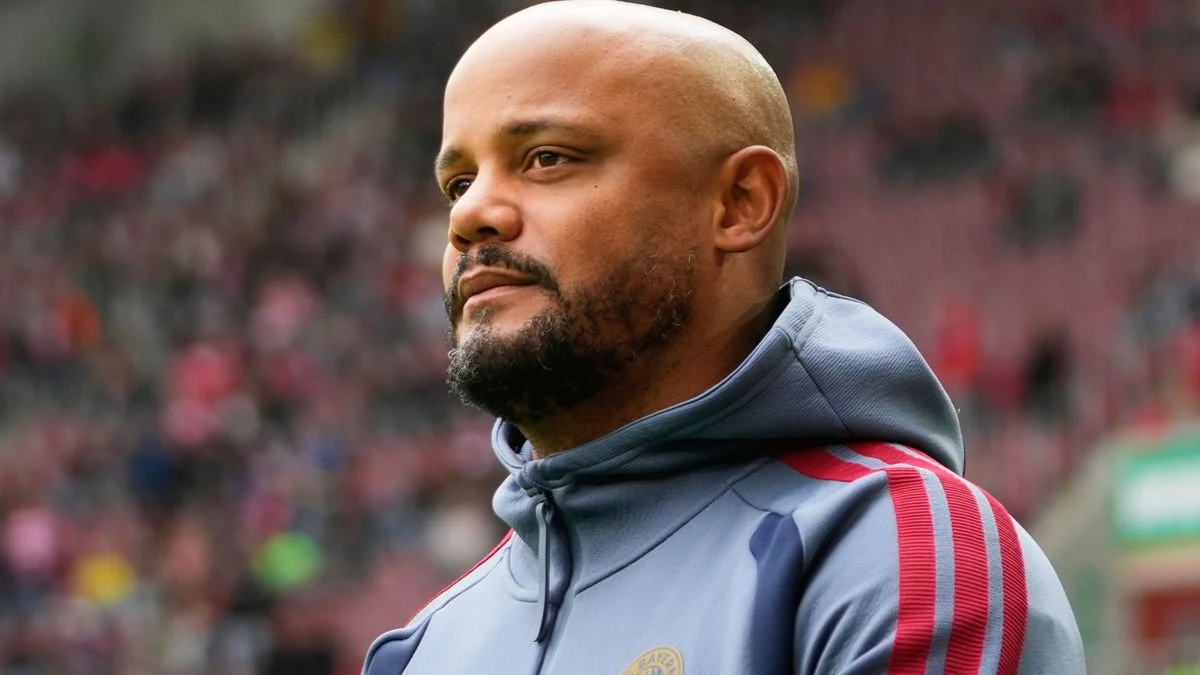
The footballing world has been gripped by concern following the sudden hospitalization of Bayern Munich head coach Vincent Kompany. The 40-year-old manager, who has been a transformative figure at the helm of the German giants this season, collapsed on Friday while observing a training session involving the club’s amateur squad. The incident has sent shockwaves through the sport, triggering an unprecedented wave of well-wishes from former clubs, international governing bodies, and high-profile figures across the European football landscape.
As Kompany remains under medical observation, the focus at Säbener Straße has shifted from tactical preparation to the health and recovery of their leader. While the club has confirmed that the manager is in a stable condition, the uncertainty surrounding his timeline for return has cast a shadow over a critical stretch of the season for the Bavarian side.
The Incident: A Sudden Medical Emergency
The collapse occurred during a routine training observation on Friday morning. According to reports from the club, Kompany, who had been dealing with persistent health issues throughout the week, was immediately attended to by the club’s medical staff. Given the gravity of the situation, he was swiftly transported by emergency services to a local Munich clinic for comprehensive diagnostic testing and stabilization.
The incident comes just days after Kompany openly admitted to battling a severe viral infection. In an interview following Bayern’s 2-2 Champions League draw against Arsenal on Wednesday—a match where he remained on the touchline—Kompany confessed that his health had been compromised. "I picked up a pretty nasty virus last week," he told reporters. "I obviously didn’t listen to my body, and eventually, the body just said: ‘Stop now!’"
It appears that the high-pressure environment of top-flight management, combined with the physical toll of the virus and lingering hip issues, culminated in the collapse. The club has since issued a firm directive regarding his recovery. "Vincent is receiving all the necessary medical care and support, and he will be granted all the time he needs to recover fully," stated Bayern Munich sporting director Max Eberl.
Chronology of Events
To understand the gravity of the situation, it is necessary to look at the sequence of events leading up to Friday’s crisis:
- Mid-October: Kompany begins exhibiting symptoms of a persistent viral infection but continues to manage team duties, including the Bundesliga clash against FC Augsburg.
- Tuesday, October 22: Kompany is forced to miss the final training session before the Arsenal match to focus on recovery. He also skips the mandatory pre-match press conference, with assistant coach Aaron Danks stepping in to address the media.
- Wednesday, October 23: Despite clearly appearing unwell, Kompany manages the match from the touchline against Arsenal, which ends in a 2-2 draw. He confirms his illness to the media post-match.
- Friday, October 25: While overseeing a training session for the club’s youth/amateur setup, Kompany collapses. Emergency services arrive on-site, and he is taken to a local hospital.
- Saturday, October 26: The club issues updates confirming his stable condition while emphasizing the need for rest and total recovery.
A Global Response: Unity in the Football Community
The news of Kompany’s collapse transcended club loyalties and national borders. As a former captain of Manchester City and a legendary figure in Belgian football, his influence is vast.

Manchester City’s Tribute
Manchester City, the club where Kompany spent eleven defining years and cemented his status as a Premier League icon, was among the first to offer public support. "Everyone at Manchester City wishes our former captain and club legend Vincent Kompany a speedy recovery," the club stated in an official release. The sentiment was echoed by thousands of fans on social media, reflecting the deep emotional connection between the player and the city of Manchester.
International and League-Wide Solidarity
The response from the broader football community has been equally profound. The Portuguese Football Federation, in a gesture of solidarity, commented on Bayern Munich’s social media channels: "Everyone at the Portuguese Federation wishes you a speedy recovery, Vincent."
Real Madrid goalkeeper and former international teammate Thibaut Courtois sent a poignant personal message, stating simply: "Get well soon, friend."
Furthermore, Bundesliga clubs, including his former side Burnley—which he guided with distinction for two seasons before his move to Germany—issued statements of support. Even political figures have weighed in; German Federal Minister of Research and prominent Bayern member, Dorothee Bär, described the news as a "huge shock." Speaking at the CSU party conference, she remarked, "He is an outstanding human personality. I wish him all the best, God’s blessing, and I hope he is back on his feet very soon."
Operational Implications: Who Takes the Helm?
With the manager sidelined indefinitely, the immediate question facing the Bayern Munich hierarchy is operational continuity. Sporting director Max Eberl has moved quickly to reassure the fanbase and the players, stating that the established coaching staff is more than capable of handling the workload.
The Role of Aaron Danks
The primary responsibility for the day-to-day operations will fall to assistant coach Aaron Danks. The 43-year-old Englishman is no stranger to taking the lead in Kompany’s absence. During the previous season, when Kompany was suspended for a crucial Champions League semi-final against Paris Saint-Germain, Danks stepped up to orchestrate the team from the sidelines.
Eberl noted that the transition is seamless because the entire backroom staff is deeply integrated into the "Kompany philosophy." "Vincent has his charisma and everything that goes with it," Eberl explained during the previous emergency. "But the detailed work in the background comes from all the colleagues in the coaching staff. Everyone knows the ideas and the tactical approach we want to implement, both defensively and offensively."

Upcoming Fixtures and Tactical Challenges
The timing of the medical emergency could not be more challenging. Bayern faces a daunting calendar over the next two weeks:
- Sunday: A high-stakes Bundesliga clash against SC Freiburg.
- Wednesday: The DFB-Pokal second-round match against 1. FC Magdeburg.
- October 31: The Klassiker at home against Borussia Dortmund.
- November 3: A pivotal Champions League away match against Atlético Madrid.
The coaching staff, led by Danks, must now maintain the tactical integrity of the team while ensuring that the players remain focused despite the emotional distress caused by their leader’s illness.
Analyzing the Pressure of Modern Management
The collapse of a 40-year-old professional athlete and manager serves as a sobering reminder of the physical and mental demands placed on those at the pinnacle of European football. Kompany’s admission that he "did not listen to his body" highlights a systemic issue within the sport: the pressure to perform at all costs.
Sports medicine experts have long warned that the "virus-to-pitch" pipeline, where managers and players return to high-intensity work before full recovery, carries significant cardiovascular risks. By forcing his body to endure a high-intensity coaching week immediately following a viral infection, Kompany effectively ignored the warning signs that his physiological systems were failing.
The decision by Bayern Munich to allow him time off—and the fact that he was working with the amateur team when he collapsed—suggests that even at the highest levels, the desire to be "hands-on" can lead to dangerous consequences. Moving forward, this event will likely spark a conversation regarding the duty of care clubs owe to their coaching staff, who often face workloads that rival or exceed those of the players they manage.
Conclusion
As the Bavarian capital waits for further updates, the primary concern remains Vincent Kompany’s health. The outpouring of love from England, Belgium, Portugal, and across Germany is a testament to the character of the man behind the tracksuit.
While the tactical challenges ahead are significant, they are currently secondary to the well-being of the man who has brought such intensity and tactical innovation to the Allianz Arena. For now, the message from the club and the fans is unanimous: football can wait; the health of the individual is paramount. The coming days will be critical, not just for the club’s sporting ambitions, but for the recovery of one of football’s most respected figures. The hope remains that when the whistle blows for the next match, the focus can return to the game, with Kompany safely on the mend and on his path to a full return.