In an era before modern medical regulations, the discovery of radium in 1898 sparked a widespread, misguided obsession with radioactivity. Today, that obsession has left behind a dangerous legacy: thousands of household items—ranging from watch dials to drinking vessels—that remain lethally radioactive more than a century later.
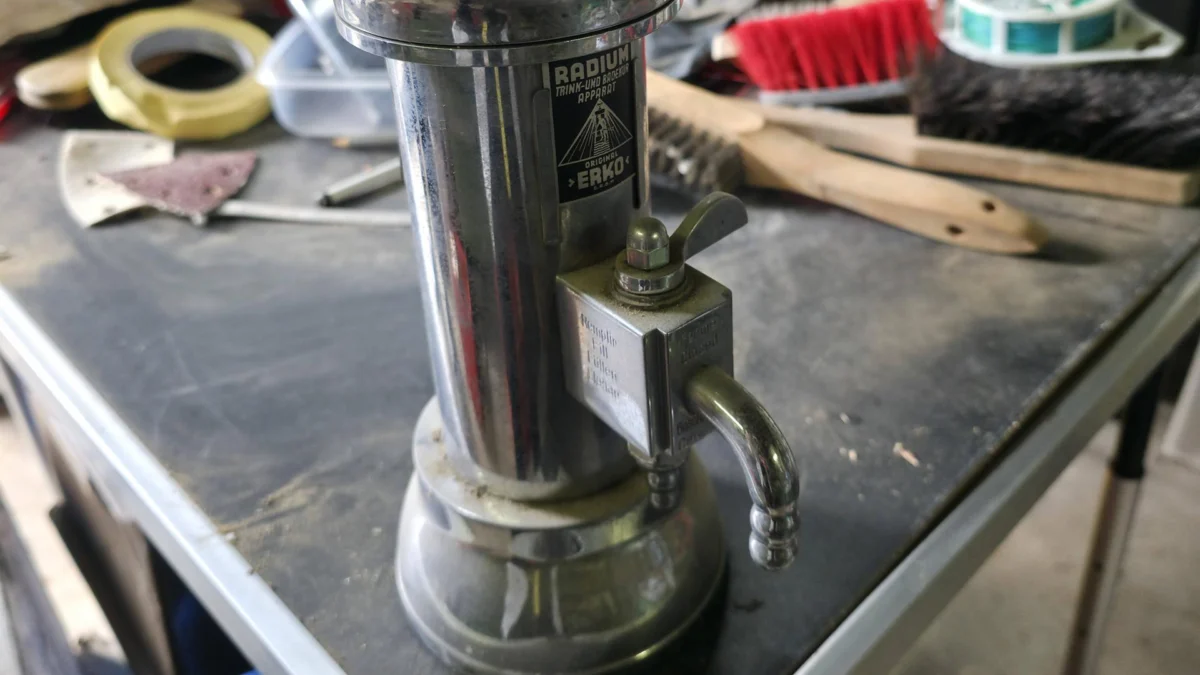
The Regierungspräsidium (RP) Darmstadt recently issued an urgent public safety warning following the discovery of a "Radium Drinking Apparatus" by two citizens cleaning out their garage in the Bergstraße district of Hesse. While the device appears to be an innocuous, antique metal pitcher with a spigot, officials warn that it is, in fact, a source of significant ionizing radiation. This discovery has reignited concerns about the prevalence of radioactive antiques still tucked away in attics, basements, and flea markets across Europe.
The Core Facts: A Silent Household Hazard
The device recovered in Bergstraße is a stark reminder of the "Radium Craze" of the early 20th century. According to the RP Darmstadt, these vessels were designed to infuse drinking water with radon gas—a byproduct of the decay of radium-226.
The fundamental danger lies in the physics of the radioactive isotopes used in these products. Radium-226 has a half-life of approximately 1,600 years. Because these items were manufactured barely a century ago, they have lost only a negligible fraction of their original radioactive potency. The RP Darmstadt estimates that these devices still retain roughly 95 percent of their initial radioactivity.
Possession of these items is not merely a health hazard; it is a regulatory issue. Under current German law, the unauthorized possession of radioactive materials is considered an administrative offense. Officials emphasize that these items must never be discarded in household trash or taken to municipal recycling centers, as this could expose waste management workers and the general public to unnecessary radiation.
Chronology: From Medical Miracle to Toxic Relic
The Radium Craze (1900–1930)
In the years following Marie and Pierre Curie’s discovery of radium, the scientific community and the general public were captivated by the "miraculous" properties of the element. Because radiation was then poorly understood, it was marketed as a panacea for various ailments.
During the first half of the 20th century, companies mass-produced "Radium-226 generators" or "drinking apparatuses." The logic was simple: Radium would decay into radon gas, which would then dissolve into the water stored in the device. This "radon water" was marketed to treat everything from arthritis and gout to fatigue and digestive issues.
The Realization of Risk (1930s–1950s)
The public perception of radium shifted dramatically as the health consequences became undeniable. High-profile cases, most notably the "Radium Girls"—factory workers who painted watch dials with luminous radium paint and subsequently suffered horrific bone decay and cancers—brought the dangers of ionizing radiation into the global consciousness. By the mid-20th century, the sale of radioactive health products was largely banned or phased out.
The Modern Rediscovery (2024)
While many such devices were destroyed, a significant number persisted as "curiosities" or antique collectibles. The recent discovery in the Bergstraße garage is not an isolated incident; it serves as a wake-up call for homeowners who may have inherited or purchased such items without realizing their true nature.

Supporting Data: The Science of Decay
To understand why a 100-year-old cup is still dangerous, one must look at the decay chain of Radium-226.
- Isotope Stability: With a half-life of 1,600 years, the intensity of the radiation emitted by these devices will remain virtually unchanged for centuries to come.
- Ionizing Radiation: These devices emit alpha, beta, and gamma radiation. While alpha particles are blocked by the skin, the ingestion of radioactive particles or the proximity to a high-concentration source poses severe internal radiation risks, including increased susceptibility to leukemia and bone cancer.
- The "Radon" Mechanism: These devices were designed specifically to allow the radioactive decay product (radon gas) to escape the radium source and enter the water. This effectively creates a concentrated source of radioactive liquid, which is significantly more dangerous than the solid source alone.
The RP Darmstadt notes that because these items were mass-produced, they are still circulating on internet auction sites and at flea markets. Collectors often purchase them for their aesthetic value—typically marked with labels such as "Radium Drinking and Bathing Dispenser"—completely unaware that they are bringing a radioactive source into their homes.
Official Responses and Safety Protocols
The Regierungspräsidium Darmstadt has been clear in its directive: Do not attempt to dispose of these items yourself.
Official Instructions for Discovery:
- Cease Handling: If you suspect you own a Radium-226 device, move it to a location where it will not be disturbed, such as a garage or basement shelf, and limit your time in its immediate vicinity.
- Report Immediately: Contact the relevant environmental or radiation protection authority (in this case, the RP Darmstadt). They have the equipment to conduct radiation surveys and the expertise to handle and store radioactive waste safely.
- Avoid Recycling/Trash: Under no circumstances should these items be placed in standard waste bins or taken to a recycling center. Such actions risk contaminating public facilities and triggering radiation alarms at waste-processing plants.
The authorities are working to catalog these finds to ensure they are moved into secure, long-term storage facilities designed for radioactive waste. The goal is to remove these "time bombs" from private circulation permanently.
Broader Implications: The Burden of History
The presence of these drinking apparatuses in modern society highlights a broader issue: the "Long Shadow" of historical industrial practices. Many objects from the early 20th century, including luminous watch dials, compasses, and certain medical devices, were imbued with radioactive materials to increase their utility or appeal.
The Ethics of Collecting
The case of the Radium-226 cup forces a conversation about the ethics of collecting antique medical or scientific equipment. While historical preservation is important, the "collectability" of these items is often at odds with public safety. Auction platforms and online marketplaces are now under increased scrutiny to ensure that sellers are not offering hazardous radioactive material to the unsuspecting public.
Public Awareness and Education
The RP Darmstadt’s warning serves as a vital educational tool. Many people hold the false belief that "antique" is synonymous with "harmless." The truth is that radioactivity does not respect the passage of time. As the older generation that remembers these items fades, and as these objects are rediscovered by younger generations during estate clean-outs, the risk of accidental exposure grows.
Moving forward, authorities are calling for greater public vigilance. If an object appears to be a medical device from the early 1900s, especially one that mentions "radium," "radon," or "luminous" properties, it should be treated as a potential health risk.
In conclusion, while the Radium-226 cup from the Bergstraße garage is an interesting historical artifact, it is a reminder that some legacies of the past are best left buried—or, in this case, securely locked away in a lead-lined container by professionals. The pursuit of "health" in the early 20th century has resulted in a lingering threat, one that requires modern science and responsible governance to manage effectively. The public is urged to look before they touch and report anything suspicious to ensure the safety of the community at large.