DRESDEN, GERMANY – For those who have ever dreamed of residing within a piece of architectural history, an extraordinary opportunity has emerged in the heart of Saxony. The iconic Erlweinturm, a striking Jugendstil (Art Nouveau) tower that has stood as a silent sentinel over the Ostragehege and Dresden’s trade fair grounds for over a century, is set to be sold at auction. As part of the upcoming winter auctions organized by the Sächsische Grundstücksauktionen AG, this industrial landmark represents a unique intersection of heritage preservation, urban development, and high-stakes real estate investment.
The Landmark in Focus: A Legacy of Hans Erlwein
The Erlweinturm is far more than a mere structure; it is a testament to the architectural vision of Hans Erlwein, the renowned Dresden city architect who shaped the aesthetic landscape of the city during the early 20th century. Completed in 1906, the tower was originally part of the city’s massive municipal slaughterhouse complex, a site that has since evolved into a vibrant hub of culture, commerce, and sports.
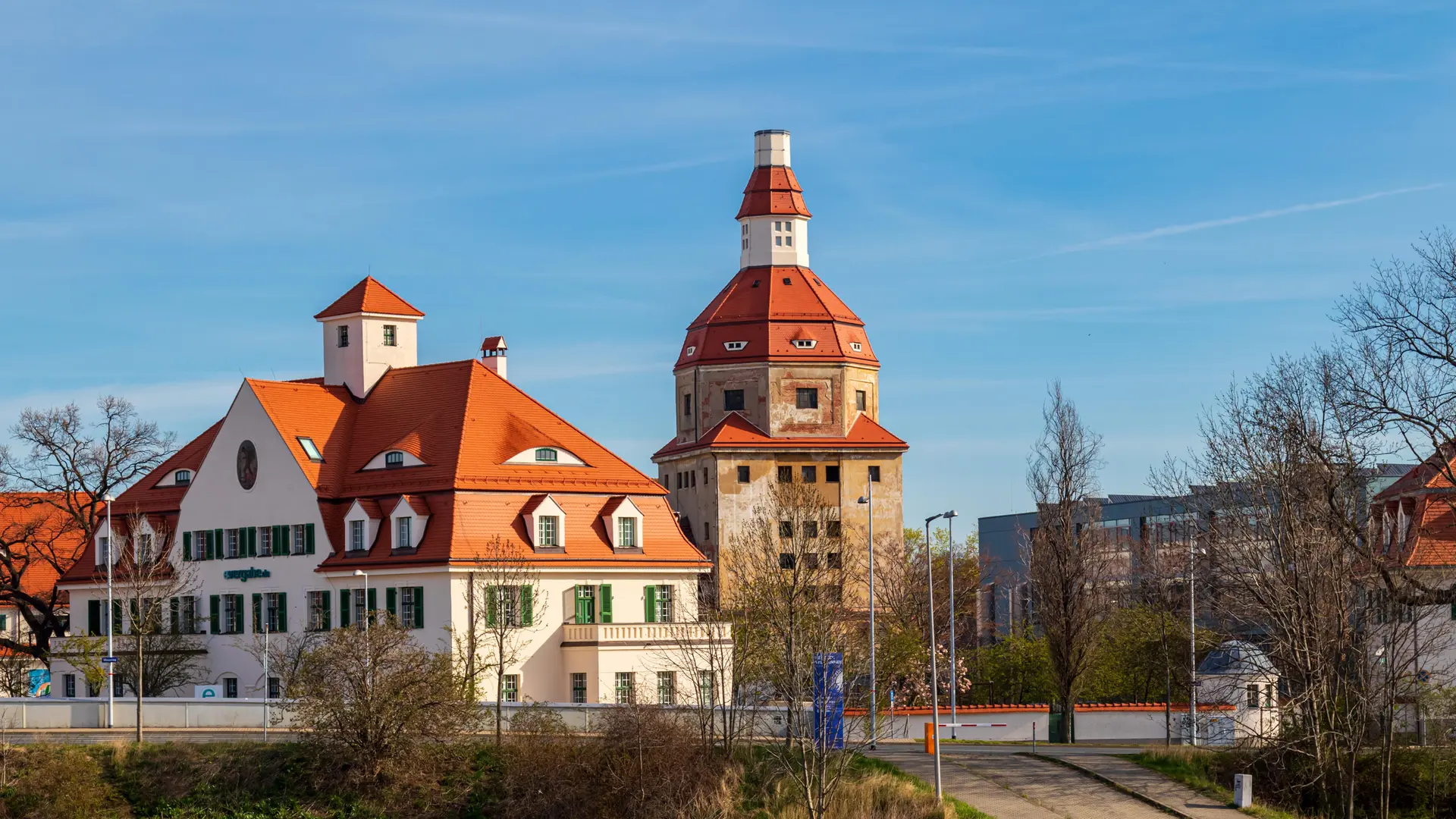
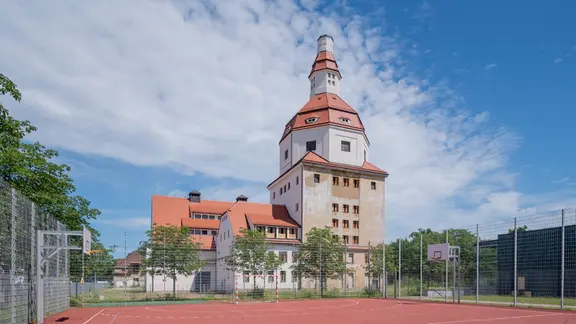
The tower’s distinctive architectural language—a fusion of functionalism and decorative Jugendstil elements—has made it an instantly recognizable feature of the Dresden skyline. For decades, it has stood as a guardian of the Ostragehege, witnessing the city’s transformation from the industrial age to the post-reunification era. Today, the tower is a protected heritage site, meaning any future owner must balance the desire for modern utility with the strict mandates of historic preservation.
A History of Investment and Transformation
The decision to auction the tower comes after significant efforts by the public sector to preserve the structure. Over the past several years, the City of Dresden—through its municipal entity, the Technical Works (Technische Werke)—has invested heavily in the tower’s survival.

According to the official auction documentation, approximately 4.75 million euros have already been funneled into the site. These funds were primarily allocated toward essential structural stabilization and aesthetic restoration. Key improvements include:
- Facade and Roofing: Extensive work has been completed to weatherproof the building and restore its historic exterior.
- Site Remediation: Years of industrial debris and obsolete machinery have been cleared to prepare the interior for a new chapter of use.
- Machine House Upgrades: The former machine house has been specifically outfitted to serve as a high-end event space, hinting at the building’s potential as a cultural venue.
Despite these millions in investment, the tower remains a "work in progress." It is not a turnkey property but rather a canvas for a visionary investor. The auction catalog notes that while the "heavy lifting" of structural repair is behind it, the site possesses "extraordinary development potential" that remains largely untapped.
The Auction: Financial Stakes and Market Expectations
The auction, scheduled for November 25, is expected to draw interest from specialized developers, hotel operators, and high-net-worth individuals interested in trophy assets. The minimum starting bid is set at 1.5 million euros.
While 1.5 million euros might seem like a bargain for a landmark of this scale, potential buyers must factor in the massive secondary costs associated with adaptive reuse of a protected historic site. The property comprises the tower itself and an expansive surrounding plot of nearly 7,400 square meters. Its location is arguably its greatest asset: situated in the immediate vicinity of the Dresden Trade Fair, the Ostra-Studios, and the city’s major sports training center, the site is positioned within one of the most dynamic development zones in the city.
The sale is being conducted by the Sächsische Grundstücksauktionen AG, a firm known for handling complex and often high-profile real estate transactions in the region. The auction process is designed to ensure transparency, yet it brings with it the uncertainty of an open market bid.
Official Stance and Implications for the City of Dresden
The sale of the Erlweinturm by the municipal entity, the Technical Works, is indicative of a broader trend in German urban management: the divestment of industrial heritage sites that no longer serve a direct public utility.
From the city’s perspective, the auction is an attempt to pass the burden—and the opportunity—of the site to a private entity that has the capital and the mandate to breathe permanent life into the structure. However, this raises questions regarding the future of the Ostragehege district. Critics of such sales often express concern that public icons might be transformed into exclusive private enclaves, losing their accessibility to the general public.
Conversely, proponents of the sale argue that the tower’s long-term survival is only guaranteed if it becomes economically self-sustaining. "The city cannot maintain every piece of heritage indefinitely," noted a representative familiar with the auction proceedings. "Finding an investor who respects the historical significance while providing a modern business case is the best possible outcome for the Erlweinturm."
The Challenges of Adaptive Reuse
The buyer of the Erlweinturm will face a unique set of challenges that extend beyond the initial purchase price. These include:
1. Heritage Preservation Constraints
As a listed monument, every renovation detail must be approved by the State Office for Monument Preservation. This limits the ability of the owner to make radical changes to the floor plans or the external appearance of the tower. Windows, materials, and even the types of lighting used on the facade must meet rigorous standards.

2. High Operational Costs
Maintaining a historic tower requires specialized craftsmanship. The maintenance costs for a century-old masonry building are significantly higher than those for modern commercial real estate. An owner must account for these ongoing expenses in their long-term business plan.
3. Zoning and Planning Permission
While the location is prime, it is subject to specific zoning laws that govern the Ostragehege area. Future uses, such as residential apartments, luxury offices, or boutique hotels, will require complex planning permissions that take into account the proximity to the sports facilities and the fairgrounds.
Broader Context: The German Property Market in Flux
The auction of the Erlweinturm occurs against a backdrop of a cooling German real estate market. The construction industry in Saxony, like much of Germany, is currently grappling with high interest rates, increased material costs, and a sharp decline in new project starts.
The struggle to keep the "dream of home ownership" alive—as highlighted by recent trade fairs in cities like Chemnitz—reflects a broader national anxiety. While the Erlweinturm is a commercial rather than residential project, the economic climate will undoubtedly influence the bidding strategy. Investors are currently more cautious, looking for projects that offer clear cash flow potential rather than speculative vanity projects.
Conclusion: A New Chapter for a Dresden Icon
The upcoming auction on November 25 is more than just a real estate transaction; it is a defining moment for one of Dresden’s most beloved architectural figures. Whether the tower becomes a prestigious headquarters, a boutique hotel with panoramic views of the Elbe, or a multi-functional event hub remains to be seen.
What is certain is that the next chapter of the Erlweinturm will be written by someone with both the financial resources to overcome the hurdle of renovation and the aesthetic sensitivity to honor the legacy of Hans Erlwein. As the bidding clock ticks down, the city watches with bated breath, hoping that this historic tower will continue to watch over the Ostragehege for another hundred years, newly revitalized and firmly integrated into the modern life of the city.
The transition from a municipal asset to private ownership marks the end of an era of state-led preservation and the beginning of a period of market-led evolution. For the winner of the auction, the prize is the chance to define a landmark; for the people of Dresden, the hope is that the tower remains a beacon of the city’s industrial past, preserved for future generations to admire.