Introduction: The "Operation Ossavakiam"
In the early hours of an October morning in 1946, the Soviet occupation zone in Germany underwent a clandestine and life-altering operation that would remain a dark chapter in post-war history for decades. Thousands of German aviation experts, scientists, engineers, and their families were rousted from their homes, forced into trains, and transported deep into the interior of the Soviet Union. This operation, codenamed "Operation Ossavakiam," was not merely a relocation; it was a systematic extraction of human capital designed to accelerate the Soviet Union’s technological capabilities in the burgeoning Cold War era.
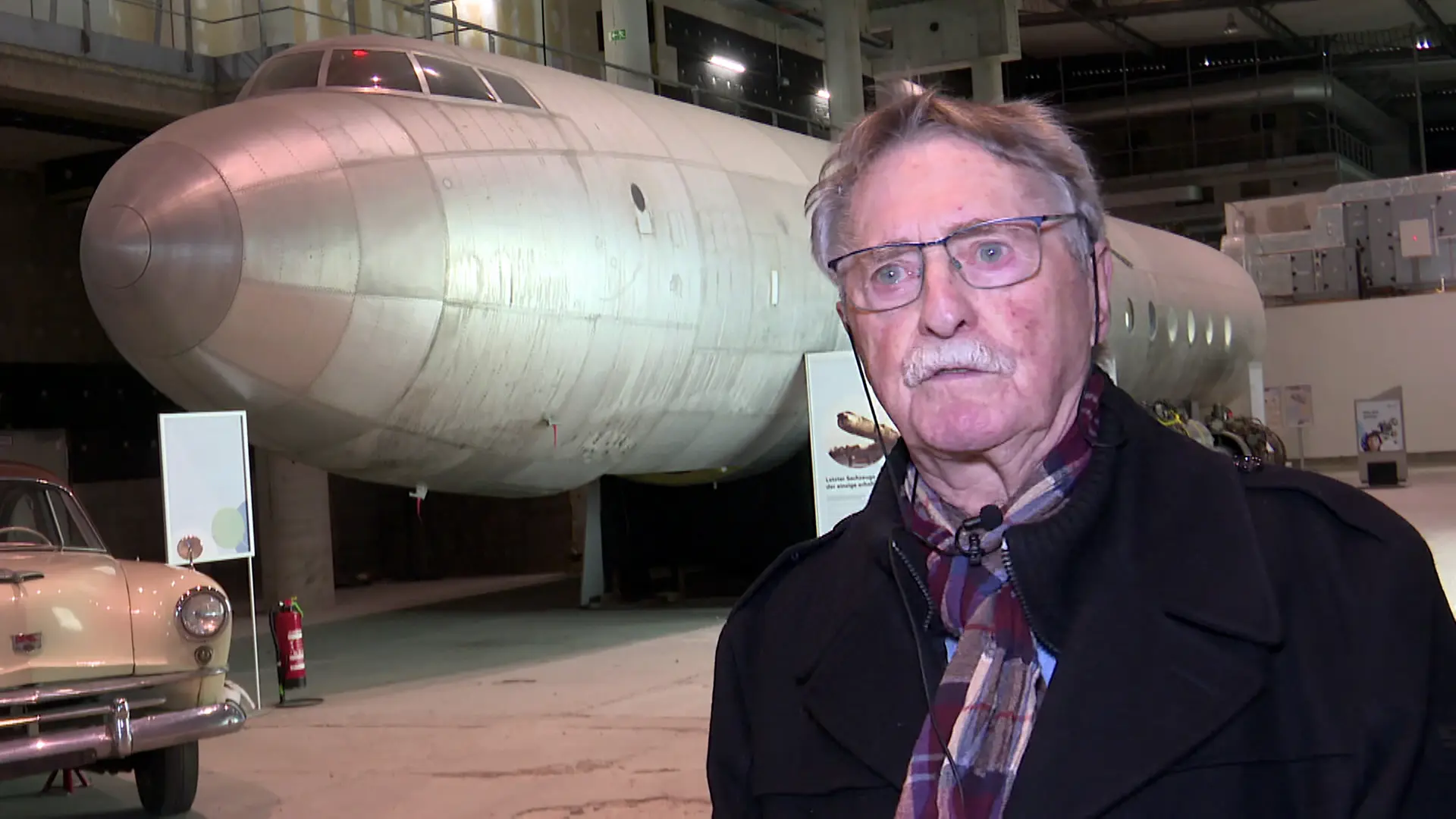
Decades later, the memory of these events remains vivid, preserved by the few remaining survivors who were tracked down for interviews. Their stories offer a harrowing account of forced labor, scientific exile, and the struggle to maintain human dignity while being used as instruments of reparations.
The Chronology of Dispossession
To understand the gravity of the 1946 deportations, one must place them within the chaotic context of the immediate post-war period.
October 22, 1946: The Night of the Knock
The operation began simultaneously across the Soviet occupation zone. Under the guise of fulfilling reparations agreements, NKVD troops moved into the homes of key personnel working in the aviation, rocket, and precision engineering sectors. Families were given mere hours to pack their belongings—often limited to a few suitcases—before being loaded onto trucks and taken to designated railway stations.

The Transit and the Destination
The journey to the East was marked by uncertainty and fear. For many, the destination was not clearly stated, but as the trains rolled across the Russian border, the reality settled in: they were to be moved to remote, fortified scientific centers (sharashkas) or industrial hubs deep within the Soviet Union, such as the Urals, Moscow, or Podberezye.
The Years of Enforced Innovation (1946–1950s)
Once in the USSR, the German experts were not treated as ordinary prisoners, but as "specialists" whose freedom of movement was strictly curtailed. They were tasked with reverse-engineering German jet technology, improving Soviet rocket designs, and contributing to the development of the USSR’s fledgling nuclear and aviation programs. They lived in guarded settlements, isolated from the local population, and were subjected to intense pressure to deliver results that would allow the Soviet Union to catch up with Western advancements.

Supporting Data: The Scale of the Extraction
Historical archives suggest that the scale of the forced migration was immense. While exact figures are debated, estimates indicate that between 2,500 and 3,000 highly qualified technicians and their dependents were involved.
- Human Capital: The group included engineers who had worked on the Junkers jet engines, the V2 rocket program, and various advanced radar technologies.
- Economic Impact: The departure of these individuals created a massive "brain drain" in the nascent East German state, hindering local industrial recovery and scientific progress for years to come.
- Duration: Most of these experts remained in the Soviet Union until the early 1950s, with some not returning to Germany until 1954 or later.
Implications: A Legacy of Scientific Exile
The forced deportation had profound implications that resonated on both sides of the Iron Curtain.

Impact on Soviet Technological Advancement
There is little doubt that the presence of these German experts played a catalytic role in the Soviet Union’s ability to successfully develop jet fighters (such as the MiG-15 derivatives) and improve the reliability of their early ballistic missiles. By leveraging the expertise of captured engineers, the Soviet Union condensed years of research and development into a fraction of the time.
The Personal Cost
For the individuals involved, the cost was immeasurable. Many were separated from their extended families for nearly a decade. Their professional careers were disrupted, and upon their eventual return to Germany, they often faced suspicion—in the West, they were viewed as collaborators; in the East, they were closely monitored by the Stasi, fearing they had been compromised by their time in the Soviet Union.
Official Responses and Historical Reconciliation
For decades, the Soviet government maintained that the migration was "voluntary," claiming the experts had agreed to work in the USSR for better pay and living conditions. However, declassified documents and survivor testimonies have systematically dismantled this narrative.
The Changing Historical Narrative
In the post-Cold War era, archives in both Moscow and Berlin have shed light on the brutal efficiency of the NKVD. Historians have confirmed that the contracts signed by the specialists were coerced. The "salary" provided was often a fraction of what would be expected, and the "choice" to move was made at the point of a bayonet.
Recognition and Remembrance
In recent years, Germany has taken steps to acknowledge the suffering of these experts. Documentation centers and museum exhibitions now recount the tragedy of Operation Ossavakiam. The personal accounts gathered from the final surviving witnesses provide a necessary corrective to the sterile, state-sanctioned versions of history that previously dominated the narrative.
Conclusion: The Human Element of History
The events of October 1946 serve as a stark reminder of how individuals are often treated as mere pawns in the geopolitical strategies of superpowers. The aviation experts who were deported were not ideological crusaders; they were men and women of science, caught in the gears of a war that had technically ended but had merely transitioned into a different, more technological form of conflict.
Their forced migration remains a poignant case study in the ethics of science, the nature of reparations, and the enduring resilience of those caught in the machinery of state power. As we reflect on these events, we are reminded that history is not just about the movement of borders or the development of weapons—it is about the lives of people who were forced to endure the consequences of those shifts in the most profound way possible.
Appendix: Historical Context and Further Reading
- The Sharashka System: The organizational structure of Soviet secret research laboratories where many of these experts were housed.
- The Post-War Brain Drain: How the competition between the US (Operation Paperclip) and the USSR (Operation Ossavakiam) defined the technological race of the late 1940s.
- Testimonies: Oral history projects now act as the primary repository for the final accounts of those who lived through the exile.
This article is based on recent investigative efforts to trace the families and survivors of the October 1946 deportations, ensuring that their contribution to history is remembered as a human story, not just a technical footnote.
Editor’s Note
While this article focuses on the historical forced deportation of 1946, it is important to acknowledge that the broader landscape of post-war recovery in Germany involved many other displaced persons and communities. The stories shared here are part of a wider tapestry of human displacement that defined the 20th century. For those interested in the cultural and societal aspects of the era, the MDR archives offer extensive video and audio coverage of related events, including the evolution of German music and art in the years following the conflict.