By [Your Name/Journalistic Desk]
The promise emblazoned in bold white lettering on the Sölden tourism website is absolute: "100 percent snow guarantee." It is a pledge designed to capture the imagination of winter sports enthusiasts, painting a picture of pristine slopes, cozy mountain huts, and the thrill of descent. Yet, as the alpine ski world gathers at the Rettenbach glacier for the traditional season opener, the reality on the ground offers a starkly different narrative. Beneath the thin, meticulously prepared ribbon of white snow, the reality of a warming planet is impossible to ignore.
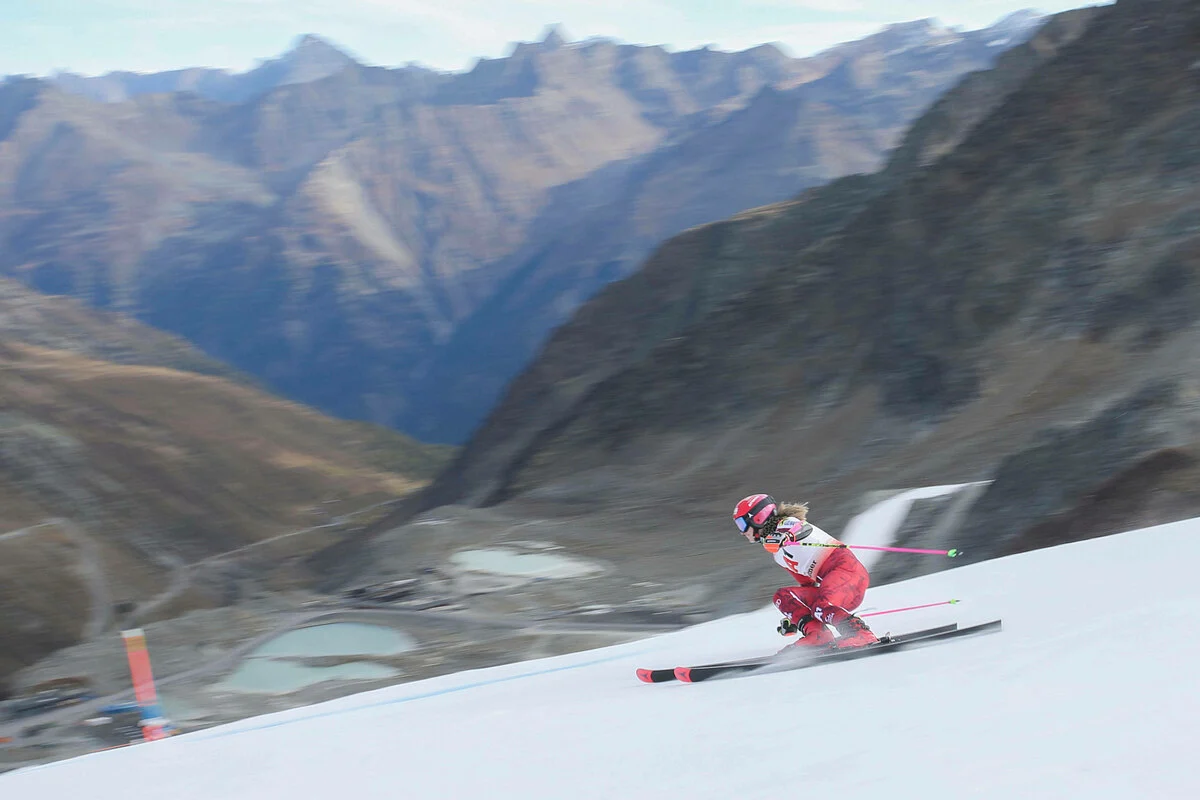
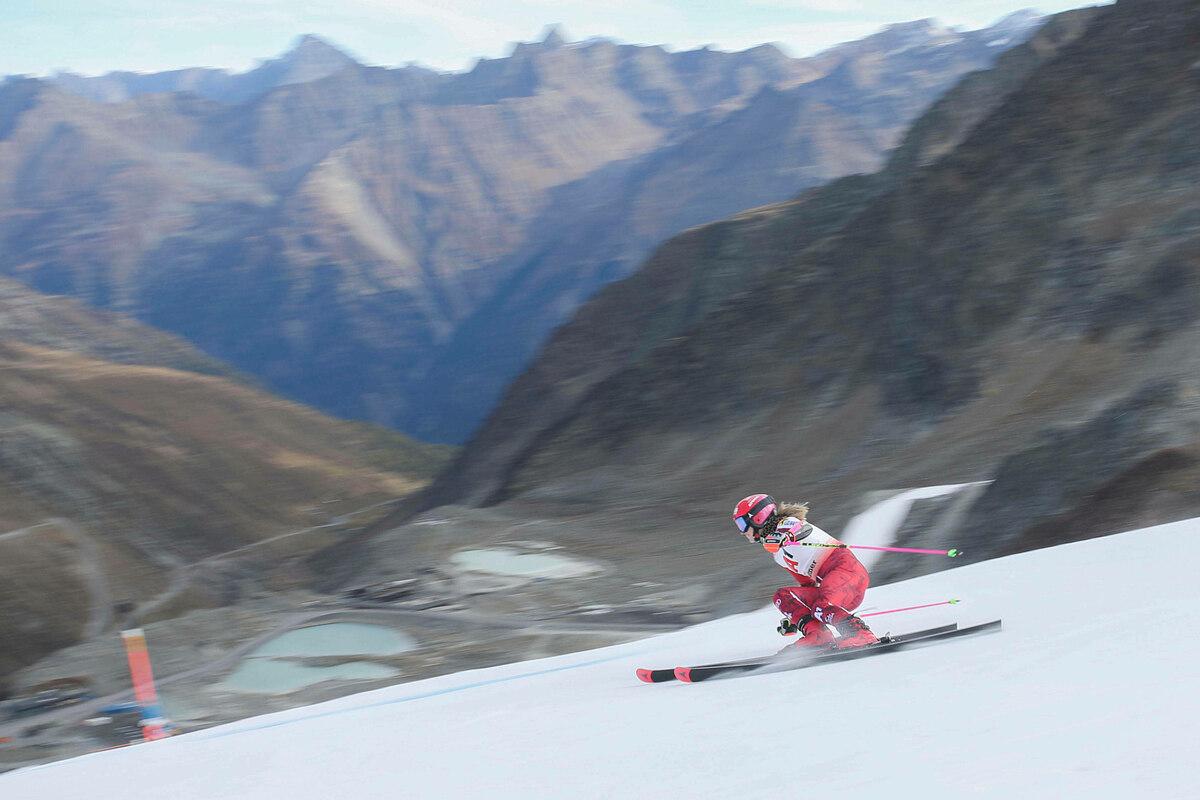
As the best skiers in the world arrive in the Ötztal valley, the surrounding peaks present a sobering visual: green, rocky slopes and barren ridges that look more suited to autumn hiking than high-altitude winter sports. With temperatures consistently hovering above freezing even at elevations exceeding 3,000 meters, the landscape is a testament to the accelerating climate crisis in the Alps.
The Ritual of the Opening
For decades, the Sölden World Cup has served as the unofficial curtain-raiser for the professional circuit. Since the year 2000, the event has firmly established itself as an October staple. This weekend, the spectacle returns. The women’s giant slalom features legends like Mikaela Shiffrin and emerging talents like Germany’s Emma Aicher. On Sunday, the men take to the 1,200-meter course, which boasts gradients of up to 68 percent. Among the favorites is the Brazilian sensation Lucas Pinheiro Braathen, while Alexander Schmid carries the hopes of the German contingent.
This event is merely the start of a grueling marathon. By the time the circus concludes in Sun Valley, USA, in March 2027, athletes will have navigated 39 races for women and 42 for men across disciplines including downhill, slalom, and Super-G, hitting iconic venues like Kitzbühel, Garmisch-Partenkirchen, and Bormio. However, as the calendar expands, the environment required to host these events is shrinking.
A Fragile Ecosystem: The Engineering of Winter
The "snow-white ribbon" that snakes down the Rettenbach glacier is a triumph of engineering over nature. It is, as critics frequently point out, an artificial construct. Ursula Bittner of Greenpeace Austria pulls no punches: "It is simply an artificially created beginning to winter that does not correspond to nature. No one benefits from this except the economy of Sölden."
The environmental cost of maintaining this illusion is significant. As the glacier retreats—having lost more than half of its surface area since the 1980s—the infrastructure required to keep it skiable becomes increasingly invasive. Reports have detailed the use of heavy machinery, industrial blasting, and even the "concreting over" of glacial crevasses to maintain a consistent surface for racing.
The Economic Imperative vs. Ecological Reality
For Jakob "Jack" Falkner, long-time managing director of the Sölden mountain lifts, the event is a commercial lifeline. "Images of snow and blue skies generate emotions. When these images go out, many colleagues in the industry confirm that they receive their first bookings," he explains. While the lifts operate nearly year-round, the winter season remains the engine of profitability. The logic is simple: the earlier the season begins, the higher the revenue.

However, the disconnect between the marketing and the mountain is growing. While Sölden officials argue that glacial retreat is a "natural process" that has left behind vast amounts of ice-free rock requiring "straightening and remediation," environmentalists see a deeper rot. The encroachment into fragile high-altitude ecosystems to build new lifts or expand pistes—often involving the clearing of forests—is a recurring point of contention. Bittner argues that the focus should shift entirely: "We don’t need more ski areas in Austria. Designing the ones we have to be as sustainable as possible—that would be a goal."
The Imminent Snowline Shift
The crisis in Sölden is a microcosm of a larger, systemic threat. According to recent climate projections, the snowline in the Alps could rise to approximately 1,700 meters by the year 2100. Currently, the reliable snowline sits at around 1,000 meters.
The consequences for the industry are profound. In Austria, less than half of the country’s total piste kilometers are located above that projected 1,700-meter threshold. In Germany, the situation is even more dire, with only about 10 percent of slopes sitting in the "safe" zone. Artificial snow, the industry’s current crutch, is not a panacea. It requires sub-zero temperatures—which are becoming rarer—and vast quantities of energy and water.
Technological Solutions or Band-Aid Measures?
To bridge the gap between the end of winter and the start of the next, Sölden relies heavily on "snow depots." Massive quantities of artificial snow are produced at the end of the season and stored under protective, heat-reflecting foils throughout the summer. Much of the current course in Sölden is composed of this stored "ghost snow."

To mitigate the environmental footprint of this energy-intensive process, Sölden has invested 14 million euros in a new photovoltaic plant on the glacier. Described by locals as a "solar forest" with a design reminiscent of science-fiction technology, it is intended to cover one-quarter of the region’s electricity consumption. While a step toward decarbonization, many argue it fails to address the most significant carbon contributor: the spectator.
The Invisible Footprint: Logistics and Travel
Experts point out that the greatest environmental burden of the ski industry is not the snowmaking, but the mobility of the fans. "Three-quarters of the emissions are released by travel alone," notes Bittner. While organizers offer free shuttle buses to reduce individual car usage, the lack of direct rail connections to the 3,000-resident town remains a major hurdle. With 89 percent of guests in Tyrol historically arriving by car, the convenience, luggage capacity, and transit time of trains cannot yet compete with the private vehicle.
The Voice of the Athletes
The concern is no longer confined to NGOs; it is reaching the locker rooms. Swiss slalom specialist Daniel Yule has become one of the most vocal critics of the current FIS (International Ski Federation) calendar. "The speed racers are flying to the USA twice this year," Yule points out. "Once at the beginning of the season and then again for the finals. Is that not a bit too much traveling? Does that really make sense?"
Yule’s concern is existential. "It is becoming increasingly difficult to find places where you can train well. We have to ensure that snow sports exist at all in a few years. Because if we continue like this, there will be no more snow due to climate change." For Yule, the sport is a passion, but one that is currently on a collision course with reality. He is calling for an urgent rethink by the sport’s governing body to protect the industry for future generations.

Conclusion: A Future on Thin Ice
Despite the mounting evidence and the vocal dissent from both scientists and athletes, the status quo remains resilient. In Sölden, the appetite for growth has not been sated. Philipp Falkner, president of the organizing committee, has already hinted at future ambitions: "We would like a double weekend in the future." Two weekends of racing, back-to-back, is the vision—justified by the organizers as an efficiency measure for sustainability.
As the crowds descend on the Ötztal valley this weekend, the juxtaposition remains: the spectacle of human performance against the backdrop of a rapidly changing landscape. The industry is currently banking on technology, energy-efficient infrastructure, and the hope that the "100 percent snow guarantee" can be sustained through sheer willpower and engineering. Yet, the glaciers themselves tell a different story—one that suggests that even the most advanced technology may struggle to outrun the warming climate. The question remains whether the sport will evolve to meet the climate crisis or if, like the glaciers themselves, it will continue to melt away until only the memory of winter remains.