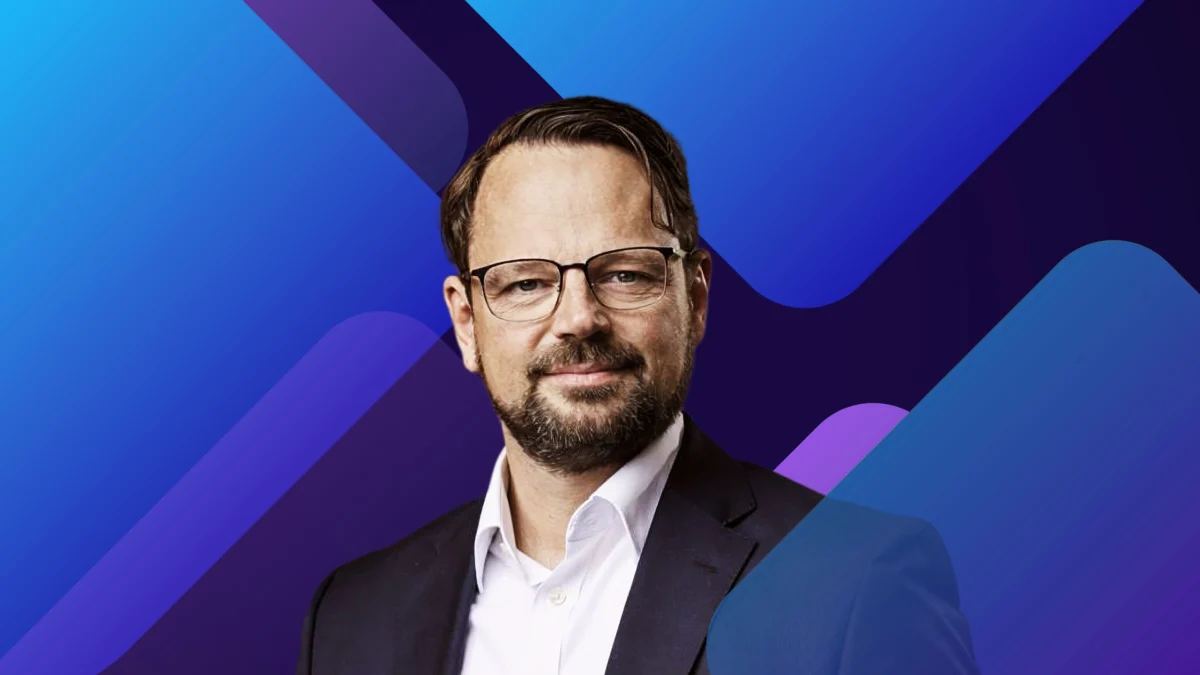
In an era defined by the urgent need for decarbonization and urban resilience, the real estate sector faces a paradigm shift. Mark Meier, the newly appointed Managing Director of Ramboll Germany, argues that the industry’s greatest untapped asset is not the next high-tech skyscraper, but the existing building stock. As he navigates his new role at the helm of the Danish engineering and consultancy giant, Meier calls for a radical rethink of how we view urban infrastructure.
1. Main Facts: The New Mandate at Ramboll
Mark Meier assumed the position of Managing Director of Ramboll Germany in early 2025, inheriting a legacy of engineering excellence. Founded in Denmark in 1945, Ramboll has evolved into a global powerhouse, operating across 35 countries with a workforce dedicated to architecture, engineering, and high-level management consultancy.
The company’s current strategic focus is explicitly aligned with the global transition toward sustainability. Under Meier’s leadership, the German branch is prioritizing four critical pillars:

- Sustainable Transformation: Modernizing existing building stocks to meet 21st-century energy standards.
- Resilient Cities: Designing urban environments capable of withstanding climate volatility.
- Mobility and Energy Transitions: Facilitating the shift toward greener infrastructure.
- Industrial Decarbonization: Providing technical expertise to help heavy industry reduce its carbon footprint.
Meier brings a wealth of experience to this role, having spent 17 years at the chemical giant BASF. His tenure there—most recently as a leader overseeing operations across the Nordic and Baltic states—has given him a unique perspective on the intersection of industrial scale and environmental responsibility.
2. Chronology: A Career Built on Transformation
To understand Meier’s philosophy, one must look at the trajectory of his career. His 17-year tenure at BASF was defined by the challenges of chemical manufacturing in an era of increasing environmental scrutiny. Working within the Nordic and Baltic regions, he was exposed to Scandinavian models of urban planning and environmental policy, which often serve as the "gold standard" for sustainable development.
- 2008–2024 (The BASF Years): Meier developed a deep expertise in operational leadership and international market dynamics. His time in the Nordic countries proved to be the most influential period for his professional outlook.
- Late 2024: The announcement of his appointment as Managing Director of Ramboll Germany sent a clear signal to the market: the firm was looking for a leader who understood the complex bridge between heavy industry and civil engineering.
- January 2025: Meier officially took the reins, setting a tone of "transformation over new construction." His early statements suggest a departure from the traditional "build-new" mindset that has dominated the German construction industry for decades.
3. Supporting Data: The Case for the Existing Stock
The argument for focusing on existing property is supported by compelling environmental data. According to industry analysis, the construction and operation of buildings account for nearly 40% of global energy-related carbon emissions.

The Embodied Carbon Argument
When a building is demolished, the "embodied carbon"—the energy expended to mine, manufacture, and transport the materials like concrete and steel—is effectively lost. Replacing it with a new building, even one that is "highly energy efficient," requires decades of operation before it can compensate for the carbon debt incurred during construction.
The "Resource" Mindset
Meier emphasizes that buildings should be treated as "material banks." In a circular economy, an office block or residential building is not merely a shelter; it is a repository of aluminum, copper, glass, and steel. By focusing on deep energy retrofits—upgrading insulation, smart energy management, and adaptive reuse—the industry can significantly lower the carbon footprint of the real estate sector without the environmental cost of new development.
4. Official Perspectives: Rethinking Urban Resilience
During a recent interview, Meier highlighted the disparity between how Germany and his former base, Denmark, approach the built environment.
The Danish Influence
"I have lived in Denmark for a long time," Meier noted. "I was impressed by how natural it is to think in interconnected systems there." In the Danish model, an architect does not design a building in isolation. Instead, they look at the building as part of a wider ecosystem.
Beyond the Four Walls
Meier posits that the success of a development should be measured by the question: What can this building do for its surroundings? He argues for an "integrated perspective" where energy, water, mobility, and community usage are considered in the design phase. For example, a building should not just be a consumer of energy; it should be a node in a smart grid, potentially feeding excess power back into the system or utilizing its rooftop to mitigate urban heat islands.
Hamburg’s Hafencity as a Template
Meier points to Hamburg’s Hafencity as a prime example of successful urban integration. The project demonstrates how former industrial docklands can be transformed into a vibrant, mixed-use district that balances residential needs, climate resilience, and economic utility. It is this "courage for transformation"—the ability to look at a stagnant area and see its future potential—that he hopes to scale across Germany.

5. Implications: The Future of the Real Estate Industry
The implications of Meier’s vision are profound, particularly for investors, developers, and policymakers.
For Investors and Developers
The "buy, demolish, build" cycle is becoming increasingly expensive due to rising material costs and stricter ESG (Environmental, Social, and Governance) regulations. Meier’s focus on the existing stock implies that the future of profit lies in renovation and adaptive reuse. Investors who ignore the energy-efficiency potential of their current assets will likely face "stranded assets"—properties that are too expensive to heat and too carbon-intensive to operate under future climate laws.
For Urban Planners
Municipalities must shift their regulatory frameworks to make it easier to repurpose buildings. Current zoning laws in many German cities are often too rigid, making it difficult to convert old offices into residential units. Meier’s call for a "mut zur transformation" (courage for transformation) serves as a challenge to city councils to streamline bureaucracy.

The Competitive Edge for Ramboll
By positioning Ramboll as a leader in this transition, Meier is betting that the market will demand more than just blueprints. Clients are increasingly seeking holistic consultants who can handle the complexity of decarbonizing industrial sites while simultaneously optimizing urban residential density.
Conclusion: A New Philosophy for a Changing World
Mark Meier’s arrival at Ramboll comes at a pivotal moment. The climate crisis is no longer a distant threat; it is a current operational reality for the real estate and construction sectors. By asserting that "the most sustainable property is the one that already exists," Meier is not just making a clever soundbite—he is outlining a survival strategy for the industry.
The path forward requires more than just new technology; it requires a fundamental shift in perception. If the industry can move from viewing buildings as disposable commodities to viewing them as precious, adaptable resources, it will not only meet the requirements of the European Green Deal but will also lay the foundation for cities that are truly built for the future.

As Meier steers Ramboll through this transition, his emphasis on integrated thinking—connecting energy, mobility, and architecture—serves as a blueprint for others. The era of unchecked new construction is coming to a close; the era of intelligent, sustainable, and resilient transformation has begun.