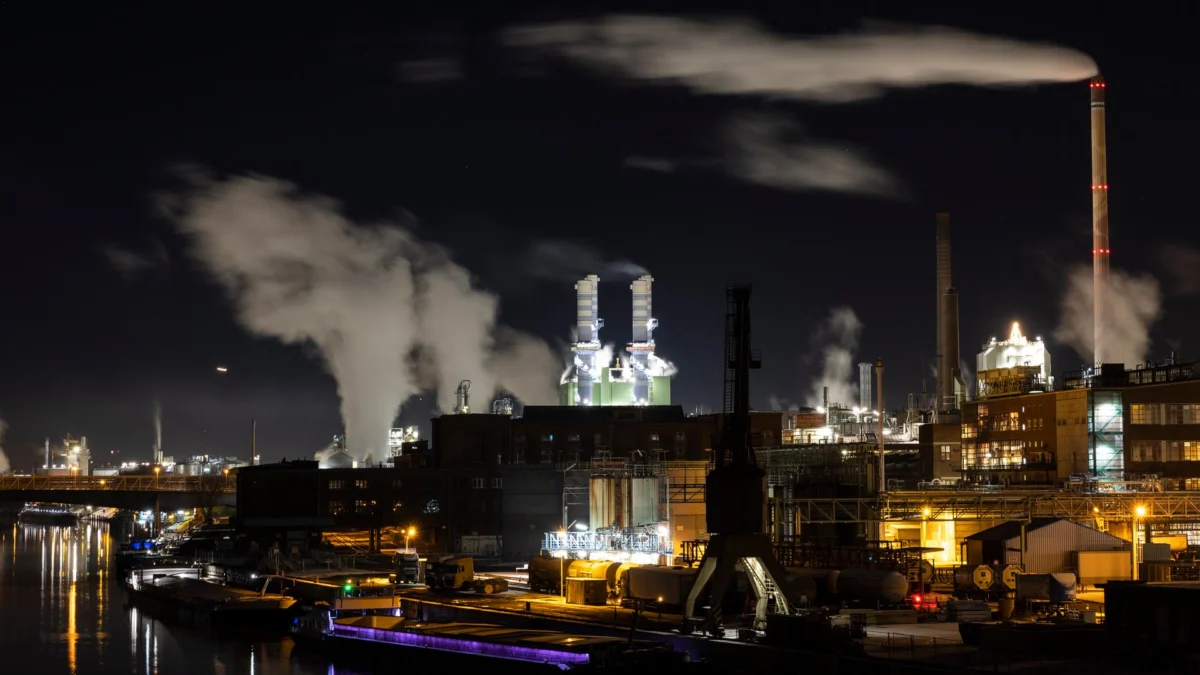
The industrial heartbeat of Hessen, one of Germany’s most vital economic engines, is faltering under the weight of structural crises. According to the latest "Energy Transition Barometer" published by the Chambers of Industry and Commerce (IHK), a significant portion of the region’s manufacturing sector is actively contemplating or already executing plans to move production abroad or drastically scale back domestic operations.
The findings represent a stark warning signal for policymakers: the dream of a competitive, climate-neutral industrial base is clashing violently with the reality of high energy costs, suffocating bureaucracy, and systemic uncertainty.
Main Facts: The Scope of the Crisis
The data paints a sobering picture. Nearly 38 percent of Hessen’s industrial enterprises have either already implemented measures to shift production away from their home state, initiated such processes, or are in the advanced stages of planning them. While this figure remains below the 43 percent peak recorded in 2023, it represents a sharp increase from the 29 percent observed just one year ago.
The shift in strategy is particularly concerning for the state’s long-term economic health. While the number of "already implemented" measures has dropped from 13 percent to 4 percent, the proportion of companies actively planning such moves has surged from under 7 percent to over 15 percent. This indicates that a wave of industrial disinvestment is currently in the pipeline, waiting to be unleashed should the underlying economic conditions fail to improve.
Large enterprises are the most vulnerable. More than half of all Hessian industrial firms with over 500 employees are now either downsizing their local presence or offshoring production. This concentration of distress among large-scale employers threatens the stability of regional supply chains and the livelihoods of thousands of workers.
Chronology: A Multi-Year Deterioration
To understand the current malaise, one must look at the trajectory of the last few years. The IHK’s annual barometers serve as a ledger of the eroding confidence within the German industrial sector.
- 2023: The peak of the initial energy crisis. Amidst the shock of the energy price spike following the geopolitical instability in Europe, 43 percent of Hessian industrial firms signaled a readiness to abandon domestic production.
- 2024: A slight, albeit fragile, sense of stabilization led to a drop in these figures to 29 percent. Many firms adopted a "wait and see" approach, hoping for structural reforms.
- 2025–2026: The current cycle shows a reversal of that optimism. As the "wait and see" period yields no significant reduction in energy costs or bureaucratic red tape, frustration has manifested into concrete action plans. The rise in "ongoing" and "planned" measures (a combined 33 percent) underscores that companies are no longer just reacting to immediate shocks; they are making long-term, structural changes to their business models to survive in a hostile regulatory environment.
Supporting Data: The Cost of Doing Business
The IHK report, based on an extensive survey of 3,085 companies nationwide—with 103 industrial respondents specifically from Hessen—highlights three primary drivers of this industrial retreat: energy costs, excessive bureaucracy, and the glacial pace of administrative procedures.
Energy Price Volatility
The data on input costs is staggering. Over 50 percent of Hessian firms reported increased electricity prices within the last twelve months. Even more alarming is the situation regarding heating and fuel:
- 68 percent of companies face higher costs for gas, district heating, and heating oil.
- 87 percent report significant increases in transportation and fuel costs.
Marcus Kraus of ECO3, a company based in the Industriepark Höchst that processes 30,000 tons of aluminum annually, provides a real-world perspective. With an annual energy demand of approximately 40 megawatts, the math is unforgiving. "The costs are absolutely relevant to our survival," Kraus notes. When energy costs consume the margins that should be allocated to R&D and digital transformation, the company’s ability to compete on the global stage is effectively neutralized.
The Death of Long-Term Planning
The most alarming indicator of systemic failure is the loss of predictability. For the first time, over 51 percent of Hessian companies have abandoned their own target years for achieving climate neutrality. This is a massive jump from just 11 percent in the previous year. When corporations stop setting targets, it is a sign that they have lost faith in the state’s ability to provide a stable, cost-effective framework for the green transition.
Official Responses: A Call to Action
The Hessian Chamber of Industry and Commerce (HIHK) has characterized these findings as a "red alert" for the region. Felix Heusler, Vice President of the HIHK, warned that the trend is no longer a theoretical risk.
"Produktionsverlagerungen (production shifts) are no longer an abstract future threat," Heusler stated. "They represent the creeping loss of value creation, regional supply chains, and, crucially, our innovative power."
Heusler argues that the window for political intervention is closing. "The government must strengthen the competitiveness of the location now, before these plans become irreversible Standort-Entscheidungen (location decisions)."
The industry’s demands are clear and consistent:
- Competitive Energy Pricing: A restructuring of taxes and levies on electricity to bring German industry back into alignment with global peers.
- Regulatory Guillotine: A drastic reduction in bureaucracy and the acceleration of planning and approval processes.
- Infrastructure Security: A reliable and rapid expansion of energy infrastructure that does not come with exorbitant price tags for the end-user.
Implications: The Path Forward
The situation is not entirely devoid of hope. The case of Michael Gross, an entrepreneur in Wettenberg, demonstrates that local production can be made climate-neutral. By investing in biomass heating and photovoltaics over the last seven years, his firm has successfully decoupled itself from some of the volatility of the traditional energy markets.
However, Gross acknowledges that his success is the result of long-term, capital-intensive investment—a luxury many firms currently cannot afford. "We have to be faster and more efficient in our transition," Gross argues. "Competitiveness in Germany is possible, but only if we shorten the distance between the political goal and the actual implementation."
The Economic Consequences
If Hessen—and Germany more broadly—fails to address these concerns, the implications are severe:
- Deindustrialization: The loss of heavy industry will have a domino effect on the service sectors and local tax bases that rely on industrial wealth.
- Brain Drain: As production leaves, high-skilled engineering and manufacturing jobs will follow, leading to a permanent depletion of the regional talent pool.
- Innovation Stagnation: The capital currently tied up in surviving high energy costs is capital that cannot be spent on the next generation of industrial technology.
The "Energy Transition Barometer" serves as a final warning. The German industrial model is not failing because of a lack of will or technological capability, but because the economic framework has become too burdensome to sustain. The transition to a green economy is necessary, but as the survey data shows, it cannot be achieved by sacrificing the very industries that must fund it. The ball is now firmly in the court of policymakers to decide whether Hessen remains a powerhouse of global industry or becomes a cautionary tale of economic over-regulation.