The rise of AI-generated imagery has ignited a fierce debate regarding the essence of truth in visual media. As photorealistic synthetic images challenge our perception of reality, history offers a crucial perspective: the conflict between technological advancement and artistic integrity is not new—it is a cycle that has defined the last two centuries of image-making.
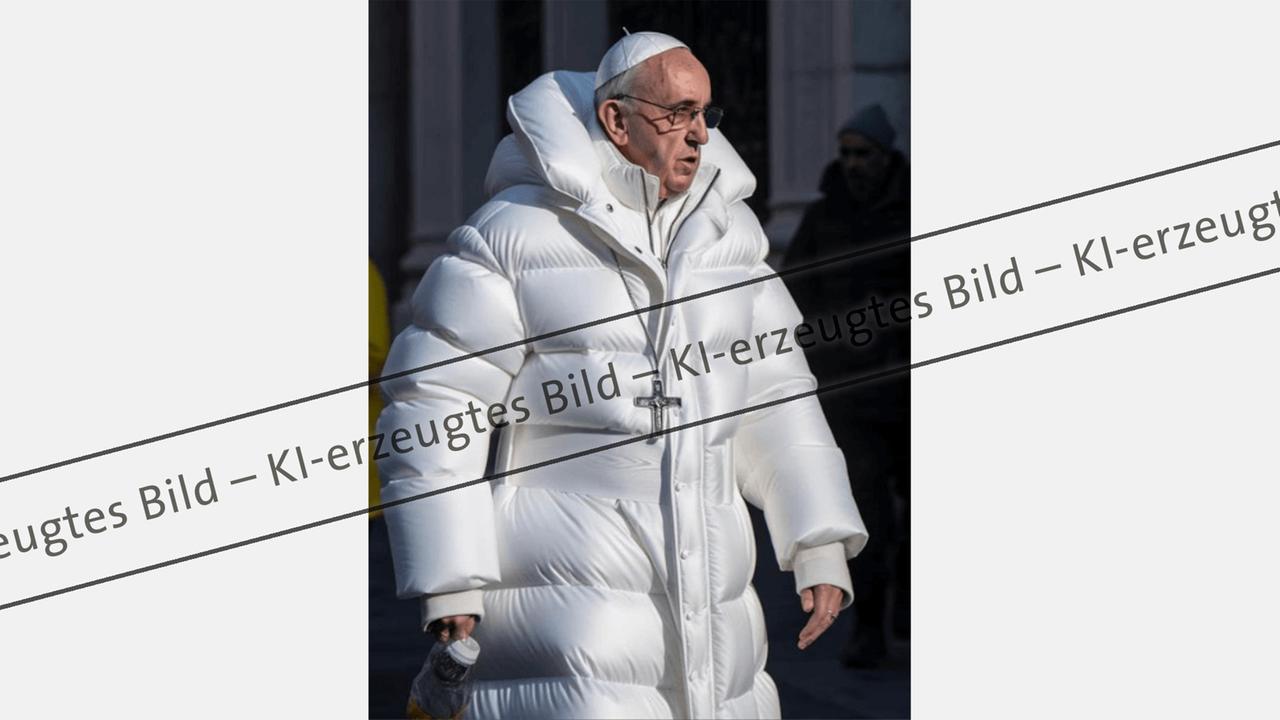
The modern era is defined by a deluge of visual content. From the viral image of Pope Francis in a designer puffer jacket to prize-winning "photographs" that were never actually captured by a lens, we are living through a paradigm shift. Yet, to understand the current crisis of authenticity, we must look back to 1826, when Joseph Nicéphore Niépce captured the first permanent photograph. That grainy, contrast-heavy view from his window in Le Gras was not just a technical feat; it was the birth of a new relationship between humanity and the "truth" of the captured moment.
The Historical Precedent: From Silver Plates to Digital Algorithms
The history of photography is not a linear progression of unvarnished truth; it is a history of negotiation. When the first German photograph of the Munich Frauenkirche was captured by Franz von Kobell in 1837—a fact only verified by researchers at the Deutsches Museum in 2024—it represented a leap in scientific capability. However, the art world of the 19th century was far from welcoming.
The Great Rivalry: Painting vs. Photography
In the mid-1800s, painters viewed the camera as an existential threat. They argued that because a machine captured the image, it lacked the "soul" and technical mastery of a brushstroke. Ursula Frohne, a professor of art history and co-spokesperson for the research group Access to Cultural Goods in Digital Change at the University of Münster, explains that this rivalry was born from economic anxiety.
"Where painters spent days in the studio with models, photographers could produce results with unprecedented speed and economic efficiency," Frohne notes. The fear that painting would become obsolete mirrors today’s panic within the creative industries regarding Generative AI. Yet, history proved that the older medium did not die; it evolved. Photography forced painting to abandon rigid realism and explore Impressionism and Abstract Expressionism. The two mediums ultimately learned to coexist, each occupying different roles in the cultural ecosystem.
A Chronicle of Deception: Beyond the Camera
While the public often associates "fake news" with the advent of deepfakes, manipulation is as old as the darkroom. The ability to alter reality was present in the early days of photography, long before the first neural network was trained.
The Illusion of Authenticity
Manipulation has historically served political, commercial, and sensationalist ends. A poignant example from 1997 illustrates this: the Swiss newspaper Blick published an image of the Temple of Hatshepsut in Luxor, Egypt. The original photograph showed a stream of water flowing down the steps. In the publication, however, the water was tinted a deep, blood-red, suggesting a supernatural or violent event.
"Through the preparation of the image, combined with the accompanying text, the viewer was intentionally manipulated," Frohne explains. This serves as a reminder that the "authenticity" of a photograph has always been susceptible to the context in which it is placed. We are not just decoding images; we are decoding the intent of the author.
The AI Revolution: Why "Stylistic Perfection" Changes Everything
The current crisis, however, is fundamentally different. In 2023, an AI-generated image of Pope Francis wearing a white, oversized puffer jacket went viral. It was not a bad Photoshop job; it was a high-resolution, photorealistic image that mimicked the lighting, texture, and bokeh effects of a professional camera.
The Problem of Provenance
"What is new is that an AI image now possesses all the visual markers of photographic credibility," says Frohne. The human eye, trained for nearly 200 years to equate a photograph with a record of reality, is now being systematically deceived. When the markers of "realism" are synthesized by an algorithm, the viewer’s primary defense mechanism—their own perception—fails.
The Case of Boris Eldagsen
The tension between the old world and the new culminated in 2023 when artist Boris Eldagsen won the Sony World Photography Award with his piece "PSEUDOMNESIA: The Electrician." Eldagsen refused the award, admitting the image was AI-generated. His goal was to force a global debate.
Eldagsen’s work is a "promptography"—a term he uses to distinguish his process from traditional photography. He is not against technology; he is an advocate for a new lexicon. "I can work as if I have a huge budget," Eldagsen explains. "I photograph, I use different locations, I manage props, I consider lighting and weather, and then I integrate the AI." He argues that calling these images "photography" is an insult to the craft of the photographer, just as calling an oil painting "oil-photography" would be a category error.
Implications: The Erosion of Historical Memory
The most profound danger of AI-generated content is not just the deception of the present, but the potential for the rewriting of the past. As we feed large language models and image generators on the collective archives of human history, the boundary between documented fact and synthesized fiction dissolves.
The "Promptography" Paradigm
Eldagsen emphasizes that the difference lies in the creative impulse. "The result may look the same, but the process is different," he notes. "Photography relies on the photographer’s perception and the element of chance—the way light hits a lens in a fleeting moment. Promptography is a mirror of the human user and the training material of the algorithm. It is conceptual, not observational."
For those who argue that the end product is all that matters, Eldagsen is blunt: "Those who say it looks the same, so let’s call it photography, are being intellectually lazy."
Societal and Economic Risks
The implications are broad:
- Economic: Professional photographers and photojournalists face a market flooded with low-cost, high-quality synthetic images.
- Environmental: The training and operation of these models require massive energy and water resources, a hidden cost often ignored in the push for technological progress.
- Political: The ease of creating "photographic" evidence for historical events that never occurred poses an existential threat to historical record-keeping.
The Path Forward: Literacy and Transparency
As we stand 200 years after Niépce, we find ourselves at a crossroads. The consensus among media experts is clear: we require a new visual literacy.
Mandating Transparency
In the realm of journalism and public record, the distinction between a photograph and a "prompted" image must be non-negotiable. If an image is AI-generated, it must be labeled as such. Transparency is the only mechanism that can preserve the integrity of news reporting.
Furthermore, as viewers, we must move beyond the "seeing is believing" mindset. We must begin to investigate the provenance—the origin—of the images we consume. Who created it? Under what circumstances? Is it a record of a physical event, or an iteration of a database?
Conclusion: A New Visual Language
The history of photography has always been a battle for the truth, but it has also been a story of artistic liberation. Just as the camera did not destroy painting, AI will not necessarily destroy photography. Instead, it will force a redefinition of what it means to be a creator. We are entering an era where the image is no longer a window into the past, but a reflection of the data we feed it.
To navigate this, we need more than just better software; we need a renewed commitment to honesty. The camera can capture the world as it is, but as we hand the reins over to algorithms, we must ensure that we do not lose the ability to distinguish between the world we inhabit and the one we merely imagine.