HAMBURG, Germany – As the "Fantastic Furry Festival" descended upon Hamburg in late August 2026, the city’s streets and parks were transformed into a vibrant tapestry of anthropomorphic art. The Eurofurence, Europe’s premier convention for the "Furry" subculture, reached a new zenith this year, drawing nearly 10,000 participants. While many of these attendees were clad in intricate, hand-crafted full-body animal costumes known as "fursuits," the event represented far more than a mere costume party. It served as a sprawling testament to a global community that finds solace, identity, and profound creative expression in the blurring of lines between human and animal.
Main Facts: A Community in the Spotlight
The Furry fandom is a subculture centered on interest in anthropomorphic animals—creatures with human traits, such as speech, bipedalism, and complex emotions. In Germany alone, estimates suggest a population of approximately 100,000 enthusiasts, while global figures are thought to exceed one million.
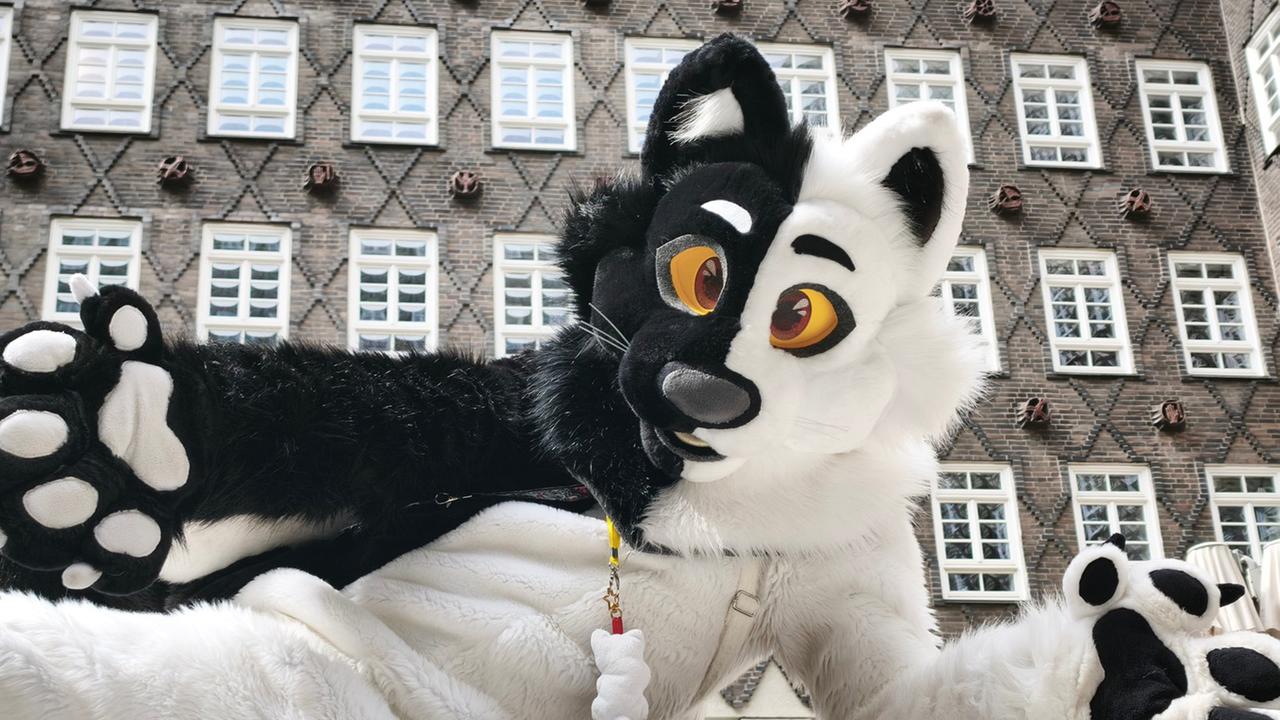
The core of the experience for many is the "fursona," a personalized character that allows individuals to explore facets of their personality in a safe, non-judgmental environment. For Marc, a mid-50s finance professional from Lüneburg, his persona "Kimkat"—a stylized, black-and-white feline—is more than a hobby. "For me, this is a necessary balance to the serious, often sterile life I lead as an adult," he explains. When he dons the heavy, custom-made suit, the professional mask of the finance world falls away, replaced by the playful, uninhibited persona of a giant plush cat.
A Brief Chronology of the Fandom
The roots of the Furry movement are often traced back to the fringes of 1970s and 80s Science Fiction and Fantasy conventions, where enthusiasts of anthropomorphic art began to coalesce. However, the movement gained its own distinct identity in 1989 with the first dedicated gathering, the "Confurence."
Over the decades, the movement migrated from the basements and niche forums of the early internet to the mainstream. The growth has been exponential. In the United States, the Anthrocon in Pittsburgh, long considered the world’s largest, has reached its capacity of 20,000 attendees. Similarly, Europe has seen a rapid surge in popularity; the Nordicfuzzcon in Malmö, Sweden, nearly doubled its attendance figures within a two-year window, reflecting a broader European trend toward normalizing and expanding these creative social spaces.
Supporting Data: The Cost of Creativity
The complexity of the Fursuit is a significant marker of the community’s dedication. These outfits are not mass-produced; they are bespoke works of art, meticulously hand-crafted by specialized artists. A high-quality, professional-grade suit can easily range between 5,000 and 8,000 euros, with many creators opting for custom features that push the price even higher.
The 2026 Hamburg convention provided a window into the professional and academic rigor of the scene. The programming was dense, featuring:
- Technical Workshops: Sessions dedicated to suit construction, ventilation systems, and faux-fur grooming.
- Creative Panels: Discussions on comic book illustration, character design, and animation.
- Performance Arts: The "Paws on Fire" dance competitions and organized "suitwalks" through public spaces like Planten un Blomen park, which aim to foster public interaction and visibility.
The data suggests that the demographic is shifting. While once dominated by younger tech enthusiasts, the fandom now spans all ages, professions, and socioeconomic backgrounds, unified by a shared philosophy of inclusivity.
Official Stance: Fighting Stigmatization
For years, the Furry community has grappled with a distorted image projected by mainstream media. Early reporting often relied on tropes that either mocked the participants as infantile or, more damagingly, sexualized a subculture that is, for the vast majority, entirely non-sexual.
"There is a deep-seated suspicion toward journalists," says one organizer, noting that the community remains defensive due to past experiences with "Schmuddelecke" (the "seedy corner") reporting.
The community’s response has been the aggressive promotion of "antidiscriminatory" values. The fandom prides itself on being a haven for the LGBTQAI+ community and those who feel marginalized in traditional social settings. However, as Marc points out, one does not need to be queer to be a Furry. The movement is defined more by its openness than by any specific sexual or political orientation. It is, at its heart, an exercise in radical empathy and escapism.
Implications: The Therapeutic Power of the Persona
The rise of the Furry fandom in the mid-2020s coincides with a period of heightened social anxiety and professional burnout across the Western world. For many, the "fursona" acts as a psychological buffer.
Marc’s personal journey highlights this: after nearly two decades in the community, he stepped away for several years during a severe bout of burnout. Upon returning to the persona of Kimkat, he found that the costume provided a unique form of therapy. "It sounds strange to the outsider," he admits, "but there is something deeply healing about stepping out of your own skin and into a version of yourself that is incapable of the anxieties of the ‘real’ world."
This therapeutic aspect extends to the "virtual" Furry world as well. Not every enthusiast possesses a physical suit. Many participate exclusively through Virtual Reality (VR) platforms, gaming servers, and online chat rooms. This digital accessibility has lowered the barrier to entry, allowing people with limited financial means or physical disabilities to engage with the subculture on their own terms.
The Cultural Legacy of Anthropomorphism
Anthropomorphism is not a modern invention; it is a primal human instinct. From the cat-headed deity Bastet in Ancient Egypt and the Minotaur of Greek mythology to the Brothers Grimm’s Puss in Boots and the sprawling cinematic universes of Disney’s Zootopia, humanity has always used animal-human hybrids to explore the complexities of the human condition.
The Furry subculture is simply the latest, most technologically advanced iteration of this ancient storytelling tradition. By adopting these personas, participants are not "hiding" from reality, but rather using these characters to process it.
As the sun set on the final day of the 2026 Eurofurence in Hamburg, the streets were filled with people shedding their animal skins—returning to their day jobs as accountants, engineers, and teachers. Yet, for many, the experience of having been "someone else" for a few days leaves a lasting impact. Whether it is through the lens of a Japanese manga lion like Kimba or a custom-made feline, the Furry movement proves that sometimes, in order to feel more human, it helps to put on a bit of fur. The convention may be over, but the community’s growth shows no signs of slowing down—a testament to the enduring human need for fantasy in an increasingly rigid world.