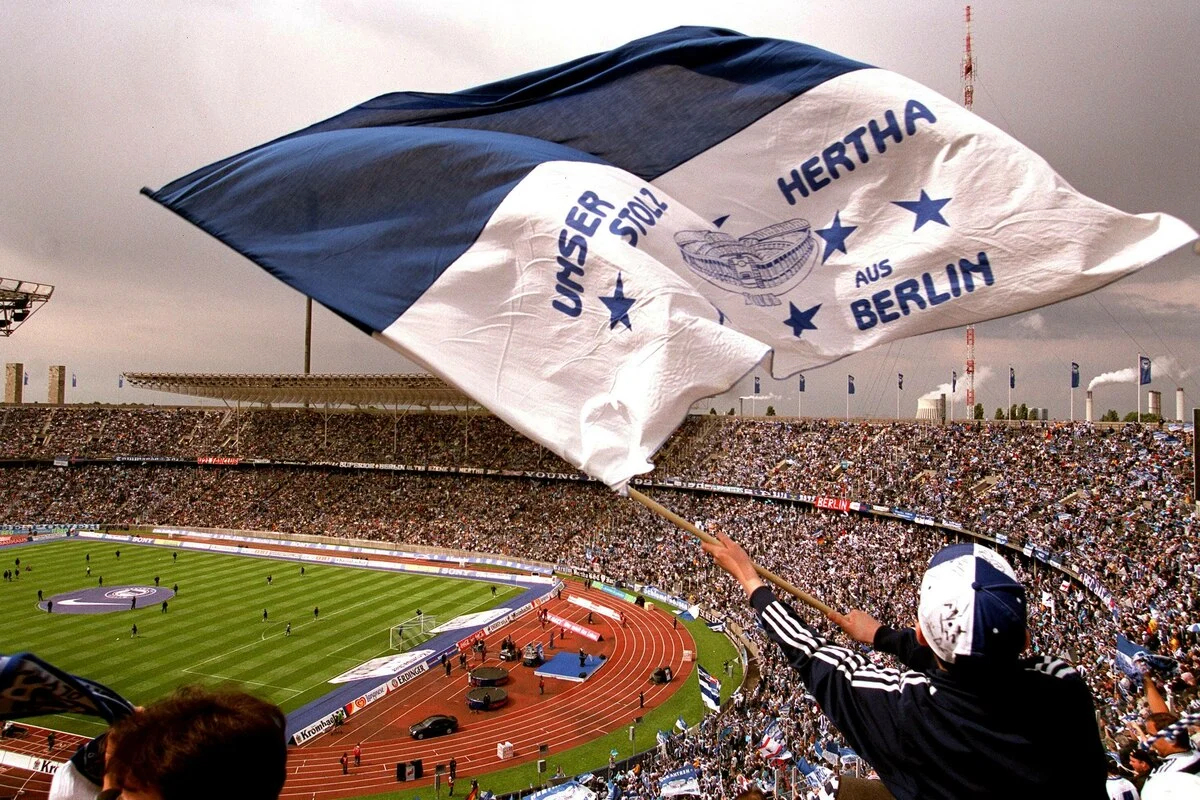
Berlin, Germany – For many, supporting a football club is a choice, a calculated alignment with success or a vibrant style of play. For Ralf Sotscheck, a lifelong Berliner and fervent follower of Hertha BSC, it was an inescapable destiny, a "misfortune of birthplace" that tethered him to the "Old Lady" through decades of soaring highs and crushing lows. His journey, mirroring the club’s own tumultuous history, is a testament to the enduring, often painful, but ultimately unbreakable bond between a fan and his team.
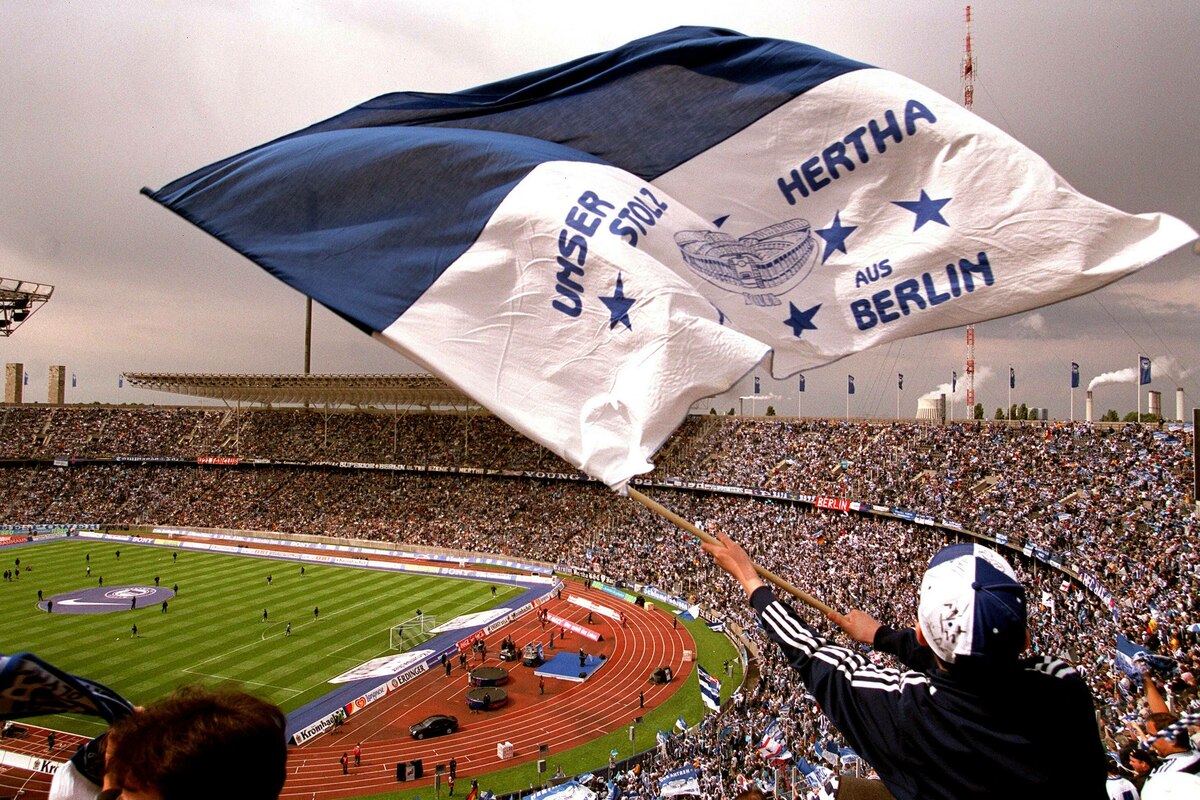
Born into the vibrant, football-mad landscape of post-war Berlin, Sotscheck’s allegiance to Hertha was forged in the roar of the Olympiastadion, a monumental arena that has witnessed both Olympic glory and countless Hertha dramas. From his earliest youth, he was a fixture in the stands, a youthful standard-bearer of the blue and white, proudly waving a colossal Hertha flag meticulously sewn by his mother. He even recalls a fleeting moment of television fame in September 1968, captured by the iconic "Sportschau," as he and his oversized banner charged onto the pitch following a memorable 2-1 victory over 1. FC Köln. That image, etched in his memory, symbolizes the raw, unbridled passion that defines a Hertha fan.
Main Facts: A Club Forged in History and Heartbreak
Hertha BSC, founded in 1892, stands as one of Germany’s oldest and most historically significant football clubs. It was a pioneering force, one of the first purely football-focused clubs in the nation, and a founding member of the Bundesliga in 1963. With over 60,000 members, it remains one of Germany’s largest sports organizations. Yet, its history is a paradoxical tapestry woven with moments of brilliance and prolonged periods of struggle, making the fan experience a perpetual rollercoaster of hope and despair. The club’s recent history has been particularly challenging, culminating in a seventh relegation from the Bundesliga in 2023 and facing near bankruptcy. Despite this, a surprising turnaround sees the team currently leading the table in the 2. Bundesliga, rekindling a cautious optimism among its long-suffering faithful.
Chronology: The Old Lady’s Enduring Saga
Hertha’s path through German football is a rich narrative spanning over a century, marked by significant milestones and dramatic downturns.
The Golden Era: Pre-Bundesliga Dominance (1930s)
While Sotscheck’s personal fandom began much later, Hertha’s foundational glories were well in the past by the time he first entered the Olympiastadion. The club’s golden age arrived in the early 1930s, when Hertha established itself as a dominant force in German football. After four consecutive lost finals, the "Old Lady" finally clinched the German Championship in 1930, triumphing 5-4 over Holstein Kiel in a thrilling encounter. The following year, they repeated the feat, defeating 1860 Munich 3-2. Both victories were significantly influenced by the legendary striker Hanne Sobek, who netted two goals in each final. Sobek remains an iconic figure in Hertha’s pantheon, a symbol of a time when the club stood at the pinnacle of German football.
Sotscheck’s connection to this era, albeit indirect, highlights the local football ecosystem. He recalls purchasing his football gear from Hanne Berndt, a formidable striker for local rivals Tennis Borussia. Berndt, who reportedly scored over a thousand goals in his career, had opened a sports shop after retiring. Sotscheck humorously notes Berndt’s perpetually grumpy demeanor, perhaps exacerbated by having to sell equipment to a young Hertha fan in his rival club’s colors. The anecdote underscores the deep-seated rivalries and shared history within Berlin’s football landscape. Berndt’s death on April 9, 1988, coincidentally the founding day of Tennis Borussia, adds another layer of local football lore.

The Bundesliga Era Begins: Scandal and Temporary Defection (1960s)
The birth of the Bundesliga in 1963 saw Hertha BSC among its founding members, a testament to its historical standing. However, this initial period was short-lived and marred by controversy. In 1965, Hertha was forcibly relegated to the Regionalliga Berlin due to severe violations of the league’s statutes, specifically for exceeding the player salary caps. This left a void in the top flight, which was controversially filled by Tasmania 1900, another Berlin club.
For a brief, almost blasphemous period, the young Ralf Sotscheck found himself rooting for Tasmania. This temporary defection was fueled by a personal connection: Ingo Usbeck, the son of the canteen owner at the Landespostdirektion where Sotscheck’s father worked, played for Tasmania. When Usbeck scored both goals in Tasmania’s opening 2-0 victory against Karlsruher SC, Sotscheck briefly harbored dreams of a championship for his "new" team. However, Tasmania 1900’s subsequent season became legendary for all the wrong reasons, cementing their place in football history as arguably the worst team ever to play in the Bundesliga, recording only two wins and setting numerous negative records. This infamous run quickly brought Sotscheck, "remorsefully," back to his true love, Hertha, where Usbeck himself would later play for the senior team.
Resurgence, European Dreams, and the Betrayal of 1971 (1970s)
Hertha’s forced exile in the Regionalliga lasted three years. In 1968, the "Old Lady" triumphantly returned to Germany’s elite division, ushering in a period of significant on-field success. The club quickly climbed the ranks, achieving impressive third-place finishes in both the 1969-70 and 1970-71 seasons. Their ambition even stretched to Europe, reaching the quarterfinals of the UEFA Cup in 1970, where they were narrowly eliminated by Italian giants Inter Milan. These were exciting times for Hertha fans, signaling a return to national prominence and the promise of a bright future.

However, this promising era was abruptly shattered by one of the darkest chapters in German football history: the 1971 Bundesliga scandal. It was revealed that numerous matches, including Hertha’s 0-1 home defeat against Arminia Bielefeld, had been manipulated. Almost the entire Hertha squad was implicated, having accepted 250,000 Deutschmarks to fix the game. Many players, including goalkeeper Volkmar Groß, were suspended. Sotscheck vividly recalls the irony of Groß, a player who had "cashed in" on the scandal, later opening a car dealership directly outside his family home in Eisenzahnstraße, a constant, tangible reminder of the club’s fall from grace.
A Brief Revival and the Long Decline (1970s-1980s)
Despite the scandal, Hertha managed to rebuild, albeit with a tarnished reputation. The mid-1970s saw another brief flourish of success. In 1975, Hertha achieved its highest-ever Bundesliga finish, securing the vice-championship. They followed this with another third-place finish in 1978. But as Sotscheck laments, "as is typical for Hertha, it didn’t last long." The late 1970s marked the beginning of a sustained period of decline. The nadir came in 1986 when Hertha plummeted to the Amateur Oberliga, playing before a paltry handful of spectators in the dilapidated Poststadion. By this time, Sotscheck had moved to Ireland, observing from afar as his beloved club earned the unenviable moniker of "Fahrstuhlmannschaft" – an "elevator team," perpetually oscillating between divisions.
The Era of Remote Suffering: Taunts and Lingering Pride (1990s-2010s)
From his Irish exile, Sotscheck’s loyalty was tested by playful, yet pointed, taunts from his friends Fritz Eckenga, Wiglaf Droste, Klaus Bittermann, and Friedrich Küppersbusch – all devoted Borussia Dortmund fans. Their "hämische E-Mails" (malicious emails) chronicled Hertha’s ongoing struggles, until even the sardonic Droste called for "Mitleid" (pity). This, Sotscheck admits, was worse than the outright taunts, a cruel twist of the knife. In response, he could only offer a solitary, albeit glorious, rebuttal: Hertha’s highest-ever Bundesliga victory, a resounding 9-1 thrashing of BVB on April 18, 1970. It was a fleeting moment of pride, a distant echo of past glories against the backdrop of current despair.

Supporting Data: A History of Peaks and Valleys
- Founded: July 25, 1892
- Members: Over 60,000 (one of Germany’s largest sports clubs)
- German Championships: 1930, 1931
- Bundesliga Founding Member: 1963
- Bundesliga Relegations: 7 times (most recently 2023)
- Highest Bundesliga Finish: Vice-Champions (1975)
- UEFA Cup Quarterfinals: 1970 (eliminated by Inter Milan)
- Infamous Bundesliga Scandal: 1971 (players suspended for match-fixing)
- Record Bundesliga Win: 9-1 vs. Borussia Dortmund (April 18, 1970)
- Current Situation (2023/24 season): After relegation from the Bundesliga, currently leading the 2. Bundesliga table.
Official Responses and Club Trajectory
Hertha BSC’s history is replete with moments requiring official responses, from navigating financial irregularities to rebuilding after sporting failures. The 1965 relegation forced the club to confront its internal structures and financial management, leading to a three-year period of reorganization before their return to the Bundesliga. The 1971 scandal was an even more profound crisis, damaging the club’s reputation and forcing a complete overhaul of the playing staff. The official stance was one of condemnation and internal cleansing, though the memory of the event lingered.
In more recent times, Hertha has grappled with the burden of its "Big City Club" aspirations. Fueled by significant investment, particularly from Lars Windhorst, the club aimed to establish itself as a perennial European contender. However, this ambition often outpaced sporting reality, leading to managerial merry-go-rounds, poor transfer decisions, and ultimately, repeated relegations and severe financial distress. The latest relegation in 2023 forced the club into a drastic restructuring, shedding high-earning players and focusing on a more sustainable, youth-oriented approach under new leadership. The current unexpected success in the 2. Bundesliga, despite the loss of many key players and the looming threat of bankruptcy, can be seen as a testament to this painful but necessary reset. The club’s recent draw against Holstein Kiel, a strong competitor, underscores the tough fight ahead but doesn’t diminish the newfound hope.
Implications: The Enduring Spirit of the Hertha Fan
Ralf Sotscheck’s deeply personal account offers a window into the unique psychology of a Hertha BSC fan. It is a loyalty born not of consistent success, but of geographical belonging, shared history, and an almost masochistic acceptance of adversity. The "Ungnade des falschen Geburtsortes" becomes a badge of honor, a declaration that true fandom transcends mere wins and losses.

The club’s cyclical nature – the rise and fall, the hopes dashed and rekindled – has bred a resilient, albeit perpetually cautious, optimism. Each downturn is met with despair, yet the blue-white flame never truly extinguishes. The recent financial woes and the exodus of star players, which led Sotscheck to muse about a "debt-free existence in Liga drei" (the third division), paradoxically paved the way for a surprising turnaround. To now see Hertha as "Tabellenführer" (league leader) in the 2. Bundesliga, despite the draw against Holstein Kiel, feels almost miraculous.
This journey is not just about football; it’s about identity, community, and the human capacity for enduring hope against long odds. It’s about the memories created, the shared experiences with family and friends, and the quiet satisfaction of belonging to something bigger than oneself, regardless of its imperfections. The "HaHoHe" chant, Hertha’s rallying cry, echoes not just in celebration, but also in defiance, in solidarity, and in the eternal belief that, perhaps, this time, everything will finally be good. The Old Lady may stumble, she may fall, but she always rises again, carried by the unwavering hearts of fans like Ralf Sotscheck.