For decades, the rhythm of Earth’s glacial cycles has been attributed to the Milankovitch cycles—periodic shifts in the Earth’s orbit and the tilt of its axis. These changes, while primarily affecting sunlight intensity in the Northern Hemisphere, were long thought to be the sole orchestrators of the planet’s temperature plunges. However, a groundbreaking study led by geoscientist Madison Shankle of the University of St Andrews has unveiled a hidden, complex mechanical link between the icy North and the remote Southern Ocean, fundamentally changing our understanding of how the Earth traps carbon.
Published in the Journal of Climate, the research demonstrates that the cooling of the Northern Hemisphere alone is sufficient to trigger a massive sequestration of carbon dioxide in the Southern Ocean. According to the team’s computer simulations, this Northern cooling accounts for 74 percent of the temperature-driven CO2 decline typically associated with a global ice age.
Main Facts: A Teleconnected Climate System
The core discovery centers on a "teleconnection"—a physical chain reaction spanning roughly 15,000 kilometers. The research team, comprising experts from the University of St Andrews, the National Oceanography Centre in Southampton, and the University of Chicago, utilized an MIT-developed ocean circulation model to isolate the effects of Northern cooling.
In a series of experiments spanning 15,000 simulated years, the researchers lowered air temperatures north of the 40th parallel to glacial levels while keeping the rest of the planet at pre-industrial, warm-period temperatures. The results were startling: despite the tropical and southern regions remaining warm, the Southern Ocean began to behave as if the entire planet were entering an ice age. The cooling of the North altered the global ocean circulation, ultimately locking away 18.8 billion tons of additional carbon in the deep sea.
Chronology of a Planetary Chain Reaction
To understand how a cold snap in the Arctic can affect the waters off the coast of Antarctica, one must follow the ocean’s "conveyor belt." The simulation reveals a multi-stage process:
- Northern Chilling: As temperatures drop in the North, the surface waters of the North Atlantic cool significantly.
- Deep-Water Formation: This chilled, denser water sinks, becoming the North Atlantic Deep Water (NADW).
- The Great Conveyance: This mass of cold water travels southward at depths of 1,000 to 2,000 meters. Although the North Atlantic’s overturning circulation (a precursor to the modern AMOC) weakens by roughly 33 percent, the remaining flow is more than enough to transport the "cold signal" to the Southern Ocean.
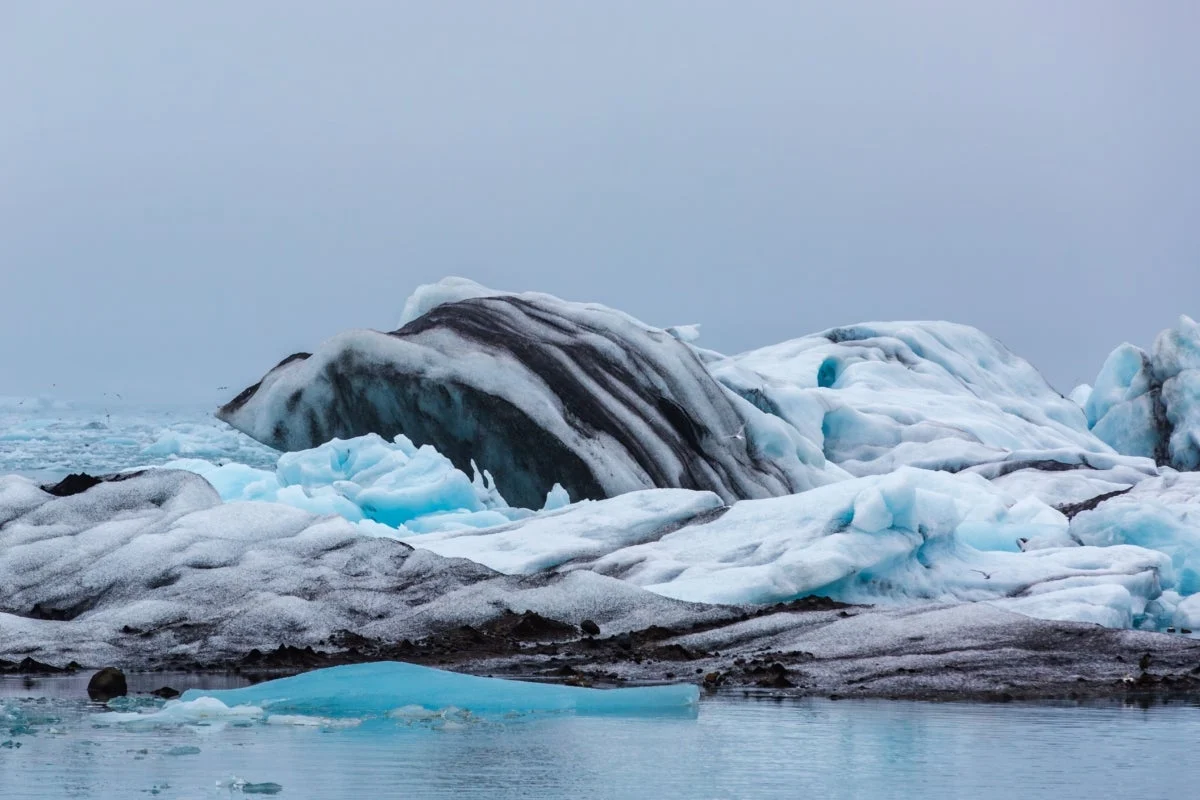
- Southern Upwelling and Sea Ice: Upon reaching the Antarctic region, this deep, cold water rises to the surface. It acts as a thermal brake, chilling the surface layers despite the warm air above. This promotes the growth of thick Antarctic sea ice, which effectively caps the ocean.
- Carbon Entrapment: As seawater freezes, it excludes salt, creating dense, brine-heavy water that sinks to the seafloor, effectively "locking" the carbon-rich deep water away from the atmosphere.
Supporting Data and Evidence
The theoretical framework provided by the MIT circulation model is bolstered by geological evidence. Recent findings published in Nature Geoscience, involving researchers from the GEOMAR Helmholtz Centre for Ocean Research in Kiel, have analyzed ocean sediment cores that confirm this oceanic transport link remained active during historical cold periods.
The simulation highlights two primary physical drivers for the CO2 drop:
- Thermal Solubility: The influx of Northern water cools the global deep-ocean reservoir by an average of 2.5 degrees Celsius. Because colder water has a higher capacity to dissolve and hold gases, the deep sea becomes a more efficient carbon sink.
- The Sea Ice "Lid": The expansion of Antarctic sea ice acts as an impermeable barrier. Under normal conditions, deep water upwelling in the Southern Ocean releases stored CO2 into the atmosphere. The expansion of sea ice in the model prevents this gas exchange, trapping the carbon in the abyss.
However, the researchers noted a counteracting effect: the altered circulation reduces the transport of nutrients to the surface. With fewer nutrients available, the growth of phytoplankton—which normally absorbs atmospheric CO2 through photosynthesis—is suppressed, slightly offsetting the total carbon sequestration.
Official Responses and Scientific Context
The implications of this study extend beyond paleoclimatology into the realm of modern climate modeling. Madison Shankle, the study’s lead author, emphasized the importance of this discovery in interviews with Phys.org, stating: "We have provided evidence for a plausible mechanism that connects these two distant puzzle pieces—the ice sheets of the Northern Hemisphere and the changes in ocean circulation on the Southern Hemisphere that lead to CO2 withdrawal from the atmosphere."
This finding aligns with recent research from the Max Planck Institute for Meteorology in Hamburg and the University of Bern, published in Geophysical Research Letters. Their work also confirms a deep, long-distance dependency between Northern and Southern ice dynamics, reinforcing the idea that the Earth’s climate system is inextricably linked across hemispheres.
Limitations and Future Implications
While the study is a milestone, the researchers are transparent about the limitations of their model. To isolate the Northern cooling effect, the simulation operated in a simplified ocean environment—a single, four-kilometer-deep basin without seasonal variations or complex geography. Furthermore, the model excludes biological factors such as iron-rich dust, which in real-world conditions acts as a fertilizer for marine algae, significantly impacting carbon absorption. Because of these simplifications, the model accounts for roughly half of the total CO2 reduction observed in historical ice core data.
The sensitivity of these results to starting parameters is underscored by a comparison with a 2022 study. That research, using a two-basin model with different temperature thresholds, suggested that Northern cooling could lead to increased ocean mixing, potentially causing a net release of CO2 rather than sequestration. This discrepancy highlights the complexity of climate systems and the necessity of refining our models.
Conclusion: A Lesson for the Future
The work of Shankle and her colleagues serves as a critical warning for current climate scientists: the North Atlantic and the Southern Ocean cannot be studied as isolated systems. As we attempt to predict the capacity of our oceans to absorb anthropogenic carbon emissions, understanding these long-distance teleconnections is vital.
The study confirms that the global climate is not merely a collection of local events but a synchronized, planetary-scale machine. The "Arctic-Antarctic connection" reminds us that shifts in one hemisphere—whether through natural cycles or human-induced warming—will inevitably cascade through the deep oceans to the other side of the globe. As we look to the future, the resilience of these ocean carbon sinks remains one of the most significant variables in the trajectory of global temperature change. Understanding how they have functioned in the past is the only way to prepare for how they will behave in a rapidly changing climate.