Paris, France – October 21, 2026 – A nationwide day of protest in France has erupted into widespread violence and destruction, leaving the country reeling and sparking intense debate about the identity of those responsible. While Prime Minister Sébastien Lecornu has swiftly pointed fingers at far-left extremist elements, a closer examination of the events reveals a far more intricate and multifaceted picture, involving distinct groups with varying motivations, from politically charged activism to opportunistic looting.
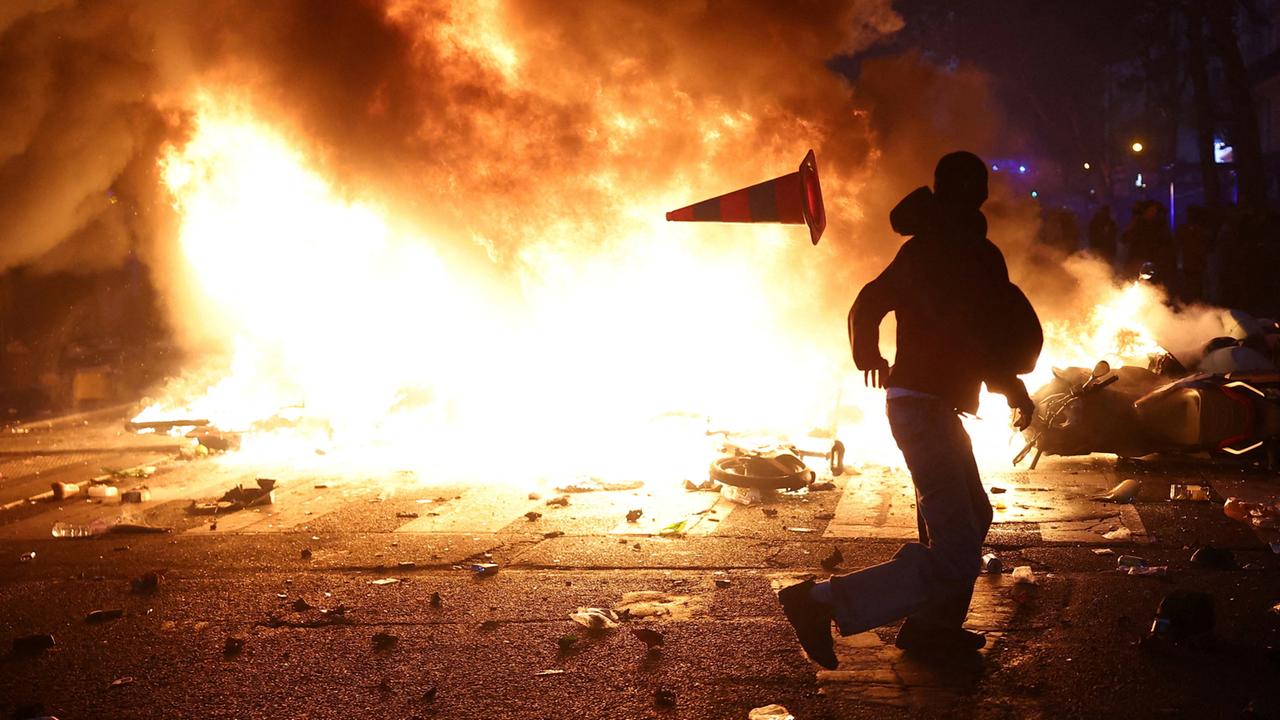
The aftermath of Saturday’s unrest is still being assessed, with images of burning barricades, shattered storefronts, and the pervasive use of tear gas dominating the public discourse. The scale of the violence has deeply shaken the nation, prompting urgent calls for accountability and a clear understanding of the forces at play. This article delves into the differing accounts, official statements, and on-the-ground observations to paint a comprehensive portrait of who participated in the chaos and what drove their actions.
The Government’s Stance: A Clear Enemy Identified
Prime Minister Lecornu wasted no time in attributing the most severe acts of violence to organized far-left activists. He described their methods as unprecedented, noting their coordinated approach, which he claimed began as early as the morning in Marseille. "We saw it from the morning in Marseille, where a group of extreme, radical, and ultra-left individuals appeared en masse – and incited violence: methodically and digitally organized," Lecornu stated, emphasizing what he perceives as a deliberate and calculated strategy.
This assertion is partly supported by an arrest made in connection with the arson of the Limoges town hall. The suspect, who has been apprehended, is reportedly classified as a far-left extremist and has a prior record of violent offenses. This single arrest, while significant, serves as a focal point for the government’s narrative, suggesting a clear and identifiable group orchestrating the destruction.
However, the government’s firm stance has been met with skepticism by some legal authorities. Laure Beccuau, the Chief Prosecutor of Paris, has indicated that the reality on the ground is more complex than the government’s pronouncements suggest. Beccuau, speaking to TF1, revealed that many individuals detained by the police have not disclosed their political affiliations, making it difficult to definitively categorize their motivations. This discrepancy highlights a potential gap between the political framing of the events and the factual findings of the ongoing investigations.
A Chronology of Chaos: Distinct Waves of Unrest
The violence that swept across France on Saturday did not appear to be a monolithic event. Instead, evidence suggests a series of distinct episodes, each with its own characteristics and, potentially, its own perpetrators.
Afternoon Disturbances on Place de la République: In Paris, protests on the Place de la République in the afternoon were marked by a different set of activities than the looting that ensued later. While tensions were high and confrontations with law enforcement occurred, the initial focus of these groups appears to have been more overtly political.
Nighttime Looting and Vandalism: As darkness fell, a different wave of individuals emerged, targeting shops and engaging in widespread looting. The spokesperson for the French Ministry of Justice, Sacha Straub-Khan, speaking to France Info, emphasized that these looters had little connection to the afternoon’s rioters. This distinction is crucial in understanding the diverse motivations behind the unrest.
The Limoges Arson: The incident in Limoges, where the town hall was set ablaze, represents a more severe act of targeted destruction. The arrest of a known far-left extremist in connection with this event aligns with the government’s broader narrative but also points to the potential for a more radical and ideologically driven faction to be involved in specific acts of violence.
Unpacking the Profiles: Beyond Political Labels
The official narrative of a unified far-left extremist front is being challenged by a more nuanced understanding of the groups involved. Investigations and journalistic observations point to at least two, and possibly more, distinct profiles of individuals participating in the unrest.
The Politically Motivated Rioters:
According to Straub-Khan, the first group observed in Paris were "organized rioters." He elaborated, "They profess a political goal, usually located in the left spectrum." These individuals, while engaging in disruptive and violent acts, appear to be driven by a specific political agenda, even if their methods are extreme. Their actions suggest a degree of planning and a desire to express political grievances through confrontation.
The Opportunistic Looters:
In stark contrast, a second group, described by Straub-Khan, were those who "moved through the city centers and used the hours-long chaos to loot." These individuals, he stressed, are "different groups, who are not politicized." Their primary motivation appears to be economic gain, taking advantage of the breakdown of order to steal goods. Their actions are less about political expression and more about exploiting a chaotic situation for personal benefit.
This distinction is critical. While both groups contribute to the overall destruction and fear, their underlying motivations and affiliations are vastly different. Lumping them together risks oversimplifying the complex social and economic factors that may be contributing to the unrest.
The Role of the Suburbs:
Further insights into the composition of the looters have emerged, suggesting a significant presence of individuals from the Parisian suburbs. Prosecutor Beccuau noted that police observed individuals arriving at several train stations in Paris around 4:00 PM, apparently with the intention of taking advantage of the situation. These individuals were later involved in the raids on shops.
Beccuau’s analysis indicates that many of the apprehended looters hailed from departments such as Seine-Saint-Denis, Nanterre, or Créteil – areas known for their socio-economic challenges and a significant proportion of residents living below the poverty line. These suburbs are also characterized by a more diverse population, including many with migrant backgrounds.
However, the article cautions against simplistic interpretations that connect the origin or migrant background of these looters directly to a broader immigration debate. It rightly points out that many young people from the suburbs are French citizens, and those born in France automatically have the right to apply for citizenship at 18. This underscores the importance of avoiding generalizations and recognizing the complex citizenship and integration pathways within French society.
Demographics of Destruction: A Gender and Age Divide
Beyond political affiliations and geographical origins, the demographics of those involved in the looting offer further clarity. Justice Minister Gérald Darmanin, speaking on CNews, provided some statistics that paint a more detailed picture.
Predominantly Male Participants:
Darmanin stated that "95 percent of men are behind this criminality." This statistic highlights the overwhelming male dominance among those engaged in looting and violence. While women may have been present, their participation appears to have been minimal.
Adults Leading the Charge:
While some young individuals were arrested, Darmanin emphasized that the majority, "70 percent of those arrested, were adults." This suggests that the looting was not solely driven by youthful impulsivity but also involved a significant proportion of adults who actively participated in or organized the criminal activities.
A Mix of Backgrounds:
Darmanin acknowledged the diverse backgrounds of those apprehended, stating, "Among them are people with a migration history, people without French citizenship – but also people who are perfectly integrated, French citizens. They were all there." This statement, while aiming to present a comprehensive view, also risks conflating different categories of individuals. The crucial point remains that the group of looters was not homogenous, encompassing individuals with varying levels of integration and citizenship status.
The Scale of the Crackdown: Arrests and Imprisonments
The French authorities have responded to the widespread unrest with a significant crackdown. Approximately 2,500 individuals were taken into police custody across the country. Of these, a substantial number, nearly 150, have already been imprisoned. This includes those held in pre-trial detention and those directly sentenced to immediate incarceration following rapid court proceedings.
Broader Implications: Social Cohesion and Political Polarization
The violence that erupted during the nationwide protests has far-reaching implications for French society and its political landscape.
Erosion of Social Cohesion:
The clear division between politically motivated protesters and opportunistic looters, coupled with the involvement of individuals from marginalized communities, raises concerns about social cohesion. The events risk exacerbating existing divisions and fueling further mistrust between different segments of the population and between citizens and the state.
Fueling Political Polarization:
The government’s immediate attribution of blame to the far-left risks further polarizing the political discourse. While identifying and addressing extremist elements is a legitimate concern, failing to acknowledge the socio-economic factors that may drive some individuals to participate in unrest can lead to an incomplete and potentially counterproductive policy response. The nuanced reality of distinct groups with differing motivations requires a more sophisticated approach than a broad-brush condemnation.
The Challenge of Integration:
The prominent involvement of individuals from the suburbs, some with migrant backgrounds, inevitably reignites debates about integration and social inclusion in France. However, as the article rightly points out, it is crucial to avoid simplistic causal links and to recognize the complexities of citizenship and belonging in contemporary France.
Maintaining Public Order vs. Addressing Root Causes:
The government faces the dual challenge of restoring public order and addressing the underlying issues that may contribute to such widespread unrest. While immediate security measures are necessary, a long-term strategy must also consider the socio-economic disparities, marginalization, and perceived injustices that may fuel discontent.
The events of Saturday have undoubtedly left a scar on France. As investigations continue and the full extent of the damage is assessed, the nation grapples with the complex question of who was responsible and why. The answer, as this analysis suggests, is not a simple one, but rather a tangled web of political grievances, opportunistic criminality, and the lingering challenges of social and economic inequality. The path forward will require a nuanced understanding, a commitment to justice, and a concerted effort to mend the fractures that have been exposed.