The intersection of Big Tech and political activism faced a renewed crisis this past weekend as the Meta-owned platform Instagram suspended the account of the “No Kings” protest movement. The outage, which occurred during a pivotal moment of nationwide demonstrations across the United States, has reignited long-standing debates regarding algorithmic transparency, the power of social media giants to influence political discourse, and the efficacy of automated content moderation systems.
While Meta has characterized the incident as an unfortunate technical error triggered by anti-bot security protocols, the organizers of the “No Kings” coalition remain skeptical, describing the explanation as insufficient. With the shadow of the upcoming November 3rd elections looming, the incident serves as a flashpoint for broader concerns about whether Silicon Valley’s infrastructure is inadvertently—or intentionally—stifling democratic participation.
The Chronology of the Outage
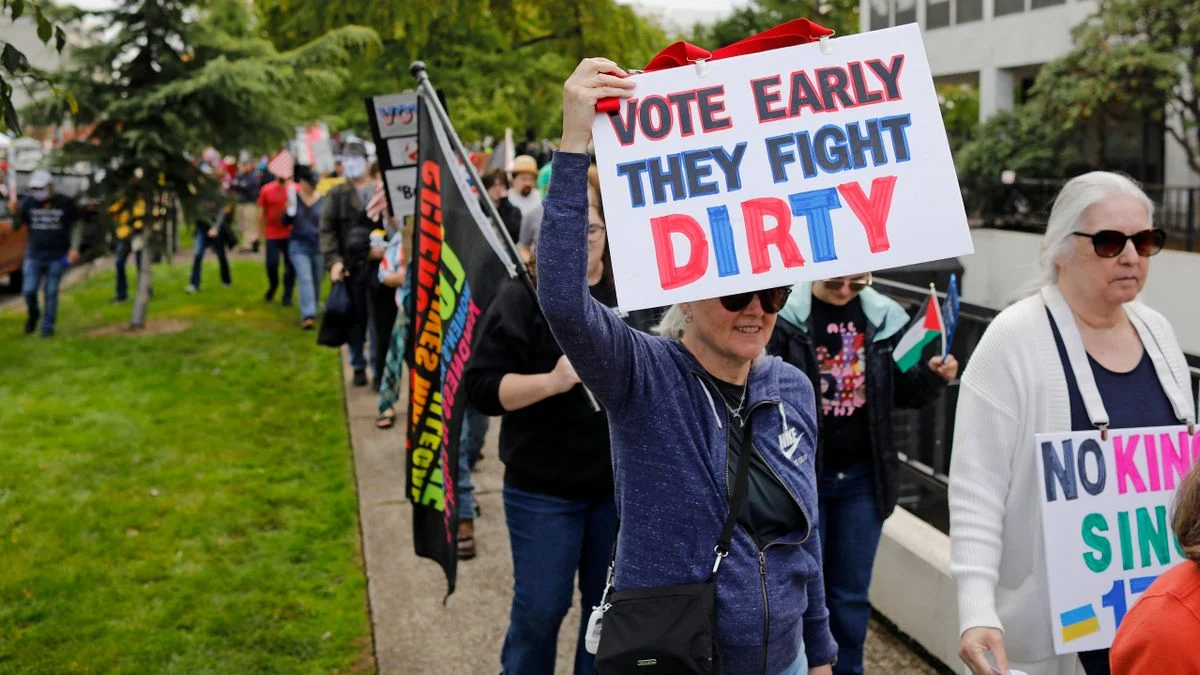
The disruption began on Saturday, a day marked by thousands of coordinated demonstrations across the United States. The “No Kings” movement had mobilized supporters to voice their opposition to a wide array of policies, including President Donald Trump’s aggressive deportation strategies, the escalating geopolitical tensions involving Iran, and various domestic legislative agendas. Crucially, the events also served as a focal point for voter mobilization efforts ahead of the November 3rd midterms.
As participants took to the streets, the movement’s primary digital hub—the Instagram account @nokingscoalition—suddenly went dark. For over an hour, the account, which served as a central repository for real-time updates, protest imagery, and logistical coordination for thousands of activists, was inaccessible to the public.
For the organizers, this was not merely a technical inconvenience; it was a disruption of their primary tool for assembly and civic engagement. During the hour-long blackout, the flow of information regarding demonstration locations and protest strategies was effectively severed. Even after the initial suspension was lifted, the account reportedly faced ongoing technical hurdles, preventing administrators from accessing their own content and management tools.
Meta’s Official Explanation: The Role of Automated Systems
Following widespread criticism and public outcry from activists and digital rights advocates, Meta addressed the situation. Andy Stone, a spokesperson for the tech giant, provided a detailed explanation that centered on the company’s internal security architecture.
According to Stone, the suspension was not a targeted act of political suppression, but rather the result of a "false positive" generated by the platform’s anti-spam algorithms. Meta utilizes sophisticated automated systems designed to identify and mitigate "inauthentic behavior," such as the activity typical of bot networks.
"When accounts engage in high-frequency posting, sharing, or commenting, it can trigger our automated security systems," Stone stated. He explained that the intensity of the “No Kings” coalition’s activity on Saturday—driven by thousands of users interacting with the account simultaneously—mirrored the patterns often associated with coordinated bot-led disinformation campaigns.
"The system identified the spike in traffic and activity as potential automation," Stone added. "Consequently, our protection mechanisms moved to restrict the account. We recognize that in this instance, our systems failed to distinguish between legitimate, organic political mobilization and malicious automated activity. We sincerely apologize for this error."
Meta further noted that the delay in restoring full functionality to the account was due to technical complexities in account recovery processes, which were exacerbated by the platform’s security safeguards.
The Skepticism of the "No Kings" Movement
The "No Kings" organizers have roundly rejected the narrative of a simple technical error. In a formal response posted to their Instagram account, they characterized Meta’s explanation as "inconclusive" and argued that the apology fails to address the gravity of the situation.
"Meta’s explanation does not account for the pattern of behavior we observed," the coalition stated. "A ‘bot’ excuse is a convenient shield for a company that has yet to demonstrate transparency regarding how its algorithms prioritize or suppress specific types of political speech."
Beyond the hour-long total blackout, the movement reports a broader phenomenon of “shadowbanning” or algorithmic suppression. Activists claim that throughout the weekend, content related to the “No Kings” demonstrations and information regarding early voting processes were significantly harder to find on Meta platforms. They describe a environment where their posts were buried, engagement metrics were artificially deflated, and reach was curtailed—all during a critical window for voter turnout.
The movement is now demanding more than a standard apology. "With only weeks remaining until the election, a simple apology is insufficient," the statement continued. "The public requires clear, verifiable answers. We demand accountability for these ‘errors’ and the implementation of concrete protective measures to ensure that political mobilization is not treated as a threat to platform stability."
The Implications for Democracy and Social Media
The "No Kings" incident highlights a fundamental tension in modern democracy: the reliance of political movements on private, profit-driven digital infrastructure.
The Algorithmic Black Box
The primary concern among digital policy experts is the lack of transparency in how social media companies define "inauthentic behavior." If an algorithm can interpret the organic, high-energy activity of a grassroots movement as a bot attack, it suggests that these tools are either poorly calibrated or fundamentally hostile to the fast-paced, high-volume nature of digital activism.
When Meta’s algorithms prioritize "normal" user behavior, they effectively impose a standard of "acceptable" political speech. Movements that rely on rapid-fire updates and mass-coordinated action are, by definition, operating outside of those normative patterns, making them inherently vulnerable to automated censorship.
The Timing and the Midterms
The proximity to the November 3rd midterm elections adds a layer of existential urgency. In an era where social media is the primary venue for voter education and mobilization, the ability of a platform to "switch off" a movement—even for an hour—is a form of power that transcends corporate policy.
Critics argue that if Meta cannot guarantee the uptime and visibility of legitimate political movements, they are effectively failing their duty as a public square. The fear is that such "glitches" could be exploited to suppress voter turnout in competitive districts or to dampen the impact of social justice movements.
The Call for Regulation
The backlash to the "No Kings" incident is likely to intensify calls for stricter regulatory oversight. There is a growing bipartisan consensus—albeit for different reasons—that the status quo of "self-regulation" by tech giants is inadequate.
Legislators are increasingly looking at proposals that would require platforms to provide "due process" for account suspensions, especially for accounts engaged in protected political activity. Such regulations could include:
- Mandatory Human Review: Requiring that account suspensions for organizations of a certain size or political relevance involve a human moderator rather than relying solely on automated scripts.
- Transparency Reports: Requiring platforms to disclose the specific criteria used by algorithms to throttle or hide political content.
- Restoration Guarantees: Implementing a legal requirement for platforms to prioritize the restoration of political accounts that have been flagged as "false positives."
Conclusion: A Fragile Balance
The suspension of the “No Kings” Instagram account is a microcosm of the fragile relationship between digital platforms and the movements they host. While Meta maintains that its actions were rooted in the neutral enforcement of security policy, the incident has exposed the deep mistrust that exists between activists and the platforms that control the flow of information.
As the political season intensifies, the pressure on Meta to prove its impartiality will only grow. Whether the company chooses to refine its algorithms to better recognize human-led political fervor, or whether it continues to rely on blunt-force automation, remains to be seen.
For the "No Kings" movement and the wider electorate, the message is clear: the digital infrastructure of democracy is currently under-regulated and overly prone to the whims of black-box algorithms. Until the gap between corporate security protocols and the realities of democratic engagement is bridged, incidents like the one experienced this past weekend will likely continue to threaten the integrity of political discourse in the digital age.
As the coalition continues its efforts, they are calling on their followers to remain vigilant and to look for decentralized, alternative ways to organize, suggesting that the era of blind trust in social media giants has effectively come to an end. The path forward will require not just apologies from Silicon Valley, but a fundamental shift in how digital spaces are governed, managed, and held accountable to the people who use them to build a better future.