Riyadh, Saudi Arabia – October 21, 2026 – Saudi Arabia, a nation aggressively pursuing a future defined by modernization, economic diversification, and global prominence, finds its ambitious "Vision 2030" increasingly imperiled. A series of devastating attacks by the Iran-backed Houthi militia on critical infrastructure, including the international airports of Riyadh and Dammam, has shattered the kingdom’s carefully cultivated image of security and stability, sending shockwaves through international investment circles and regional diplomacy.
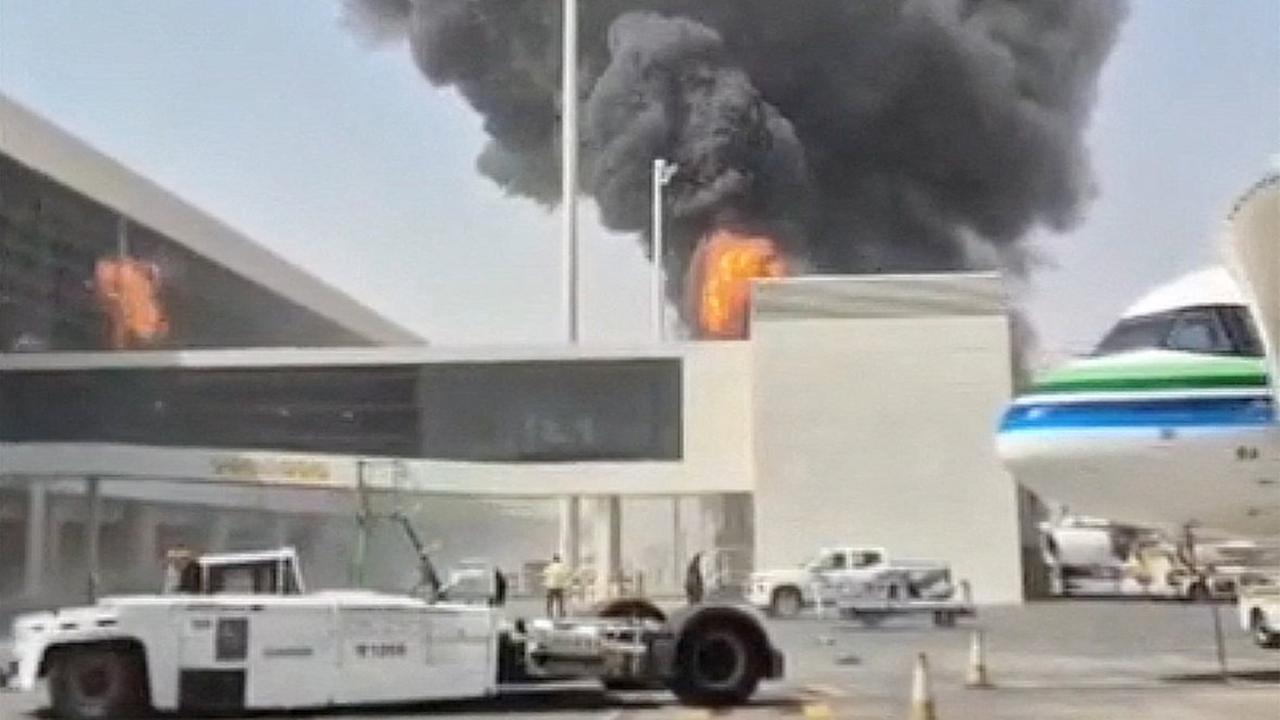
The most recent and harrowing incident unfolded on October 20 at Riyadh’s King Khalid International Airport. Surveillance footage, later widely circulated, captured a scene of ordinary life abruptly transformed into chaos. Muslim pilgrims, queuing at a terminal, were suddenly engulfed by a blinding flash and a thunderous explosion. The screen filled with smoke, and fleeting glimpses showed individuals collapsing to the ground before the recording abruptly ceased. Official reports confirm 18 fatalities and over 300 injuries from this single attack, figures that the Saudi government released, though the actual toll is feared by some observers to be higher.
These acts of aggression stand in stark contrast to the grand narrative championed by Crown Prince Mohammed bin Salman (MBS), Saudi Arabia’s de facto ruler. His "Vision 2030" project envisions a vibrant, open Saudi Arabia, a magnet for tourists, a hub for international businesses, and a host for mega-events, all underpinned by an assurance of safety and prosperity for both its citizens and foreign visitors. Yet, the escalating Houthi campaign directly targets the very pillars of this transformative agenda, casting a long shadow over the kingdom’s aspirations.
Chronology of a Deepening Conflict
The current wave of Houthi aggression represents a severe escalation in a conflict with deep roots. The insurgency of the radical Islamist Houthi movement against the Yemeni government began as early as 2004, but it dramatically intensified in March 2015 when Saudi Arabia, leading a coalition of Arab states, directly intervened. The stated goal was to restore the internationally recognized government and counter what Riyadh perceived as Iranian expansionism in its southern backyard.
For years, the conflict was largely confined to Yemen, with Saudi Arabia conducting extensive aerial campaigns and enforcing a naval blockade. Despite overwhelming military superiority, the Saudi-led coalition failed to dislodge the Houthis, who maintained control over large swathes of the country, including the capital Sanaa. This protracted engagement drew significant international criticism, particularly regarding the immense humanitarian crisis it unleashed. Critics often labeled the intervention a "military adventure" for the then-young Crown Prince bin Salman, who had just entered the international political arena.
The situation saw a period of relative calm beginning in 2022, fueled largely by war-weariness on all sides and tentative diplomatic overtures. However, this fragile détente was shattered in July of this year. Saudi Arabia launched an attack on Sanaa airport while a Houthi delegation was reportedly returning from a visit to Iran, their closest regional ally. This act ignited a fierce Houthi response, who vowed to retaliate in kind, adopting a doctrine of "airport for airport, escalation for escalation."
Since July, the Houthi attacks on Saudi territory have grown in frequency and sophistication. Initially targeting border towns and military installations, they have increasingly struck deep into the kingdom, hitting civilian infrastructure and economic targets. The October 20 attack on Riyadh airport was merely the most recent and devastating in a series that has seen drones and ballistic missiles launched towards major cities. Just days before the Riyadh incident, during the World Petroleum Congress in the capital, Saudi authorities advised guests to arrive via Dammam airport – only for that airport to be targeted by Houthi projectiles shortly thereafter. This rapid succession of attacks underscores the Houthi’s expanding reach and their determination to inflict maximum disruption.
Supporting Data and Humanitarian Catastrophe
The human cost of the Yemen conflict is staggering. Over the years, the war has led to hundreds of thousands of deaths, both directly from violence and indirectly from disease, malnutrition, and lack of access to healthcare. Millions have been displaced from their homes, creating one of the world’s worst humanitarian crises. Nearly half of Yemen’s population continues to suffer from severe food insecurity, reliant on international aid that is often hampered by blockades and ongoing fighting.
For Saudi Arabia, the recent attacks introduce a new layer of internal vulnerability. The official casualty figures from the Riyadh airport attack – 18 dead and over 300 injured – are presented by the government. However, the secretive nature of the Saudi state often leads to speculation that such numbers might be understated, particularly in times of conflict. The Houthi militia, in contrast, actively claims responsibility for these attacks, using them as propaganda to bolster their image among supporters and demonstrate their capabilities to regional adversaries.
Economically, the attacks target the core of Saudi Arabia’s wealth and future plans. Oil facilities, the lifeblood of the Saudi economy, have been repeatedly struck, though the extent of the damage is often downplayed by Riyadh. More significantly for Vision 2030, the attacks on airports and other civilian infrastructure directly undermine confidence in the kingdom’s stability. The decision by executives from major oil companies like Exxon, Shell, Total, and BP to pull out of the World Petroleum Congress in Riyadh after the airport attacks serves as a stark indicator of investor apprehension. As Sebastian Sons, an expert from CARPO (Center for Applied Research in Partnership with the Orient), noted, this is a "worst-case scenario" for Crown Prince bin Salman, posing a significant threat to the "new Saudi business model."
The Houthi’s military successes within Yemen have also expanded their sphere of influence, notably securing control over the entire western coast of Yemen. This strategic gain gives them leverage over the crucial Bab al-Mandab Strait, a narrow chokepoint for global maritime trade, particularly oil shipments from the Gulf to Europe and North America. This control amplifies their ability to disrupt international commerce and exert pressure on Saudi Arabia, further compounding the kingdom’s security concerns.
Official Responses and International Alignment
In the aftermath of the heightened attacks, Saudi Arabia has responded with a show of force and a concerted diplomatic push. The Crown Prince, reportedly fearing for his personal safety, has been moving between palaces equipped with bunkers, surrounded by an augmented security detail. Militarily, Riyadh has launched heavy retaliatory airstrikes on Sanaa and other Houthi-controlled areas in Yemen, aiming to demonstrate resolve and degrade the militia’s capabilities.
Diplomatically, Saudi Arabia has sought to shore up its alliances and garner international support. In August, Crown Prince Mohammed bin Salman established the "Mecca Defense Pact" with Turkey and Pakistan, ostensibly to enhance regional security cooperation. Both nations, alongside Egypt and now the United Kingdom, have pledged their support to Saudi Arabia in its defense against Houthi aggression. Germany’s Minister for Economic Affairs, Katherina Reiche, attended the World Petroleum Congress despite the attacks, signaling continued engagement, though other international figures opted to cancel.
However, experts like Sebastian Sons emphasize that a purely military solution to the Houthi conflict is unlikely. "One has not been able to defeat the Houthis militarily, and I consider such a scenario very improbable now," Sons stated. He suggests that Saudi Arabia needs partners to assert its leadership among Muslim nations and "manage" the conflict diplomatically.
The role of Iran, the Houthis’ closest ally, remains central. Tehran provides financial, military, and logistical support to the militia, including advanced drone and missile technology. This patronage is widely seen as a key factor enabling the Houthis’ sophisticated attacks. Iran’s broader regional strategy, often characterized by proxy conflicts with the United States and Israel, could see the escalation on the Arabian Peninsula as a means to improve its negotiating position with its adversaries. The initial shock for Saudi Arabia came with the "Iran War," involving Iranian attacks on US bases in the Gulf, which already challenged the perception of regional stability. The Houthi attacks are now a direct, even more potent, blow.
Implications for Vision 2030 and Regional Stability
The implications of these persistent attacks are profound and far-reaching, particularly for Crown Prince Mohammed bin Salman’s transformative Vision 2030.
Erosion of Trust and Investment: The most immediate impact is on investor confidence. Vision 2030 relies heavily on attracting trillions of dollars in foreign direct investment to diversify the economy away from oil. Megaprojects like NEOM, the Red Sea Project, and Qiddiya are designed to create new cities, tourism destinations, and entertainment hubs. Consistent attacks on airports and other infrastructure fundamentally undermine the perception of a safe and stable environment necessary for such long-term, capital-intensive ventures. Companies and individuals will be hesitant to commit resources to a region perceived as a conflict zone, directly threatening the financial viability and timelines of these ambitious projects.
Deterrence of Tourism: A cornerstone of Vision 2030 is the dramatic expansion of the tourism sector. Saudi Arabia aims to welcome 100 million visitors annually by 2030, a tenfold increase from pre-Vision numbers. Images of explosions at international airports are antithetical to this goal. Tourists, whether religious pilgrims or leisure travelers, prioritize safety. The attacks create a pervasive sense of insecurity that will deter potential visitors, hindering the growth of a crucial new economic pillar.
Challenges to MBS’s Domestic Legitimacy: Crown Prince bin Salman has largely cultivated his popularity among the young Saudi population by presenting himself as a "modernization manager," promising new opportunities and a brighter future. The ongoing conflict, with its human and economic costs, threatens this carefully crafted image. While the state-controlled media may frame the conflict as a necessary defense against external aggression, prolonged instability and the failure to secure the kingdom could erode public trust and support, particularly among a generation eager for change.
Regional Instability and Geopolitical Realignment: The escalation of the Houthi conflict risks further destabilizing an already volatile Middle East. It exacerbates the Saudi-Iranian proxy struggle, making diplomatic de-escalation efforts more challenging. The Houthi’s control over the Bab al-Mandab Strait introduces a new dimension of risk to global shipping and energy security. The "Mecca Defense Pact" and other alliances represent Saudi Arabia’s attempt to build a robust security architecture, but the effectiveness of such pacts in deterring asymmetric warfare remains to be seen.
The Future Outlook: The conflict’s trajectory remains uncertain. A military victory for Saudi Arabia against the Houthis appears increasingly improbable. Diplomacy, therefore, emerges as the most viable path to de-escalation. However, successful negotiations would require significant concessions from all parties, including Saudi Arabia, the Houthis, and crucially, Iran. The international community, led by the UN and regional powers, faces the complex task of facilitating a comprehensive political settlement that addresses the underlying grievances in Yemen and provides security assurances for Saudi Arabia.
In the meantime, the attacks by the Houthi militia represent a severe and escalating setback for Saudi Arabia and its Crown Prince. They strike at the kingdom’s economic strength through oil facilities and, perhaps more damagingly, at its vision for an internationally connected, secure, and prosperous future, leaving Vision 2030 precariously balanced on the edge of a deepening regional abyss. The clock is ticking for Riyadh to find a way to secure its borders and, more importantly, its ambitious future.