In the rarified atmosphere of contemporary literature, few figures command the same reverence—or provoke the same delightful bewilderment—as Anne Carson. Recently crowned with the Nobel Prize in Literature, the 76-year-old Canadian poet, classicist, and essayist has long been celebrated as a titan of the avant-garde. To read Carson is to engage in an act of intellectual demolition; she dismantles the traditional boundaries of genre, time, and narrative, replacing them with a shimmering, fragmented reality that feels both ancient and startlingly immediate.
Main Facts: The Architect of Doubt
The core of Anne Carson’s brilliance lies in her relentless commitment to the process of questioning. In a recent dialogue with Norwegian novelist Linn Ullmann, Carson offered a masterclass in this philosophy. Discussing René Descartes’ seminal dictum, "Cogito, ergo sum" ("I think, therefore I am"), Carson famously noted that the original, more nuanced formulation is often overlooked: "Dubito, ergo cogito, ergo sum" ("I doubt, therefore I think, therefore I am").
For Carson, doubt is not a symptom of indecision but the primary engine of creative inquiry. Her work is a systematic assault on "frozen" certainties. Whether she is translating the Greek tragedies of Sophocles or re-imagining the lives of mythological monsters, she approaches her subjects with a forensic curiosity that refuses to settle for established canon. By centering her practice on the inherent instability of language and memory, she forces her readers to abandon their roles as passive consumers and become active participants in the construction of meaning.
Chronology: A Life of Perpetual Scholarship
Anne Carson’s trajectory is as unconventional as her prose. Born in Toronto in 1950, her academic career was marked by a restlessness that mirrored her intellectual disposition. She did not follow a linear path toward professional stability; instead, she drifted through various disciplines, repeatedly interrupting her studies in classics to pursue wider avenues of inquiry.
- 1980s-1990s: Carson established herself as a formidable academic, earning a PhD in Classics and teaching at universities across North America. During this time, she began bridging the gap between austere philological scholarship and creative output.
- 1995: The publication of Plainwater marked a shift in her career, blending essays, poetry, and fiction in a way that defied classification.
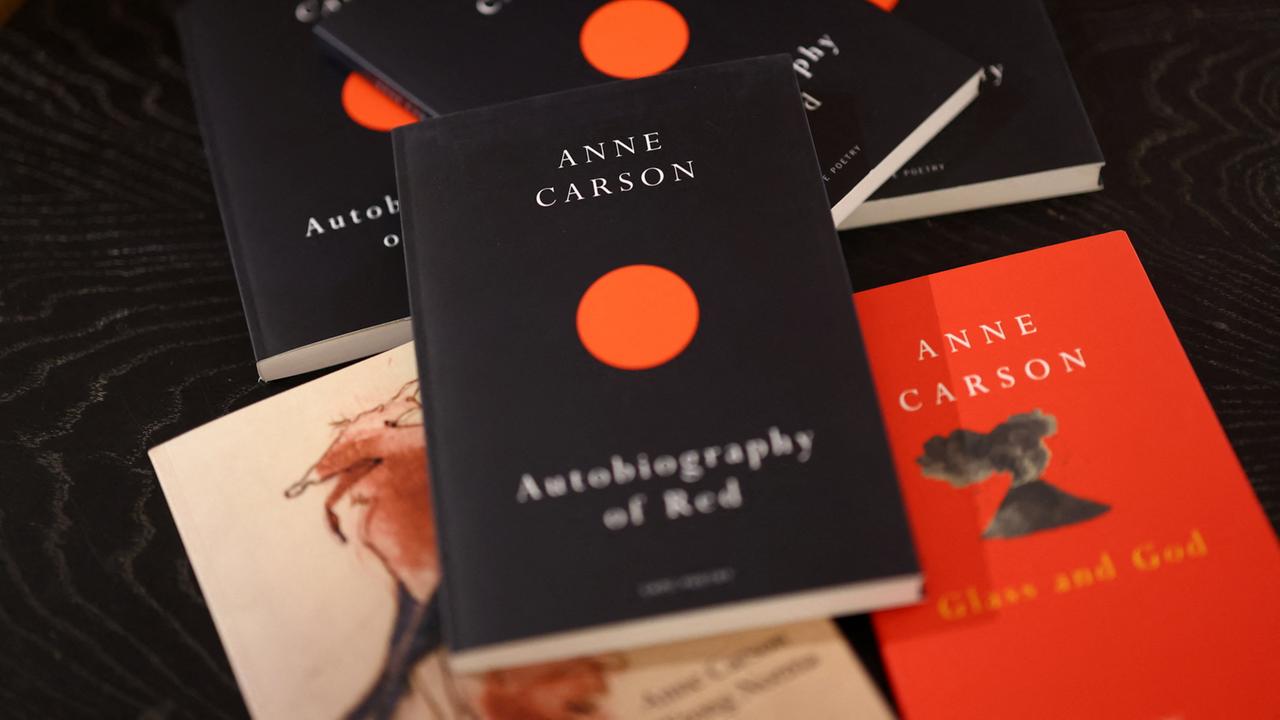
- 1998: The release of Autobiography of Red catapulted her into the global literary consciousness. By reimagining the Greek myth of Geryon as a contemporary, queer, volcanically-obsessed teenager, Carson proved that the "classics" were not dusty relics, but living, breathing blueprints for the human condition.
- 2000s-Present: Following the acclaim of Eros the Bittersweet, Carson became a perennial favorite for major international literary awards, eventually culminating in her Nobel Prize victory. Throughout these decades, she has maintained a rigorous schedule of performance-based readings and interdisciplinary collaborations, cementing her status as a "punk philosopher."
Supporting Data: The Anatomy of an Aesthetic
Carson’s work is characterized by its visual and structural subversion. Her pages are not merely containers for text; they are canvases. Lines break unpredictably, text drifts across margins, and narrative threads are severed only to be picked up in a different medium.
She is a master of the "long view," connecting disparate historical figures through a shared psychological thread. In her exploration of the Greek poet Stesichoros, she credits him with "inventing the adjective." Before him, characters were static: Helen was always beautiful, the hero always brave. Stesichoros introduced the possibility of nuance, of subjective experience. Carson carries this tradition forward, infusing figures like Hektor, Antigone, and even the biblical Lazarus with a profound sense of modern anxiety.
Her translation work is equally radical. Her renditions of Euripides and Aeschylus are performed on stages worldwide not because they are "faithful" to the original Greek in the traditional sense, but because they are faithful to the energy of the original—bringing the raw, visceral trauma of the ancient world into the frame of 21st-century discourse.
Official Responses and Critical Acclaim
The Nobel Committee’s decision to honor Carson reflects a broader shift in the literary establishment toward recognizing writers who refuse to adhere to the traditional novelistic structure. Critics have consistently praised her for her "unbound narrative joy" and her ability to synthesize vast swathes of human knowledge—from the philosophy of Longinus to the pop-culture iconography of Marilyn Monroe—into a cohesive whole.
"To experience Anne Carson live," noted one observer at a recent sold-out lecture in Berlin, "is to witness the creation of the universe in real-time." Her ability to transition from dry academic discourse to whimsical, witty performance is what fuels her reputation as a "punk philosopher." She does not lecture down to her audience; she invites them into a shared space of uncertainty.
The Implications: Why Carson Matters Now
Why does a poet who obsesses over 6th-century BC lyricists resonate so deeply with the modern digital audience? The answer lies in the "small things." Carson posits that it is the duty of the author to pay attention to the overlooked details—the small dog that dies in the margins of a hero’s epic, or the reason why Godot never arrives.
By centering the marginal and the forgotten, Carson creates a space for the modern reader to address their own anxieties. In an age of algorithmically curated information and "frozen" truths, her invitation to "doubt" is a radical act of liberation. She argues that we must move our brains, shake our established perceptions, and look at the world through the eyes of the "other"—whether that other is a monster, a historical relic, or a cloud.
The Legacy of the Unanswered Question
Ultimately, Carson does not offer the reader a destination. She does not provide the "answer" to why Lazarus was brought back to life, or why the hero chose violence over mercy. She leaves the reader in the state of the question. As she continues to produce work that defies expectations, her legacy is already secure: she has changed the way we read. She has proven that poetry is not a decoration of life, but a necessary, painful, and beautiful method of survival.
For those new to her work, the invitation remains open. Her books are not meant to be finished and shelved; they are meant to be returned to, interrogated, and allowed to shift alongside the reader. In a world that demands absolute conviction, Anne Carson’s greatest gift is the permission to remain uncertain.